You might think you have it bad now, but trust me, you’ve got it easy compared to life in medieval times. We turn our delicate little noses up at food that’s past its sell-by date. We have wellness days to cope with life’s difficulties, and our houses have instant heating and lighting.
Our modern-day comforts have turned us into softies ill-prepared to face the harsh realities medieval folk had to deal with. The working day started at dawn and finished at dusk. Now we complain if we have to go into the office every day and aren’t offered hybrid working hours.
Table of Contents
And as for the food, forget the sumptuous feasts, free-flowing wine and giant turkey legs. If you saw what was really on the menu in the Middle Ages, you’d be pressing the time-travel button back to the 21st century faster than I can say “juicy burger.”
The Food Was Bad, and Sometimes It Killed You
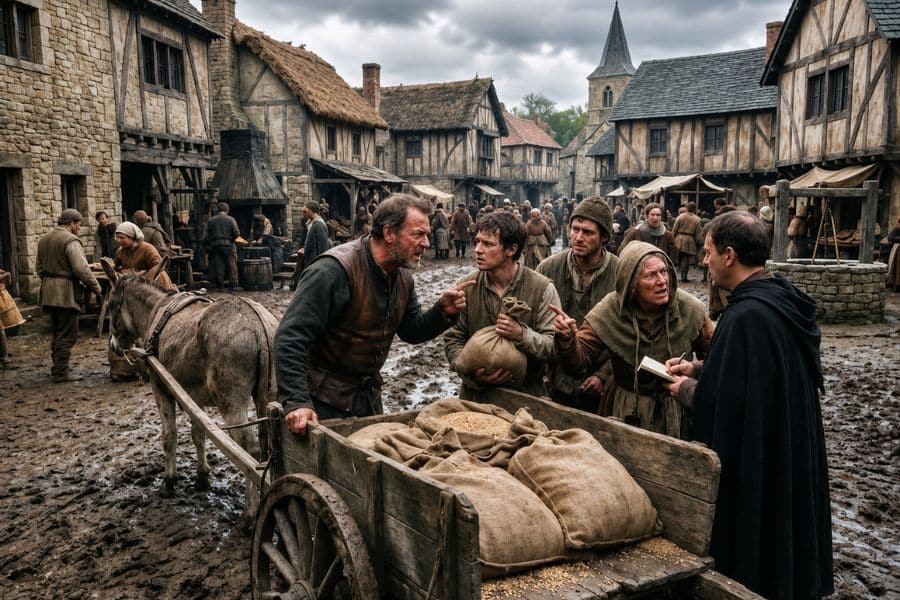
Most people in medieval England ate pottage. It was a thick soup of grains, peas, beans and whatever greens the household could grow or forage, kept warm on the hearth and topped up day after day.
C. M. Woolgar, in The Culture of Food in England 1200-1500, describes the pottage pot as the working heart of the peasant kitchen, simmering for days at a time. Meat, when it appeared, was often bacon, dried and salted hard enough to survive months hanging from a beam.

Bread was the main staple. For most of the population, that meant maslin or rye loaves, dense and dark, ground on stone querns that shed grit into the flour.
Skeletons from medieval cemeteries show worn-down molars from a lifetime of chewing stone dust with dinner. When the harvest was bad, bakers stretched flour with beans, acorns, even bark, and the poor ate what they could get.
Rye brought its own danger. In wet years, the fungus Claviceps purpurea infected the crop and produced ergot, which contains alkaloids that cause hallucinations, convulsions, and gangrene.

Historian John Kelly discusses ergotism in The Great Mortality, and the medieval condition known as St Anthony’s Fire is now understood to have been ergot poisoning. Whole villages could be affected at once when the flour came from a bad batch.
Drinking water was risky in towns, so weak ale was the everyday drink for adults and children alike. Household accounts from the 13th century, quoted by Christopher Dyer in Standards of Living in the Later Middle Ages, show harvest workers receiving several pints of ale a day as part of their wages.
The ale was thin, sour and low in alcohol, brewed fresh every few days because it wouldn’t keep.
Sanitation Was a Public Emergency
Chamber pots emptied out of upstairs windows into the street below. In London and Paris, city ordinances tried, and mostly failed, to control it. Ernest Sabine’s 1934 study for the journal Speculum, City Cleaning in Mediaeval London, quotes 14th-century regulations against dumping waste in the Thames and the Fleet, and the fines imposed when people did so anyway.
Castles had garderobes, which were stone seats built into the outer wall with a shaft dropping the waste onto a heap outside or into a moat.

Archaeological work at sites like Chepstow and Conwy has mapped these systems in detail. The chutes were long, the smell drifted upward on warm days, and servants had the job of clearing what collected below.
Then there were the gong farmers, the men who emptied cesspits by night. Records from the City of London show they were paid well, sometimes four times a laborer’s wage, because almost no one else would do it.
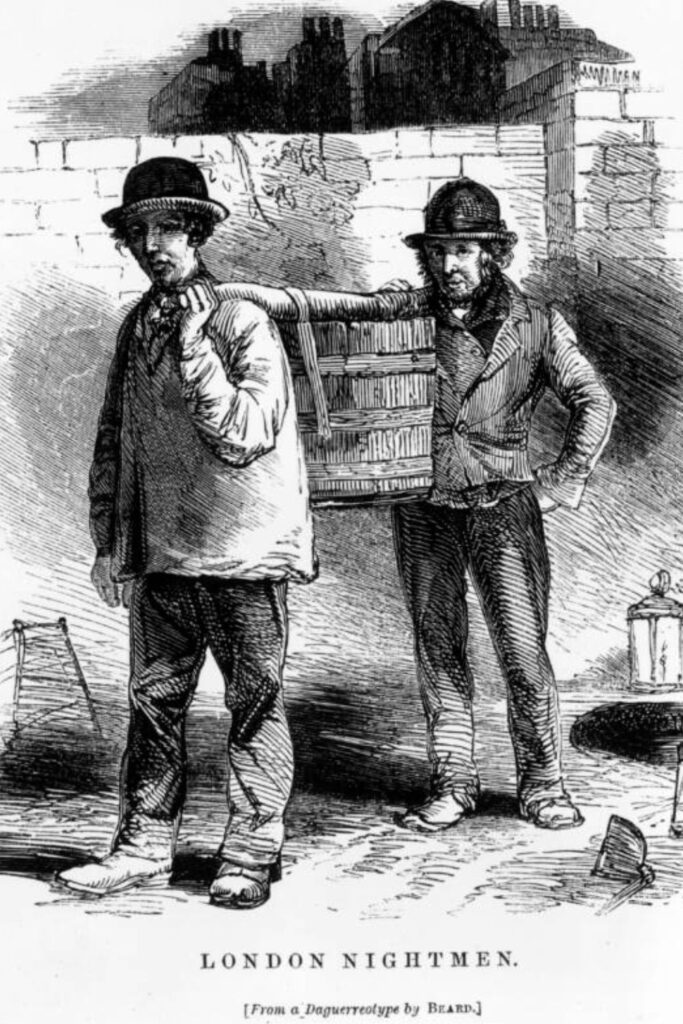
They worked after dark, hauled the waste in barrels outside the city walls, and lived apart from other trades. A man named Richard the Raker, mentioned in a 1326 London coroner’s roll, fell through the rotten planks of his own privy and drowned in his cesspit. The city was that saturated with its own waste.
As for what people used instead of toilet paper, the answer was moss, leaves, hay, rags, or the left hand, which is one reason so many cultures kept the left hand out of the shared bowl at dinner.
Work Broke Your Body Before You Turned Forty
The overwhelming majority of medieval people were peasants tied to the land, and the rhythm of their year was set by the plow, the sickle, and the lord’s demands.
Christopher Dyer’s Making a Living in the Middle Ages remains the standard account of what that actually looked like on the ground.
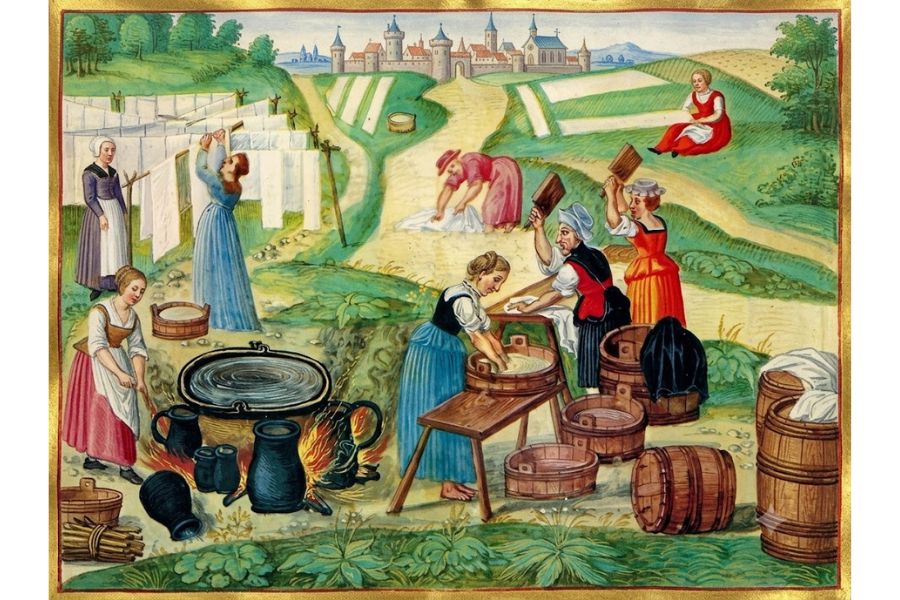
Plowing began in autumn and again in spring; sowing followed; weeding filled the summer; and harvest in August and September was a frantic race against the weather that pulled in every able body, including children.
A harvest day started before dawn and ended when the light went. Manorial records from estates like Cuxham in Oxfordshire show reapers paid in bread, ale and a share of the crop, working from sunrise to sunset in the August heat.
Skeletal evidence from medieval English cemeteries, published in the Museum of London’s Wellcome Osteological Research Database, shows osteoarthritis in the spine and shoulders of men and women in their twenties.
Craft work wasn’t any kinder. Tanners soaked hides in vats of urine and lime and then dog feces to soften the leather, and their workshops were pushed to the edges of towns because of the stench.
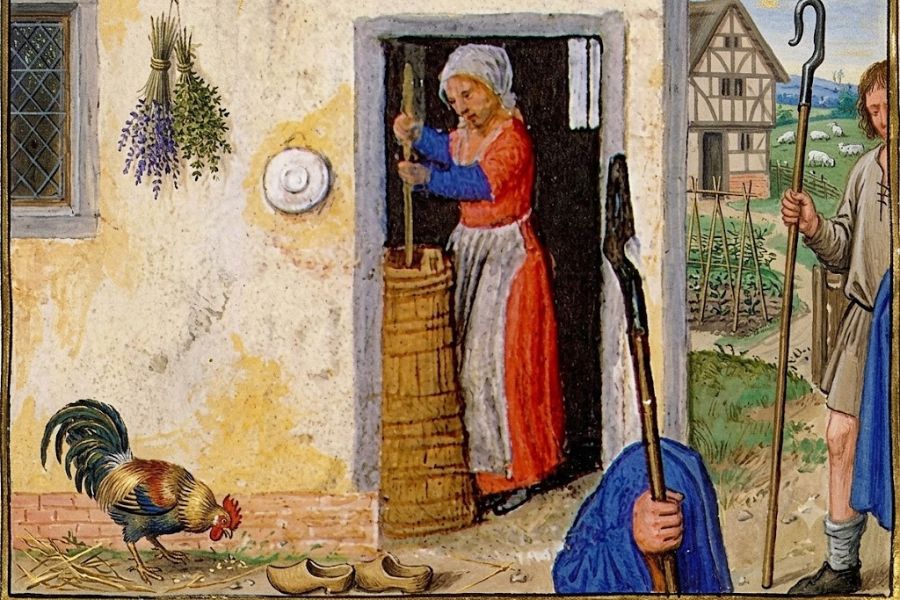
Blacksmiths worked in smoke, with burns as a routine hazard. Apprenticeships in London, as recorded in the city’s letter books, typically started around age 12 and lasted seven years, during which the apprentice lived in the master’s household and was fed, clothed, and beaten by him at his discretion.
Wages were bad, and then, briefly, they were better. After the Black Death of 1348-49 killed perhaps a third of England’s population, labor became scarce, and workers demanded more. Parliament passed the Statute of Laborers in 1351, trying to force wages back down. It didn’t work, and the pressure fed into the Peasants’ Revolt of 1381.
Hooked on the Middle Ages? Get more stories like this one in your inbox.
Medicine Was Guesswork, and the Guesses Hurt
Medieval physicians worked from the humoral theory inherited from Galen: four fluids, blood, phlegm, yellow bile, and black bile, needed to be kept in balance. Fever meant too much blood, so the treatment was to let some out.
Bloodletting was performed with a lancet at a vein, or with leeches, and it was routine care rather than a last resort.

Surgery existed and was sometimes competent. John of Arderne, a 14th-century English surgeon, wrote a treatise on treating anal fistulas that describes a procedure with a survival rate that would still be respectable.
Barber-surgeons pulled teeth, set bones and stitched wounds. Monastic infirmaries kept physic gardens with herbs whose uses we still recognize: willow bark, the source of salicylic acid, was used for pain and fever centuries before aspirin was isolated from it.

Everything else was a lottery. Childbirth killed a substantial fraction of women, and infant mortality ran high enough that estimates from parish records and coroners’ rolls suggest around a quarter to a third of children died before age five.
When the plague arrived in 1348, Gabriele de’ Mussi in Piacenza and the French chronicler Jean de Venette both left accounts of physicians fleeing, priests refusing to attend the dying, and mass graves being dug in a hurry.

Ole Benedictow’s The Black Death 1346-1353 gathers the demographic evidence and puts European losses at somewhere between 50 and 60 percent in the worst-hit regions.
Mercury was prescribed for skin disease and later for syphilis, and it poisoned the people it was meant to cure.
Arsenic appeared in cosmetics. The line between medicine and slow murder was thin, and the patient usually didn’t know which side of it the physician was on.
Justice Was Public, Physical and Uneven
Trial by ordeal survived in parts of Europe into the early 13th century, until the Fourth Lateran Council of 1215 forbade clergy from taking part in it. Before that, an accused person might be made to carry a hot iron a set distance, or plunge a hand into boiling water to retrieve a stone.

The wound was bandaged, and three days later a priest examined it. Clean healing meant innocence. Robert Bartlett’s Trial by Fire and Water is the standard study, and he traces how these ordeals worked in practice and why the Church eventually pulled its support.
After 1215, trial by jury became the norm in England, but punishment stayed physical and public. Stocks and the pillory were common for petty offenses: theft, cheating with weights, and selling bad meat.
Baker Ralph Hurdas was pilloried in London in 1327 for baking underweight loaves, according to the city’s letter books.

For more serious crimes, hanging was standard. For treason, the sentence was hanging, drawing and quartering, carried out in front of crowds who came with pies and children.
Nobles operated under a different set of rules. They could claim the benefit of clergy if they could read a scrap of Latin, which reduced a capital offense to a lesser penalty. They could pay wergild, blood money, to a victim’s kin in earlier centuries.
They could demand trial by combat, which meant hiring a champion if they didn’t fancy fighting themselves. Poor defendants had no such options, and the pardons that flowed from the Crown tended to flow toward the well-connected.

Torture as a formal part of legal procedure was more common on the continent than in England, particularly under inquisitorial systems. Confessions extracted under it were treated as evidence, and Edward Peters, in Torture, tracks how the practice spread through secular courts from the 13th century onward.
Most people, faced with the rack or the strappado, said whatever the questioner wanted to hear.
War Was Part & Parcel of Life
If you were born in the 15th century in France or England, you would have lived in a time when war was common. The Hundred Years’ War lasted from 1337 to 1453, and the Wars of the Roses spanned much of the second half of the 15th century in England.
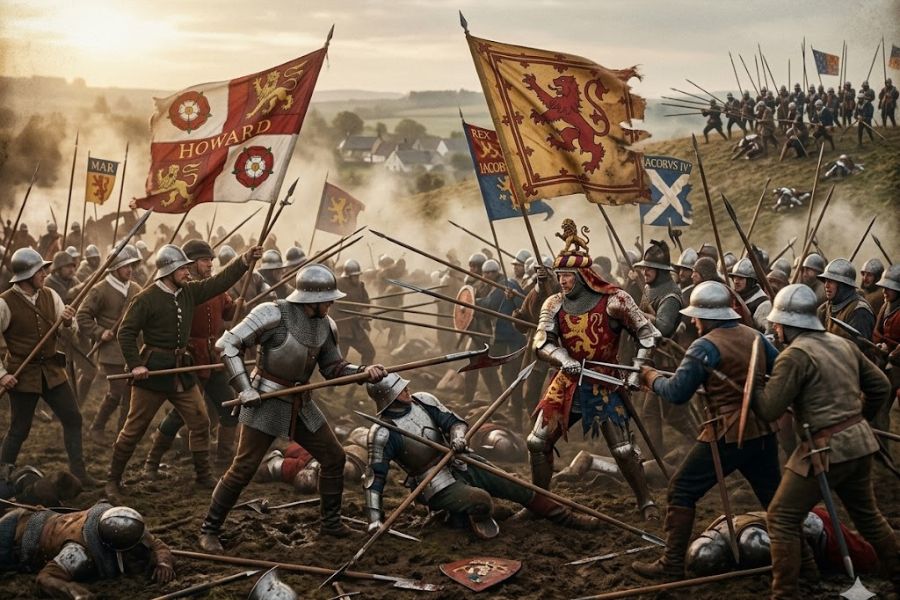
Most soldiers were common men. They carried billhooks, spears, longbows and daggers, and they wore padded jacks stuffed with tow rather than the plate armor reserved for the wealthy.
Battles were short, chaotic and lethal. At Towton in 1461, fought in a snowstorm on Palm Sunday, chroniclers put the dead at 28,000, though modern historians such as George Goodwin in Fatal Colors argue the true figure was probably lower.
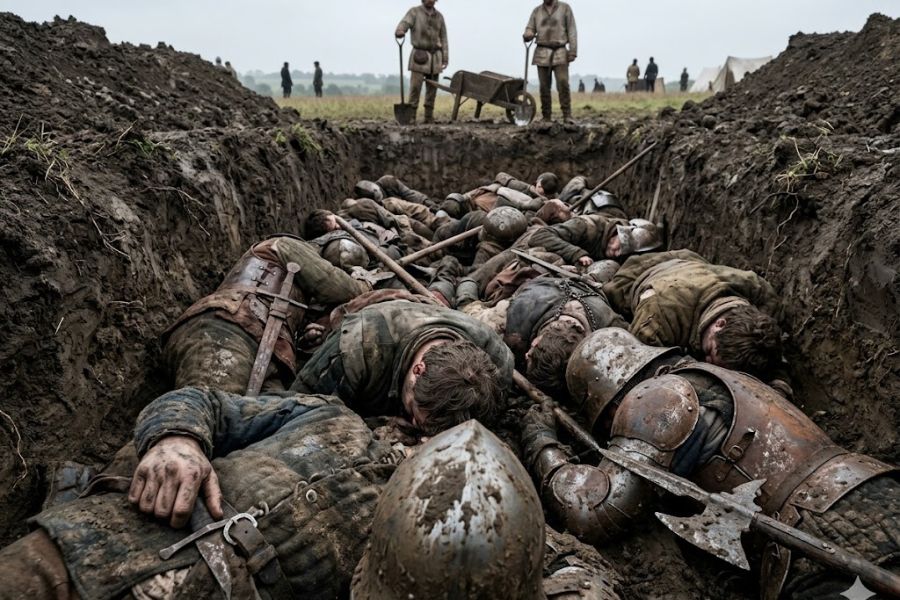
It was still catastrophic. The mass grave excavated near the battlefield in 1996 held skeletons with multiple skull fractures, blade wounds to the face, and cuts to the arms consistent with men trying to shield their heads.
What happened between the pitched battles was often worse. The chevauchée, a mounted raid designed to burn crops, kill livestock, and terrorize the local population, was standard English strategy in France under Edward III and the Black Prince.
Jonathan Sumption’s multi-volume history The Hundred Years War documents village after village torched, harvests destroyed, and civilians murdered as a matter of policy. The point was to make the king’s peasants suffer so badly they would pressure him into terms.
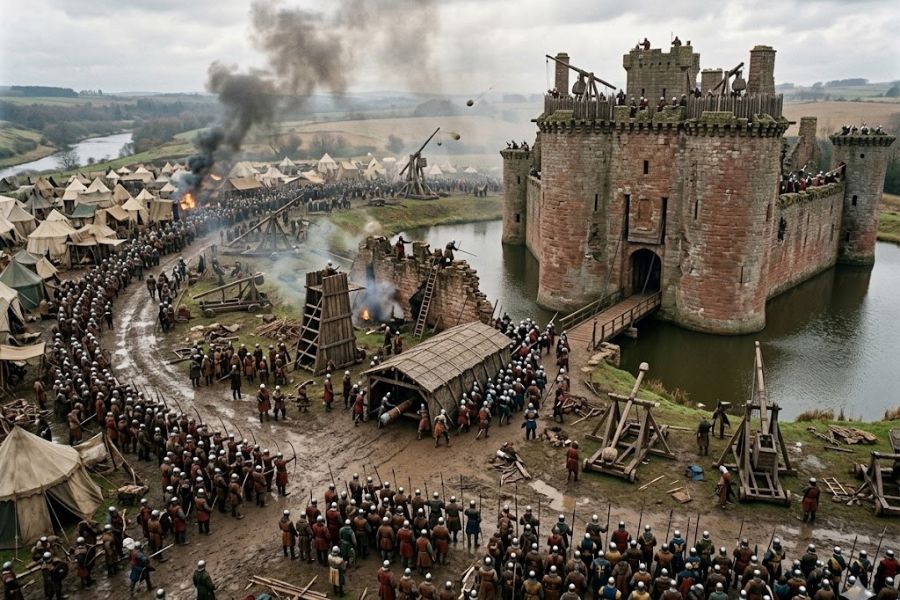
Sieges finished off what raids started. Rouen was besieged by Henry V from July 1418 to January 1419, and the citizens expelled the useless mouths, the old, the young, the sick, into the ditch between the walls and the English lines.
Henry refused to let them through his camp, and they starved there in view of both sides through a winter. The chronicler John Page, who was present, wrote a poem describing it. He watched infants trying to nurse from dead mothers. That was the reality behind the tapestry of medieval warfare.
Love a good medieval story?
Join our readers and get tales of kings, queens, castles and ordinary medieval lives straight to your inbox.

Kylie Lang is a nationally syndicated travel journalist with bylines on the Associated Press Wire & more, a medieval history writer, and the founder and lead author of Tales of the Middle Ages (talesofthemiddleages.com). She holds a BA (Honours) in History from the University of Kent and is a member of the British Guild of Travel Writers.


