
If you’ve ever complained about a dirty gas station bathroom, wait until you hear what people were dealing with in the Middle Ages. Toilet paper hadn’t been invented, and for most, a hole in the ground was as good as it got.
And you’d be pretty good at dodging the contents of chamber pots thrown from upper-floor windows onto the heads of anyone unfortunate enough to be walking below. But the big question is: were medieval toilets disgusting, or were they not actually that bad?
Table of Contents
Because while some people had a less than sanitary experience, others had remarkably well-designed sanitation systems that would surprise you. It all depended on who you were.

What Was a Medieval Toilet Called?
Medieval toilets went by several names, most of them euphemisms. The most common were “privy,” “privy chamber,” and “garderobe.” Others included “the draught,” “gong,” “siege-house,” “necessarium,” and, brilliantly, “Golden Tower.”
Someone clearly had a sense of humor.
The word garderobe comes from the French garde de robes, meaning “robes protector.” That sounds odd until you understand the logic behind it. People hung their clothing in garderobe shafts specifically to rid them of fleas, using the ammonia from urine as a natural fumigant.
How Did Castle Toilets Actually Work?
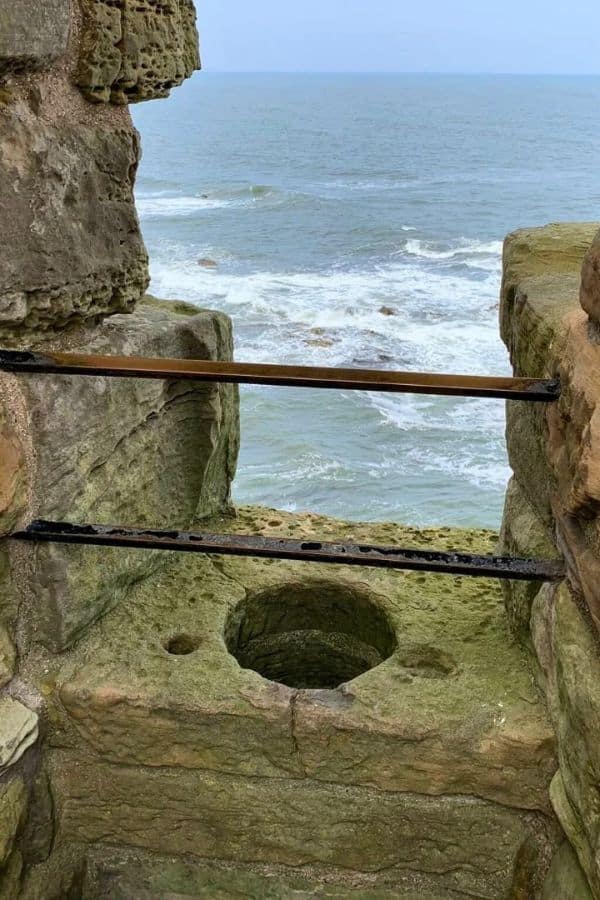
Castle toilets were built into the walls, projecting outward on corbels so that waste fell below into the moat or directly into a river. From the inside, the toilet sat in a small recess or within a passage carved through the thickness of the wall. A short corridor often led to it, sometimes with a right-angle turn for privacy.
The seat was a wooden bench covering a hole in the masonry, cut in a rectangular or keyhole shape. Pairs of toilets sharing the same waste chute were common.
As for toilet paper? Nope, the folks in the Middle Ages had to get inventive and use hay. grass, or moss, if you were lucky.
Some toilets had a small ventilation window. The floor might be scattered with aromatic herbs to cover the smell and deter vermin. Walls were sometimes whitewashed with lime, which killed bacteria and reflected the little light that came through the single window.
So while the basic design involved sitting over an open drop shaft, there was an effort to make the experience tolerable.
Was There a Difference Between Rich and Poor?
The gap was enormous.
A castle lord typically had a private garderobe attached to his chamber. The castle priest often had one too. The Great Hall might have one tucked into a corner. Everyone else shared communal facilities and kept a chamber pot for nighttime use.
Wealthy nobility sometimes employed a “groom of the stool,” a senior household servant whose job was to assist the lord during toilet use. The role carried real status at court if this was your position to the king.
Why? Because you were ‘privy’ to his most private time and likely to be a confidant of sorts. Not sure it’s a job I’d want, no matter how privileged it was seen to be.
For common city dwellers, the options were far grimmer. Public latrines, called “sege houses,” existed in larger towns, but London at the end of the 14th century had just 16 public latrines for a population of around 30,000 people.
One London latrine had two rows of 64 seats each. Imagine 128 people sitting side by side over a single open trench doing their daily business. It fills my 21st-century mind with horror, not just at the smell but at the invasion of privacy.
Hooked on the Middle Ages? Get more stories like this one in your inbox.
What Happened to All the Waste?
This is where things get truly grim.

Cesspits were dug under cellar floors or in the yard. Some houses had wooden chutes carrying waste from upper floors down to the pit below. The pits weren’t watertight by design, allowing liquid to drain away naturally, leaving only the solid waste behind. That solid waste built up for around two years before anyone dealt with it.
And the person who dealt with it was the gong farmer.
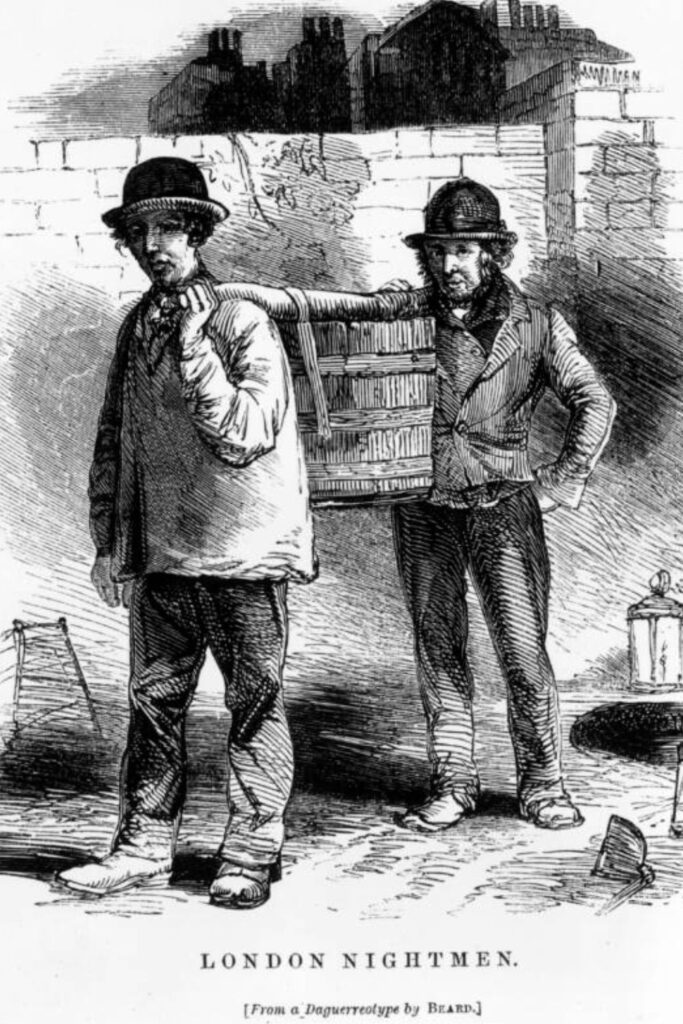
Gong farmers were paid to empty cesspits by hand, working for two shillings per ton removed. By law, they could only operate between 9 pm and 5 am so that the sights and smells of cartloads of human waste would not offend the public during daylight hours. They were known as “nightmen” for exactly this reason.
The job was every bit as terrible as it sounds. No protective equipment or big trucks to carry it all away in. Today’s health and safety would have a pink fit. Pockets of deadly gas building up in enclosed pits with no warning. A rotting wooden ceiling that could give way without notice.
In 1326, a gong farmer named Richard the Raker fell through the rotted floor of a cesspit and drowned in its contents. And that was his day off. He wasn’t even working.
What About People Living in Cities With No Garderobe at All?
Some city buildings had private toilet rooms on upper floors, supposedly connected to a drainage pipe that ran waste down to a pit. However, plenty of homeowners simply let the waste drop into the alleyway below, risking a fine.
Conflict between neighbors over leaking or overflowing cesspits was so common that a 13th-century London ordinance specified exactly how far a stone-lined pit had to sit from a neighboring property. Non-stonewalled pits needed even more distance.
The neighbors of a leaking cesspit in medieval London had very specific legal recourse. Urban life in the Middle Ages was a constant negotiation between people and their waste.

Were Monks Actually Better Off Than the Nobility?
Possibly yes. Monastery toilets, called reredorters or the “necessarium,” were communal latrine halls usually built at one end of the dormitory. Waste dropped down chutes or between walls, sometimes falling as far as seven meters, and was carried away continuously by a stream or diverted watercourse running beneath the building.
Monks chose their building sites partly based on access to a suitable stream for exactly this reason. At Rievaulx Abbey in Yorkshire, running water was routed into stone channels that flushed the communal latrines clean.
At Cluny Abbey in France, the latrine block had 45 individual cubicles, each with its own window, all emptying into drainage channels fed by diverted streams.
Compare that to London’s 16 public toilets for 30,000 people, and the monks were doing very well by medieval standards.
Did Anyone Actually Breach a Castle Through the Toilet?
Believe it or not, they did, and it worked.
In 1203 to 1204, French soldiers besieging Chateau Gaillard in Normandy spent months unable to break through the walls. Then a small group found an entry point nobody had thought to defend: the garderobe shaft. They climbed through it, made it inside the walls, and opened a door from the other side.
The garrison held for months against a full siege, but in the end, fell because nobody had thought to block the toilet.
What Did It Actually Smell Like?
Medieval records don’t give us a fully vivid account, because, let’s face it, who is going to write about something as normal as it was to them, such as going to the toilet? But the picture is clear enough.
Cities were densely packed, drainage was primitive, cesspits overflowed, and chamber pots were thrown from upper windows into the streets below. Hundreds of thousands of people and animals producing waste every day, with no sewage system to move it anywhere.
The herbs scattered on the garderobe floors, and the lime on the walls, were a practical attempt to make a foul situation more bearable. But to our modern-day noses, the smell would have been horrific. For them? Maybe not as they were used to it. Luckily, it’s something we’ll never have to experience.

Love a good medieval story?
Join our readers and get tales of kings, queens, castles and ordinary medieval lives straight to your inbox.

Kylie Lang is a nationally syndicated travel journalist with bylines on the Associated Press Wire & more, a medieval history writer, and the founder and lead author of Tales of the Middle Ages (talesofthemiddleages.com). She holds a BA (Honours) in History from the University of Kent and is a member of the British Guild of Travel Writers.