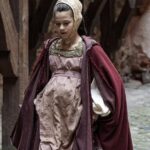
When a man rode out to fight for York or Lancaster, his wife already knew the arithmetic. If he won, the family rose. If he lost, she might lose her lands, her title, her children’s inheritance, and sometimes her freedom. The Wars of the Roses produced more widows than chronicles ever bothered to name.
Margaret Beaufort and Elizabeth Woodville get most of the attention, and they earn it. But behind them stand dozens of other women whose husbands picked the losing side at Towton, Barnet, Tewkesbury, or Bosworth, and who then had to figure out how to keep a roof over their children and a name worth marrying into.
Table of Contents
This is what political disaster actually looked like for a medieval noblewoman. Not a single dramatic moment on a battlefield, but years of petitions, second marriages of convenience, lawsuits over dower lands, and the slow grind of trying to claw back what an attainder had taken.
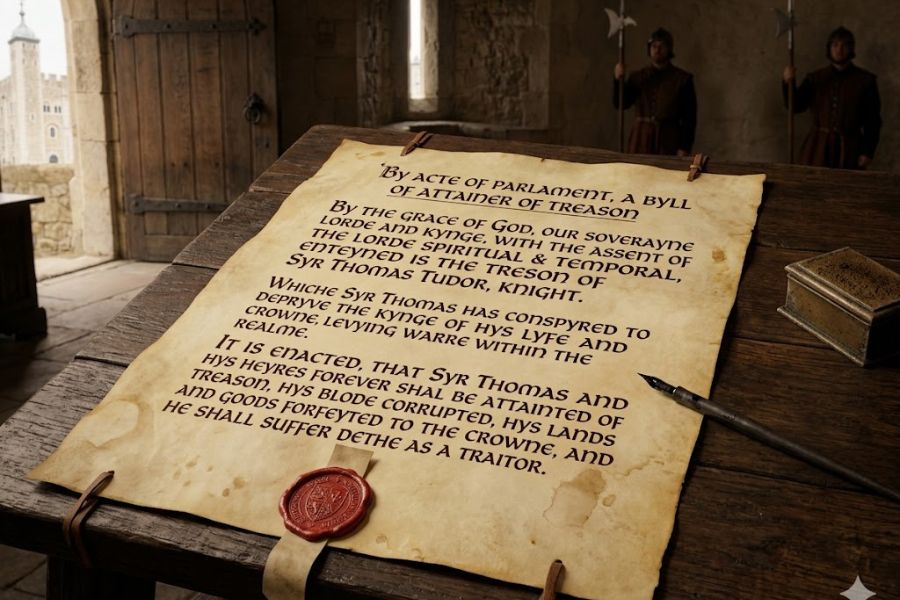
The Legal Trap: What an Attainder Actually Did to a Family
An act of attainder was the medieval equivalent of a financial death sentence that outlived the man it killed. Parliament declared the traitor’s blood corrupted, which meant his lands reverted to the Crown, his heirs couldn’t inherit, and his widow’s claim to her dower, the third of his estate she was legally owed in widowhood, became something she had to fight for rather than something she received.
In theory, dower was sacred. A widow’s right to it was written into Magna Carta. In practice, when the king who issued the attainder needed lands to reward his own followers, that theory bent.
Edward IV handed out forfeited Lancastrian estates to his Yorkist supporters in the 1460s like a man dealing cards. The widows of those Lancastrian lords spent the next two decades writing petitions, begging audiences, and remarrying strategically to try to recover even a portion of what had been theirs.
The other piece of the trap was the children. Sons of attainted fathers couldn’t inherit titles, and the daughters became less marriageable overnight. A girl who had been worth a barony as a bride at twelve was worth far less at fourteen if her father had died screaming on a scaffold at Tewkesbury. I’ve always thought this is the part that gets lost in the TV adaptations.

Margaret Beaufort: The Widow Who Outplayed Everyone
Margaret Beaufort was thirteen years old when she gave birth to the future Henry VII. Her husband, Edmund Tudor, was already dead, captured by Yorkists and died of plague in Carmarthen Castle three months before his son was born. She was a widow with a baby and a Lancastrian bloodline that made her one of the most dangerous women in England.
What she did next is the template for how a clever woman survived this war. She remarried, fast, to Henry Stafford, a younger son of the Duke of Buckingham. Stafford was a moderate Yorkist by the 1460s, which gave Margaret political cover while her son Henry was being raised by his Yorkist uncle in Wales.
When Stafford died of wounds taken at Barnet in 1471, fighting on Edward IV’s side, Margaret was widowed again at twenty-eight. Within a year, she married Thomas Stanley, one of the richest and most slippery magnates in the country.
Each marriage was a calculation. Each one kept her at court, kept her son alive in exile, and kept her in a position to act when the moment came. By 1485, she was helping fund the invasion that put her son on the throne. She spent thirty years preparing for one specific week in August.
The full story of how she built the Tudor dynasty is worth its own deep read, and we’ve covered it at length in our piece on the real Margaret Beaufort.
Hooked on the Middle Ages? Get more stories like this one in your inbox.
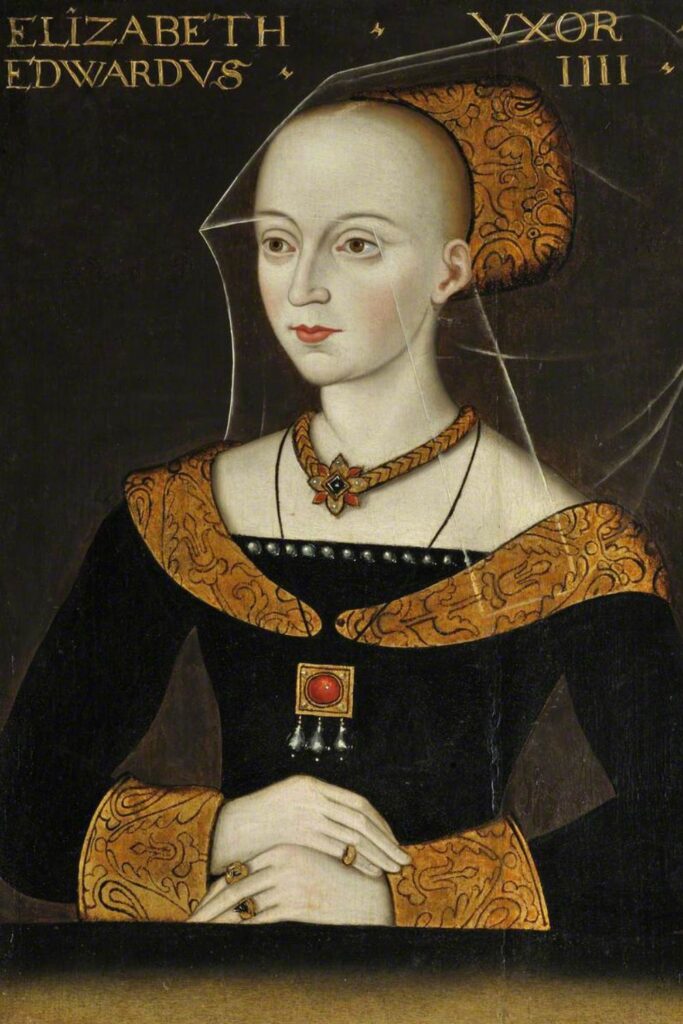
Elizabeth Woodville and the Cost of Marrying a King
Elizabeth Woodville is usually remembered as the commoner widow who caught Edward IV’s eye in 1464 and ended up queen of England. The part that gets skipped is that she was already a widow of the Wars of the Roses when he met her.
Her first husband, Sir John Grey of Groby, had died fighting for Lancaster at the Second Battle of St Albans in 1461. She was left with two small sons and a mother-in-law who sat on the Grey lands and refused to release the boys’ inheritance.
Her marriage to Edward solved that problem and created a hundred others. The Woodville family rose hard and fast, marrying into every earldom they could reach, and the old nobility hated them for it.
When Edward died in 1483, Elizabeth’s protection died with him. Her brother, Anthony, and her son Richard Grey were arrested and executed by Richard III within weeks. Her two younger sons by Edward, the Princes in the Tower, vanished. She fled into sanctuary at Westminster Abbey with her daughters and stayed there for nearly a year.
What happened to her after Bosworth is the part historians still argue about. She was treated well at first by her son-in-law, Henry VII, then suddenly stripped of her lands in 1487 and sent to Bermondsey Abbey, where she died in 1492.
Whether she retired voluntarily, was punished for involvement in a Yorkist plot, or simply became inconvenient is one of those questions the documents won’t answer cleanly. She left almost nothing in her will. The Queen Mother of England died with barely enough to bury herself.
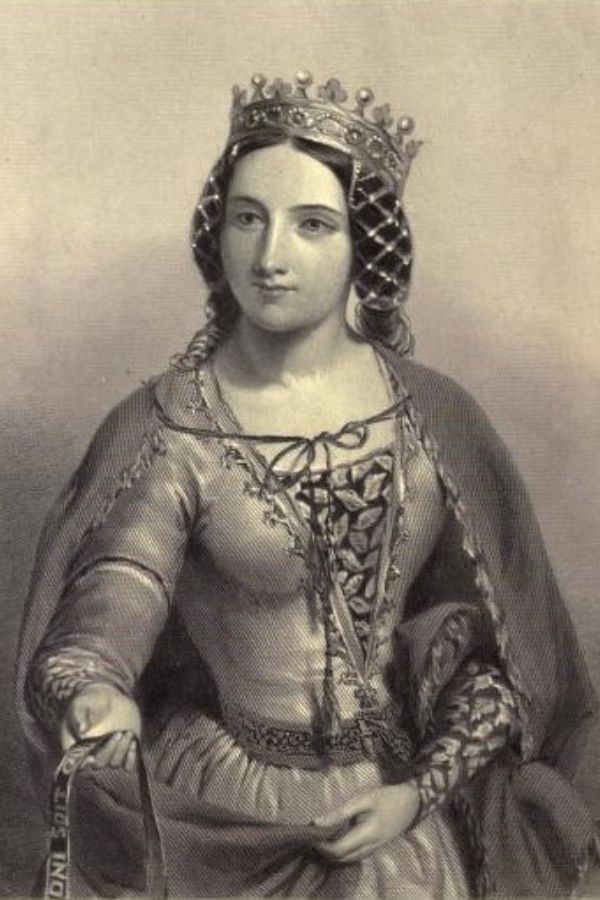
Anne Neville: Married to Both Sides and Erased by Both
Anne Neville was the younger daughter of the Earl of Warwick, the Kingmaker, and her life is a small horror story of being moved between men. At fourteen, she was married to Edward of Westminster, the Lancastrian Prince of Wales, as part of her father’s deal with Margaret of Anjou.
Her husband was killed at Tewkesbury in May 1471, her father had already been killed at Barnet three weeks earlier, and her mother fled into sanctuary. Anne was fifteen, a widow, and the heiress to half of one of the largest landed fortunes in England.
She ended up in the household of her brother-in-law, the Duke of Clarence, who had married her older sister Isabel and wanted to keep all of the Warwick inheritance for himself. There’s a story, told by the chronicler John Rous, that Clarence hid Anne by disguising her as a kitchen maid in a London house to prevent his brother Richard of Gloucester from marrying her. Whether it happened exactly that way is unclear. What’s clear is that Richard found her, married her in 1472, and the brothers spent years fighting over which Neville estate each got.
Anne became queen of England in 1483 when Richard took the throne. She buried her only son, Edward of Middleham, in 1484. She died in March 1485, possibly of tuberculosis, possibly of something else, five months before Bosworth. She was twenty-eight years old.
Two husbands, both kings or king’s sons, both dead. Her father’s vast inheritance was picked over by men.
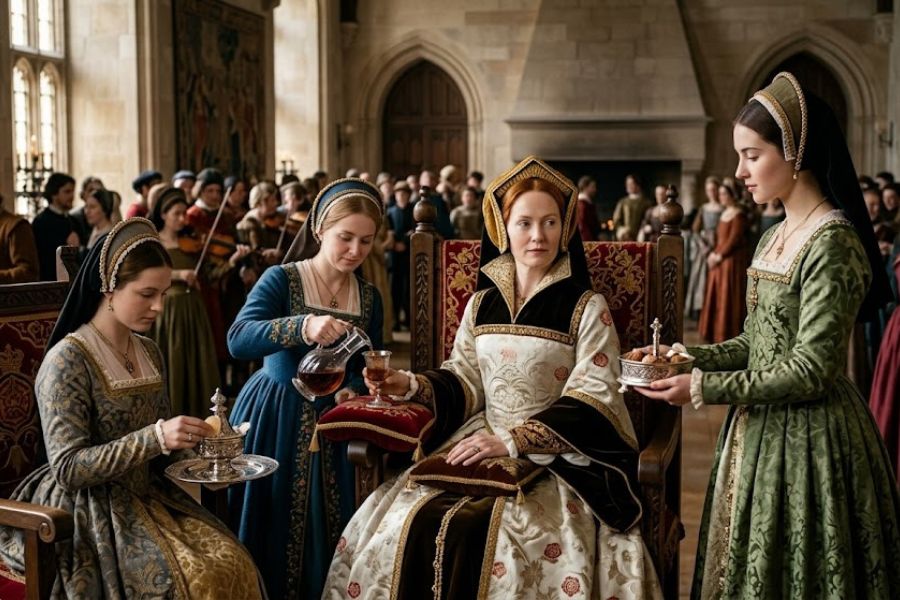
The Forgotten Widows: Women Whose Names You Won’t Find on the Family Tree
Below the queens and the duchesses sat a much larger group: the wives of knights and lesser lords who died on losing battlefields and whose families never recovered. Their stories are harder to reconstruct because the chronicles didn’t bother with them, but the petitions they filed survive in the Patent Rolls and the records of Chancery.
Katherine Neville, Lady Hastings, was widowed when Richard III had William Hastings beheaded without trial on the floor of the Tower in June 1483. She spent the next two years petitioning to have the attainder against him reversed and to recover her dower lands. She got some of it back under Henry VII, though never all of it.
Eleanor, Lady Hungerford, watched her husband Robert lose his head at Newcastle in 1464 after being captured at Hexham. The Hungerford lands were forfeited, and her mother-in-law, Margaret, spent the rest of her life writing letters and selling off plate to ransom and bury the men of her family.
Three generations of Hungerford men died on the Lancastrian side of these wars. The women buried them and tried to keep the estate intact for the grandsons who might one day be allowed to inherit again.
Some widows did better than others. A woman with strong birth family connections, a sympathetic second husband, or a knack for legal maneuvering could often claw back a decent portion of what she’d lost.
A few were left destitute and ended up depending on relatives, religious houses, or remarriage to men far below their original station. Convents filled up with the widows of the Wars of the Roses, who had nowhere else to go and no political use to anyone.
What Survival Actually Looked Like
The women who came through this period with anything intact had three things working in their favor. They had family they could call on, usually brothers, fathers, or sons from an earlier marriage who hadn’t been on the losing side.
They were willing to remarry quickly, often within the year of mourning, and often to men they wouldn’t have considered as a first match. And they had stamina for paperwork. The Patent Rolls of the late 15th century are stuffed with widows’ petitions, year after year, the same names appearing again and again, asking, reminding, requesting, suing.
Elizabeth Tilney was widowed at Barnet in 1471 when her first husband, Humphrey Bourchier, died fighting for Edward IV. She remarried Thomas Howard, the future Duke of Norfolk, within a year. Howard then backed Richard III, fought at Bosworth on the losing side, and spent three years in the Tower.
Elizabeth held the family together during his imprisonment, kept their children educated, and was at court as a lady-in-waiting to Elizabeth of York by the early 1490s. Her daughter, Elizabeth Howard, became the mother of Anne Boleyn. Two generations later, the Howards would be running Tudor England.
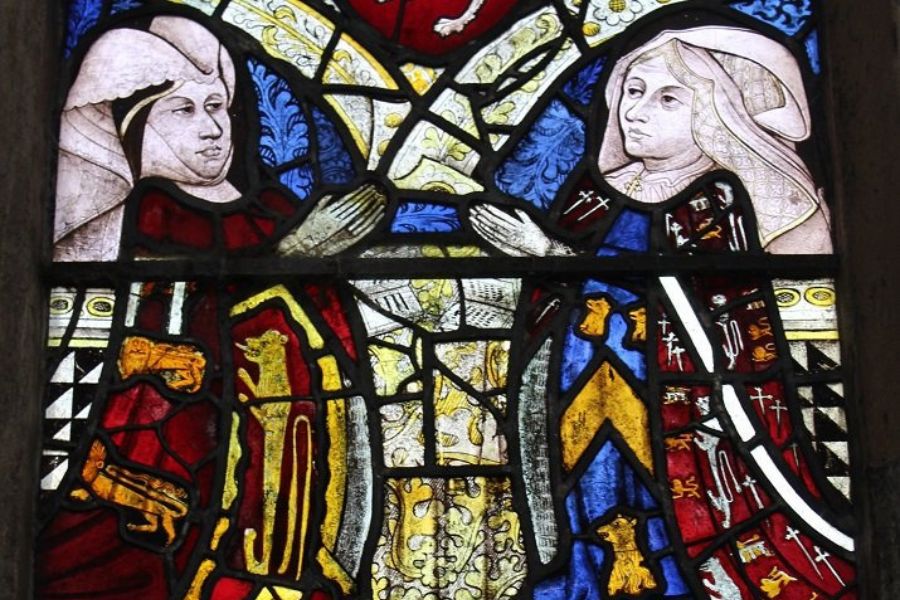
A woman widowed by one side of the war remarries into the other. Her sons from her second marriage grow up Tudor, her daughters marry into the new establishment, and by the time her grandchildren are at court, the question of which king their grandfather died for has stopped mattering.
They did it in dower hearings and marriage negotiations and letters written in cold rooms while the men who’d inherited their late husbands’ lands ignored them. They rebuilt what the battles had broken, one petition at a time, and most of their names never made it into the chronicles at all.
Love a good medieval story?
Join our readers and get tales of kings, queens, castles and ordinary medieval lives straight to your inbox.

Kylie Lang is a nationally syndicated travel journalist with bylines on the Associated Press Wire & more, a medieval history writer, and the founder and lead author of Tales of the Middle Ages (talesofthemiddleages.com). She holds a BA (Honours) in History from the University of Kent and is a member of the British Guild of Travel Writers.