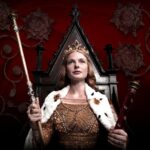
On a May morning in 1464, Edward IV slipped away from his hunting party and rode to a manor house in Northamptonshire to marry a widow with two small sons and no political value whatsoever. There were no witnesses worth naming, no contract drawn up in advance, no ambassadors summoned, no bishops blessing the union. Just a young king, a Lancastrian widow five years his senior, and a priest.

When the news finally broke that autumn, it detonated. The king’s most powerful supporter, the Earl of Warwick, had spent months negotiating a French princess for Edward’s hand. Now he was being told, in front of the council, that his king had already married a woman whose father was a mere baron and whose first husband had died fighting for the wrong side at St Albans.
Table of Contents
Elizabeth Woodville is one of those figures the textbooks rush past on the way to her daughter, Elizabeth of York. That’s a shame, because her story is one of the strangest in English royal history. A widow from the wrong family, with the wrong loyalties and the wrong rank, who somehow ended up queen, then watched almost everything she built come apart, and still managed to outlive the dynasty that destroyed her sons.
The Woodvilles Were Never Supposed to Sit on a Throne
Elizabeth was born around 1437 at Grafton Regis, the eldest of what would eventually be fourteen children. Her father, Richard Woodville, was a knight of decent but unremarkable standing.
Her mother, Jacquetta of Luxembourg, was the catch. Jacquetta had previously been married to John, Duke of Bedford, brother of Henry V and uncle to Henry VI. When Bedford died, she scandalized the court by secretly marrying Richard Woodville without royal permission.
The parallels with her daughter’s later marriage are hard to miss. Jacquetta paid a fine and got on with it, and the couple produced a large brood at Grafton. Her connections kept the family at the edges of court, but the Woodvilles were not magnates.
They had no great estates, no private armies, no ancient earldoms behind their name. In the brutal hierarchy of fifteenth-century England, they were minor nobility with a well-connected mother.
Elizabeth’s first marriage suited that station. Around 1452, she was wed to Sir John Grey of Groby, heir to a Leicestershire barony. They had two sons, Thomas and Richard. Then, in February 1461, John Grey was killed at the Second Battle of St Albans, fighting for Henry VI. Elizabeth was suddenly a widow in her mid twenties with two small boys, a disputed dower, and a husband who’d died on the losing side of a civil war.
The Secret Marriage That Shook the Court
The story that comes down to us is that Elizabeth waited under an oak tree at Grafton to petition the new king for the return of her sons’ inheritance.Edward IV, nineteen years old when he took the throne and famously susceptible to a pretty face, was riding through the area.
Whether the oak tree is real or romance, what followed is documented. Edward wanted Elizabeth in his bed. Elizabeth, by all surviving accounts, refused unless he married her.
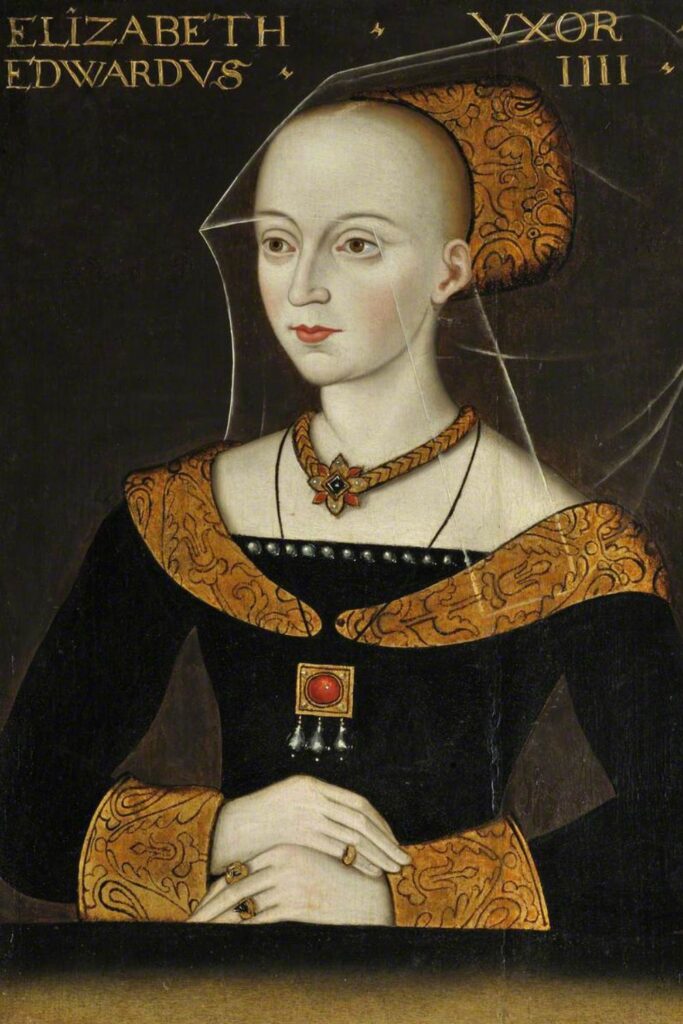
He did. On 1 May 1464, in a tiny ceremony at Grafton, the king of England married the widow of a Lancastrian knight. Only Jacquetta and a handful of others were present. Edward then returned to his hunting and kept the marriage secret for months, while Warwick continued negotiating with the French for a different bride entirely.
When Edward finally confessed at a council meeting in September, the chronicles record the shock. He had not just married beneath him but also married a widow and into a Lancastrian family. He’d humiliated Warwick in front of every court in Europe. And he’d done it without consulting anyone, which told his nobles exactly how much he valued their counsel.
A Queen with Twelve Siblings to Marry Off
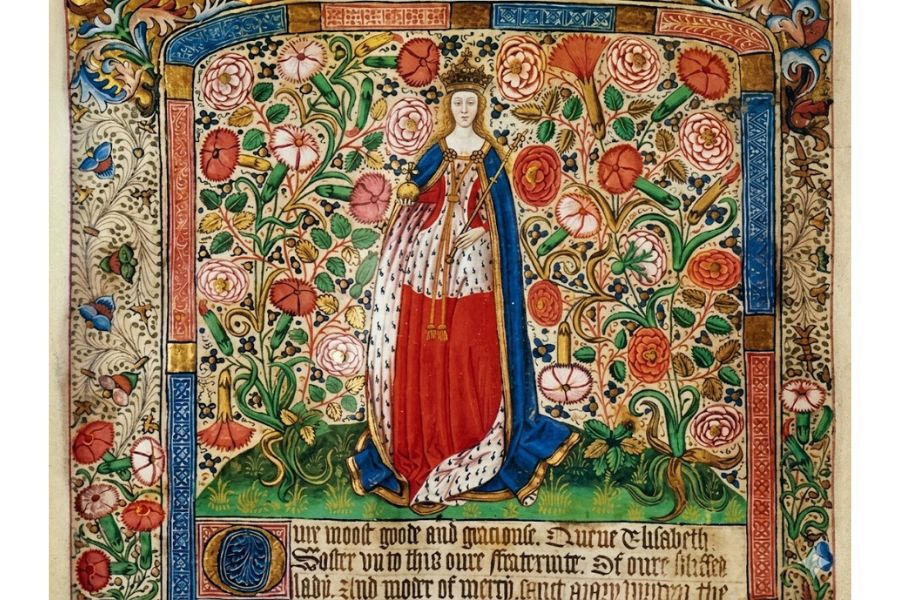
Elizabeth was crowned at Westminster on 26 May 1465 in a ceremony of careful, deliberate splendor. Edward needed to make her royal, and quickly. What followed in the next two years did more damage to his reign than the marriage itself.
The Woodville family was vast. Elizabeth had five brothers and seven sisters still living, and most of them were unmarried. With a queen for a sister, they were now the most eligible commodities in England.
The matches came fast. Her sister Margaret married the heir to the Earl of Arundel, Anne married the heir to the Earl of Essex, and Mary married the heir to Lord Herbert. Katherine, aged seven, was married to the nine-year-old Duke of Buckingham, one of the greatest peers in the realm.
Her twenty-year-old brother John was married to the Dowager Duchess of Norfolk, who was in her sixties. The chroniclers called it a diabolical marriage.
Warwick watched this and seethed. Every English heir he might have used for his own daughters was being snapped up by Woodvilles. He had two daughters of his own, Isabel and Anne, and the king had blocked his attempts to marry Isabel to Edward’s brother George, Duke of Clarence.
By 1469, Warwick had moved from sulking to plotting. He rebelled, captured Edward briefly, and executed Elizabeth’s father Richard and her brother John at Kenilworth without trial.
Jacquetta was accused of witchcraft, the old standby for bringing down an inconvenient woman. The charges collapsed, but the message was clear. The Woodvilles were vulnerable when their king was not standing in front of them.
Sanctuary, Exile, and the Birth of a Prince
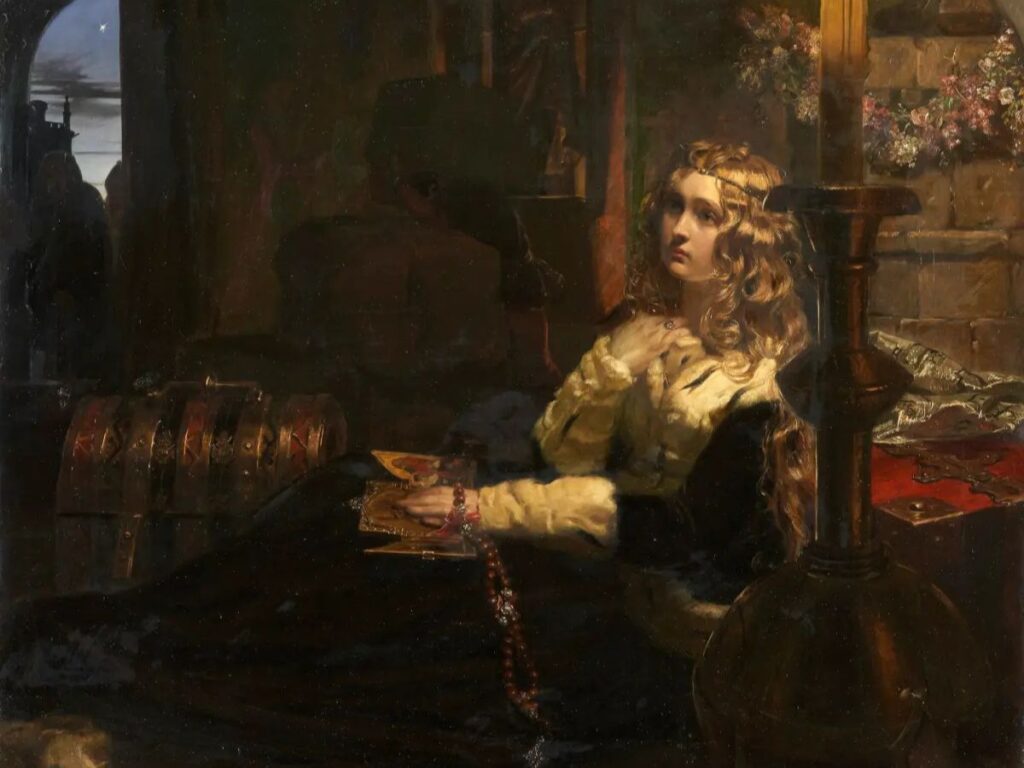
In 1470, Warwick went further. He allied with the exiled Margaret of Anjou, the Lancastrian queen whose cause his father-in-law had once helped destroy, and invaded. Edward fled to Burgundy with almost nothing. Elizabeth, heavily pregnant and with three small daughters, ran for Westminster Abbey and claimed sanctuary.
She gave birth there to her first son, the future Edward V, in November 1470. There was no royal nursery, no doctors of standing, no ceremony. A butcher named William Gould reportedly sent her meat, the abbot gave her rooms, and the future king of England was born to a queen living on charity in a stone abbey while her husband begged for ships across the Channel.
Edward came back in the spring of 1471. He won at Barnet, where Warwick was killed in the mud. He won again at Tewkesbury, where Margaret of Anjou’s only son, Prince Edward, was cut down in the rout, ending the Lancastrian male line.
Henry VI was murdered in the Tower a few weeks later, almost certainly on Edward’s orders. Elizabeth came out of sanctuary, presented her husband with his son, and for the next twelve years lived as queen of a country that finally seemed to have settled.
The Spring That Took Everything
Edward IV died suddenly on 9 April 1483, probably of a stroke or a chill caught fishing. He was forty. His heir was twelve years old and being raised at Ludlow by Elizabeth’s brother, Anthony Woodville, the cultured, well-read Earl Rivers. Elizabeth, her sons, and her wider family controlled the new king. They expected to control the regency.
They were wrong. Edward’s brother Richard, Duke of Gloucester, intercepted the young king on his journey to London at Stony Stratford. He arrested Anthony Woodville and Elizabeth’s son Richard Grey. Both men were sent north and executed at Pontefract in June, without trial. Elizabeth understood what was coming.
She fled into sanctuary at Westminster again, this time with her daughters and her younger son, the nine-year-old Richard, Duke of York.
What happened next is one of the bleakest sequences in English history. Richard pressured Elizabeth to hand over her younger son, supposedly so he could attend his brother’s coronation. She gave him up. Both boys were lodged in the Tower of London.
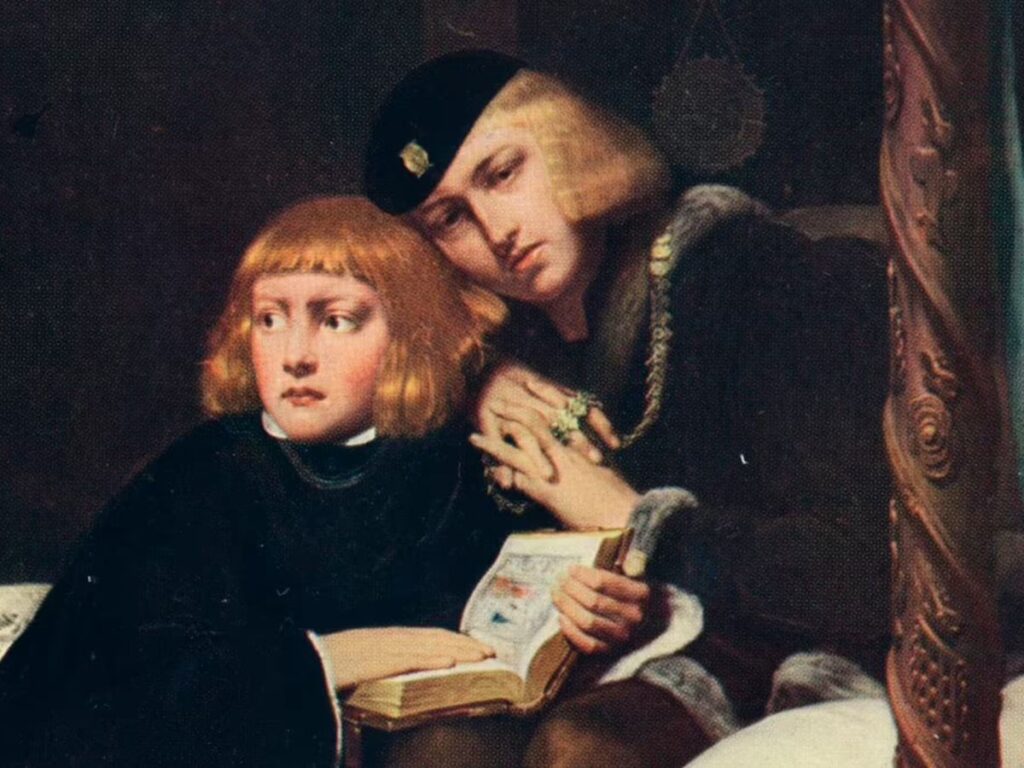
Within weeks, a sermon declared Edward IV’s marriage to Elizabeth invalid on the grounds of a prior precontract with another woman, Eleanor Butler. Her children were declared illegitimate. Richard took the crown as Richard III. The boys in the Tower were seen less and less. By the autumn of 1483, they were not seen at all.
Elizabeth had lost her husband, two of her sons by Edward, her brother, and another son by her first marriage, all in the space of months. She was in sanctuary, stripped of her title, her daughters declared bastards. She did what survivors do. She started negotiating.
Outliving the Men Who Tried to Destroy Her
By Christmas 1483, Elizabeth was in contact with Margaret Beaufort. The two women had a son and a daughter between them who could be useful to each other. Henry Tudor, exiled in Brittany, would marry Elizabeth of York. The Lancastrian claim, such as it was, would unite with the Yorkist heir. It was a desperate scheme by two women trapped in different ways, and somehow it worked.
In March 1484, Elizabeth came out of sanctuary, having struck a deal with Richard III for her daughters’ safety. Some historians have read this as a betrayal of the Tudor scheme. Others see it as a mother trying to keep her surviving children alive while a different plan ran in parallel.
The truth is probably both. Elizabeth had spent her whole adult life in survival mode by this point. She had no reason to put all her hope in one exiled stepson.
When Henry Tudor won at Bosworth in August 1485 and married Elizabeth of York the following January, Elizabeth Woodville became the mother of the new queen of England. She served as godmother at the christening of her grandson, Arthur, in 1486. Then, in 1487, she retired to Bermondsey Abbey.

The reasons are still debated. Some chroniclers claim Henry punished her for involvement in the Lambert Simnel plot. Others suggest she chose retirement, or that Henry simply wanted her out of the way. Her income was reduced, her movements restricted.
She died at Bermondsey on 8 June 1492, aged about fifty-five. Her will was the will of a woman who had nothing left. She asked for a quiet burial next to Edward at Windsor, with no great ceremony, because she could not afford one. The widow from Grafton who had married a king in secret was buried almost in private, twenty-eight years after that morning at the manor house.
Conclusion
Elizabeth Woodville’s reputation has swung wildly across five centuries. To Tudor chroniclers, she was a scheming social climber who corrupted Edward IV and provoked the disaster of 1483. To Victorian historians, she was a tragic mother of the princes in the Tower.
To modern novelists, she’s been variously a witch, a feminist, a saint, and a villain. The actual woman is harder to pin down because she left almost no words of her own. We have her actions and the reactions of men who mostly disliked her.
What the record does show is a woman who navigated the Wars of the Roses with extraordinary stamina. She married into the losing side, lost a husband, married a king, weathered Warwick, gave birth in sanctuary, raised a future queen, survived the destruction of her sons, and brokered the marriage that ended a thirty-year war.
She did all of this in a system designed to use women as currency and discard them when their value dropped.
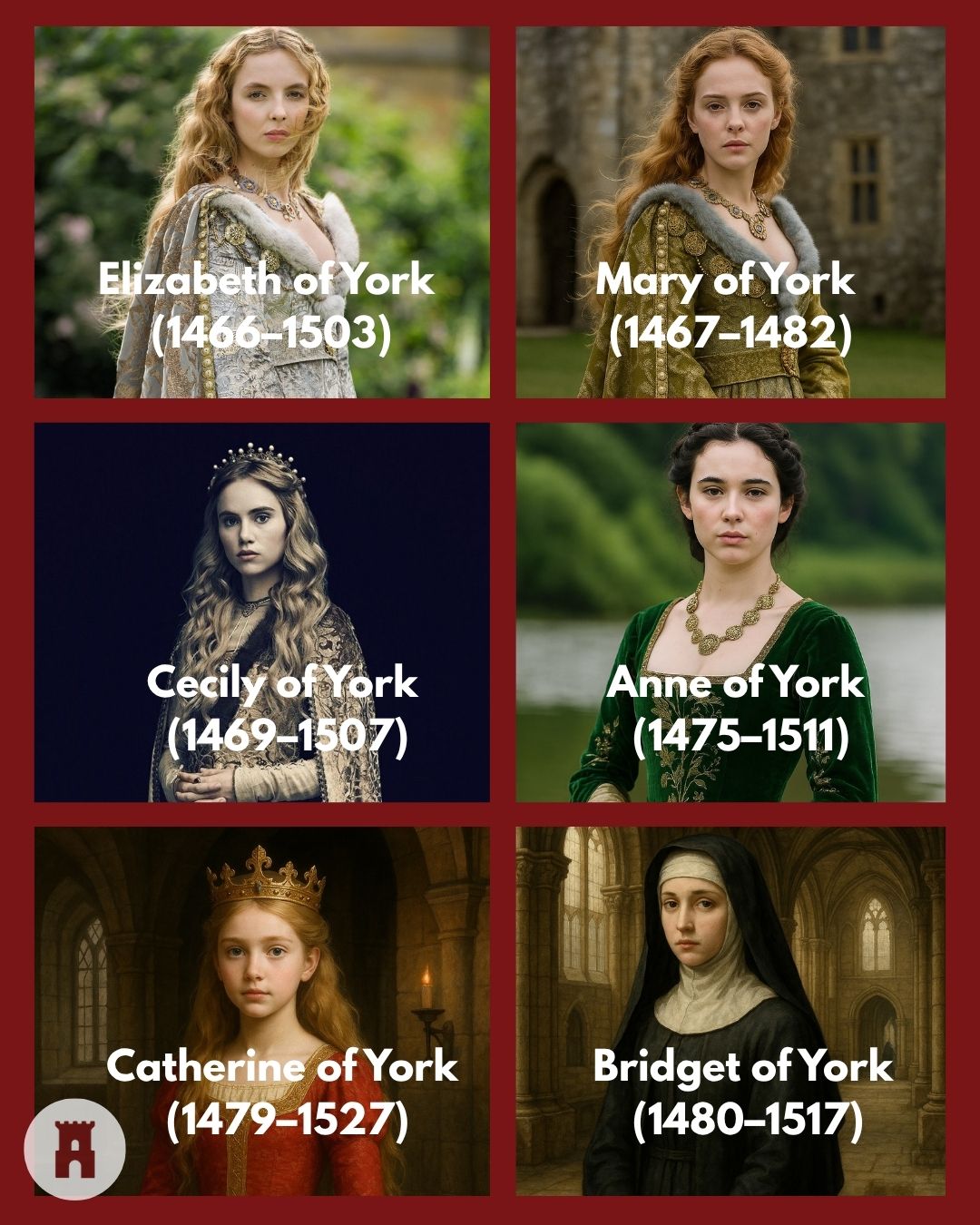
Her daughters went on to thrones and dukedoms, and the Tudor line that followed. Elizabeth herself ended in a quiet room at Bermondsey, asking only to be laid next to the husband who had ridden out one May morning to marry her without telling a single one of his lords.

Kylie Lang is a nationally syndicated travel journalist with bylines on the Associated Press Wire & more, a medieval history writer, and the founder and lead author of Tales of the Middle Ages (talesofthemiddleages.com). She holds a BA (Honours) in History from the University of Kent and is a member of the British Guild of Travel Writers.