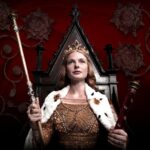
Elizabeth Woodville, a widowed mother of two, went from the roadside waiting for a royal favor to sitting on the English throne as Edward IV’s wife. The secrecy of their marriage and the fallout that followed gave her enemies plenty of ammunition.
By the time Edward was gone, Elizabeth was accused of everything from scheming ambition to outright witchcraft. Did she really use spells to win the king’s heart, or were these stories nothing more than weapons in the brutal politics of the Wars of the Roses?
Table of Contents
The deeper you look, the stranger her story becomes, but the big question is, was Elizabeth Woodville a witch?

A Widow Who Became a Queen
In 1464, Edward IV shocked his court by marrying Elizabeth Woodville. She was no dynastic jewel. Elizabeth was a widow with two young sons, Thomas and Richard Grey, from her first marriage to Sir John Grey of Groby, a Lancastrian knight killed at the Second Battle of St Albans in 1461. Her husband had died fighting against Edward’s Yorkist forces, which made her elevation even more surprising.
Elizabeth’s lineage gave her some standing, but nowhere near what was expected of a queen. She was the daughter of Sir Richard Woodville, a knight who had risen through service to Henry V, and Jacquetta of Luxembourg, who brought continental nobility into the family.
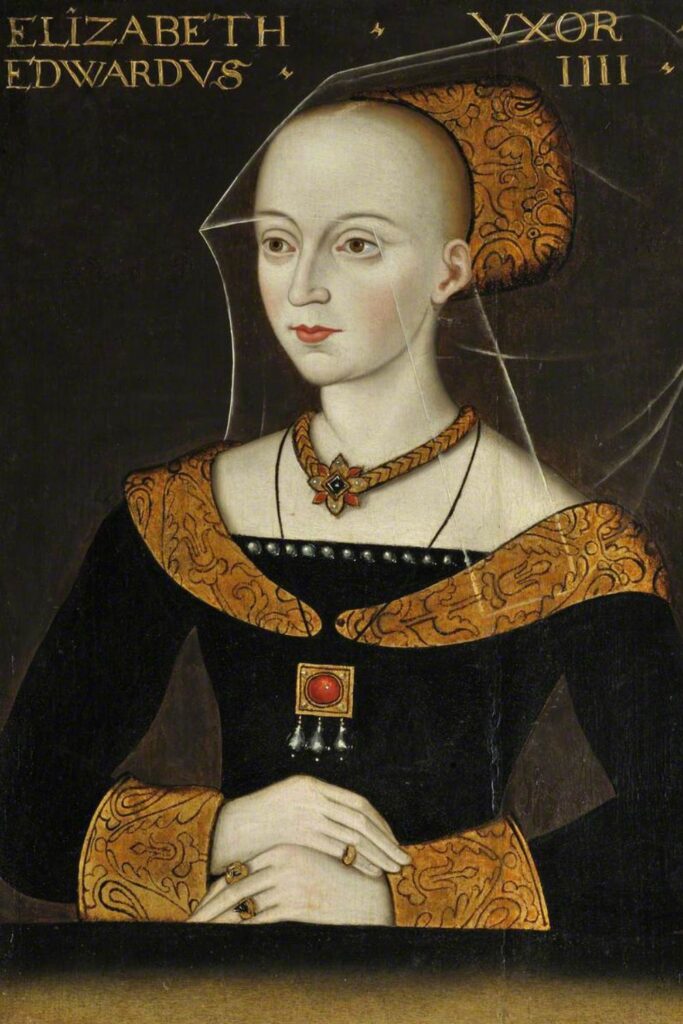
Jacquetta had once been married to John of Lancaster, Duke of Bedford, the uncle of Henry VI. That link to Luxembourg bloodlines later fed into the whispers of sorcery, since stories clung to Jacquetta of dabbling in the occult.
The secrecy of the wedding made matters worse. On May 1, 1464, Edward married Elizabeth at her family’s manor in Grafton Regis. The ceremony was private, witnessed only by her mother and two ladies. Meanwhile, Richard Neville, Earl of Warwick, the “Kingmaker,” had been negotiating a marriage between Edward and Bona of Savoy, the French king’s sister-in-law. To Warwick, Elizabeth’s sudden appearance as queen was a political disaster that undermined years of careful diplomacy.
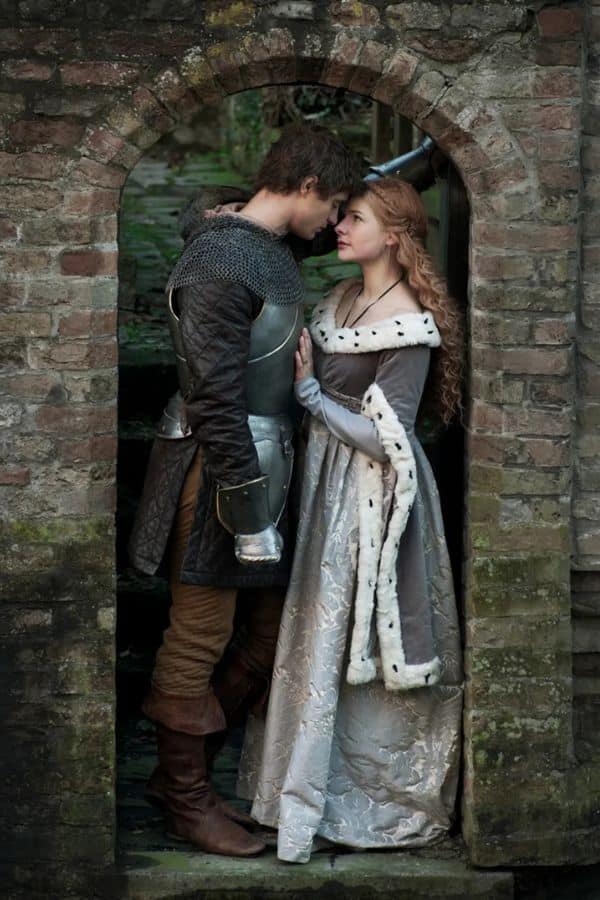
From that moment, suspicion grew. Why had the king chosen a Lancastrian widow over a European alliance? Why keep it secret if the union was legitimate? And why did Elizabeth’s rise seem to echo the stories told about her mother, Jacquetta, who had once been accused of using witchcraft to secure her own advantageous marriage to her first husband? Those questions laid the foundation for the darker tales that would follow Elizabeth throughout her reign.
Hooked on the Middle Ages? Get more stories like this one in your inbox.
Where the Witchcraft Rumors Began
Accusations of witchcraft had already touched Elizabeth’s family long before she became queen. In 1469, her mother, Jacquetta of Luxembourg, faced charges brought by Warwick the Kingmaker’s faction. They claimed she had made lead images to cast spells against Warwick’s allies, evidence supposedly discovered in her house. The case never held up, and she was acquitted, but once the word “witch” attached itself to a noblewoman, it was nearly impossible to shake.

That taint spilled over onto Elizabeth. Once Edward died and the fight for power reopened, Jacquetta’s old scandal resurfaced and gave Richard of Gloucester’s supporters a ready-made story. Elizabeth was painted as the daughter of a woman once accused of sorcery, and by extension, a queen whose influence over the king could only be explained in the same way.
What Witchcraft Meant in the 15th Century
In late medieval England, witchcraft was not yet the organized witch-hunting craze that would come a century later. Magic could mean anything from charms and potions to attempts at controlling the weather or influencing people’s minds. What mattered most was intent. If it seemed to interfere with political order or the king’s will, it became dangerous.

Women of rank made easy targets. The combination of influence, ambition, and foreign connections often made them suspect. Joan of Arc had been condemned as a heretic and sorceress only a generation earlier. Now, when political needs demanded it, Elizabeth Woodville and her mother found themselves caught in the same kind of rhetoric.
For Edward’s opponents, calling his queen a witch gave them a powerful weapon. It framed his marriage not as his choice, but as something unnatural, an enchantment that distorted the proper order. In a world where unseen forces were blamed for plague, failed harvests, and sudden turns of fortune, the idea that a king might be bewitched was convenient.
Witchcraft in the Law: Titulus Regius
When Edward IV died suddenly in April 1483, his son Edward V was still a boy. Power passed into the hands of Edward’s brother, Richard of Gloucester, who moved quickly to secure the crown for himself. To do that, he needed a way to strip Elizabeth Woodville’s children of their right to inherit.
The solution came in the form of an Act of Parliament known as Titulus Regius. The statute declared that Edward’s marriage to Elizabeth had been unlawful. It accused Elizabeth of using witchcraft and sorcery to entice the king into wedlock, echoing the shadow that had hung over her mother, Jacquetta, years earlier. It also revived the claim that Edward had already been precontracted to Lady Eleanor Talbot, which, if true, would have made his marriage to Elizabeth invalid under canon law.
The language of Titulus Regius was blunt. It presented Elizabeth not as a rightful queen but as a woman who had bewitched a king, brought illegitimate children into the royal line, and upset the natural order. Copies of the act were ordered to be read aloud across the realm to justify Richard III’s seizure of power.
When Henry VII defeated Richard at Bosworth in 1485, one of his first acts was to repeal Titulus Regius and destroy its records. Still, the damage had been done. The image of Elizabeth as a sorceress clung to her long after the law itself had been erased.
Elizabeth’s Reputation in Folklore
The legal charges against Elizabeth faded after Richard III’s fall, but the stories about her did not. Over the years, later writers embellished her reputation with tales that further entrenched her in the world of legend. Some claimed she kept a spell book and used sorcery to bind Edward IV to her, a story that played neatly into the accusations once hurled by her enemies.
Other tales reached further back into her family’s ancestry. Elizabeth’s mother, Jacquetta of Luxembourg, traced her lineage to the Lusignan family of France, a dynasty wrapped in myth. Their most famous ancestor was said to be Melusine, a half-woman, half-serpent water spirit cursed to transform on certain nights.
These stories blurred the line between fact and folklore. They kept alive the idea that Elizabeth’s rise from widow to queen could not be explained by ordinary means. To her detractors, the myth of Melusine and the image of a queen with a spell book were a way to frame Elizabeth as a woman touched by something unnatural, even dangerous.

Witchcraft and the Precontract
When Richard of Gloucester set out to claim the throne in 1483, he could not rely on one argument alone. Witchcraft accusations cast Elizabeth Woodville in a sinister light, but they did not fully disinherit her children. For that, Richard leaned on a different charge: that Edward IV had been precontracted to marry Lady Eleanor Talbot before ever meeting Elizabeth.
Under canon law, a binding promise of marriage carried the same weight as a wedding ceremony. If Edward had sworn himself to Eleanor, his later union with Elizabeth was invalid, and their children were illegitimate. Combined with the claim that Elizabeth had bewitched Edward, Richard’s case painted a picture of a king deceived and a royal line corrupted.
The two accusations worked hand in hand. Witchcraft explained why Edward would have chosen Elizabeth in the first place, while the precontract provided the legal grounds to block her sons from inheriting the crown. Together, they gave Richard the justification he needed to seize power, even if the evidence behind them was shaky at best.
Love a good medieval story?
Join our readers and get tales of kings, queens, castles and ordinary medieval lives straight to your inbox.

Kylie Lang is a nationally syndicated travel journalist with bylines on the Associated Press Wire & more, a medieval history writer, and the founder and lead author of Tales of the Middle Ages (talesofthemiddleages.com). She holds a BA (Honours) in History from the University of Kent and is a member of the British Guild of Travel Writers.