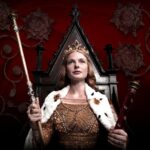
If you’ve ever watched a TV series about the Wars of the Roses, chances are Margaret Beaufort showed up in a cloak of doom, whispering in corners, clutching rosary beads like she was plotting someone’s demise between Hail Marys. Cold. Calculating. Power-obsessed. That’s the version most people know.
But that’s not the woman I want to introduce you to.
Table of Contents
The real Margaret Beaufort gave birth at twelve and nearly died doing it. She buried husbands, dodged execution, and outmaneuvered kings. And while she’s often remembered as the mother of the Tudors, that title barely scratches the surface.
She was a strategist, yes, but she was also a woman who had to learn quickly how to stay alive in a world that didn’t exactly give second chances. So forget about what you think you know about Margaret Beaufort and discover Margaret the girl bride, grieving widow, and mother with everything to lose. And the woman who, against every possible odd, built a dynasty.

Timeline of Key Events:
- 1443 (31 May): Born at Bletsoe Castle, Bedfordshire, only child of John Beaufort, Duke of Somerset (grandson of John of Gaunt)
- 1444: Father dies in France; as sole heir, her wardship is transferred to powerful nobles.
- 1450–1453: King Henry VI arranges Margaret’s wardship and marriages. At age 6, she is briefly married (annulled) to John de la Pole; by 1455 (age 12), she is married to Edmund Tudor, Earl of Richmond (half-brother of Henry VI)
- 1456: Edmund Tudor is captured by Yorkist forces and dies of plague in captivity in Carmarthen. Margaret, now a 13‑year‑old widow, is seven months pregnant.
- 1457 (January): Gives birth to son Henry Tudor at Pembroke Castle
- 1458: Aged 14, Margaret marries her second cousin, Sir Henry Stafford.
- 1461: Edward IV seizes the throne for the House of York. Young Henry Tudor becomes a ward of Yorkist lord William Herbert, and Margaret loses her family’s lands and influence.
- 1470: Lancastrians briefly restore King Henry VI.
- 1472: Margaret marries Thomas Stanley, 1st Earl of Derby, a shrewd Yorkist noble.
- 1483: King Edward IV dies. Richard III takes the throne and imprisons the young Princes in the Tower. Lady Margaret quietly conspires with Queen Elizabeth Woodville and others to depose Richard in favour of her son.
- 1485 (22 Aug): Battle of Bosworth Field. Henry Tudor lands in Wales and marches on England with support from Margaret’s husband, Thomas Stanley. Richard III is defeated and killed. Margaret’s son ascended as Henry VII, founding the Tudor dynasty.
- 1486 (18 Jan): Henry VII marries Elizabeth of York, uniting Lancastrian and Yorkist claims.
- 1491 (28 June): Birth of Margaret’s grandson, Prince Henry (future Henry VIII) – named in her honor.
- 1503: Queen Elizabeth of York dies; Margaret becomes the senior female at court.
- 1509: In April, King Henry VII dies; Henry VIII (age 17) becomes king. Margaret Beaufort organizes her son’s funeral and arranges the coronation of her grandson.

Early Years and Claim to the Crown
Margaret Beaufort didn’t get a childhood. She got a title, a bloodline, and a future planned out by people with more ambition than affection. Born in 1443, she came into the world carrying the weight of royal blood, which could open doors or get you killed, depending on who sat on the throne that week.
Her family, the Beauforts, traced their lineage back to Edward III. That should have put them right in line for power, but the catch was in the fine print. The Beauforts were descendants of John of Gaunt and his mistress-turned-wife, Katherine Swynford. The line had been legitimized, but there was always an asterisk next to their name. They were royal, just not quite royal enough. And in the cutthroat world of 15th-century England, that distinction meant everything.
Margaret’s mother, Margaret Beauchamp, was no fool. She knew her daughter’s value, and she raised her to understand it too. There was no room for naivety in the Beaufort household. By the time Margaret was nine, she was standing at court in front of King Henry VI, already fully aware that her inheritance was under threat and her future was up for negotiation.
It didn’t take long for the negotiations to begin. At six, she was handed over in wardship like a prized piece of land and married off to John de la Pole. The marriage was annulled, but the message was clear. Margaret wasn’t a child in the eyes of the court. She was a political tool. By twelve, she was married again, this time to Edmund Tudor, the king’s half-brother and a man with his own royal ambitions.
Twelve years old. Married to a grown man with a claim to the throne. That’s not the beginning of a love story. That’s the beginning of a survival story. Margaret was being moved into place like a chess piece, and the game had only just begun.

The Wars of the Roses: Conflict and Tragedy
Margaret came of age during one of the bloodiest family feuds in English history. The Wars of the Roses weren’t just battles between red and white roses. They were years of shifting alliances, betrayals, battlefield losses, and whispered deals in candlelit halls. Margaret was caught in the middle of it, with everything to lose.
In 1456, while still a girl in many ways, Margaret’s world cracked open. Her husband, Edmund Tudor, was captured by Yorkist forces and imprisoned in Carmarthen. He died in captivity of what was probably plague, though some said neglect or worse. She was thirteen. Pregnant. Alone. A child expecting a child, in the middle of a civil war.
The birth nearly killed her. The labor was long, excruciating, and so traumatic that she never had another child. And yet, against all odds, she survived. So did her son, Henry. Born in January 1457 at Pembroke Castle, he came into the world under the protection of Margaret’s brother-in-law, Jasper Tudor, one of the last Lancastrians still standing.
For a while, they lived together at Pembroke under Jasper’s guardianship. Margaret doted on her son. She may have been only a teenager, but her attachment to Henry was deep and immediate. She knew his life was fragile. So was hers. And she knew that in times like these, the wrong allegiance could get you both killed.
Then, the balance of power shifted. In 1461, after the brutal Battle of Towton, the Yorkists won control of the crown. Edward of York became King Edward IV. Jasper Tudor fled into exile. Margaret, still barely out of girlhood herself, lost everything.
The new king confiscated the lands and titles of the Lancastrians, including Henry. He was taken from Margaret and placed into the household of William Herbert, a loyal Yorkist noble. Margaret had no choice. She was allowed no say.
It was a loss that never left her. Henry wasn’t just gone physically. He was being molded by people who stood for everything she had been taught to resist. She saw him rarely. Carefully arranged visits. A few letters. That was all she was allowed.
But this is where Margaret’s story stops being tragic and starts being quietly impressive. She didn’t rage, seeking revenge or retreat into the shadows. She adapted.

Marriage, Diplomacy and the Tudor Claim
With Henry under the watchful eye of William Herbert, Margaret couldn’t raise him. She couldn’t even protect him. What she could do, though, was survive long enough to matter again.
To do that, she needed protection. Her second husband, Sir Henry Stafford, offered a measure of it. He was a Lancastrian, like her, but not a hothead. He had enough noble blood to command respect, and just enough political caution to keep them both out of trouble. They moved to Woking Palace, kept their heads down, and watched the storm blow through the country.
But Margaret was calculating. When her cousin, Henry Beaufort, Duke of Somerset, started making waves by cozying up to Edward IV in the mid-1460s, Margaret didn’t follow. Somerset was trying to worm his way back into Yorkist favor, and for a moment, it looked like it might work. But in 1464, he flipped again, rejoining the Lancastrian cause, and sealing his own fate. He was executed after the Battle of Hexham.
Margaret took note. If there was a lesson to be learned, she learned it quickly: Loyalty might be admirable, but timing was everything.

By the late 1460s, Margaret and Stafford had carefully begun rebuilding their reputation. In 1468, they went a step further. They hosted King Edward IV himself at their hunting lodge near Woking. It clearly conveyed that Margaret Beaufort, Lancastrian by blood, could be trusted to play nice with a Yorkist crown.
It worked. Edward didn’t restore her son but stopped treating her like a threat. Margaret kept playing the part, publicly loyal, privately watching. Then came tragedy once again. In 1471, Stafford was wounded fighting at the Battle of Barnet. He died not long after. Once again, Margaret was a widow. Once again, she had to make a move.
Safety wasn’t the only thing on her list of qualities in a potential husband this time. She wanted power. In 1472, she married Thomas Stanley, one of the sharpest political operators in England. Stanley was a master of survival. He served the Yorkist king but never tied himself too tightly to any one side.
Margaret had just aligned herself with a man with influence, resources, and a talent for not getting executed. More importantly, Stanley gave her space—space to maneuver, space to start thinking long term. She didn’t waste it.
Hooked on the Middle Ages? Get more stories like this one in your inbox.
Conspiracy and the Road to Bosworth
With Stanley at her side, Margaret settled into a holding pattern. She couldn’t control what happened to Henry, who was now living in exile in Brittany, but she could make herself indispensable at court. She played the loyal Yorkist wife. She attended church. She hosted guests. She kept her head down. And all the while, she was building relationships that would matter when things began to shift.
And they did.
In 1483, King Edward IV died suddenly. His son, Edward V, was only twelve. Before the boy could be crowned, his uncle, Richard of Gloucester, swept in and took control. Within weeks, Richard had locked up the young king and his brother in the Tower and claimed the crown for himself.
For Margaret, it was a familiar feeling. Another power grab. Another king who wasn’t supposed to be king. But this time, she had options. Real ones.
Richard’s takeover rattled plenty of cages. The dowager Queen Elizabeth Woodville, whose sons had vanished into the Tower, wanted revenge. So did the Duke of Buckingham. And Margaret? She had something no one else had, a living Lancastrian heir with a claim to the throne. Her son, Henry Tudor.
She began to move.
She made contact with Buckingham and his rebels. She sent messages to Elizabeth Woodville, quietly forming a pact between the mothers of two rival houses. They would marry Henry to Elizabeth’s daughter, uniting Lancaster and York. It was bold. Dangerous. And for a brief moment, it looked like it might work.
But then the rebellion collapsed. Buckingham was executed. Richard tightened his grip on power. Margaret was punished. She was legally stripped of her titles and income and placed under house arrest, confined to Stanley’s household, forbidden from contacting her son. It was meant to silence her.
It didn’t.
Stanley was no fool. He played the obedient courtier when Richard was around, but behind closed doors, he protected Margaret’s communication lines. Messages still moved. Plans were still made. Henry was still coming.
And in August 1485, he did.

Henry landed in Wales with a modest force and marched across England, gathering support. Richard scrambled to meet him. The two armies clashed at Bosworth Field.
Margaret wasn’t there, but her fingerprints were all over that battlefield. Stanley, her husband, arrived late. His forces stood watching until the final moment, then turned against Richard. That swing ended the battle. Richard was killed. Henry was crowned right there on the field.
And Margaret? She had done it. After decades of maneuvering, compromise, loss, and careful defiance, she had placed her son on the throne.
Now known at court as My Lady the King’s Mother, she was restored to her titles and lands, given the highest honors a woman could receive short of wearing a crown. But more than anything, she finally had what she’d fought for since she was twelve. Her son was King Henry VII. The Tudor era had begun.
A New Role at the Tudor Court
Margaret had spent most of her life watching kings from the edges of the room. Now her son was one. Henry VII sat on the throne, and Margaret Beaufort was his most trusted advisor. From the moment he claimed the crown at Bosworth, Henry made it clear she was no ordinary noblewoman.
She was given her own royal household. She signed letters as “Margaret R,” using the regal “R” for Regina, just like a queen. When foreign ambassadors arrived, they bowed to her first. And when it came to running the court, Henry often deferred to her judgment. He had grown up without her, but trusted her more than anyone else.

The Queenmaker
Margaret helped shape the new court from the ground up, establishing order in a kingdom still raw from years of civil war. She ensured her son was seen as the unifying force between Lancaster and York, not a conqueror, but a healer.
Part of that was arranging his marriage to Elizabeth of York. It had been planned even before Bosworth, as part of the agreement Margaret had struck with Elizabeth Woodville. A Tudor king marrying a Yorkist princess. It was the best possible ending to decades of bloodshed.
Margaret supported the match, and when the wedding finally happened in January 1486, she orchestrated the whole affair behind the scenes. Every detail mattered. This was more than a marriage. It was a political performance, and Margaret knew how to direct it.
Power with a Light Touch
The union worked. It brought peace to a fractured realm and gave the Tudors legitimacy, something no other new dynasty had managed so quickly. And for all the seriousness with which she approached her role, her own household was far from cold.
Despite what dramas like The White Princess might suggest, Margaret wasn’t some grim-faced fanatic whispering through candlelight and plotting in silence. Those who knew her described her as warm, witty, and quick with dry humor. Her servants were loyal, and her household was a cheerful place. She liked good conversation. She valued intelligence. She wasn’t afraid to laugh.
Busting a Myth. Not the Feuding Royals You Were Told About
When people dig into Tudor history and see Margaret Beaufort living under the same roof as her daughter-in-law, Elizabeth of York, the drama writes itself. Two powerful women, one crown, one son, one throne—cue the slow burn and the withering looks.
Except… that version doesn’t really hold up. Forget what you’ve seen on the White Princess TV show as it isn’t true.

Spend more than five minutes in the depths of Tudor Google, and you’ll find countless blog posts and even published biographies that spin the same story. Margaret bullied Elizabeth, ran the court, and made her daughter-in-law’s life a misery. The entire narrative often leans on one line from a foreign ambassador who claimed Margaret “dominated” Elizabeth. That’s it. One comment from one outsider. And based on that, an entire soap opera has been invented.
Historians like Alison Weir, who has written some fantastic books on the Tudor period, have pointed out that this could have been a moment of concern, not conflict. Margaret was protective of Elizabeth, especially during pregnancy, and may have overstepped out of worry rather than malice.
When the Two Matriarchs Teamed Up
In fact, there’s more evidence that the two worked together than fought against each other. When Elizabeth’s daughter, Margaret Tudor, named for her grandmother, was pledged to the King of Spain, both Elizabeth and Margaret were concerned. The Spanish king was much older, and there were real fears he wouldn’t “wait” for the teenage bride to come of age.
Elizabeth acted out of maternal instinct. Margaret, likely, from her own lived trauma. She knew what it meant to be married too young to a man with power. Together, they pushed Henry VII to intervene, and he did.
Then there’s the case of Cecily of York, Elizabeth’s younger sister. After making an unauthorized marriage, Cecily fell sharply from royal favor. It was Margaret who interceded. Maybe it was affection for Cecily. Maybe it was in support of Elizabeth. Either way, it’s not the move of a woman seething with Yorkist resentment.
And let’s be honest. These two women spent a lot of time together. Yes, some of that was likely necessity, but if they truly loathed each other, they would’ve found ways to keep their distance. Powerful women don’t usually stick close unless something is to be gained, or it works.
Power Dynamics and Modern Projections
There are some tired old arguments that Margaret only ever walked one step behind Elizabeth or had Elizabeth sent away. But most of those claims crumble under closer inspection. When I was researching this, I came across an interview with the historian and author Amy Licence, who summed it up perfectly:
“If Elizabeth did find her [Margaret] at all ‘overbearing’ — and this is a modern reaction — she may well have accepted that, as it was balanced by the assistance Margaret was able to offer. Having an experienced older woman at her side, particularly when she was pregnant or in Henry’s absence, may well have been reassuring… Elizabeth and Margaret found a sort of equilibrium that allowed them to be allies. I think their mutual interest bound them together.”
We’ll never know what they said to each other behind closed doors. But their choices tell the story. Both women threw everything, their status, lineage, and political capital, behind the Tudor cause. They knew what was at stake. Personal feelings, whatever they may have been, were secondary to the project they were building together.
Two queens behind one crown. Not enemies. Not rivals. Just women who knew how to survive and win.

Did Margaret Beaufort Really Kill Jasper Tudor?
Short answer? No. Absolutely not. There’s no evidence. None. Not even a whisper in a court record. The scene in The White Princess where Margaret murders Jasper Tudor because she can’t have him is pure fiction, the sort that makes good TV but doesn’t hold up to even the lightest historical scrutiny.
So, where did the idea come from?
It’s true that Margaret and Jasper were close. Jasper was her brother-in-law, her protector, and the man who likely kept her alive and sane after Edmund Tudor died. He oversaw her care during her traumatic childbirth and guarded young Henry when Margaret couldn’t. He was the family’s anchor while everything else was falling apart.
Naturally, people have wondered if there was more between them. Nothing in the historical record confirms a romantic relationship, but there’s also nothing that entirely rules it out. Margaret would have known him well, and they shared a common purpose: keeping Henry Tudor safe.
But was she secretly in love with him? That’s speculation, not fact. It’s the kind of narrative that gets layered on centuries later, usually by historical novelists or screenwriters looking to inject some heat into the story.
We know that Jasper Tudor lived well into Henry VII’s reign. He wasn’t murdered. He didn’t mysteriously disappear. He died in 1495, about ten years after Bosworth, most likely of natural causes. By then, he’d been made Duke of Bedford and married Catherine Woodville, the queen’s sister. It was a smart political match arranged to solidify the new Tudor dynasty.
Was Margaret jealous? Again, no evidence. And if she had been, she certainly didn’t act on it. She was the one helping arrange those matches, not sabotage them.
So, where does that leave us? Probably with a strong, complex partnership based on shared loyalty and family, not forbidden passion and murder plots.
The Last Power Move: Henry VIII and Catherine of Aragon
By the time Henry VII died in April 1509, Margaret was already in her sixties, old by the standards of the day, especially for someone who had survived childbirth at thirteen and lived through five decades of political upheaval. But if anyone thought she’d slow down and retire quietly, they didn’t know Margaret Beaufort.
She immediately took charge of the transition. Margaret planned her son’s funeral down to the last ceremonial detail. She handled the practical and political steps of crowning the new king, even though Henry VIII was seventeen and didn’t legally need a regent. She also had a hand in Catherine of Aragon’s future.
Catherine had been living in England for years at that point, waiting in royal limbo. Her first husband, Prince Arthur, had died young. She had claimed the marriage was never consummated. Henry VII, ever cautious, dragged his feet on what to do with her. But Margaret? She knew that Catherine came with a powerful Spanish alliance, and she knew the match mattered.
In those last months of her life, Margaret worked with Henry VIII’s council to finalize the terms of the marriage. She made sure the papal dispensation was in place. She oversaw the politics of it all, smoothing the way for a union that would define the next generation. Henry VIII married Catherine just weeks after becoming king, and the wedding was partly made possible by the groundwork his grandmother had laid.

Margaret’s Final Years
Margaret spent her last years much the way she had lived the rest of her life, with purpose. She took a vow of chastity and was granted the legal status of a femme sole, which meant she could own property and handle her affairs independently of her husband. That was rare. Very rare. But Margaret wasn’t interested in playing by anyone else’s rules.
She used that freedom to put her energy where she always wanted it, into faith, education, and shaping what the Tudor legacy would look like long after she was gone. She funded grammar schools, chapels, and scholars.
She established endowments at Oxford and Cambridge and founded Christ’s College with her own money. Just before her death, she laid the groundwork for St John’s College, too. These weren’t symbolic gestures, but long-term investments.
She lived just long enough to see Henry VIII crowned. Five days after his coronation, Margaret Beaufort died peacefully at the Abbot of Westminster’s house. She was sixty-six.
Her tomb still lies in Westminster Abbey, not far from the kings and queens she helped place on the throne. Her effigy shows her in prayer, dressed in the plain robes of a widow.
The Legacy She Left Behind
Margaret Beaufort was the architect of a dynasty. She lost her childhood, her first husband, and eventually even her son. But she never lost her grip on the bigger picture. And despite the way she’s often portrayed, as cold, calculating, or consumed by ambition, the truth is far more human. She was clever, yes. But also warm, witty, stubborn, and fiercely protective of the people she loved.
Margaret played the long game. And she won.
Her legacy wasn’t just Henry VII, or Henry VIII, or even the Tudor name carved into England’s royal history. It was the example she left behind, of a woman who used power well.
That’s the real Margaret Beaufort.
Love a good medieval story?
Join our readers and get tales of kings, queens, castles and ordinary medieval lives straight to your inbox.

Kylie Lang is a nationally syndicated travel journalist with bylines on the Associated Press Wire & more, a medieval history writer, and the founder and lead author of Tales of the Middle Ages (talesofthemiddleages.com). She holds a BA (Honours) in History from the University of Kent and is a member of the British Guild of Travel Writers.