
Richard Neville didn’t wear the crown, but for years, he called the shots. Powerful, wealthy, and always one step ahead of the game, he became known as the Kingmaker. He was the man who could build a throne and tear it down just as quickly.
He put Edward IV on the throne, only to turn against him when things didn’t go his way. He tried to shape the future through political marriages, foreign alliances, and fast-moving military campaigns. He was once the most feared man in England, but he found himself on the losing end of the very system he thought he could master.
Table of Contents
Warwick’s rise was fast, his grip on power was firm, and his fall was brutal. It’s a story of power-hungry nobles, two rival kings, ambitious daughters, and a queen who didn’t forget her enemies. And at the heart of it all is Warwick, trying to hold the strings long after the puppets stopped listening.

How Richard Neville Took the Warwick Title
Richard Neville was born into the powerful Neville family in 1428, the eldest son of Richard Neville, 5th Earl of Salisbury. The Nevilles were no strangers to influence. They had land, money, and royal blood on both sides. But what set Richard apart was what came next.
He didn’t inherit the earldom of Warwick in the usual way. He married into it. His wife, Anne Beauchamp, was the daughter of the previous Earl of Warwick. Anne became the sole heir to the vast Warwick estates when her brother died without an heir. Through her, Richard stepped into one of the richest titles in the kingdom.
The title came with more than a name. It brought Warwick Castle, swathes of land across England and Wales, and enough wealth to fund private armies. It also came with a reputation to uphold. The Beauchamps had been loyal servants of the crown. Richard intended to carry that legacy forward, only on his terms.
By his twenties, he was already making waves at court. And with England sliding into a civil war that would later be called the Wars of the Roses, the timing couldn’t have been more in his favor.
Backing the House of York
By the early 1450s, England was edging closer to civil war. King Henry VI’s grip on the crown slipped, and rival factions circled. On one side was the Lancastrian court, dominated by the queen, Margaret of Anjou. On the other, the House of York, led by Richard, Duke of York, who believed he had a stronger claim to the throne.
Warwick’s loyalties were tested early. His father, the Earl of Salisbury, backed the Duke of York. That connection, his marriage ties, and rising status pulled him into the Yorkist fold, and he quickly became York’s most valuable ally.
When the First Battle of St Albans broke out in 1455, it was Warwick’s debut as a military leader. The Yorkist victory was short but decisive. Somerset, the Lancastrian commander, was killed. Henry VI was captured. And Warwick, still in his twenties, had shown he could deliver results on the battlefield.
He didn’t stop there. In the following years, he commanded Calais, England’s most important outpost in France. That came with ships, soldiers, and serious autonomy. While the king’s court struggled at home, Warwick built his own power base across the Channel, complete with private fleets and loyal followers.
By the end of the decade, Warwick was a force to be reckoned with. He had money, military muscle, and a growing reputation as the man who could change the course of the crown.

Putting Edward IV on the Throne
By the early 1460s, Warwick was a fully paid up supporter of the Yorkist cause and driving it. When the Duke of York was killed in battle in 1460, Warwick shifted his support to the duke’s teenage son, Edward of March. Young, ambitious, and with a claim to the throne, Edward had the title. Warwick had everything else.
Together, they moved fast. Edward had already proven himself on the battlefield, but it was Warwick who opened doors. He controlled London. He had Calais. His private army was loyal and well-paid. When they marched into the capital, it was Warwick who made sure Edward was crowned.
Edward became Edward IV in 1461 after the decisive Battle of Towton, one of the bloodiest battles in English history. The victory crushed Lancastrian resistance, for a time, and gave the Yorkists control of the crown. Warwick had delivered a king, and for the next few years, he acted like one.
He ran foreign policy, led the royal council, and negotiated alliances and treaties, often without checking with Edward. At the height of his influence, the kingdom ran largely on his terms. But that kind of power doesn’t last forever. Especially when the king you put on the throne starts thinking for himself.
Hooked on the Middle Ages? Get more stories like this one in your inbox.
The Marriage That Turned Everything
Warwick had plans. Big ones. He was deep in negotiations to marry Edward IV to a French princess, which would have secured a powerful alliance abroad and strengthened England’s position after years of civil war. Everything was lining up. Until Edward went behind his back.
In 1464, Edward revealed he had already married Elizabeth Woodville in secret. She wasn’t royalty. She wasn’t even a noble of Warwick’s choosing. She was the widow of a minor Lancastrian knight, with no political advantage to offer. For Warwick, it felt like a betrayal.
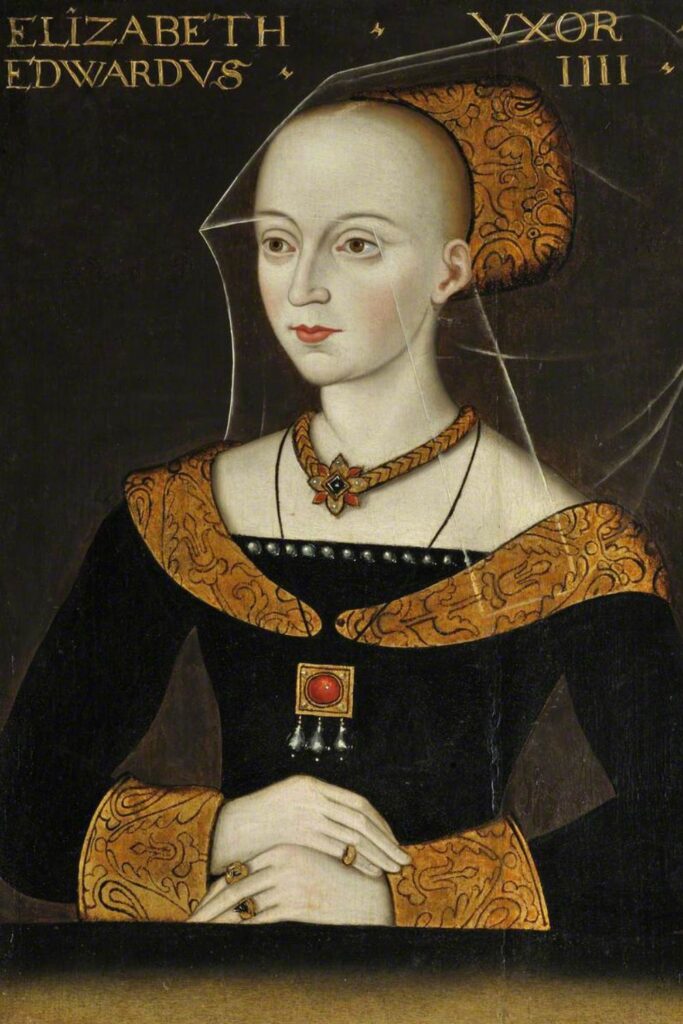
This marriage was a direct challenge to Warwick’s influence. The Woodvilles were suddenly elevated at court. Elizabeth’s many siblings were married off into powerful families, taking titles and lands Warwick had expected for his own allies. The balance shifted, and Warwick didn’t like it.
From that moment, the cracks widened. Warwick still held titles and lands, but his voice in council carried less weight. Edward no longer needed a kingmaker, he had become his own man. Warwick had built the throne. Now it was slipping from under him.
Teaming Up with Clarence and Turning Against the Crown
Warwick wasn’t the type to sit quietly on the sidelines. If the king shut him out, he’d find another way in. And that’s exactly what he did, by teaming up with someone even closer to the crown than himself. Edward’s younger brother, George, Duke of Clarence.
Clarence had his own reasons for feeling hard done by. He was ambitious, restless, and convinced he deserved more power. Warwick offered him just that, along with his daughter, Isabel Neville, in marriage. It was a bold move. Edward had forbidden the match, but they did it anyway, marrying in Calais in 1469.

That sealed the deal. Warwick and Clarence became allies, and almost immediately, they launched a rebellion. They spread propaganda claiming Edward was surrounded by corrupt advisors, naming the Woodvilles and their allies as the real threat to England. Warwick painted himself as the savior of the realm, just as he had in the past.
At first, it worked. They raised armies in the north and stirred up unrest. Edward was caught off guard and even captured for a short time. But Warwick couldn’t hold things together. He couldn’t rule through Clarence, and Clarence wasn’t ready to rule on his own. The rebellion started to collapse.
Edward regained control, Warwick and Clarence fled the country, and the king they’d tried to sideline returned stronger than ever.
Making Peace with His Old Enemy
Warwick had spent years fighting against the Lancastrians. He’d helped bring down Queen Margaret’s power. He’d pushed her husband off the throne. But now, exiled and out of options, he turned to the very woman he once tried to destroy.
In France, Warwick met with King Louis XI, who saw a chance to stir the pot in England. Louis brought Warwick and Margaret of Anjou together and pushed them into an alliance neither of them would have chosen if left to their own devices. Warwick had to swallow his pride. Margaret made him kneel before she’d even speak to him. But in the end, they struck a deal.

Margaret’s son, Prince Edward, would marry Warwick’s younger daughter, Anne Neville. In return, Warwick promised to restore Henry VI to the throne. It was risky, and more than a little desperate. But Warwick saw a chance to reclaim his influence, and he grabbed it.
In 1470, Warwick landed back in England with French support. His gamble paid off, at least for a moment. Edward IV fled, and Henry VI was reinstalled as king. Warwick was back in charge, again pulling the strings behind the scenes.
But the crown didn’t sit comfortably. Henry was a figurehead. Margaret still didn’t trust Warwick. And Clarence was already looking for a way back to his brother’s side. The alliance held, but just barely.
The Battle of Barnet That Ended It All
Warwick was back on top but didn’t have much time to enjoy it. Edward IV wasn’t the kind of king to stay in exile for long. In early 1471, he returned to England with a small force, quickly gaining momentum. Nobles who had once backed Warwick began switching sides. Even Clarence turned on his father-in-law, pledging loyalty to his brother in exchange for power and forgiveness.
Warwick scrambled to respond. He raised his army and marched to intercept Edward near the town of Barnet. It was dark and foggy when the two sides met on 14 April. The battle was fierce, chaotic, and over within hours. Warwick’s army was thrown into confusion when one of his own divisions was mistaken for the enemy. Everything unraveled fast.
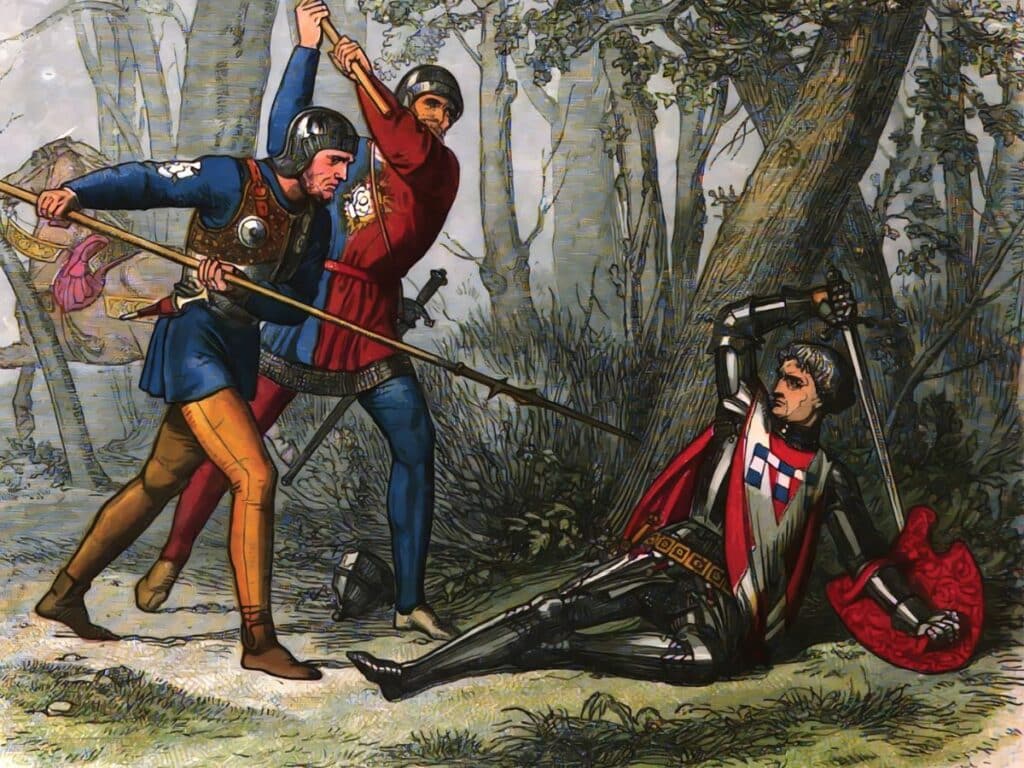
Warwick fought hard. He was in the thick of it, wearing no helmet so his troops could see who he was. But in the end, it didn’t matter. He was cut down while trying to flee the battlefield. His brother Montagu died beside him.
For years, Warwick had been the most powerful man in England. He had made kings and broken them. But on that muddy field, none of it saved him. Edward IV was king again, and this time, no one stood in his way.
What the Kingmaker Left Behind
Richard Neville died without a crown, but he left behind a legacy that shaped England for years to come. His daughters, Isabel and Anne, became key players in what followed.
Isabel, already married to Clarence, stayed at court. But her life was far from peaceful. Clarence fell out of favor with Edward IV shortly after Warwick’s death. He was executed for treason in 1478, reportedly drowned in a barrel of wine. Isabel died two years earlier, only twenty-five.
Anne, Warwick’s younger daughter, had been married off to Prince Edward, son of Henry VI, as part of her father’s deal with Margaret of Anjou. But after the prince was killed at the Battle of Tewkesbury, Anne was left a widow before she was even out of her teens. She later married Richard, Duke of Gloucester, Edward IV’s youngest brother, who eventually became King Richard III. Anne became queen, but her reign was short and marked by personal tragedy. She died young, just like her sister.
As for Warwick himself, his lands were divided, his titles stripped, and his power erased. The Kingmaker rose fast, played hard, and lost everything. But for a time, he was the one everyone feared, followed, or tried to outwit. And that’s not something history forgets.
Love a good medieval story?
Join our readers and get tales of kings, queens, castles and ordinary medieval lives straight to your inbox.

Kylie Lang is a nationally syndicated travel journalist with bylines on the Associated Press Wire & more, a medieval history writer, and the founder and lead author of Tales of the Middle Ages (talesofthemiddleages.com). She holds a BA (Honours) in History from the University of Kent and is a member of the British Guild of Travel Writers.
Related posts:
 How George Plantagenet, Duke of Clarence, Ended Up Dying in a Wine Barrel
 The Story of Anne of Cleves Henry VIII’s Reject Queen: Too Plain for a King, Too Clever for Court
 Margaret of Anjou and the War of the Roses: One of the Most Formidable Women in English Medieval History
 Did Richard III Really Kill the Missing Princes in the Tower? Or Was It the Tudor PR Machine At Work?