She arrived in England at fifteen, the daughter of a king with no kingdom, married off to a gentle man who would lose his wits before he lost his throne. Within a decade, she was being called a she-wolf, a foreign meddler, a woman who’d unsexed herself to lead armies. Within two decades, she was a widow, a mother who’d watched her only son hacked apart on a battlefield, and a prisoner in the Tower of London.

Most queens of her era handled crises by retreating into prayer, motherhood, or the polite shadows of court life. Margaret of Anjou rode out in armor.
Table of Contents
She is one of the most maligned women of the fifteenth century, painted by Shakespeare as a screeching harpy and by chroniclers as the architect of England’s bloodiest civil war. Margaret didn’t start the Wars of the Roses, but once the fighting began, she fought longer and harder than any of the men around her, and she nearly won.
A French Bride for a Failing King
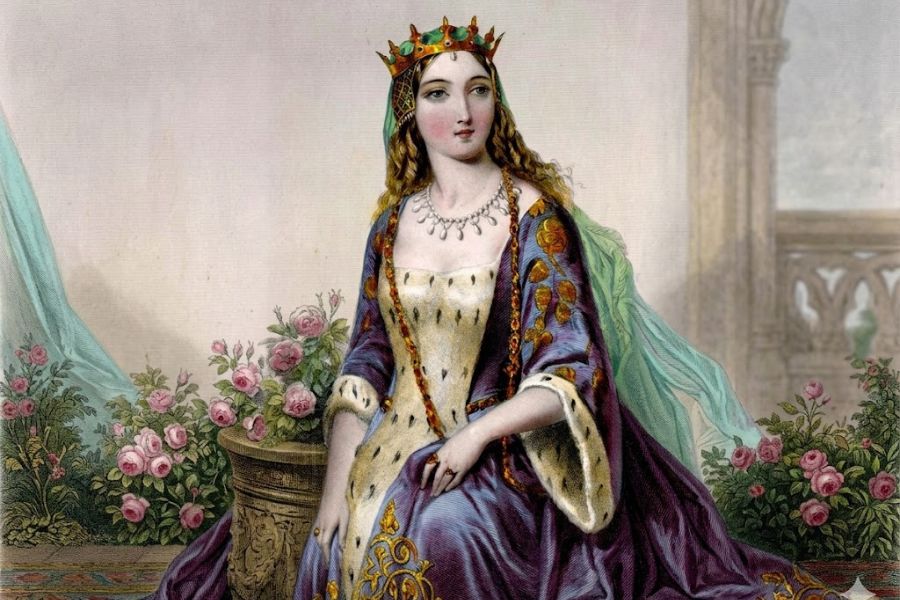
Margaret was born in 1430, daughter of René of Anjou, a man who collected royal titles the way other nobles collected hunting dogs. King of Naples, King of Jerusalem, King of Sicily on paper, and in practice, king of very little. The Anjou family had grand names and empty coffers, which made Margaret a useful pawn rather than a prized one.
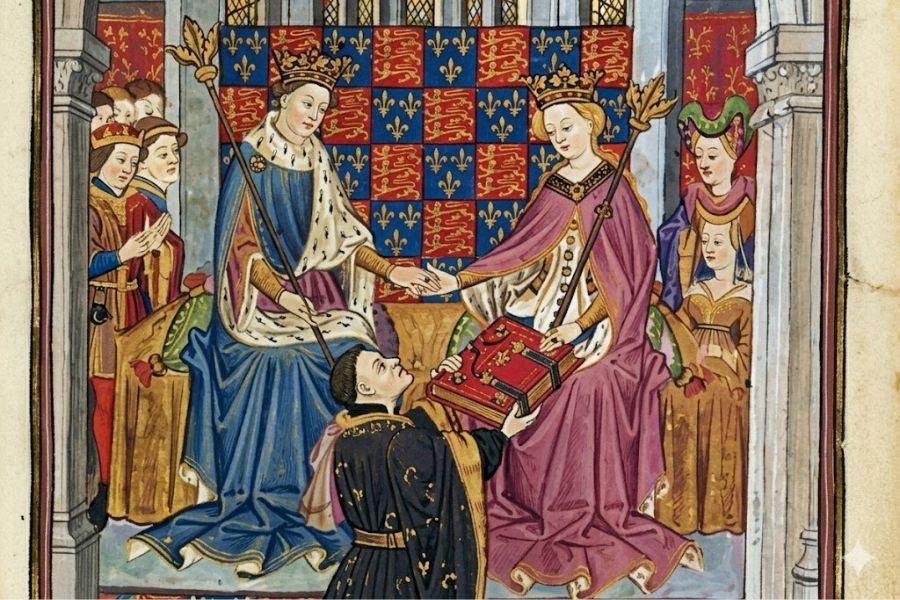
In 1445, she sailed to England to marry Henry VI, a young king already showing the soft, distracted piety that would define his reign. She was fifteen, and he was twenty-three.
The marriage was part of a French peace deal that Henry’s advisors had bungled badly, agreeing to hand back hard-won English territory in Maine as part of the bargain. The English court welcomed their new queen with pageants and feasts, and then began to blame her for everything that was wrong with the peace.
It wasn’t a fair charge. Margaret was a teenage girl with no political experience and no English. But she learned fast, and by her early twenties she’d built a household of loyal servants, cultivated allies at court, and started to recognize the dangerous fault lines in her husband’s government. The chief fault line had a name: Richard, Duke of York.
The Queen Who Had to Govern a King Who Couldn’t
In August 1453, Henry VI suffered a complete mental collapse. He stopped speaking and didn’t even recognize his own wife. When Margaret gave birth to their son Edward that October and brought the baby to him for a blessing, Henry stared blankly and said nothing. He stayed in that state for more than a year.
This was a catastrophe for Margaret personally and for England politically. A king who couldn’t function meant a regency, and a regency meant whoever held the protectorship held the country.
Richard of York, descended from Edward III through two lines and already the wealthiest noble in England, was the obvious candidate. He was also the man Margaret trusted least. She tried to claim the regency herself, citing French precedent, but Parliament refused, and York got the job.
When Henry recovered his senses in late 1454, Margaret moved quickly to push York out. She succeeded, but the price was civil war. York and his allies, including the powerful Neville family, decided they wouldn’t accept being shut out of government a second time.
In May 1455, they raised an army and met the king’s forces at St Albans. Henry was wounded in the neck by an arrow. The Wars of the Roses had begun, and the queen now had a small son to protect and a husband who could not protect either of them.

Leading Armies in a Man’s War
What Margaret did next scandalized her contemporaries and shaped her reputation to this day. She took command. Not formally, because no fifteenth-century queen could hold a military title, but in practical terms, she became the leader of the Lancastrian cause.
She raised money, negotiated with the Scots and the French, and traveled the north of England rallying lords to her son’s banner. She rode with armies.
In December 1460, her forces caught and killed Richard of York at the Battle of Wakefield. York’s head was set on the gates of the city, wearing a paper crown in mockery of his royal claims. His seventeen-year-old son Edmund was murdered after the battle, reportedly while begging for his life.
Whether Margaret personally ordered the paper crown is debated, but the chroniclers blamed her, and the Yorkists never forgave her.
Two months later, her army won again at the second Battle of St Albans, freeing Henry VI from Yorkist custody. Margaret had her husband back and the road to London open. Then she made the decision that probably cost her the war.
Her army, swollen with northern soldiers and Scottish mercenaries, was known for looting. London shut its gates against her. Rather than force the issue, Margaret pulled back north. By the time she regrouped, Edward of York, the dead duke’s eldest son, had reached London first and been proclaimed king as Edward IV.
A few weeks later, he destroyed her army at Towton in a snowstorm. Some 28,000 men died. It remains the bloodiest battle ever fought on English soil.

The Long Exile
After Towton, Margaret had nothing left in England. Her husband was captured and imprisoned in the Tower. Her son Edward, now eight, was the last hope of the Lancastrian line. She fled with him, first to Scotland, then to France, where she spent nearly a decade trying to scrape together the men and money for one more attempt at the crown.
This is the part of her life that gets skipped over because the dramatic battles and the bloody victories make better television. The years of exile were grinding and humiliating. She lived on the charity of relatives, wrote endless letters begging for support, and watched her son grow up in poverty while the Yorkist court in England settled into comfortable rule.
She was a queen without a country, a wife without a husband she could reach, and a mother whose only currency was a teenage boy with a distant claim to a stolen throne.
Then, in 1470, the impossible happened. Edward IV fell out with his most powerful supporter, the Earl of Warwick, known to history as the Kingmaker. Warwick switched sides. He came to Margaret in France and knelt before her, the woman whose army had killed his father and brother at Wakefield, and offered to put Henry VI back on the throne.
Margaret made him wait. She refused to leave France until her son Edward was safely married to Warwick’s daughter Anne Neville. When the deal was sealed, she finally sailed for England.
Tewkesbury and the End of Everything
She landed in the West Country on the same day Warwick was killed at the Battle of Barnet. Edward IV, who’d been briefly driven into exile himself, had returned and crushed the Lancastrian forces in the south.
Margaret’s army, what remained of it, was now alone in hostile country with no veteran commander to lead it. She pushed on anyway. She’d waited ten years for this chance, and she wasn’t going to retreat without a fight.
On 4 May 1471, her forces met Edward’s at Tewkesbury. The Lancastrians were outmaneuvered and broken. Margaret’s seventeen-year-old son, Prince Edward, the boy she’d raised from infancy as the future king of England, was killed in the rout.
Some accounts say he died on the field. Others say he was captured and executed afterward. Either way, he died young, and with him died the entire purpose of Margaret’s twenty-six-year fight.
She was found a few days later, hiding in a religious house. Edward IV brought her to London as a prisoner. Two weeks after that, Henry VI was murdered in the Tower, almost certainly on Edward’s orders. Margaret had lost her husband, her son, her cause, and her freedom in the space of a month. She was forty-one years old.

What She Left Behind
Margaret spent the next four years moving between English castles as a state prisoner. In 1475, her cousin Louis XI of France ransomed her as part of a treaty, on the condition that she renounce all claims to anything in England. She signed. She had nothing left to bargain with anyway.
She returned to France and lived out her last years in genteel poverty on the estate of an old retainer, dying in 1482 at the age of fifty-two.
Her historical reputation has been a strange thing. Tudor chroniclers, writing under a dynasty that traced itself partly through the Lancastrian line, were ambivalent about her. Shakespeare turned her into a monster, the cursing queen of the Henry VI plays and Richard III, an old woman roaming the corridors of the Yorkist court spitting prophecies of doom.
The image stuck. For centuries, she was the foreign harridan who’d dragged England into civil war.
Modern historians have been kinder, partly because they’ve actually read her letters. What emerges is a woman doing exactly what any king in her position would have done, fighting to preserve her dynasty, defend her son’s inheritance, and hold together a faction that the other side wanted destroyed.
The difference was that she was a woman, foreign, and she refused to disappear quietly when the political winds turned against her. Her real crime, in the eyes of her enemies, was that she fought back.
She fought when her husband couldn’t after her allies abandoned her, and after most people in her position would have taken the veil and retreated to a convent.
And yet she came closer to winning than any of her contemporaries thought possible. She kept the Lancastrian cause alive for a decade after it should have been buried at Towton. She forced the most powerful man in England, the Earl of Warwick, to kneel and beg her forgiveness before she would accept his help.
She made Edward IV fight for every inch of his throne, and when he finally killed her son at Tewkesbury, he did it knowing he’d been running from her for twenty years.
The women who came after her, Margaret Beaufort in particular, were watching. Beaufort took the same raw material, a son with a distant claim, a hostile court, and an exile abroad, and built the Tudor dynasty out of it. The road she walked had been mapped, in blood, by the French queen who refused to give up.
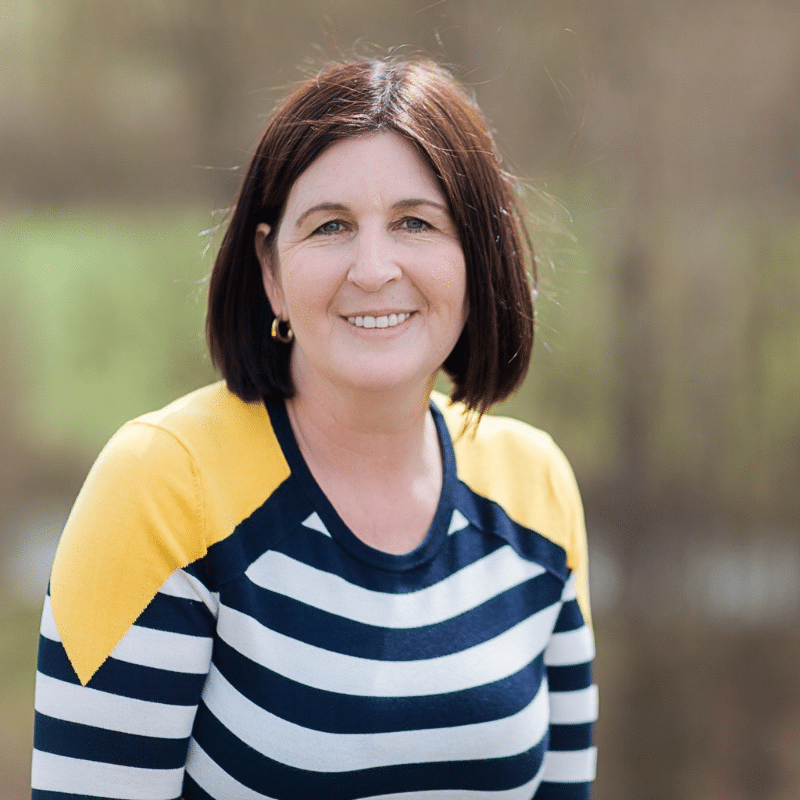
Kylie Lang is a nationally syndicated travel journalist with bylines on the Associated Press Wire & more, a medieval history writer, and the founder and lead author of Tales of the Middle Ages (talesofthemiddleages.com). She holds a BA (Honours) in History from the University of Kent and is a member of the British Guild of Travel Writers.