
Margaret Beaufort is one of the few women in English history who has wielded extreme power without a crown. She survived the Wars of the Roses from start to finish, watching kings rise and fall while she played the long game. By the time the dust settled, her son wore the crown as Henry VII, and she stood behind him as the true architect of the Tudor dynasty.
Was she the ultimate survivor or a cold manipulator wrapped in piety? Her story is one of ambition, calculation, and a mother’s relentless will. She’s been called a saint, a schemer, and everything in between. There’s an even wilder theory: that Margaret Beaufort herself may have had a hand in the disappearance of the Princes in the Tower.
Table of Contents
This is the story of the four husbands of Margaret Beaufort and how she outplayed them all.

Margaret Beaufort’s Early Years
Margaret Beaufort entered the world in the spring of 1443, the only child of John Beaufort, Duke of Somerset, and Lady Margaret Beauchamp of Bletsoe. Through her father, she carried the royal blood of Lancaster, the same line as King Henry VI, who was just twenty-one when she was born.
Her family connections stretched far across the realm. Her great-uncle, Cardinal Beaufort, was one of the most powerful men in the King’s court, while her aunt, Joan Beaufort, had once been Queen of Scotland.

The Rise and Fall of John Beaufort
John Beaufort’s story was already a complicated one long before Margaret’s birth. Captured as a teenager during the wars in France, he spent seventeen years in captivity before being released at thirty-five.
On his return to England, he wasted little time in restoring his fortune and reputation. The King rewarded him handsomely, raising him from Earl to Duke and commissioning him to lead an army in France to defend Aquitaine.
John, however, had no desire to leave his new life behind. He delayed his departure for months, only setting out after his daughter was born. When he finally reached France, the campaign went badly. His leadership was questioned, his reputation crumbled, and he found himself at odds with Richard, Duke of York, one of England’s most influential men. Whether his failures were due to misjudgment or politics remains unclear, but he returned home in disgrace.
When Margaret was barely a year old, her father was dead. The cause has never been settled. Some said he took his own life. Others claimed he fell ill while abroad. Whatever the truth, the result was the same: his dukedom passed to his brother, Edmund, while his fortune went to his infant daughter.
The Four Husbands of Margaret Beaufort
Before she could even speak, Margaret Beaufort was one of the wealthiest heiresses in England. In a world where wealth meant control, and marriage meant power, her inheritance made her a prize worth claiming. It was a title she would carry and use for the rest of her life.
Husband No. 1 – John de la Pole, 2nd Duke of Suffolk
Margaret Beaufort’s early life was managed by her mother, Lady Margaret Beauchamp. Having already raised seven children from her first marriage to Sir Oliver St John. Widowed and wealthy, she was an attractive match for John Beaufort when he returned from France. Their union united two powerful families, but after his death, it was Margaret’s future that drew royal attention.
A Royal Ward with a Price
Before her father’s passing, Margaret had become a ward of King Henry VI. It was an honor that came with a price, as it meant her lands and her fate were now under royal control. The King granted guardianship of her estates to his trusted adviser, William de la Pole, Marquess of Suffolk, who was then brokering the King’s marriage to Marguerite of Anjou.
Suffolk saw an opportunity. He had one son, John, just a little older than Margaret, and the match promised to secure his family’s influence. The arrangement was made before the children could read or write. The marriage united two wealthy houses, tying Suffolk’s ambitions to the King’s most valuable ward. It was politics, pure and simple.
A Union That Barely Existed
In 1450, Suffolk’s fortunes began to collapse. The English were losing ground in France, and Parliament held him responsible. As accusations of treason gathered momentum, he rushed to protect his legacy by formalizing his son’s marriage to young Margaret. She became a bride before her seventh birthday.
Weeks later, Suffolk was dead, murdered at sea as he fled into exile. The alliance became worthless overnight. Margaret’s mother and stepfather cut all ties, and since both children remained with their families, nothing about Margaret’s life actually changed. Years later, she would act as if the marriage had never taken place.
By 1453, King Henry VI annulled the marriage without protest. It had never been consummated, and both children were under the legal age of consent. The King already had another plan in mind for his young ward. He handed her guardianship to his half-brothers, Edmund and Jasper Tudor, setting the stage for a union that would forge a dynasty.
Husband No. 2 – Edmund Tudor, 1st Earl of Richmond
Edmund Tudor was the eldest son of Owen Tudor and Katherine of Valois, the widow of Henry V. Their relationship had begun in secret after the king’s death and produced at least four children. When Katherine died in 1437, her son Henry VI took responsibility for his half-brothers, Edmund and Jasper.
They were first educated in a convent before receiving a secular education paid for by the King. By 1453, both were in their early twenties, newly titled, and favored at court. As the King remained childless, Edmund and Jasper were seen as potential heirs.
That possibility disappeared later that year when Queen Marguerite of Anjou gave birth to a son, Edward of Westminster. Even so, the idea of uniting the royal bloodlines of Beaufort and Tudor remained attractive.
Margaret was only ten years old when the marriage was arranged, and it was postponed until she turned twelve. The wedding took place on November 21, 1455, likely in London, with the King and Queen present.
It is unclear whether the marriage was intended to be consummated immediately, but by April 1456, Margaret was pregnant. If Edmund acted sooner than expected, his reasoning was likely financial. Control over his wife’s estates and wealth depended on the birth of a child.

A Widow at Thirteen
Margaret left her mother’s household to join Edmund in Wales, where he had been sent to defend the border. By mid-1456, he had crushed most of the local uprisings, but his success drew the attention of Richard, Duke of York, who was now one of Henry VI’s most dangerous rivals. In August, the Duke’s ally, William Herbert, led an attack on Carmarthen Castle. Edmund was captured and imprisoned.
Released that November, he was already gravely ill, most likely with plague, and died soon after. Margaret, only thirteen and heavily pregnant, was left stranded in hostile territory.
The Birth of a Dynasty
She made her way to Pembroke Castle, where Jasper Tudor had taken command after his brother’s death. Most of Edmund’s estate went to Jasper, but his title, Earl of Richmond, passed to his unborn child. On January 28, 1457, Margaret gave birth to a son named Henry.
Contemporary accounts suggest the birth nearly killed her. She was said to be small and frail for her age, and the ordeal left her unable to have more children.
Hooked on the Middle Ages? Get more stories like this one in your inbox.
Husband No. 3 – Sir Henry Stafford
After giving birth to her son Henry, Margaret spent the winter of 1457 at Pembroke Castle with her brother-in-law, Jasper Tudor. She had little time to recover before Jasper began planning her next move. In a world where alliances meant survival, he knew she needed another husband, someone with wealth and power who could protect both her and her son.
He turned to the influential Stafford family. Jasper built a friendship with Humphrey Stafford, the Duke of Buckingham, and in early 1458, he and Margaret visited the Duke’s manor at Greenfield near Newport. During that visit, a marriage was arranged between Margaret and the Duke’s second son, Sir Henry Stafford. The bride was fourteen. The groom was in his early thirties.
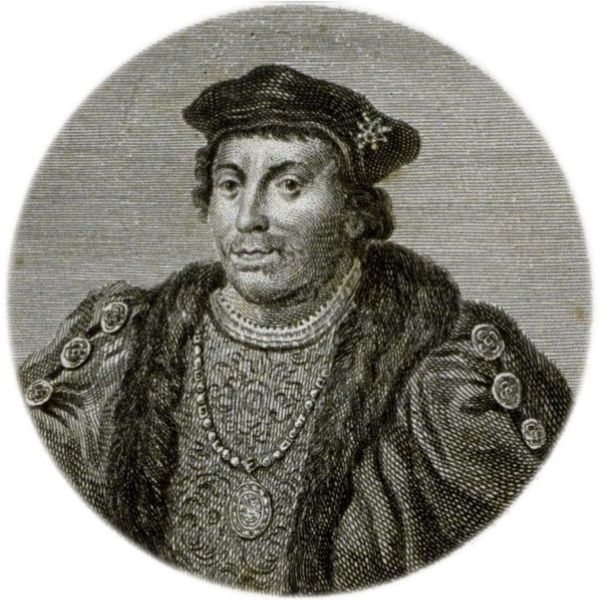
The wedding likely took place at Maxstoke Castle in Warwickshire, one of Buckingham’s residences. Thanks to Margaret’s fortune, the couple lived well, dividing their time between several properties, including Bourne Castle in Lincolnshire. They invested heavily in their estates and enjoyed a peaceful, comfortable existence.
But this new chapter came at a price. Margaret’s young son remained behind in Wales under Jasper’s care. She saw him only on visits to Pembroke Castle, and it would be nearly three decades before they lived under the same roof again. Still, Margaret stayed close to him through letters and trusted Jasper to keep him safe.
A Kingdom in Chaos
Peace at home did not mean calm in the kingdom. England was splintering as the Wars of the Roses deepened. The rivalry between Lancaster and York had already claimed the life of Margaret’s uncle, Edmund Beaufort, at the First Battle of St Albans. Her cousin Henry now held the title of Duke of Somerset, and court politics were turning deadly.
The Staffords were staunch Lancastrians. Sir Henry fought for Henry VI at the Battle of Towton in 1461, one of the bloodiest conflicts in English history. When the Yorkists triumphed and Edward IV took the throne, Henry Stafford wisely submitted to the new King and received a pardon. Jasper Tudor, however, fled into exile.
At just four years old, Margaret’s son was left behind at Pembroke Castle when it fell to Yorkist forces led by William Herbert, the same man Jasper blamed for his brother Edmund’s death. Herbert was rewarded with control of South Wales and soon after purchased young Henry’s wardship from the crown. The boy was moved to Herbert’s grand home, Raglan Castle, and raised alongside Herbert’s own children.
He lived comfortably, but far from his mother. Margaret, thanks to her husband’s loyalty to Edward IV, was granted permission to visit him. In 1467, records show she spent a week at Raglan with Henry and Stafford.
The Fall of the Herberts
That arrangement ended abruptly in 1469. The Earl of Warwick and the Duke of Clarence turned against Edward IV, sparking yet another rebellion. William Herbert marched to defend the King, bringing twelve-year-old Henry Tudor with him. The battle at Edgecote Moor ended in disaster. Herbert was captured and executed, while young Henry was saved from the chaos by a relative of Herbert’s wife, Sir Richard Corbet.
When Margaret learned of the battle, she immediately sent messengers to find her son. He had been taken to the home of Lord Ferrers, Herbert’s brother-in-law, where Anne Devereux, Herbert’s widow, soon joined him.
With Henry’s future uncertain, Margaret and Stafford saw a chance to act. The King was in temporary captivity, and the rebel lords were in control. They met with Clarence in London to negotiate Henry’s wardship and later dined with Anne Devereux and Lord Ferrers at the Bell Inn on Fleet Street. The talks appeared successful, but when Edward IV regained power, Stafford’s decision to meet with Clarence cast suspicion over his loyalty.
Despite this, Stafford remained in the King’s service. He stood by Edward IV in 1470 when Margaret’s stepbrother, Robert Welles, led a short-lived rebellion.
A Return to War
That same year, Warwick and Clarence rebelled again, this time allying with the exiled Queen Marguerite of Anjou. Their cause briefly restored Henry VI to the throne, and Jasper Tudor brought young Henry to London for the opening of Parliament. For the first time since his infancy, Margaret and her son were reunited.
They spent two weeks together that autumn before Henry returned to Wales in Jasper’s care. Margaret stayed in London to negotiate for her son’s inheritance, meeting with Clarence at Baynard’s Castle. He refused to grant her request, but she secured a promise that Henry would inherit the Richmond title upon Clarence’s death.
By spring 1471, the fragile peace was shattered again. Edward IV returned from exile, defeated Warwick at Barnet, and crushed the Lancastrians at Tewkesbury. Queen Marguerite’s son was killed, and Henry VI was murdered soon after. Jasper and young Henry Tudor fled Wales, sailing toward France but landing in Brittany, where Duke Francis II granted them protection.
Margaret’s Second Widowhood
Back in England, Henry Stafford had been badly wounded at Barnet. Margaret arranged for him to be brought to their home at Woking, a Beaufort property granted to them after Stafford’s nephew married Katherine Woodville, sister to Queen Elizabeth Woodville. On October 4, 1471, Henry Stafford died of his injuries.
Margaret was twenty-eight. She had outlived two husbands and was separated from her only child, now an exile across the sea. But she was far from finished.
Husband No. 4 – Thomas Stanley, 1st Earl of Derby
Margaret moved quickly after Henry Stafford’s death. She needed a husband who could shield her wealth and position. With her son abroad and the Yorkist regime looking stable, she sought influence at the center.
She chose Lord Thomas Stanley. He was rich, well-connected to the Woodvilles, and politically useful. Ambition drew them together.
On June 2, 1472, Margaret placed her Devon and Somerset estates in trust and ordered that a separate estate be prepared for Henry. Ten days later, she married Stanley. The match put her back at court and close to power.

Back Among Yorkists
At Edward IV’s court, Margaret played the loyal subject. John de la Pole, once her child bridegroom and now Duke of Suffolk, moved in the same orbit. He had married the King’s sister and built a large family.
Margaret served Queen Elizabeth Woodville and her daughters. She even stood as godmother to at least one of the younger princesses. By the early 1480s, the King and Queen trusted her, even with Jasper and Henry still in Brittany.
Edward opened talks with Duke Francis of Brittany to bring Henry home with a pardon and the Richmond title. The plan suited a peaceful realm with two Yorkist princes and a full bench of male heirs. There was no public path to a Tudor crown.
Margaret’s mother died on June 3, 1482. That month, Stanley swore, in the presence of the King and his wife, that he would not interfere with Margaret’s estates. He also agreed that lands would pass to Henry if he returned in the King’s favor. The marriage between Henry and Princess Elizabeth of York was proposed during this period, although the princess had been promised to the French dauphin by 1475.
The Crisis of 1483
Edward IV died on April 9, 1483. His heir, Edward V, was twelve. Richard, Duke of Gloucester, took control as protector. Within weeks, the Woodville marriage was declared invalid, the royal children were branded illegitimate, and Edward V and his brother were lodged in the Tower. Richard took the throne as Richard III.
Stanley first sided with those who backed Edward V. Richard made peace with him and kept a wary eye on Henry Tudor abroad. On July 5, 1483, Margaret and Stanley met Richard and Chief Justice William Hussey to discuss a French debt claim. Margaret also appealed to her nephew, Henry Stafford, Duke of Buckingham, for help with her son’s cause. The idea of a Tudor marriage to Elizabeth of York surfaced again, now with interest from Richard’s circle and from Buckingham’s household.
The next day, Stanley became Richard’s steward. Margaret bore Queen Anne Neville’s train. Richard then urged Brittany to keep Henry under tighter watch. Duke Francis demanded terms Richard could not meet. Soon after, King Louis XI died, leaving a minority government in France. The diplomatic ground shifted.
Margaret reached out to Elizabeth Woodville, who was in sanctuary at Westminster. Through their shared physician, Lewis Caerleon, the two women explored a plan. If Henry married Elizabeth of York, a Tudor claim could unite disaffected Yorkists and old Lancastrians against Richard.
This shift later fueled rumors that Margaret had a hand in the princes’ fate. The theory remains unproven.
Buckingham Turns
Word came that Buckingham would support Henry. The move made little sense on the surface. Buckingham owed his rise to Richard and had profited since the coronation. His reasons are still debated. Disgust with the disappearance of the princes. A bid to control events. A reading of the public mood.
Buckingham joined the rising with Margaret and Elizabeth’s network. Margaret urged Henry from Brittany to prepare an invasion. Duke Francis signaled support. Richard learned of the revolt on October 11. Buckingham was captured on October 31 and executed on November 2. The Stanley affinity stayed neutral, which sealed Buckingham’s fate.
Henry had already sailed with a small fleet. He saw the coast lined with Richard’s men and turned back. He reached France, then returned to Brittany. His escape and return show how weak his position looked, and how divided France was under a child king.
On December 25, 1483, Henry pledged publicly to marry Elizabeth of York. He understood that Yorkist backing depended on that promise.
Richard rewarded the Stanleys to secure their loyalty. He made Thomas Stanley Constable of England in December 1483. Margaret avoided charges because of her husband, but she paid a heavy price. Control of her titles and estates reverted to Stanley. Richard’s council ordered that she be stripped of servants and kept under close watch.
Richard also reached an agreement with Elizabeth Woodville. She and her daughters left sanctuary and appeared at court in March 1484. The royal heir, Prince Edward of Middleham, died a month later. By Christmas, rumors spread that Richard might set aside Queen Anne and marry Elizabeth of York. Anne died in March 1485. Elizabeth was moved to court to manage appearances.
Richard then named a new heir. He chose John de la Pole, Earl of Lincoln, son of the Duke of Suffolk. Margaret’s long distant tie to Suffolk took on a new edge.
Henry’s danger increased once he staked a claim. In September 1484, he slipped out of Brittany into France with approval from Charles VIII. He gathered supporters, including John de Vere, Earl of Oxford. Thomas Grey, Marquess of Dorset, and Sir Edward Woodville joined him. Dorset wavered. Henry never fully trusted him again.
Richard prepared for invasion, and Stanley left court to keep his options open. Richard detained Stanley’s son, Lord Strange, as a hostage.
Henry landed in Wales on August 7, 1485. Richard summoned Stanley. Stanley pleaded illness. Strange was arrested and, under pressure, admitted that his family leaned toward Henry.
Stanley held back. His strength was his uncertainty. Richard hesitated to harm Strange while Stanley’s position was unclear. On August 21, Stanley met Henry and gave him the confidence he needed. He still told Richard he was blocking the rebels, yet he refused the royal summons.
The Battle of Bosworth
The Battle came on August 22, 1485. Richard fought with the Duke of Norfolk on one side and the Earl of Northumberland on the other. Norfolk fell. Northumberland did not commit. Some say he was held in place. Others note his old ties to Henry from their youth at Raglan.
Henry had Jasper Tudor and the Earl of Oxford at his side. The Stanley brothers arrived but remained apart until the decision point. Sir William Stanley was charged late for Henry, and Richard was killed in the melee. The circlet was found and, by report, Thomas Stanley crowned his stepson on the field.

A Mother Reunited With Her Son
News spread slowly. London prepared for a new king on August 26. Henry entered the city on September 3. In October, Margaret and Henry met at Woking after fifteen years apart. She stayed close from that moment and kept her rooms near his.
Henry gifted her Richard’s book of hours, taken from the royal tent at Bosworth. He granted her Coldharbour in London. She received Elizabeth of York there, along with the children of the late Duke of Clarence. She also took in Edward Stafford, son of the executed Duke of Buckingham. Katherine Woodville married Jasper Tudor that autumn.
Margaret’s life entered a new phase. She became the power behind a new dynasty. Observers noted her influence from the start. She watched Henry be crowned on October 30, 1485. She would outlive her son by only weeks in 1509 and help ease the path for her grandson, Henry VIII. For a Beaufort girl with a perilous childhood, it was an outcome few could have predicted.
Love a good medieval story?
Join our readers and get tales of kings, queens, castles and ordinary medieval lives straight to your inbox.

Kylie Lang is a nationally syndicated travel journalist with bylines on the Associated Press Wire & more, a medieval history writer, and the founder and lead author of Tales of the Middle Ages (talesofthemiddleages.com). She holds a BA (Honours) in History from the University of Kent and is a member of the British Guild of Travel Writers.
Related posts:
 From Teenage Widow To Tudor Powerbroker: The Real Margaret Beaufort Story (Not The Villain You Think)
The Real Margaret Beaufort: The Woman Who Built the Tudors
 Margaret Beaufort vs Elizabeth Woodville: Who Was More Powerful?
 Did Richard III Really Kill the Missing Princes in the Tower? Or Was It the Tudor PR Machine At Work?