
George Plantagenet was the middle brother between two kings, which already tells you life wouldn’t be simple. Born into the chaos of the Wars of the Roses, he was raised with the kind of ambition that can either shape a great life or wreck it completely.
At first, it all looked promising. He had a powerful name, a powerful family, and a front-row seat to the throne. But George didn’t know when to stop. He played dangerous games with loyalty, made bold choices for power, and paid a high price for both.
Table of Contents
This is the story of a prince who wanted more than his share, a man who couldn’t quite stay in his lane. And by the time his life ended, face down in a barrel of wine (if the rumors are true), the line between ambition and self-destruction had well and truly disappeared.

Early Life in a Divided Kingdom
George was born on October 21st, 1449, in Dublin, the third son of Richard, Duke of York, and Cecily Neville. His father had a strong claim to the English throne, and his mother was from one of the most powerful noble families in the country. That made George York royalty by blood and politics, which meant his life was tied to power from day one.
He spent his early years surrounded by war talk, family ambition, and the constant tension of living in a divided kingdom. When he was about ten, his father’s campaign against King Henry VI took a bad turn. The family stronghold at Ludlow was stormed, and George, along with his younger brother Richard, was captured, while their father and older brother Edward fled. Watching the world fall apart around him would have been a terrifying moment for any child.
Just a year later, things flipped. His father was killed at the Battle of Wakefield, but George’s older brother Edward picked up the torch and ran with it. He led the Yorkists to victory and took the crown as Edward IV. George was suddenly the king’s younger brother, and for a time, heir to the throne.
He was only 11 but already being handed titles, honors, and responsibilities most grown men would envy. Edward made him Duke of Clarence and gave him a seat at the center of power. Everyone expected great things. And George? He started to expect them, too.

Trouble at Court and Elizabeth Woodville
By the time George was in his late teens, things were shifting at court behind the scenes, and resentment was brewing. George was right in the middle of it.
At first, he was loyal, a proud younger brother. But the cracks started showing when Edward married Elizabeth Woodville. It wasn’t the match anyone expected. She was a widow with no royal blood, from a large and ambitious family.
But the real blow was to Richard Neville, Earl of Warwick, known as the Kingmaker. Warwick had spent years building Edward’s image, forging foreign alliances, and clearing his path to the throne. He was a political operator, and up until then, Edward’s most trusted ally. Warwick had been working on a marriage for Edward with Bona of Savoy, the sister-in-law of the King of France.
It would have strengthened ties with the French crown and positioned Edward as a serious continental player. It was a solid, strategic move. But Edward had other ideas. Without telling Warwick, without telling anyone, he married Elizabeth Woodville in secret. Love over politics. And in Warwick’s eyes, that was an insult he couldn’t ignore. All his careful diplomacy tossed aside for a romantic impulse.
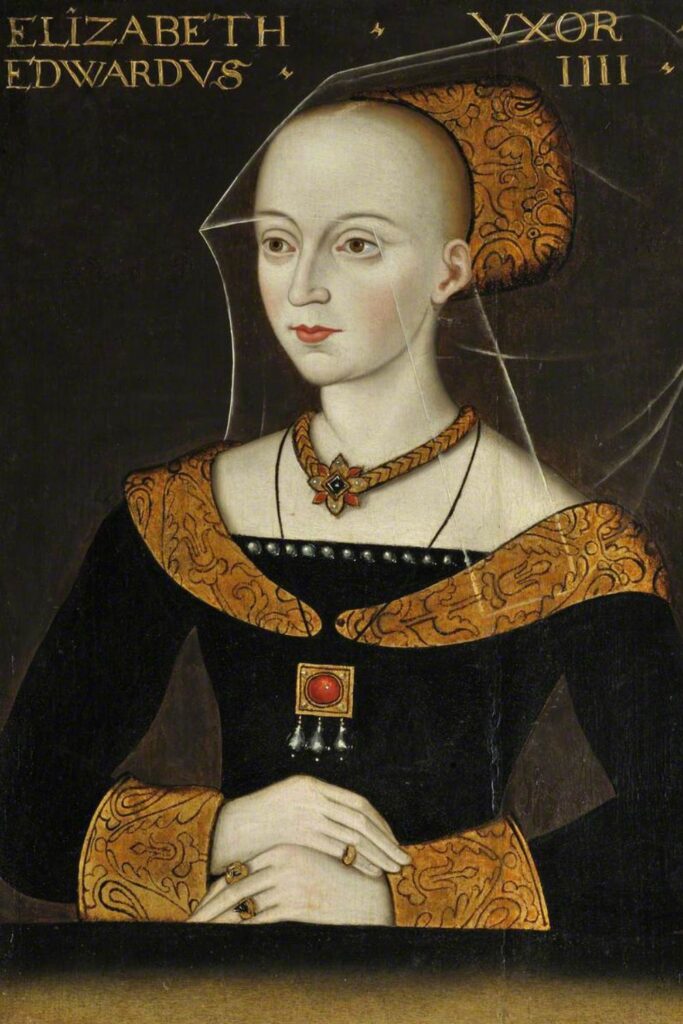
But once the crown was won, Warwick found himself on the outside looking in. The Woodvilles were everywhere, snapping up lands, positions, titles. Warwick didn’t take long to start feeling outplayed by a family he saw as social upstarts.
The new Queen’s family filled court roles, grabbed land, and quickly became the most visible and resented faction in power. George watched it unfold with growing irritation. He saw men from far below his own status rise through marriage and favoritism. He’d been the king’s heir, and suddenly, a bunch of in-laws pushed him aside.
That’s when Warwick saw his opportunity. He needed someone with royal blood to counterbalance the Woodvilles, and George fit the bill. Warwick had no sons, just two daughters. If George married Isabel Neville, he’d become Warwick’s son-in-law and future heir to his enormous estates. More importantly, the two of them could stand together against Edward and his Queen’s growing circle.
But Edward said no. He refused to allow the match. And that’s when everything boiled over. George felt insulted, overlooked, and boxed in. Warwick felt betrayed. So they took matters into their own hands.

Hooked on the Middle Ages? Get more stories like this one in your inbox.
Under the Shadow of the Kingmaker
George and Isabel were married in Calais in July 1469, with Warwick’s brother, the Archbishop of York, officiating. George and Warwick wasted no time clarifying their position when they returned to England. They put out a statement attacking the Queen’s family, accusing the Woodvilles of grabbing power through greed and manipulation.
The marriage to Isabel kicked off a full-blown rebellion.
With George now in his corner, Warwick moved fast. He stirred up unrest in the north and used George’s royal blood to give the rebellion a kind of legitimacy. After all, George was the king’s brother. That made people listen. And for a short time, it worked. They even managed to capture Edward IV and hold him prisoner.
But they’d underestimated the strength of Edward’s support. The country didn’t rally behind George the way Warwick had hoped. A few nobles backed him, but most stayed quiet, waiting to see who came out on top. Eventually, Edward was released, regrouped, and crushed the revolt. George and Warwick had no choice but to flee to France.
That crossing was brutal in more ways than one. Isabel was pregnant during the escape and went into labor aboard ship. Their child was born off the coast of Calais and died a couple of days later. It’s not clear whether it was a girl or a boy, but some historians say it was a daughter named Anne.

In France, Warwick did what he always did: look for another opening. But this time, he turned to his old enemies and made peace with Margaret of Anjou, wife of the deposed Henry VI, and agreed to fight for the Lancastrian cause. To seal the deal, he married his younger daughter, Anne Neville, to Margaret’s son, Edward of Westminster. That alliance meant one thing: George was out. Warwick had picked a new royal son-in-law, and it wasn’t him.
For George, this was a punch to the gut. He’d risked everything for Warwick, his brother’s trust, his title, his future, and now he was being passed over. Warwick no longer needed him, and George realized the crown wasn’t coming his way after all.
So, he changed sides.
In early 1471, George reached out to Edward and offered to return to the fold. Maybe it was guilt, ambition, or perhaps self-preservation. Most likely, it was a mix of all three. Edward, always the pragmatist, accepted. The two brothers reunited, and just in time.
That spring, Edward returned to England with a small force. George joined him, and together they took back the throne. Warwick was killed at the Battle of Barnet. A few weeks later, Henry VI’s son was defeated and killed at Tewkesbury. And Henry himself? Dead in the Tower not long after.
Brotherly Rivalries and Alliances
With Edward IV back on the throne, George was welcomed home, publicly, at least. There were no punishments, no loss of titles, no awkward exile. But let’s not kid ourselves. Trust had been broken. Edward might have smiled in public, but he kept one eye on George from then on.
At first, it looked like George was back on solid ground. He was showered with rewards. Warwick was dead, and George, now married to Isabel, laid claim to much of the vast Neville inheritance. Edward gave him the titles of Earl of Warwick and Salisbury in right of his wife. That again put George back at the top of the pile: powerful, wealthy, and part of the royal inner circle.
But there was one problem: Richard, Duke of Gloucester.

Richard had married Anne Neville, Isabel’s younger sister, which meant both brothers had married co-heiresses to the same fortune. That made dividing the Neville estates tricky. George wanted all of it. Richard thought half seemed fair. George had no intention of sharing.
When Anne Neville was first brought to London after her father’s death, she was placed in the care of George and Isabel at their house at Cold Harbour. It sounds reasonable on paper. But behind the scenes, George and Isabel schemed to keep the full Neville inheritance for themselves. They had no intention of letting Anne marry. The plan was to lock her away in a nunnery and cut her off from her rights entirely.
To stop Richard from finding her, they dressed Anne like a servant and hid her in the kitchens. Imagine that. The daughter of one of England’s most powerful men, working in her sister’s scullery, kept out of sight like a prisoner. Richard eventually caught wind of it, found her, and took her to sanctuary at the Church of St Martin le Grand.
She was fifteen. He was eighteen. And even though their marriage would need a papal dispensation because of how closely they were related, he went ahead with it anyway. Whether it was love, strategy, or a bit of both, Richard ensured Anne got her share of what was owed. He even managed to secure the release of her mother, who was kept in a convent by Edward.
George was not happy. He’d risked everything backing Warwick and felt he deserved more than a half-share. His younger brother was getting in the way of what should have been his.
The two had fought side by side at Barnet and Tewkesbury, but now, it was every man for himself. Richard was focused, careful, and rising in influence. George was growing restless. He had power, wealth, and a young family. But it wasn’t enough. It never really was.
Downfall of the Duke
By the mid-1470s, George was losing his grip on power, reason, and the patience of everyone around him. On the surface, things still looked fine. He had his titles, his lands, two healthy children, Margaret and young Edward, and the king’s public forgiveness. But behind closed doors, he was spiraling.
In October 1476, Isabel gave birth to their fourth child. A little boy named Richard. He died within a couple of months. Not long after, Isabel fell seriously ill. Whether it was childbirth complications or something longer brewing, she didn’t recover. She died that December. George, only 27, was completely undone.

A Grief That Turned Ugly
He couldn’t accept it. Not the baby’s death and not Isabel’s. Instead of mourning quietly, George needed someone to blame. He accused one of Isabel’s ladies-in-waiting, a woman named Ankarette Twynyho, of poisoning her. There was no proper trial. George had her dragged from her home, forced into a sham confession, and executed within days.
That crossed a line even Edward couldn’t ignore. You didn’t take justice into your own hands, especially not when you were already on thin ice with the crown. George had overstepped again, and this time he didn’t have Warwick or any political leverage to hide behind.
But he didn’t stop there. He started pushing for a new marriage, and not just any match. He had his eye on Mary of Burgundy, one of the wealthiest heiresses in Europe and the stepdaughter of his younger sister, Margaret of York.
It would’ve made him an independent power player on the continent. Edward shut it down immediately. George, unsurprisingly, lost it. He left court in protest, sulking in his grand estates, nursing grudges, and feeding old rivalries.
From Whispers to the Tower
Then came the whispers of treason, plots, and magic. George was spreading rumors that Edward wasn’t the rightful king, their mother had been unfaithful, and the royal line was built on a lie. Whether he actually said it or not didn’t matter. The damage was done.
In early 1478, Edward made his decision. Parliament was summoned. George was charged with high treason. The list of accusations was long and messy. Plotting rebellions. Slandering the crown and circulating old Lancastrian documents that named him heir if Henry VI’s line died out. Even planning to fake his own son’s identity and sneak him out of the country to rally support abroad.
Edward brought the charges himself, and Parliament passed the bill of attainder without much protest. George didn’t even bother to defend himself.
He was executed in private at the Tower of London on February 18, 1478, when he was only 28 years old.
And the part people always remember? The rumor that he drowned in a butt of Malmsey wine. No official record ever confirmed it, but it’s the detail that stuck, maybe because it’s so bizarre or because it says something about his life’s excess and dark drama. Whether he chose it himself or it was court gossip gone wild, no one really knows.

Edward reportedly fell into a deep depression after signing the order. He had tried to save George more than once. But in the end, there was no saving someone who kept sabotaging his own future.
George’s children were taken in and raised by other family members. His daughter Margaret would go on to live a long and tragic life of her own. His son Edward, the last male of the House of York, would spend most of his life imprisoned in the Tower.
George Plantagenet had every advantage. Born into power, handed opportunity after opportunity, forgiven when others would’ve been punished. But it wasn’t enough. And ultimately, the crown he once reached for cost him everything.

Seen It All Before? Maybe You Watched The White Queen
Have you seen the life of George Plantagenet play out on screen in The White Queen? Based on Philippa Gregory’s novels, the series covers this entire period, including George’s marriage to Isabel, the rise and fall of Warwick the Kingmaker, and the bitter rivalry between the York brothers.
Of course, the show takes creative license (as historical dramas always do), but it captures the tension of the time well. George comes across as charming, reckless, and power-hungry, which, in fairness, isn’t too far off the mark. His rivalry with Richard and uneasy loyalty to Edward are front and center.
And Isabel? She’s shown as clever and caught in the middle, which fits what we know about her real role in the fight over the Neville inheritance.
If you’ve watched the series and found yourself wondering how much of it was true, the answer is, quite a lot, once you strip away the dramatized romance and theatrics. The real story is just as brutal, just as tangled, and just as heartbreaking.

Love a good medieval story?
Join our readers and get tales of kings, queens, castles and ordinary medieval lives straight to your inbox.

Kylie Lang is a nationally syndicated travel journalist with bylines on the Associated Press Wire & more, a medieval history writer, and the founder and lead author of Tales of the Middle Ages (talesofthemiddleages.com). She holds a BA (Honours) in History from the University of Kent and is a member of the British Guild of Travel Writers.
Related posts:
 The Story of Anne of Cleves Henry VIII’s Reject Queen: Too Plain for a King, Too Clever for Court
 What History Got Wrong About Mary Boleyn: The Forgotten Sister of Anne, Mistress, Mother, Survivor
 Did Richard III Really Kill the Missing Princes in the Tower? Or Was It the Tudor PR Machine At Work?
 Margaret of Anjou and the War of the Roses: One of the Most Formidable Women in English Medieval History