
They were born into a world where royal daughters were currency. Their futures were bargained behind closed doors, sealed with oaths, and often lost to war. The daughters of Elizabeth Woodville stood at the heart of one of the bloodiest chapters in English history, raised under the shadow of the Wars of the Roses and shaped by the violent tug of power between York and Lancaster.
Some were married off for political gain. Others were quietly pushed aside or vanished into early graves. One became the queen of England and gave birth to the Tudors. Another married for love and paid the price. Their lives took them from glittering courts to forced exile, and their children would one day wear crowns, cross borders, and reshape the thrones of Europe. But their names rarely make the spotlight.
Table of Contents
This is their story. The royal daughters’ history nearly forgot. From coronations to cloisters, rebellion to retirement, here’s what became of Elizabeth Woodville’s daughters.
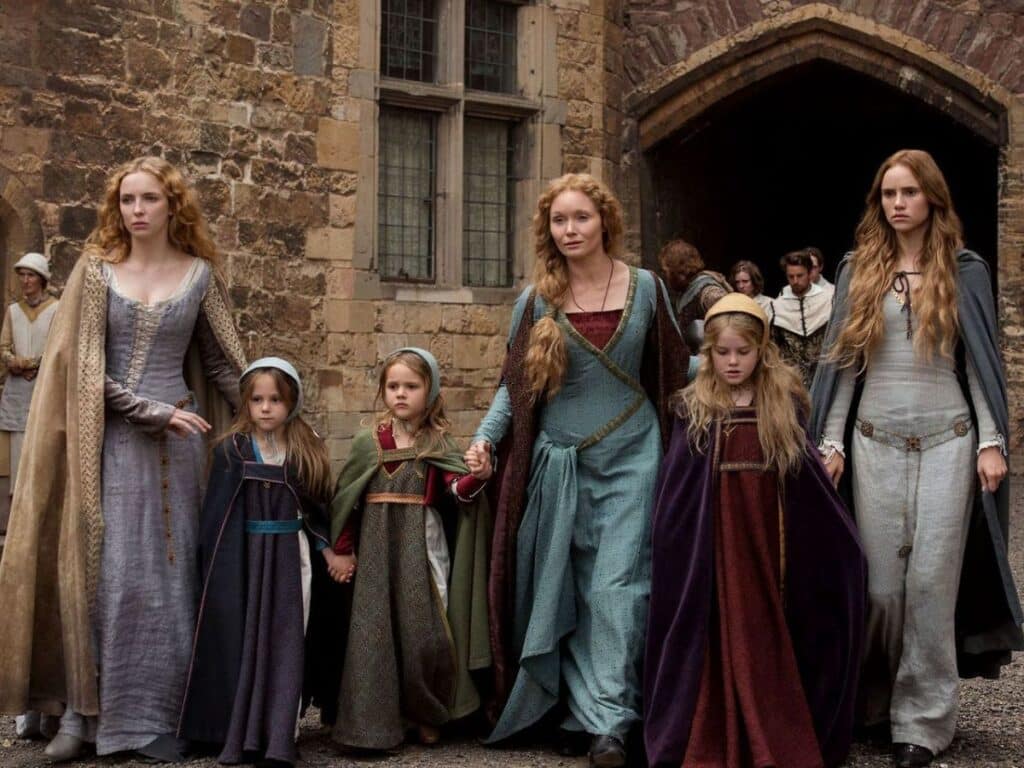
Who Was Elizabeth Woodville?
Elizabeth Woodville wasn’t born into royalty. She was the daughter of a knight and a noblewoman with ties to the royal court, but by 15th-century standards, she was far from queen material. Her first husband, Sir John Grey of Groby, died fighting for the Lancastrians, leaving her a widow with two young sons and little financial security.
She didn’t waste time waiting for fate to decide her future. In one of the most controversial moves in English royal history, she secretly married King Edward IV in 1464. He was expected to marry a European princess, not a widowed mother from a gentry family. Their union sparked a political storm that reshaped the court and helped kick off years of bloodshed during the Wars of the Roses.
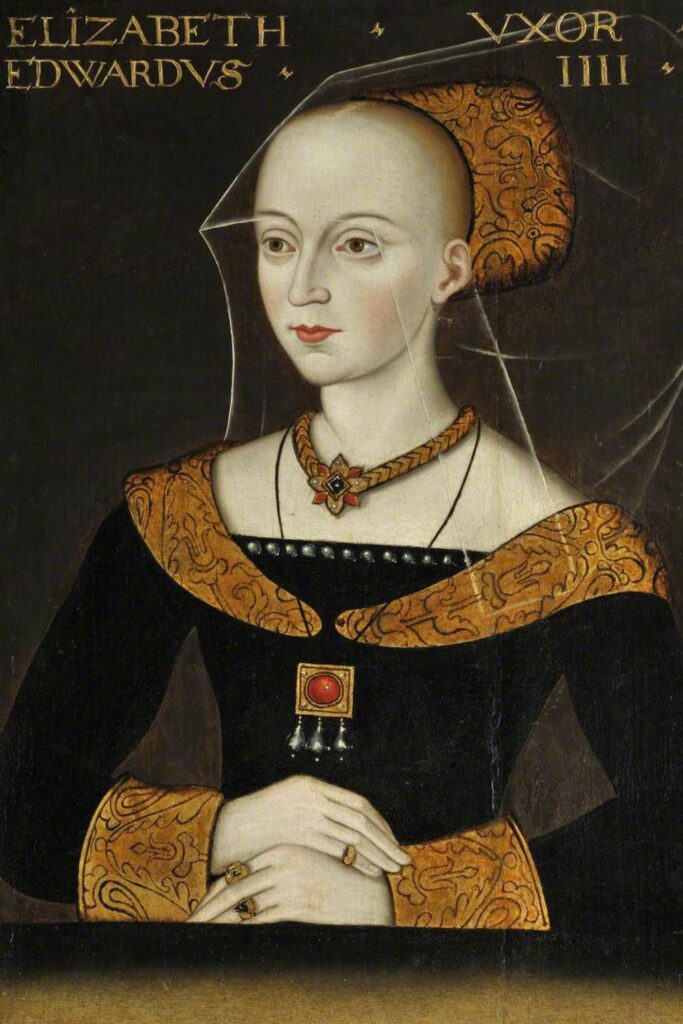
Elizabeth had ten children with Edward IV, including the boy who would briefly become Edward V and the girl who would become queen of England in her own right. She also had two sons from her first marriage. Her daughters, born into chaos, would go on to play quiet but critical roles in reshaping the royal families of Europe.
Elizabeth Grey (daughter from the first marriage)
Elizabeth Grey was the daughter of Elizabeth Woodville and her first husband, Sir John Grey. Born before her mother became queen, she grew up during a period of constant power struggles. She’s less well known than her half-sisters, and historical records on her are scarce.
She may have died young or been married off before her mother’s rise to royalty. There’s no strong evidence that she had children or played a role in European politics, which suggests her life was likely overshadowed by the sudden change in her mother’s fortunes.
What we do know is that once her mother became queen, Elizabeth Grey’s brothers were pulled into the royal fold. Her own story, though, remains largely in the background.
Elizabeth of York (1466–1503)
Elizabeth of York was born to play a role in history, though not the one her parents had planned. She was the eldest daughter of Edward IV and Elizabeth Woodville and spent her childhood in the glittering royal court her father built around the House of York. For a time, it looked like she might marry the French Dauphin. Those plans collapsed when her father died suddenly in 1483, setting off a chain of events that would change the course of English history.
When her uncle, Richard III, seized the throne and declared her parents’ marriage invalid, Elizabeth’s status was shattered. Her brothers disappeared in the Tower. Her mother was stripped of her power. And Elizabeth herself was left in limbo, royal by blood but politically toxic.
That’s when the idea of marrying Henry Tudor took hold. Elizabeth’s mother, together with Henry’s mother, Margaret Beaufort, plotted to bring about their union. Henry needed a way to make his claim to the throne stronger. Elizabeth brought him a Yorkist bloodline that legitimized his reign. Their marriage in 1486 sealed the end of the Wars of the Roses and created the Tudor dynasty. As a symbol, Elizabeth of York was golden.
She gave Henry children, seven in total, though only four survived infancy. Arthur was their firstborn, a Tudor heir raised to rule. He married Catherine of Aragon at fifteen but died just months later, throwing the succession into chaos. Henry, their second surviving son, would go on to become Henry VIII and marry Catherine himself.

Mary, their third surviving child, became Queen of France for a brief time and later married Charles Brandon. Her descendants helped carry the Tudor bloodline into the next generation of noble families. Margaret, another daughter, became Queen of Scotland and grandmother to Mary, Queen of Scots.
Three other children died young. Elizabeth gave birth to her final child, a daughter, in 1503. The baby didn’t survive, and Elizabeth died from complications shortly after. She was just thirty-seven. Henry never remarried. Her death left a quiet gap at the heart of the Tudor court, but her legacy lived on. Without Elizabeth of York, there would have been no Tudor dynasty, no union of York and Lancaster, and no line strong enough to anchor England after decades of civil war.
Hooked on the Middle Ages? Get more stories like this one in your inbox.
Mary of York (daughter of Elizabeth Woodville and Edward IV)
Mary was born in 1467, when her mother was at the height of her power. As a daughter of the king, she was considered a valuable match in the game of dynastic politics. Talks were held about marrying her off to European royalty, including a possible match with the future King of Denmark. But none of the plans stuck.
Mary never married. She died at just 14 years old in 1482. By then, the tide had already started turning against her family. Her death came a year before her father’s, and her short life was lived mostly within the strict confines of the English court. There’s no record of political influence or children, but she would’ve been raised to expect a role in international diplomacy through marriage.
Her story ends before it really began, but she was one of the many royal girls whose lives were shaped by promises that never came to pass.
Cecily of York (1469–1507)
Cecily was born into privilege but ended up living a life shaped by scandal, politics, and quiet exile. As the second daughter of Edward IV and Elizabeth Woodville, she was raised to expect a high-ranking European marriage. That nearly happened. At one point, plans were made for her to marry the future king of Scotland. But when her father died and Richard III took the throne, all of that collapsed.
As with her siblings, Cecily’s legitimacy was questioned when Richard declared Edward IV’s marriage invalid. She and her sisters were hidden away in sanctuary with their mother, then quietly returned to court once Richard secured the crown. By the time Henry Tudor defeated Richard at Bosworth, Cecily was back in favor, at least on paper.
Her first marriage was a political match. In 1485, she was married to Ralph Scrope of Masham, a low-ranking noble. It didn’t last. After Henry VII became king, Cecily had the marriage annulled and was quickly married off again, this time to John Welles, Viscount Welles. He was the king’s half-uncle, and the match was likely meant to tie Cecily more closely to the new Tudor regime. They had two daughters, but both died young.
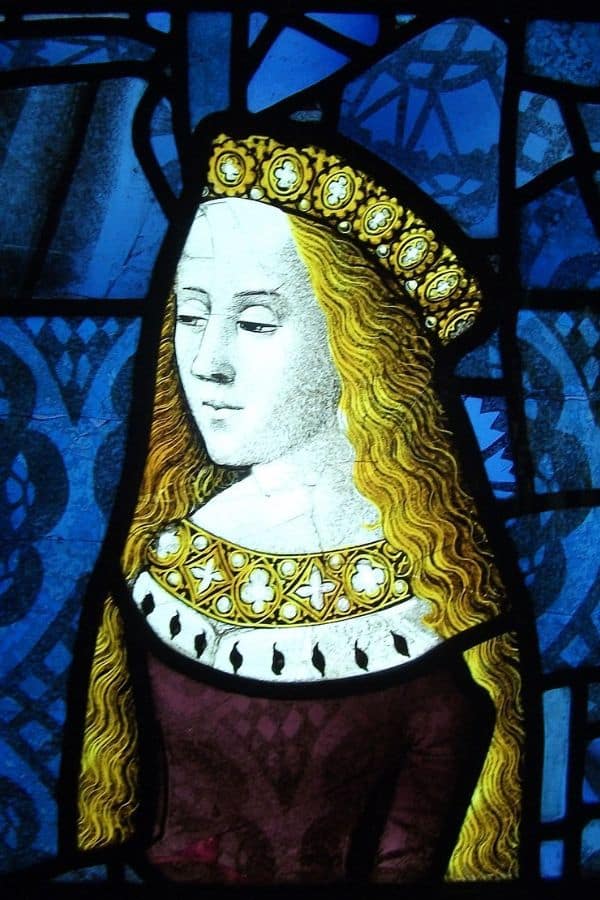
Welles died in 1499, and this is where Cecily’s story took another turn. She secretly married Thomas Kyme, a squire from Lincolnshire. It was a love match, not a political one, and Henry VII wasn’t pleased. He confiscated her lands and banished her from court. Cecily faded from public life, living quietly with Kyme and having at least one, possibly two, more children, though records are scarce.
She died in 1507, away from the spotlight she was born into. Cecily’s life is one of those Tudor footnotes that gets lost in the noise of bigger names. Her fate shows how easily royal women could be lifted up, pushed aside, or punished depending on who sat on the throne.
Anne of York (1475–1511)
Anne was born into a brief moment of calm. Her father had reclaimed his throne, the civil war had quieted, and the House of York looked secure. But like the rest of her siblings, Anne’s life was anything but settled. She grew up in a court full of whispers, shifting alliances, and the constant threat of war snapping back to life.
Plans were made early on to marry Anne to Philip of Austria, son of the Holy Roman Emperor. That match would have placed her at the heart of European power. But when her father died and Richard III claimed the throne, those negotiations collapsed. Anne, still a child, followed her mother into sanctuary, and like her sisters, she was at the mercy of whichever man happened to be king.
Eventually, Henry VII married her to Thomas Howard, whose father had fought for Richard III at Bosworth. It was a smart move politically, tying the Howards to the new Tudor regime, but it wasn’t an especially prestigious match for a woman of Anne’s rank. The couple had several children, but most of them died young. Only one son, Thomas Howard, survived and would go on to become the 3rd Duke of Norfolk, playing a major role under Henry VIII.
Anne didn’t take part in court life the way her sister Elizabeth did. Her name rarely appears in records, and she seems to have kept her head down. She died in 1511, aged thirty-six. Her husband outlived her by more than two decades, rising in power while Anne faded from the story. But her bloodline stayed close to the crown. Through her son, she became the grandmother of both Henry VIII’s second wife, Anne Boleyn, and his fifth, Catherine Howard.
Catherine of York (1479–1527)
Catherine was born into a royal family trying to hold itself together. She arrived just four years before her father died, and while she was still a toddler, the crown passed from her brother Edward V to her uncle Richard III in a bloody shuffle of power. Like her sisters, Catherine spent time in sanctuary.
After Henry VII took the throne, Catherine’s status improved. She was brought back into royal favor along with her sisters, though not all were treated equally. In 1495, she married William Courtenay, a nobleman from a respected Devonshire family. It wasn’t a match of international prestige, but it was solid enough for a daughter of the late king.
Catherine and William had three children. Their son, Henry Courtenay, would go on to become Marquess of Exeter and play a prominent role in Henry VIII’s court. But power in Tudor England was dangerous. That same son was later executed for treason during Henry VIII’s paranoid crackdown on Plantagenet blood. Catherine lived long enough to see him rise but not fall.
After William died in 1511, Catherine remained at court under her nephew, Henry VIII. Unlike some of her sisters, she seems to have lived out her later years in relative peace, away from scandal or disgrace. She died in 1527 at the age of forty-eight. Her life, like many of her siblings’, was shaped by the long shadow of the Wars of the Roses, but she managed to avoid the brutal endings that came for so many others.
Bridget of York (1480–1517)
Bridget was the last daughter of Elizabeth Woodville and Edward IV. Born in 1480, she arrived in a world already tilting toward crisis. Her father would die just three years later. In 1492, at the age of twelve, Bridget entered the priory of Dartford in Kent.
It wasn’t unusual for royal daughters to be placed in convents, but in Bridget’s case, it seems to have been a permanent decision. Whether it was her choice or her family’s is unknown. What’s clear is that she never left. While her sisters married dukes and viscounts or became pawns in the chess game of alliances, Bridget stayed cloistered.
There are few surviving records of her life at Dartford, but she lived there for decades, likely taking full vows as a nun. She died in 1517, at the age of thirty-six. She left no children, no known involvement in politics, and no public scandal. However, her life still reveals something important about the period. In a world where royal blood could be both powerful and dangerous, sometimes the safest place for a princess was behind abbey walls.
Love a good medieval story?
Join our readers and get tales of kings, queens, castles and ordinary medieval lives straight to your inbox.

Kylie Lang is a nationally syndicated travel journalist with bylines on the Associated Press Wire & more, a medieval history writer, and the founder and lead author of Tales of the Middle Ages (talesofthemiddleages.com). She holds a BA (Honours) in History from the University of Kent and is a member of the British Guild of Travel Writers.
Related posts:
 Cecily of York: The Princess Who Should Have Been Queen of Scotland But Died in Obscurity
 Plantagenet Princess, Cecily of York Should Have Been Queen of Scotland, So What Happened?
 The Real Story of Cecily Neville, Mother to Edward IV and Richard III
 The Queen Who Blew Up the Tudor Court: Catherine Howard’s Rise and Catastrophic Fall