Whether you love history or not, you’ll undoubtedly have heard of the Princes in the Tower. The disappearance of Edward V and his brother Richard of Shrewsbury has become history’s juiciest true crime cold case. Two boys vanish from the Tower of London. A king’s crown teeters on their graves, and rumors are rife.
For centuries, Richard III has rotted in infamy as the child-killing uncle who stole the throne. But what if the Tudors, the dynasty that toppled him, forged the entire narrative? We’re sifting through 500 years of lies, propaganda, and bones buried under staircases to answer the question: Did Richard III murder the Princes in the Tower, or did history frame him to justify a bloody regime change?
Table of Contents

The Disappearance That Haunts History
In April 1483, 12-year-old Edward V rode into London expecting to be crowned king. His father, Edward IV, had died suddenly, leaving the boy heir to the English throne. Edward’s uncle, Richard, Duke of Gloucester, was named Lord Protector. A title that should have meant safeguarding the boy until he came of age.
Instead, it marked the beginning of one of history’s murkiest mysteries. Edward was taken to the Tower of London, a standard step in the coronation process, but something shifted. His younger brother, Richard of Shrewsbury, joined him soon after, and then both boys were seen less and less.
And then, nothing.
No more public appearances. No sightings. Just silence. Londoners started whispering. The kind of whispers that slip down alleyways and huddle in candlelit taverns. People talked of plots. They talked of death. But they had no proof. Only the growing sense that something had gone terribly wrong behind the stone walls of the Tower.

Meanwhile, the boys’ mother, Elizabeth Woodville, was holed up in sanctuary inside Westminster Abbey. She had fled there with her daughters and youngest son the moment her husband’s death set the court into chaos. She didn’t trust the lords circling the crown, and she certainly didn’t trust her brother-in-law Richard. She knew how quickly royal favor could turn into a death sentence. She had watched it happen before. So she did what any mother would do in a world built on betrayal: she ran.
She refused to give up her second son, young Richard, for weeks. It took promises. Oaths. Sworn guarantees that he’d be reunited with his brother so they could prepare for Edward’s coronation. In the end, she handed him over, likely against her gut, because what other choice did she have?
She never saw either of her sons again.
By the summer of 1483, Richard, Duke of Gloucester, had claimed the crown. Edward V was never crowned. Both boys had disappeared. There were no announcements. No bodies. No burials. Just two children erased from view. And a mother who spent the rest of her life never knowing what happened behind those stone walls.
It was about power, survival, and legacy in a kingdom where crowns came with bloodstains. Everyone near the throne had something to lose or gain, and the boys were in the way. Whether Richard III had them killed or someone else took the opportunity while he turned a blind eye, history never left them in peace.

Richard III: Monster or Machiavellian?
Richard III has long been cast as the villain in this historical drama. Shakespeare immortalized the image of the hunchbacked usurper, which has colored perceptions for centuries. But was Richard truly the cold-blooded murderer of his nephews, or has history been unkind to a man navigating a treacherous political landscape?
Richard’s motives seem obvious. As Lord Protector, he had everything to gain from the boys’ deaths. The Titulus Regius, a 1484 act of Parliament, declared Edward IV’s marriage invalid, making his sons bastards. With them gone, Richard’s claim was secure.
But let’s not pretend medieval kingship was subtle. Rivals died. Children weren’t exempt. Edward II’s son, Edward III, executed his own uncle for treason at 18. Richard’s brother, George, was drowned in a barrel of Malmsey wine for plotting rebellion.
Yet Richard’s reputation hinges on one question: Would he kill kids?
Contemporary accounts are scarce. The Croyland Chronicle, written by a Yorkist monk, notes only that the princes were “withdrawn into the inner apartments… and day by day began to be seen more rarely.” By August 1483, rumors of their deaths swirled.
Enter Sir Thomas More. His 1513 biography of Richard III paints a vivid scene: the king ordering henchmen to smother the boys with pillows. But More was 5 when Richard died. His source? John Morton, a bishop whom Richard had imprisoned. More’s narrative details a confession by Sir James Tyrell, who allegedly carried out the murders on Richard’s orders.
Recent discoveries have added weight to this theory. A will from 1522 mentions a chain belonging to Edward V found in the possession of Lady Margaret Capell, a relative of Tyrell. This connection between Tyrell and the princes’ belongings suggests a link to the crime.
Alternatively, some historians argue that Richard was a product of his time, a shrewd politician making calculated moves in a volatile environment. The declaration of Edward IV’s children as illegitimate, based on a pre-contract of marriage, provided Richard with a legal basis to claim the throne. This maneuver, while self-serving, was not uncommon in the power struggles of the era.
Moreover, during Richard’s short reign, efforts were made to implement legal reforms and address grievances, indicating a ruler concerned with governance, not just power.

Hooked on the Middle Ages? Get more stories like this one in your inbox.
The Tudor Spin: Rewriting History Over Their Graves
Henry VII’s reign was built on a lie. He claimed legitimacy through his Lancastrian blood (thin) and marriage to Elizabeth of York, the prince’s sister (thicker). But if the boys were alive, she wasn’t the heir; they were.
1485 after killing Richard at Bosworth Field, Henry had Parliament denounce him as a tyrant. But he never accused Richard of murder. No trials, no proclamations. Just deafening silence.
In 1502, a confession emerged. Sir James Tyrrell, Richard’s former loyalist, allegedly admitted to arranging the murders under Richard’s orders. But Tyrrell “confessed” under torture, and Henry executed him without public testimony. Convenient.
Richard III’s portrayal as a malevolent usurper wasn’t merely a product of Shakespeare’s imagination. The seeds were sown earlier by Tudor historians like Thomas More and Polydore Vergil. More’s History of King Richard III, written during Henry VIII’s reign, painted Richard as a scheming murderer, responsible for the deaths of his nephews, the Princes in the Tower. Vergil’s Anglica Historia echoed this sentiment, further entrenching the image of Richard as a tyrant.
These accounts, while influential, were penned under Tudor patronage, raising questions about their objectivity. The Tudors understood the potency of storytelling. By vilifying Richard III, they not only justified Henry VII’s ascent but also sought to erase the legitimacy of the Yorkist line.
Bones in the Tower: Secrets Under the Stairs
In 1674, during renovations at the Tower of London, workmen uncovered a wooden box beneath a staircase leading to the chapel of the White Tower. Inside were the skeletal remains of two children. Given the Tower’s grim history and the enduring mystery of the missing princes, many believed these were the bones of Edward V and his brother Richard, Duke of York.
The discovery was compelling. The location matched accounts from Thomas More’s writings, and the age of the skeletons seemed consistent with the princes’ ages at the time of their disappearance. The remains were found approximately 10 feet beneath the staircase, and reports mentioned fragments of velvet, suggesting the children were of noble birth.

King Charles II ordered the bones to be interred in Westminster Abbey, where they were placed in an urn designed by Sir Christopher Wren. The inscription on the urn identifies the remains as those of the two princes, though no definitive proof has ever confirmed this.
In 1933, the urn was opened, and the bones were examined by experts. The analysis concluded that the remains belonged to two children, one aged around 12 and the other approximately 10, aligning with the princes’ ages. However, the examination faced criticism for its limited scope and the presumption that the bones were those of the princes. Notably, no attempt was made to determine the sex of the skeletons, and some bones were missing or damaged.
Calls for modern DNA testing have been made, especially after the successful identification of Richard III’s remains in 2012. However, the Church of England and Westminster Abbey have resisted these requests, citing the sanctity of the burial site and the potential for inconclusive results.
The debate continues. While some argue that testing could finally solve the centuries-old mystery, others believe the remains should be left undisturbed. As historian Tracy Borman noted, “I think probably that they are best left to rest in peace,” reflecting the delicate balance between historical inquiry and respect for the deceased.
But you have to ask, why would Richard hide them so sloppily? And why would Henry VII, who also benefited from their deaths, never produce the corpses as proof of Richard’s guilt?
Alternative Suspects: The Usual (Tudor) Suspects
If not Richard, who?
1. Henry VII: The Opportunistic Usurper
Henry Tudor, who became Henry VII after defeating Richard III at the Battle of Bosworth in 1485, had a vested interest in eliminating rival claimants to the throne. By marrying Elizabeth of York, sister to the missing princes, he sought to unite the warring houses of Lancaster and York. However, if the princes were still alive, they would significantly threaten his claim.
Some theories suggest that Henry VII may have ordered the princes’ deaths after ascending the throne to secure his position. However, this would imply that the princes were alive until at least 1485, which contradicts earlier accounts of their disappearance in 1483. Moreover, no concrete evidence links Henry VII directly to their demise.
2. The Duke of Buckingham: Betrayal and Ambition
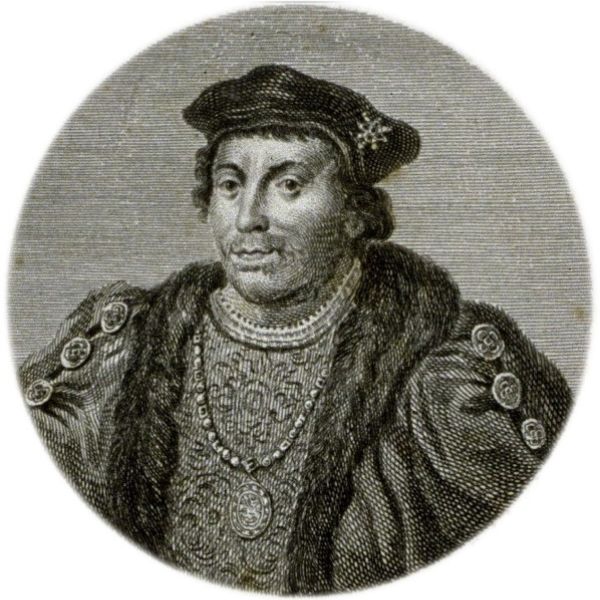
Henry Stafford, 2nd Duke of Buckingham, was initially a staunch supporter of Richard III but later rebelled against him. Buckingham had a tenuous claim to the throne through his descent from Edward III, and some historians speculate that he may have seen the princes as obstacles to his ambitions.
A contemporary Portuguese document suggests that the princes were entrusted to Buckingham’s custody and subsequently died under his watch. However, the plausibility of this theory is debated, as Buckingham would have required access to the princes, who were under Richard III’s control in the Tower. Additionally, Richard did not publicly accuse Buckingham of the murders, which raises questions about this theory’s validity.

3. Margaret Beaufort: The Puppet Master
Margaret Beaufort, mother of Henry VII, was a formidable political figure with a deep commitment to her son’s ascent to the throne. Some fictional accounts and speculative theories have portrayed her as orchestrating the princes’ deaths to clear the path for Henry. However, there is no substantial historical evidence to support this claim.
Critics of this theory point out that Margaret Beaufort lacked the means and opportunity to carry out such an act, especially given the princes’ confinement in the Tower under Richard III’s authority. Furthermore, her known activities during this period do not suggest involvement in such a plot.
Modern Sleuths: Forensics, Fiction, and Frustration
In 2012, Richard III’s skeleton was found under a Leicester parking lot. His curved spine matched Tudor propaganda, but there was no evidence of “withered arm” or other Shakespearean flaws.
Campaigners beg the King to test the Westminster bones. DNA could confirm their identity, but the Church of England refuses, calling it “disturbing the dead.”

Historians like Philippa Langley (who spearheaded the Richard III search) argue that the princes survived. She cites a 1486 letter from a Spanish diplomat noting Edward V was alive, but it’s likely a reference to Simnel’s impostor.
The truth? We’re trapped in a medieval hall of mirrors. Every source is biased. Every suspect had a motive.
A Bloody Riddle, Wrapped in Propaganda
The princes’ fate may never be solved. Richard III remains the likeliest killer, but the Tudors’ censorship leaves room for doubt.
What’s clear is this: Their disappearance was the original true crime saga, a story weaponized by winners and losers alike. In death, the princes became pawns, first in Richard’s power grab, then in Henry’s propaganda, and now in our endless fascination with history’s dark corners.
So, did Richard do it? Maybe. But in the Wars of the Roses, everyone had blood on their hands, especially the ones who wrote the history books.
Love a good medieval story?
Join our readers and get tales of kings, queens, castles and ordinary medieval lives straight to your inbox.

Kylie Lang is a nationally syndicated travel journalist with bylines on the Associated Press Wire & more, a medieval history writer, and the founder and lead author of Tales of the Middle Ages (talesofthemiddleages.com). She holds a BA (Honours) in History from the University of Kent and is a member of the British Guild of Travel Writers.
Related posts:
 12 Things You Didn’t Know About the Tower of London
 The Battle of Bosworth Reimagined: Two Voices, One Crown And the Betrayal That Changed England Forever
 Mary Tudor and Charles Brandon: The Secret Marriage That Rocked Henry VIII’s Tudor Court
 History or Hype? What Really Happened in the Wars of the Roses (And What Didn’t)