If you still picture a medieval queen as a woman in a wimple, sitting quietly and producing heirs, let me change your mind. Some of the most ruthless, clever, and downright unstoppable people in medieval England wore a queen’s crown, not a king’s.

They raised armies, deposed husbands, ruled as regents, and held kingdoms together while the men were off fighting or falling apart.
Table of Contents
I have a soft spot for these women, partly because I live right in the middle of southwest France, which was once Eleanor of Aquitaine’s backyard, and I’ve stood at Fontevraud Abbey looking down at the stone effigies of two queens who once held half of Europe in their hands.
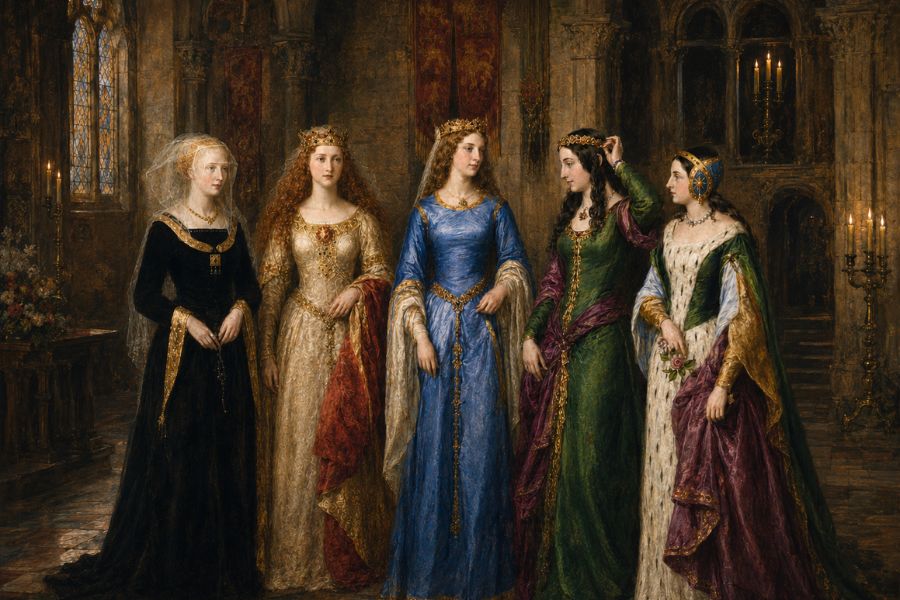
The 10 Most Powerful Medieval Queens of England
I’ve gone in chronological order rather than ranking them, because deciding who was “most” powerful would start a fight I don’t fancy. Each one left a mark, and as you’ll see, it wasn’t always for the good.
1. Emma of Normandy

Long before the Normans conquered anything, a Norman woman was quietly running rings around English politics. Married first to Æthelred the Unready and then, after the Vikings won, to Cnut the Great himself, Emma of Normandy managed the near-impossible. She was queen of England twice, to two rival dynasties, and mother to two more kings.
She was nobody’s pawn. She even commissioned a book, the Encomium Emmae Reginae, to spin her own version of events, conveniently writing the inconvenient relatives out of the story.
Her legacy is enormous and tangled. Through her bloodline and her Norman connections, the road that led to 1066 began to take shape decades before anyone landed at Hastings. For better or worse, she put her own line first every single time, even when it meant sidelining her own children.
Read more about Emma of Normandy here >>>
2. Matilda of Flanders
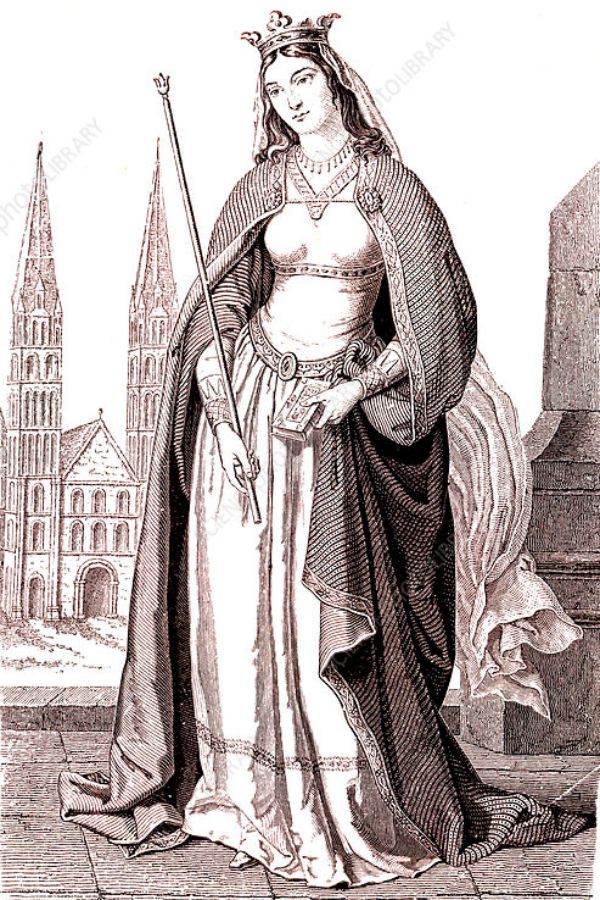
When William the Conqueror sailed off to grab England, somebody had to mind Normandy. That somebody was his wife. Matilda of Flanders ruled the duchy as regent in his absence, and frankly, without her holding the fort at home, William would never have had the freedom to play war across the Channel.
She was the first woman to be crowned Queen of England in 1068, and she wielded real power in her own right, a rare thing for any woman of her age.
She stitched the Bayeux Tapestry with her own ladies, and in France, it’s still sometimes called La Tapisserie de la Reine Mathilde. It’s a lovely story, but the evidence points to William’s half-brother Odo as the man who commissioned it. Her real legacy needs no embroidery. Without her, the Conquest itself might never have happened.
Read more about Matilda of Flanders here >>>
3. Empress Matilda

Here’s a woman who came within a whisker of being England’s first ruling queen, and never got the crown. Empress Matilda, daughter of Henry I, was named his heir and had the barons swear loyalty to her. The moment he died, her cousin Stephen nipped in and grabbed the throne anyway.
What followed was nearly two decades of civil war, so grim the chroniclers said that Christ and his saints slept. Matilda fought on regardless. She captured Stephen at Lincoln, came within touching distance of her coronation, then lost it by falling out with the Londoners.
But her escape from a besieged Oxford Castle in the dead of winter was a major feat. She slipped out dressed all in white, blending into the snow as the enemy hunted her. She never wore the crown, but she never gave up her claim either, and she won in the end.
Her son became Henry II, and the whole Plantagenet dynasty sprang from her stubbornness.
Read more about Empress Matilda here >>>
4. Eleanor of Aquitaine

If there’s one queen everyone should know, it’s this one. Eleanor of Aquitaine inherited one of the richest territories in Europe at fifteen, and spent the next sixty-odd years refusing to be anyone’s pawn.
She was the only woman ever to be queen of both France and England. She went on Crusade, mothered ten children, including Richard the Lionheart and King John. When her husband, Henry II, crossed her one time too many, she backed her sons in open rebellion against him, and he locked her up for the best part of sixteen years for it.
She outlived him, walked free, and ruled as regent for Richard. In her late seventies, she rode over the Pyrenees to fetch a granddaughter for a marriage match. She died at around eighty, having buried most of her world. Nobody, but nobody, put Eleanor in the corner.
Read more about Eleanor of Aquitaine here >>>
5. Eleanor of Provence

Yes, another Eleanor. The 13th century was positively crawling with them. This one married Henry III as a girl of twelve and never quite won England over.
Eleanor of Provence made the cardinal sin of being foreign and bringing her relatives with her. The English barons loathed the Provençal hangers-on she installed at court, and the resentment landed squarely on her.
During the Barons’ War against Simon de Montfort, things got so ugly that a London mob pelted her barge with stones and rotten food as she tried to cross the Thames.
But don’t mistake unpopular for powerless. She raised money and mercenaries abroad to fight for the royalist cause, shaped her son Edward I into the formidable king he became, and held real authority long after her husband died. For better or worse, she was a force, even when half of England wanted her gone.
Read more about Eleanor of Provence here >>>
6. Eleanor of Castile
One more Eleanor, I promise, and then we’ll move on. This one married the future Edward I and, unusually for a royal match, the two of them really did adore each other. She followed him everywhere, even on crusade, where the pair of them nearly died of illness in the Holy Land.
She was no shrinking violet behind the scenes either. She built up a formidable property empire, sometimes ruthlessly, and wasn’t above ruffling feathers to do it.
Her legacy is the most romantic on this list. When she died in 1290, a heartbroken Edward marked every overnight stop of her funeral procession to Westminster with a stone cross, known as the Eleanor Crosses. The last of them gave London’s Charing Cross its name, so a little piece of her is still standing in the middle of the city today.
7. Isabella of France

Now we come to the queen who actually overthrew a king of England, and that king was her own husband. History remembers Isabella of France as the She-Wolf, and you can see why.
Married to Edward II and humiliated for years while he lavished everything on his favorites, Isabella finally had enough. She went to France, took up with the exiled Roger Mortimer, and came back at the head of an invading army in 1326.
It was less a war than a landslide. Edward was deposed, and soon after died at Berkeley Castle in murky circumstances. The lurid red-hot-poker story is almost certainly a later invention, but a dead king was always more useful than a living one.
For three years, Isabella ruled England as regent alongside Mortimer, until her teenage son Edward III seized power, executed Mortimer, and quietly retired his mother. One of the very few women ever to topple an English king. Ruthless, brilliant, and not a woman to wrong.
Read more about Isabella of France here >>>
8. Philippa of Hainault

After all that scheming, here’s a queen who won people over by being good at the job. Philippa of Hainault arrived as a pawn in someone else’s plot, her marriage to Edward III being the price of the ships that brought Isabella’s invasion. Hardly a fairy-tale start.
But Philippa played it beautifully. She didn’t stuff the court with her own relatives or throw her weight about. She earned respect the slow way, by being steady, fair, and kind, until Edward trusted her with real power. She governed in his absence and stood firm when Scotland invaded while he was away in France.
Her most famous moment is interceding on her knees for the six burghers of Calais, begging her husband to spare their lives, and winning. The mercy made her a legend.
The one shadow on her legacy is the sheer size of her brood. Her many sons and their descendants would, generations later, tear England apart in the Wars of the Roses.
Read more about Philippa of Hainault here >>>
9. Margaret of Anjou
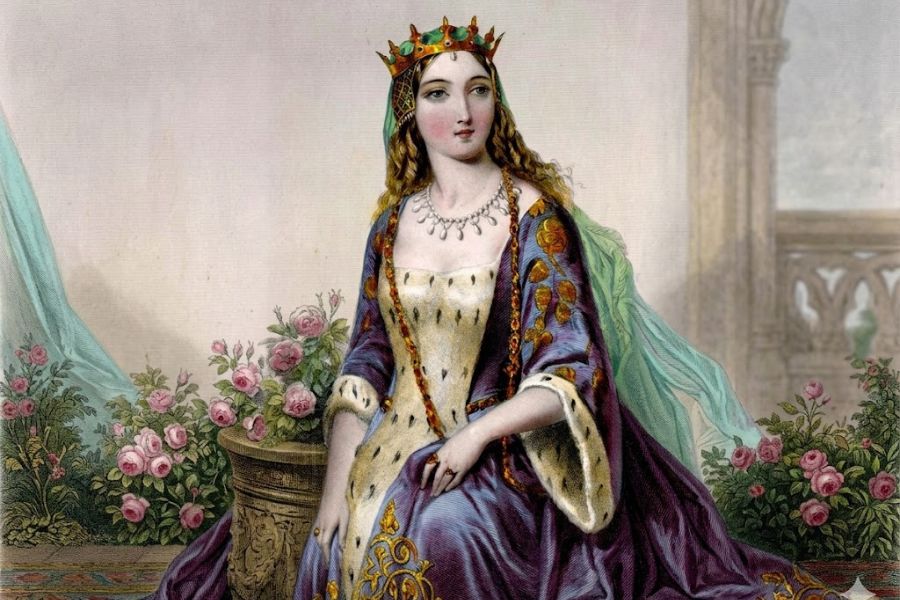
Which brings us to the woman who led one side of that war. When her husband Henry VI slid into mental collapse, leaving the throne effectively empty, Margaret of Anjou stepped into the gap and refused to budge.
She became the driving force of the entire Lancastrian cause. She raised armies, led men, struck deals with foreign powers, and even swallowed her pride to ally with her old enemy Warwick when it suited her.
Shakespeare later branded her the she-wolf of France, which tells you exactly how much a woman commanding armies frightened people.
It ended in tragedy. Her only son was cut down at Tewkesbury, her husband was murdered in the Tower, and she herself was eventually ransomed off to France to die in obscurity.
She lost everything. But for sheer nerve and staying power, few queens, male monarchs included, could match her. She broke every rule of medieval queenship and set them alight.
Read more about Margaret of Anjou here >>>
10. Elizabeth Woodville
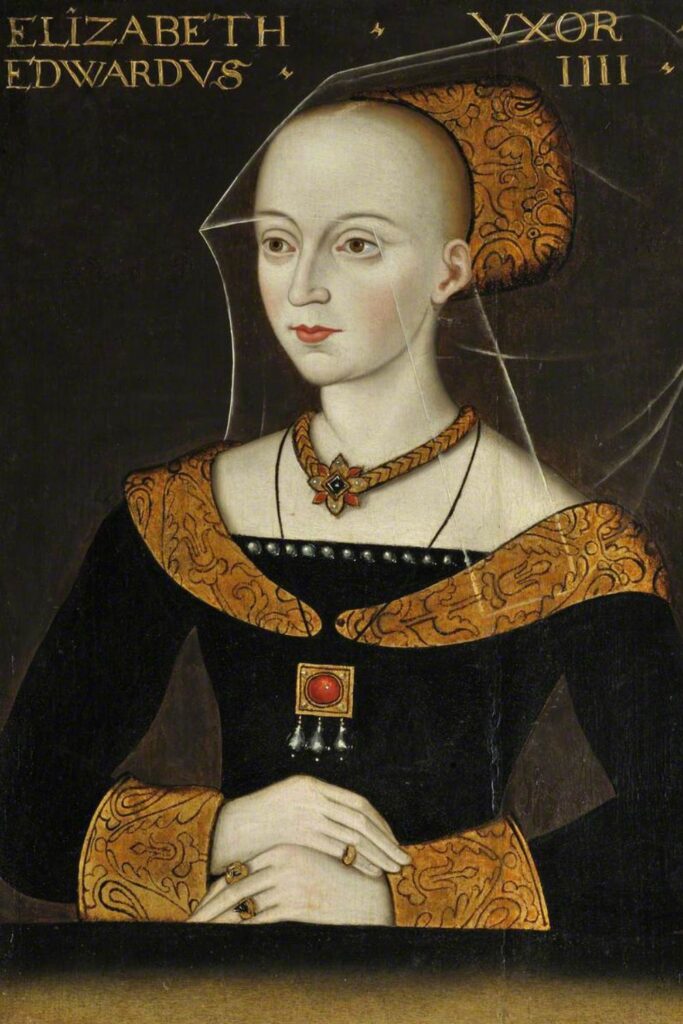
We end with the queen who, against all the odds, became the grandmother of the Tudors. Elizabeth Woodville was a widow with no royal blood and a large, ambitious family when the Yorkist king Edward IV married her in secret, purely for love. The court was scandalized.
Her huge family climbed fast on the back of that marriage, snapping up titles and matches until the great Earl of Warwick seethed with resentment, and that resentment helped reignite the Wars of the Roses. When Edward died, Elizabeth’s world caved in. Her two sons vanished into the Tower under Richard III, becoming the Princes in the Tower we still argue about today.
But she had one more move in her. She struck a quiet pact with Margaret Beaufort to back Henry Tudor, whose marriage to her daughter Elizabeth of York finally united the warring houses.
From a love match, the whole country sneered at came the dynasty that would rule England for over a hundred years.
Read more about Elizabeth Woodville here >>>
What These Women Left Behind
Ten queens, ten very different stories. A Viking-age survivor, a regent of Normandy, a near-queen who fought through nineteen winters of war, a duchess who outlived everyone, and warrior queens who marched armies across a divided land.
If you’ve enjoyed meeting them, you’ll find plenty more spirited troublemakers among the most ruthless rulers of the Middle Ages. History tends to remember the kings. But stand at Fontevraud, as I have, and it’s the queens who look back at you.

Kylie Lang is a nationally syndicated travel journalist with bylines on the Associated Press Wire & more, a medieval history writer, and the founder and lead author of Tales of the Middle Ages (talesofthemiddleages.com). She holds a BA (Honours) in History from the University of Kent and is a member of the British Guild of Travel Writers.
Related posts:
 Empress Matilda: The Crown, the Betrayal, and the Fight of Her Life
 Empress Matilda: Lady of the English and Queen of Ice and Snow. But Should She Have Been England’s First Queen?
 The Turbulent Early Years of Eleanor of Aquitaine and Henry Plantagenet
 The Tumultuous Marriage of Eleanor of Aquitaine and Henry Plantagenet