If you love British history, in particular, the War of the Roses, you’re about to get a history lesson on a French woman who nearly changed the course of English history.
Margaret of Anjou doesn’t always get the spotlight, but she should. She was a political force to be reckoned with. Intelligent, determined, and fiercely loyal to her cause, Margaret stepped into one of the most chaotic periods of English history and left her mark on it in a way few women of her time ever did.
Table of Contents
Married to a king who could barely hold a conversation, let alone a kingdom, she took on roles far beyond what anyone expected from a queen. When civil war broke out, Margaret didn’t shrink into the shadows. She raised armies, made deals with foreign powers, and stood at the center of the Lancastrian fight to hold on to the throne.
She’s often remembered as ruthless or overambitious, but that’s only part of the story. There’s far more to Margaret than the myths and the politics. This woman fought for her family, navigated the brutal world of medieval power, and stood long after many around her had fallen.
If you want to understand the Wars of the Roses, you need to understand Margaret of Anjou.
Not Your Typical Medieval Queen
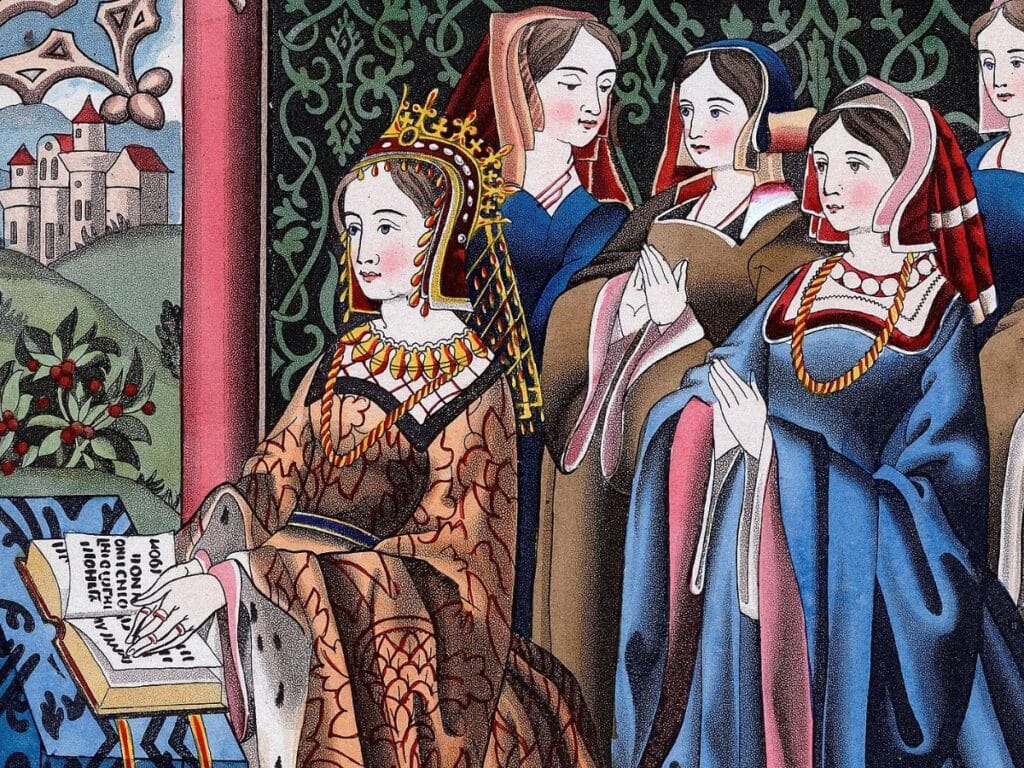
In a time when women were expected to look decorative and keep their opinions to themselves, Margaret made it clear she had no intention of following the script. She arrived in England from France in 1445, just fifteen years old, to marry King Henry VI. The match was meant to bring peace between England and France.
Instead, it helped light the fuse for decades of civil war. Margaret had barely unpacked before being caught in a storm of political rivalries, royal weakness, and public unrest. The king was passive, often unwell, and increasingly incapable of ruling. That left a power gap, and Margaret stepped straight into it.
Over time, she became the driving force behind the Lancastrian side of the War of the Roses. Loved by some, hated by others, and feared by many, Margaret fought harder than most of the men around her. This was a woman who knew what was at stake and wasn’t afraid to get her hands dirty. Her rise was bold, her fall was brutal, and her legacy is anything but straightforward.
Early Life and Political Origins
Margaret was born in 1430 in the Duchy of Lorraine, a region that sat on the fault line between French and Holy Roman influence. Her father, René of Anjou, held a long list of impressive titles: Duke of Anjou, King of Naples, King of Jerusalem, and a few others that sounded grand but came with very little actual power. His fortunes shifted constantly, but his court was cultured, creative, and politically active.
That mix of instability and high ambition shaped Margaret from an early age. She grew up surrounded by books, music, and strong women. Her mother, Isabella of Lorraine, managed her husband’s lands while he chased crowns elsewhere, and Margaret learned by watching. She was raised to be clever, composed, and ready to play the long game.
By the time she was a teenager, Margaret spoke multiple languages, understood politics, and knew how to hold her own in a court full of ambitious men, and was far more prepared for power than most expected.

A Marriage of Peace That Led to War
At fifteen, Margaret was betrothed to King Henry VI of England. It was a diplomatic match, part of an effort to secure peace during the Hundred Years’ War. There was no dowry, but there was a secret clause that handed over the region of Maine to the French. That detail would come back to haunt her.
From the English point of view, this marriage didn’t look like a win. Margaret arrived with little wealth, no land, and the loss of territory tagged onto her wedding agreement. As tensions rose, many blamed her for being French, influencing the king, and supposedly pulling strings behind closed doors.
It was a marriage built on shaky political promises, and the cracks began to show quickly.
In 1453, Henry VI suffered a complete mental breakdown. He became catatonic, unable to speak, recognize anyone, or perform even the most basic duties of a king. With her husband incapacitated and her infant son, Edward, next in line for the throne, Margaret stepped into the void. She began making decisions on behalf of the crown, negotiating with nobles, and rallying support for the Lancastrian cause.
But Margaret’s assertiveness didn’t sit well with everyone. Many saw her as overstepping her role as queen consort, and her enemies began to whisper that she was power-hungry and manipulative. These rumors only grew when she aligned herself with unpopular advisors and pushed for policies that favored her own interests. Margaret was playing a dangerous game, and the stakes were about to get even higher.
A Weak King, A Strong Queen
Henry VI was never built for kingship. He was kind, devout, and gentle, but that didn’t get you far in 15th-century England. He struggled to lead and grew increasingly detached from reality. At times, he was so mentally unwell he couldn’t speak, recognize people, or even respond. This left the country leaderless and wide open for trouble.
Margaret didn’t wait around. While others hesitated, she stepped into the power vacuum and began calling the shots. She built alliances, played politics, and fought to protect her husband’s position. But not everyone liked the idea of a queen taking charge.
Divisions at court turned into full-blown factions. On one side were the Lancastrians, loyal to Henry and Margaret. On the other hand, the Yorkists, led by Richard, Duke of York, who had royal blood of his own and a growing sense that he could do a better job running the country.
The Birth of an Heir and a Brewing War
In 1453, Margaret gave birth to a son, Edward of Westminster. Under normal circumstances, the birth of an heir would have brought stability. But this was England in the midst of chaos. Henry had been in a complete mental breakdown for over a year. He didn’t acknowledge the baby. He didn’t even seem to know Margaret was pregnant.
That gave fuel to a nasty fire. Whispers began to spread that the child wasn’t really Henry’s. Some said Margaret had taken a lover and passed the baby off as royal. No proof, just poison in the political air. And it worked. Doubt crept in. Trust broke down.
With the king unfit to rule and questions swirling around the queen, Parliament stepped in. Richard, Duke of York, was appointed Lord Protector. For Margaret, it was a personal and political slap in the face. She saw York as a threat to her son’s future, and from that moment, the battle lines were drawn. The Wars of the Roses had truly begun.

Hooked on the Middle Ages? Get more stories like this one in your inbox.
From Political Strategist to Battlefield Leader
When the Wars of the Roses exploded into full-scale conflict, Margaret wasn’t content to sit in the background. With Henry drifting in and out of lucidity and no one else willing to protect her son’s claim to the throne, she took matters into her own hands.
She became the de facto leader of the Lancastrian side. Margaret traveled north, struck an alliance with the Scots, and later secured backing from France. She promised land, money, even marriage ties, whatever it took to build a force strong enough to challenge the Yorkists. She intended to survive at any cost.
While she didn’t fight with a sword, Margaret was behind several key military decisions. At the Battle of Wakefield in 1460, the Lancastrians ambushed and killed Richard, Duke of York, alongside his son Edmund. For a while, it looked like her bold moves were paying off. But every victory seemed to spark a fiercer backlash, and with every battle, her reputation grew darker.

Ruthless Reputation
After Wakefield, Richard of York’s head was stuck on a pike and displayed on the gates of York, allegedly with a paper crown. Many believed Margaret had ordered it. Whether she did or not, the image stuck. It was brutal. It was political theater. And it cemented her as a woman who would do whatever it took to protect her son’s future.
Her enemies were quick to paint her as unnatural and bloodthirsty. Chronicles from the time often described her in terms they rarely used for male leaders. She wasn’t brave, she was dangerous. She wasn’t strategic; she was scheming. A woman leading men into battle went against every expectation of the time, and they didn’t let her forget it.
Centuries later, Shakespeare turned her into a snarling villain in his plays. She’s the only character who appears in all three of his Henry VI dramas and even pops up in Richard III for good measure. In his version, she’s vicious, unhinged, and vengeful.
The real Margaret of Anjou was more complicated. Ruthless, yes. But also resilient, politically savvy, and far more human than the legends allow.

The Reign of Brief Victories
By the late 1460s, the Lancastrian cause was on life support. In 1461, the Lancastrians suffered a devastating defeat at the Battle of Towton, one of the bloodiest battles ever fought on English soil. The Yorkists, led by Edward IV, emerged victorious, and Margaret and her son were forced to flee. They sought refuge in Scotland and later in France, where Margaret continued to rally support for their cause.
In 1470, she managed to forge an unlikely alliance with the Earl of Warwick, a former Yorkist turned Lancastrian supporter. Together, they temporarily restored Henry VI to the throne in what became known as the Readeption. But their victory was short-lived. Margaret delayed her return to England, possibly waiting to see if it was safe. By the time she arrived with her son, Prince Edward, in 1471, Edward IV had already regrouped and was ready for battle.
The Lancastrians were crushed at the Battle of Tewkesbury. Margaret’s son was killed in the fighting. Some sources say on the field, others claim he was executed after capture. Either way, her reason for fighting was gone. Not long after, Henry VI was murdered on 21 May 1471 in the Tower of London. This ended any hope of a Lancastrian future.

Captivity and Final Years
After Tewkesbury, Margaret was captured and held in England for four years. She had lost her crown, her husband, and her only child. Her political power was gone, but she wasn’t executed, likely because she was still useful as a bargaining chip.
In 1475, her cousin Louis XI of France paid her ransom and brought her back to French soil. But this wasn’t a royal homecoming. Margaret lived the rest of her life in relative obscurity in Anjou, far from court and without much comfort. The French crown gave her a small pension, just enough to get by.
She died in 1482 at the age of 52. There was no grand funeral, no lasting monuments, just the quiet end of a life spent navigating one of the most brutal chapters in English history.

Legacy of a Warrior Queen
Margaret of Anjou broke the rules of medieval queenship and set them on fire. She took on roles that most women weren’t allowed to consider, such as military planning, diplomatic negotiations, and court politics.
But stepping into power as a woman in the 15th century came at a cost. Margaret was judged far more harshly than her male counterparts. When a man led troops, he was strong. When Margaret did it, she was called ruthless. When a king made bold political moves, he was admired. When she did the same, she was accused of manipulation. The standards were wildly uneven, and Margaret bore the weight of that double standard every step of the way.
It’s only in recent years that historians have started to look past the propaganda and ask: what was Margaret actually trying to do? At the heart of it, she was a queen trying to hold her family together in a kingdom tearing itself apart. She fought to keep her husband on the throne and to secure a future for her son. And for a brief moment, she almost pulled it off.
Margaret’s story is one of survival, not villainy. She wasn’t perfect, but she was persistent. She made enemies, but she never backed down. And in a time when power was supposed to belong to men, she carved out her own space in history, loudly, defiantly, and with remarkable tenacity.
She may not have won the war, but she changed how queens were seen. And that, in itself, is a legacy worth remembering.
Love a good medieval story?
Join our readers and get tales of kings, queens, castles and ordinary medieval lives straight to your inbox.

Kylie Lang is a nationally syndicated travel journalist with bylines on the Associated Press Wire & more, a medieval history writer, and the founder and lead author of Tales of the Middle Ages (talesofthemiddleages.com). She holds a BA (Honours) in History from the University of Kent and is a member of the British Guild of Travel Writers.
Related posts:
 The Battle of Bosworth Reimagined: Two Voices, One Crown And the Betrayal That Changed England Forever
 Did They or Didn’t They? Was Catherine of Aragon Still a Virgin When She Wed Henry VIII?
 What History Got Wrong About Mary Boleyn: The Forgotten Sister of Anne, Mistress, Mother, Survivor
 Mary Tudor and Charles Brandon: The Secret Marriage That Rocked Henry VIII’s Tudor Court