The year 1066 is one of those moments in history where everything teetered on the edge. England had just lost its king, Edward the Confessor, who died without an heir. His death cracked open a struggle for power that would drag the kingdom into battles, invasions, and a storm of blood and fire.

Three men wanted the crown. Harold Godwinson, the most powerful noble in England, grabbed it first. Across the Channel, William, Duke of Normandy, claimed Edward had promised it to him years before. And from the north came Harald Hardrada of Norway, a Viking king who believed England should be his by conquest.
Table of Contents
It was a year when England faced not one invasion but two. The fate of the kingdom rested on the choices, ambition, and sheer stamina of the men who fought for it. By the end of it all, a single battle would leave an English king dead, a Norman duke victorious, and a new world beginning to take shape.

Edward the Confessor’s Death and the Succession Crisis
When Edward the Confessor died on January 5, 1066, he left behind a kingdom with no heir and no plan. His death created a power vacuum at the heart of England, and in the brutal reality of medieval politics, such a vacuum rarely lasted long. The crown was up for grabs, and three powerful men believed it should be theirs.
Harold Godwinson
Harold Godwinson was the last great Anglo-Saxon king of England, and his rise came from one of the most powerful families in the realm. His father, Godwin, had been Earl of Wessex and a kingmaker in his own right, pulling Edward the Confessor onto the throne back in 1042. Harold inherited not just his father’s lands but also the political muscle that came with them, making him the most influential nobleman in England long before he wore the crown.
As Earl of Wessex, Harold built a reputation as a capable warrior and commander. He fought against the Welsh in the 1050s, leading campaigns that broke their resistance and forced their rulers into submission. This gave him a strong following among England’s fighting men, who saw him as someone willing to lead from the front. He was also skilled at balancing the shifting alliances between nobles, the Church, and the crown, at least until the succession crisis put everything to the test.

The oath to William of Normandy was the shadow over his reign. During a visit to Normandy years earlier, Harold had ended up in William’s hands and supposedly swore to support William’s claim to the throne. Norman sources claimed it was sworn on holy relics, binding him in the eyes of God.
English sources were less certain, suggesting Harold had been pressured or even tricked into it. Whatever the truth, when Harold accepted the crown in January 1066, William branded him an oath-breaker and prepared for war.
Harold’s position was strong, but it was also precarious. He had the support of the Witan, the loyalty of many nobles, and the resources of England behind him. But he also had enemies at home, including his exiled brother Tostig, who would soon return with blood on his mind.
William, Duke of Normandy
William of Normandy was no stranger to power struggles. Born around 1028 as the illegitimate son of Duke Robert, he spent his youth fighting off rebellions from nobles who thought a child born outside wedlock would never hold Normandy together. By the time he reached adulthood, he had proved them wrong. He ruled with a mix of calculated brutality and political skill that gave him a reputation across Europe.

By 1066, William was married to Matilda of Flanders, a match that brought him powerful allies on the continent. Their marriage had not been easy at first. Matilda initially refused the union, but William made it happen in his own forceful way. Together, they had already produced several children, including Robert Curthose, who would later become Duke of Normandy, and Henry, who would go on to rule as King of England. This made William’s ambition more than personal. He wanted to secure a dynasty that would outlive him.

Normandy under William was stable, wealthy, and militarily strong, with ties to the papacy that gave his invasion of England religious weight. When Edward the Confessor died, William saw not only a promise to claim but an opportunity to expand his realm into one of the most powerful kingdoms in Europe.
Harald Hardrada
Harald Hardrada, king of Norway, was a warrior forged in fire long before he ever set foot in England. Born in 1015, he fought at the Battle of Stiklestad as a teenager, where his half-brother, King Olaf II, was killed. Harald barely escaped with his life, beginning years of exile that turned him into one of the most battle-hardened men of his age.
He spent nearly a decade as a commander in the Varangian Guard, the elite force of Scandinavian mercenaries who served the Byzantine emperors. In that role, he fought in Sicily, the Holy Land, and possibly even Constantinople itself. These years gave him both immense wealth and a reputation as a soldier who thrived in chaos. When he finally returned to Norway in the 1040s, he seized the throne and ruled with an iron hand, crushing rivals and expanding his influence across Scandinavia.
By 1066, Harald was in his early fifties, a veteran of wars across continents, and still hungry for conquest. His claim to England came from an old agreement between the kings of Norway and Denmark and the heirs of Cnut the Great. With Edward the Confessor dead, Harald declared that pact still binding. He was the last great Viking king, and England represented one more prize before his time ran out.
Harald did not come alone. At his side was Tostig Godwinson, Harold’s exiled brother, who promised support from within England. With that alliance sealed, Harald launched his fleet in September 1066, ready to stake his claim with steel.

The Road to Stamford Bridge
Harold Godwinson had barely warmed the English throne before trouble began. His younger brother Tostig, once Earl of Northumbria, had been driven into exile after a rebellion against his harsh rule. Tostig never forgave Harold for failing to back him and began plotting his return. At first, he raided along the English coast with whatever forces he could muster, but his real strike came when he found a powerful ally in Harald Hardrada.
Hardrada sailed from Norway in September 1066 with what chroniclers claimed were over 300 ships packed with warriors. His fleet cut into the northeast of England, landing near York. On September 20, they clashed with an English force at the Battle of Fulford. The defenders, led by the earls of Northumbria and Mercia, were overwhelmed. York fell soon after, and the gates of northern England seemed wide open.
News of the invasion reached Harold in London with brutal timing. He had spent the summer gathering troops along the southern coast, expecting William of Normandy to strike across the Channel. Instead, he now faced a Viking king and his brother marching unchecked through the north. Leaving the southern coast exposed, Harold chose to gamble. He forced his men on a relentless march of nearly 200 miles in just four days, pushing them to their limits but catching the Norwegians by surprise.
By late September, Hardrada and Tostig were waiting outside York, expecting hostages and supplies from the city. What they got instead was Harold Godwinson and his army arriving faster than they thought possible. The two sides met on September 25, 1066, at Stamford Bridge, and what followed would go down as one of the bloodiest battles of the age.
The Battle of Stamford Bridge
On the morning of September 25, 1066, Harald Hardrada and Tostig camped near Stamford Bridge with their men. They were relaxed, expecting little more than a handover of hostages from York. Many of their warriors had left their mail shirts behind in the warm weather. They were not dressed for a fight.
Then the English army appeared. Harold Godwinson had driven his men north with such speed that the Norwegians were caught completely off guard. Instead of surrender, they faced the full strength of the king of England bearing down on them.
The battle began with chaos. Hardrada’s men scrambled to form their lines while Harold’s troops pressed the attack. On the narrow bridge itself, one lone Viking famously held back the English advance, cutting down scores of men before he was finally brought down. That stand gave Hardrada just enough time to organize his forces on the far side of the River Derwent.

The main clash turned brutal. The shield walls smashed together, men pushing, hacking, and stabbing at close quarters. For a time, Hardrada’s raw experience as a commander steadied the Norwegians. But the English outnumbered them, and Harold’s disciplined housecarls and fyrd kept pressing. At some point in the fighting, Hardrada was struck in the throat by an arrow and fell dead. His death ripped the heart out of the Norwegian resistance.
Tostig tried to rally what was left, but he too was cut down in the melee. Leaderless, the Norwegian line buckled. Harold’s forces drove them back into the river, cutting them down as they tried to flee. By the end of the day, the Norwegians were shattered. Of the hundreds of ships that had carried them across the North Sea, only a few dozen were needed to carry the survivors home.
The victory was Harold’s, but it came at a terrible cost. His army was bloodied and exhausted. And while he had beaten back one invader, another was already preparing to strike. As the English buried their dead at Stamford Bridge, William of Normandy landed on the southern coast. Bad as the Battle of Stamford was, the most decisive battle of 1066 was still to come.
The Norman Invasion
Stamford Bridge left England safe from the Viking threat, but Harold Godwinson had no time to celebrate. His army had marched hundreds of miles in days, fought a savage battle, and suffered heavy losses. The men who survived were exhausted and bloodied. That was the moment William of Normandy had been waiting for.
For months, William had been gathering his fleet on the Norman coast, waiting for the winds to favor his crossing. At the end of September, the weather finally turned. As Harold mopped up the wreckage of Hardrada’s defeat, William sailed. He landed at Pevensey on September 28 with a force of knights, infantry, and archers supported by a fleet of hundreds of ships.
Once ashore, William moved quickly. He built a wooden fort at Hastings to secure his foothold and began raiding the surrounding countryside. The aim was simple: draw Harold south and force him to fight on William’s terms. For the people of Sussex, it meant fire, plunder, and slaughter. For Harold, it meant another march, this time back across the length of England, to face a second invasion in the same month.
By early October, Harold was on the move again. He gathered what forces he could and pushed his battered men south toward Hastings. Less than three weeks after Stamford Bridge, he would face William in the battle that decided England’s future.
The Battle of Hastings: October 14, 1066
At dawn on October 14, Harold Godwinson drew up his army on a ridge near the village of Senlac. His housecarls, the hardened core of his force, stood shoulder to shoulder with their great axes. Behind them, the fyrd, farmers, and townsmen called into service, packed the slope. Together they formed a solid shield wall, a wall that had broken Viking charges only weeks earlier. For Harold, holding the ridge was everything.
William’s Normans assembled on the open ground below. His army was mixed: archers, infantry, and cavalry that gave him a deadly edge. William rode among his men, reminding them that they fought under the papal banner, blessed by the Church itself. The message was clear. To them, this was not just a conquest but a holy war.

The battle opened with Norman archers loosing arrows uphill, but the volleys did little against the dense English shield wall. Infantry pushed forward next, climbing the slope, but they were met with the crash of axes and spears. The shield wall held. For hours, wave after wave of Norman assaults failed to break the English line.
Then came the cavalry. Norman knights charged the ridge, but the steep ground and the wall of shields stopped them cold. At one point, rumor spread that William had been killed, and panic rippled through his ranks. To steady his men, William lifted his helmet and rode along the front, showing his face and shouting that he still lived. The fight raged on.
It was William’s use of tactics that finally shifted the balance. Whether by chance or design, Norman cavalry began feigned retreats. English troops, believing their enemy was broken, abandoned the shield wall to pursue. The disciplined Normans wheeled around and cut them down. Gaps opened in the English line, and once they did, the Normans pressed them hard.
By late afternoon, the battle reached its climax. Harold stood with his housecarls at the heart of the line, fighting as the Normans closed in. Chroniclers later claimed an arrow struck him in the eye, though others say he fell in the melee, hacked down by Norman knights. However it happened, the death of the English king shattered his army’s resolve. The shield wall crumbled, and the field became a slaughter.
As darkness fell, William was master of the field. Harold and his brothers lay dead, their bodies mangled among the fallen. The road to London lay open. England’s fate had been decided in a single day of brutal fighting.
Aftermath of Hastings
The battlefield at Hastings left no doubt. Harold Godwinson and his brothers were dead, the English nobility broken, and William of Normandy stood victorious. But a crown could not be won in a single day. To rule England, William still had to take it by force.
Rather than march straight to London, William cut a slow, deliberate path across the south. His army burned villages and stripped the countryside of food, a brutal reminder of what resistance meant. Towns that surrendered were spared. Those who fought were left in ruins. The message worked. One by one, the surviving English nobles began to bend.
London itself held out for a time, but the city’s leaders soon saw the truth. With no army left to defend them and William closing in, they submitted. On Christmas Day 1066, William was crowned King of England in Westminster Abbey. The ceremony nearly collapsed into chaos when Norman guards outside mistook the cheers of the crowd for rebellion and set fire to nearby houses.
In the years that followed, England was far from quiet. Rebellions flared across the north and west, and William answered with savage campaigns. The worst came in 1069 and 1070, when he ordered the Harrying of the North. Villages were burned, fields destroyed, and tens of thousands starved.
By the end of his reign, William had stripped the old Anglo-Saxon elite of power and replaced them with Norman lords loyal to him. Castles rose across the land, Norman French seeped into the language, and England was bound to the continent in ways it had never been before. The Conquest was complete, but it came at a cost that ordinary men and women carried for generations.

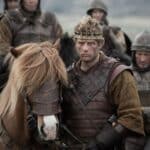
The Norman Conquest has never lost its grip on the imagination. Nearly a thousand years later, the battles, betrayals, and broken oaths of 1066 are still being retold, most recently in the new BBC drama King and Conqueror. It’s a reminder that the story of Harold and William is more than just dates in a chronicle. It’s a tale of ambition, survival, and the clash of worlds that shaped England forever.

Kylie Lang is a nationally syndicated travel journalist with bylines on the Associated Press Wire & more, a medieval history writer, and the founder and lead author of Tales of the Middle Ages (talesofthemiddleages.com). She holds a BA (Honours) in History from the University of Kent and is a member of the British Guild of Travel Writers.