The Wars of the Roses are one of those topics that initially seem straightforward. Lancaster versus York, red rose versus white, but the lines blur fast once you get into it. And the internet? Full of wild theories, dramatic retellings, and plenty of misinformation.
We’re separating the facts from the fiction and untangling the truth from the Tudor spin. A quick Google search brings enough drama to create a medieval soap opera full of brooding kings and backstabbing nobles. But there’s real history here, which goes beyond the theatrics, although some of those were true.
Table of Contents
So if you’re tired of being told the same old story about Richard III being pure evil or that the whole war was the fault of Henry VI, you’re in the right place. History class is officially in session.
The Wars of the Roses Were a Continuous 30-Year Conflict
Not quite. It makes a good headline, but the truth is far messier and much more interesting.
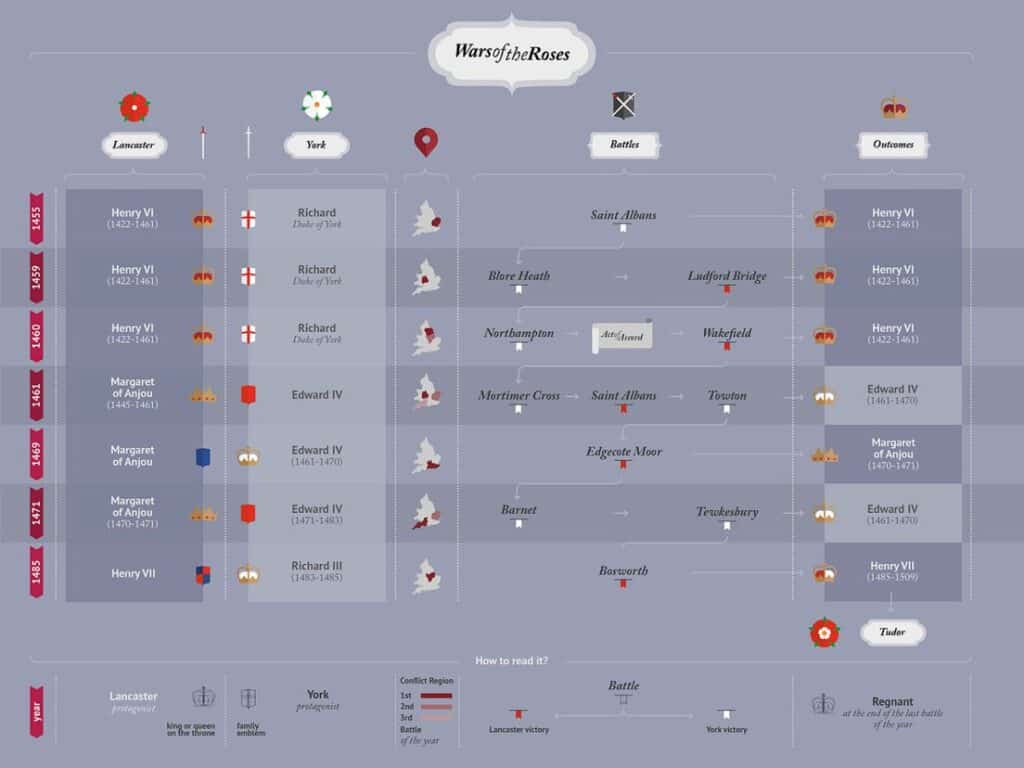
Yes, the wars stretched from 1455 to 1487, but they weren’t one long, endless battle. There were significant gaps where nothing much happened at all. Think of it less like a marathon and more like a messy family feud that kept flaring up over the years. There was a battle here, a power grab there, a short-lived peace, then boom, back at it again.
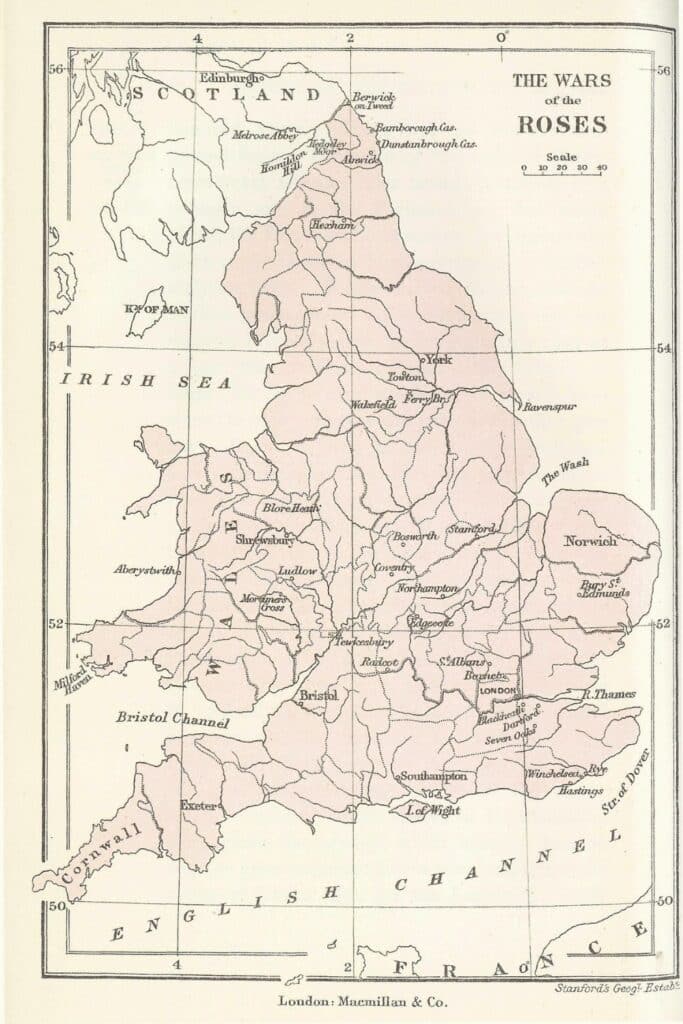
In between the big events like the Battle of Towton or Bosworth, there were stretches of quiet during which both sides regrouped, made alliances, and played political chess. Ordinary life continued for most people, even if the nobles were busy plotting who would wear the crown next.
So no, it wasn’t 30 years of nonstop sword-swinging drama. But it was 30 years of tension, shifting loyalties, and power plays.
The Term “Wars of the Roses” Was Used During the Conflict.
Nope. Not a single medieval soldier was marching into battle saying, “Ah yes, another fine day in the Wars of the Roses.” That name came along much later, centuries later, in fact.
The phrase was popularized in the 19th century by writers like Sir Walter Scott, who, to be fair, had a flair for drama. During that time, no one had called it that. They just saw it as a series of political power struggles, civil wars, or, if you were unlucky enough to be involved, a dangerous mess.
The whole red rose versus white rose branding is a bit of clever storytelling that caught on after the dust had settled. It gave people a neat way to package a very complicated conflict. Easy to remember, sure, but not how it played out in real time.

The Red and White Roses Were Symbols of the Lancastrians and Yorkists, Respectively.
It’s one of the most famous images from the period. A red rose for Lancaster, a white rose for York. Easy to remember, looks good on a T-shirt, but real history? Not that simple. But during the actual wars? The floral branding wasn’t nearly as important or as widespread as we’re often led to believe.
The white rose was used by the House of York, especially by Edward IV. It appeared in badges and personal emblems, often tucked into more elaborate designs. But it wasn’t some dramatic battlefield banner everyone rallied behind. Most soldiers wouldn’t have had any rose stitched to their clothing. You were more likely to see symbols tied to individual nobles, like Richard III’s white boar.
The red rose, on the other hand, barely showed up during the fighting at all. It wasn’t a known Lancastrian emblem in the heat of the wars. In fact, it only gained real traction after Henry VII came to power. He needed to smooth things over and present his marriage to Elizabeth of York as a symbol of unity. So he adopted the red rose, combined it with hers, and voilà, the Tudor rose was born.
During the actual conflict, most people weren’t thinking in terms of red versus white. That came later, when the Tudors had a country to unite and a story to spin. It’s more PR than petals.
Hooked on the Middle Ages? Get more stories like this one in your inbox.
The Conflict Was Primarily Between the Regions of Yorkshire and Lancashire.
This one’s stuck around thanks to those famous roses, a football rivalry or two, and some very persistent regional pride. But the Wars of the Roses weren’t a north versus north-west showdown. They were about royal bloodlines, not geography.
Although the houses of York and Lancaster sound like they should be tied to those places, and they had estates there, their supporters came from all over England. You had nobles flipping sides, families split in their loyalties, and battles fought in places that had nothing to do with either county.
The whole Yorkshire versus Lancashire idea is a neat way to frame it now, but it’s not how it played out then. This wasn’t a local feud, it was a dynastic tug-of-war that dragged the whole country into its mess.
The Wars Were Solely About the Throne.
It’s tempting to see the whole thing as one long fight over who got to wear the crown. And yes, the throne was the shiny prize that everyone had their eye on. But that wasn’t the only reason swords were drawn and alliances shattered.
A lot of what fueled the Wars of the Roses came down to messy personal grudges, rival noble families, land disputes, and fragile egos. The crown was part of it, sure, but local feuds and old family tensions played just as big a role. Some battles weren’t even about the king at all; they were about which baron hated which duke and who could grab the most influence before dinner.
Add to that a weak king like Henry VI, powerful nobles acting like mini-monarchs, and an economy in flux, and you’ve got a perfect storm. The wars were just as much about power behind the throne as the throne itself.
So while the royal crown made a dramatic centerpiece, there was a lot more going on behind the scenes than a simple game of king of the hill.
Henry VII’s Marriage to Elizabeth of York Immediately Unified the Nation
It sounds like the perfect fairy tale ending, doesn’t it? A Lancastrian king marries a Yorkist princess, the red rose joins the white, and everyone lives happily ever after. But real life and real politics weren’t that tidy.
Henry’s marriage to Elizabeth was smart. It helped symbolize unity and gave his new Tudor dynasty some much-needed legitimacy. But it didn’t magically fix decades of bloodshed and bitterness. Plenty of Yorkist supporters still saw Henry as a usurper. Rebellions kept popping up. Pretenders to the throne gained traction. Even Elizabeth’s own relatives weren’t all thrilled with the match.
Henry spent much of his early reign putting out fires, securing alliances, and dealing with plots. He knew the marriage looked good on paper, but he didn’t rely on it alone. He built a strong spy network, controlled noble power, and made sure any future threats were dealt with swiftly.
The wedding was a powerful symbol, yes. But the real unification took time, effort, and more than a few crackdowns. It wasn’t the final chapter; it was just the beginning of a very calculated new one.

Richard III Was a Malevolent Villain
Blame Shakespeare. Seriously. Most of what people think they know about Richard III comes from a playwright who was writing under a Tudor queen. Not exactly an unbiased source.
The hunchbacked, power-hungry villain who murdered his way to the crown makes for great theater. But the real Richard is a lot harder to pin down. Yes, he took the throne from his nephew. Yes, the Princes in the Tower disappeared on his watch. But he was also known for legal reforms, promoting fairer courts, and even trying to help the poor.
Contemporary sources paint a mixed picture. Some saw him as a capable ruler. Others didn’t trust him. But the full-on villain role? That was built up later to make the Tudors look better by comparison.
History doesn’t hand out halos, but it’s clear Richard was more than the sneering, scheming caricature we’ve come to expect. If anything, he was a man playing a dangerous game in dangerous times, and he lost.
The Wars Were a Direct Result of the Hundred Years’ War
The timing makes it tempting to connect the two. The Hundred Years’ War ended in 1453, and the Wars of the Roses kicked off just two years later. But one didn’t exactly cause the other.
What did happen was that England lost almost all its territory in France, and that shook a lot of people. It damaged national pride, strained the royal finances, and made Henry VI look weak. But the real sparks for the Wars of the Roses were homegrown: a fragile monarchy, a king who wasn’t up to the job, and a bunch of powerful nobles who saw an opening.
The Hundred Years’ War was the backdrop, not the cause. It added pressure, but the cracks in England’s political system were already there. Think of it like the final straw, not the root of the problem.
So while the French conflict didn’t start the civil war, it definitely left the country in a mess that made the next fight a lot easier to start.
The Wars Were Inevitable Due to the Weak Rule of Henry VI
Henry VI was timid, deeply religious, and famously indecisive. There were long stretches where he didn’t seem fit to rule at all, and his wife, Margaret of Anjou, took control. But saying the wars were inevitable because of him gives everyone else way too much of a free pass.
Plenty of kings have been weak without the country falling into civil war. What really pushed England over the edge was a perfect storm of power-hungry nobles, fragile alliances, economic pressure, and a royal succession that was anything but straightforward. Henry’s failures didn’t cause the wars on their own; they just made everything harder to manage.
Blaming it all on Henry is tidy, but it’s not the full picture. The war came from a tangled mess of ambition, mistrust, and a political system that relied far too much on personalities instead of process. Henry was part of the problem, no doubt, but he wasn’t the whole problem.
The Wars Were Purely English Affairs
Not quite. While most of the fighting happened on English soil, the Wars of the Roses weren’t sealed off from the rest of Europe. Far from it.
Foreign powers saw England’s chaos as an opportunity. The French backed Henry Tudor’s claim to the throne and gave him ships, money, and men for his final push at Bosworth. The Burgundians, who had close ties to the Yorkist cause, offered support from across the Channel. Even Scotland got involved at times, not always helpfully, but definitely involved.
Marriage alliances, trade deals, and military aid were all part of the game. Everyone had something to gain or lose, depending on who wore the crown.
So while it might look like a family feud turned civil war, it played out on a much bigger stage. Other countries were watching closely and pulling strings when it suited them.
So, What Do You Think?
So much of what we think we know about the Wars of the Roses has been shaped by later storytellers, dramatic retellings, and a good bit of hindsight. But peel back the layers, and what you’re left with is a messier, more human story about kings and crowns, ambition, fear, loyalty, and a lot of very flawed people trying to navigate a world where power could vanish overnight.
Once you start looking past the stories, you begin to see the people behind the power plays and the reasons why it all unraveled the way it did.
Love a good medieval story?
Join our readers and get tales of kings, queens, castles and ordinary medieval lives straight to your inbox.

Kylie Lang is a nationally syndicated travel journalist with bylines on the Associated Press Wire & more, a medieval history writer, and the founder and lead author of Tales of the Middle Ages (talesofthemiddleages.com). She holds a BA (Honours) in History from the University of Kent and is a member of the British Guild of Travel Writers.
Related posts:
 The Battle of Bosworth Reimagined: Two Voices, One Crown And the Betrayal That Changed England Forever
 Margaret of Anjou and the War of the Roses: One of the Most Formidable Women in English Medieval History
 Did They or Didn’t They? Was Catherine of Aragon Still a Virgin When She Wed Henry VIII?
 The Hundred Years War Battles That Broke France: Mud, Blood, Dysentery, and a King Taken Hostage