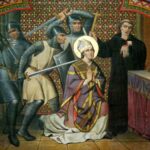
She may not have been one of Henry VIII’s wives, but she suffered one of the most brutal executions under his reign. Margaret Pole was born into a royal bloodline that should have set her up for a life of power and privilege. Instead, her name would become synonymous with loss and betrayal.

She was a Plantagenet in a Tudor world, and that made her dangerous. She outlived kings, lost her family one by one, and watched her fortune rise and fall with every shift in power. Her brother disappeared behind the Tower’s walls, her sons were hunted down, and her loyalty to the old faith put her on a collision course with Henry VIII.
Table of Contents
She was caught in the thick of it, navigating royal courts, rebellions, and religious upheaval. This is the story of a woman who lived through one of the bloodiest chapters in English history. Let’s step into her world, from the shadow of the Tower to the executioner’s block, and find out what really happened to Margaret Pole.
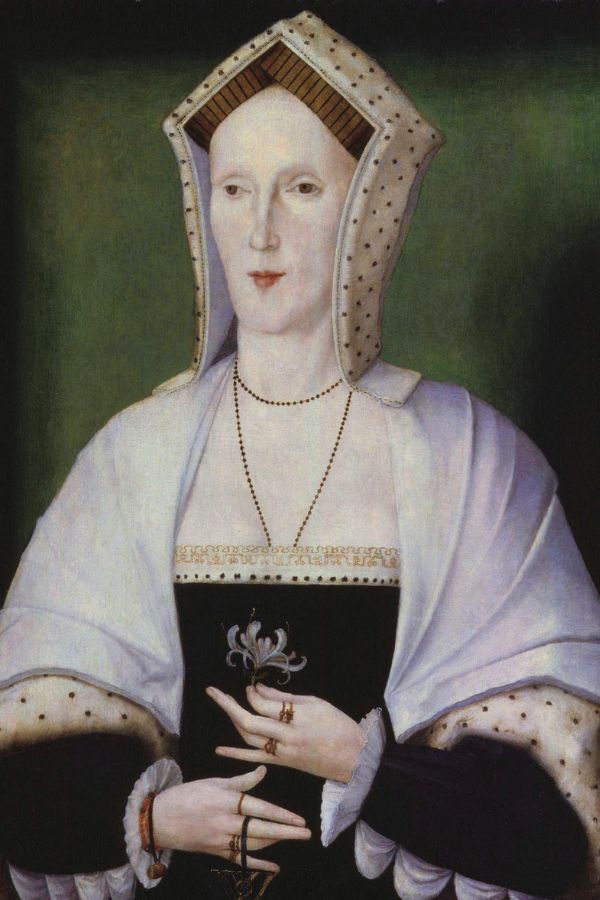
Childhood in Crisis
Margaret Plantagenet was born in August 1473 at Farleigh Hungerford Castle in Somerset. Her birth linked two of the most powerful families in England. Her father, George, Duke of Clarence, was the brother of King Edward IV. Her mother, Isabel Neville, was the daughter of the Earl of Warwick, the man known as the Kingmaker. Margaret’s early life should have been paved with influence and security, but the world she was born into was anything but stable.
In 1476, Isabel died not long after giving birth to a child who didn’t survive. Margaret was just three years old. Her father never recovered. Convinced his wife had been poisoned, he had one of her ladies executed. George had already pushed his luck with King Edward, and his grief tipped him over the edge. In 1478, he was arrested for treason. The charges were serious, but the trial was quiet. He was executed inside the Tower of London. Rumor had it he was drowned in a barrel of Malmsey wine.
Margaret and her younger brother Edward were suddenly orphaned. But they weren’t abandoned. Edward IV brought them under his protection, and for a time, they were raised in the royal nursery at court. Margaret spent the next five years growing up alongside her cousins, including Elizabeth of York. It was a brief window of stability.
Then, in April 1483, the King died unexpectedly. Everything changed. The children lost their protector, and the country lost its monarch. Margaret was just nine years old, and the battles for power were about to start again.

Disinheritance and Survival
After Edward IV died in 1483, Margaret’s life was once again swept up in political uncertainty. His young son was declared king, but Edward V never made it to the throne. Within months, the boy and his brother were locked away in the Tower. Their uncle, Richard, Duke of Gloucester, took the crown for himself and became Richard III. The princes were never seen again.
Margaret and her brother Edward were taken into the household of Queen Anne Neville, Richard’s wife and their maternal aunt. For a short time, they were protected within the royal household, living under the care of family. Edward was even knighted by Richard, who may have seen potential in the boy, especially after the death of his own son.
That fragile security didn’t last. When Henry Tudor defeated Richard III at the Battle of Bosworth in 1485 and became Henry VII, the course of history shifted again. The new king married Margaret’s cousin, Elizabeth of York, to unify the warring houses. But not everyone could be absorbed into the new order.
Edward, still just a teenager, had too strong a claim to the throne. Not long after Henry’s coronation, the boy was taken from his relatives and locked in the Tower of London. He would never leave it.
Margaret, now twelve years old, was left without family, power, or property. Her father’s attainder still stood, and with it, any right she might have had to land or title. She was no longer under the protection of her Plantagenet kin and had no secure place at court.
Her survival depended on silence, obedience, and avoiding the wrong kind of attention. The Tudor world was watching, and Margaret understood what it meant to carry the wrong name.
Margaret’s Rise at Court
In the 1490s, Margaret’s fortunes began to shift. Henry VII had spent the first years of his reign eliminating threats, such as Lambert Simnel and Perkin Warbeck, and strengthening his grip on the throne. With rebellion crushed and the Yorkist bloodlines mostly neutralized, he allowed some space for reconciliation.
Margaret, now in her late teens, became part of that strategy. She was married to Sir Richard Pole, a distant cousin of the king and a trusted member of his household. It was a political match, not a grand one, but it gave her a respectable place in Tudor society.
The marriage was steady. Margaret and Richard had five children together, including Reginald, who would later become one of the most influential figures in the English Church. For now, though, Margaret’s role was quiet. She remained close to the court but without title or land. It wasn’t until after Henry VIII took the throne in 1509 that things changed.
The new king, eager to reward loyalty and establish his own household, restored Margaret to her father’s earldom in 1512. She became Countess of Salisbury in her own right.
As Countess of Salisbury, Margaret Pole held a rare position of power for a woman in Tudor England. Apart from Anne Boleyn, she was the only woman of her time to hold a peerage title independently. The title came with vast estates, spanning 17 counties across England, from the southern coast to Calais, and a fortune that placed her among the wealthiest landowners of her generation. By 1538, her income was recorded at over £2,300 per year, equivalent to nearly £ 1 million today.
She took an active role in managing her estates, overseeing tenants, income, and administration. Her influence reached beyond land. She was a well-known patron of scholars and supported the dissemination of humanist thought.
Her children and grandchildren reaped the benefits of her position. In 1518, Margaret secured two high-profile marriages for her children. Her son Henry married Jane Neville, daughter of Lord Bergavenny, strengthening ties with one of England’s established noble houses. That same year, she arranged for her daughter Ursula to marry Henry Stafford, heir to the Duke of Buckingham.
The Duke’s parents were Henry Stafford, whose dramatic rise and downfall under Richard III were still remembered, and Katherine Woodville, sister to Queen Elizabeth and later wife of Jasper Tudor. The match linked Margaret’s family to the powerful Stafford line, one of the oldest in England and already entwined with the Neville blood that ran through Margaret herself.
She also earned a key position in the royal household as a lady-in-waiting to Queen Catherine of Aragon. Her loyalty and maturity made her a trusted figure. When Catherine’s daughter, Princess Mary, was born in 1516, Margaret was named her godmother and later served as her governess.
For a time, she was safe, respected, and deeply connected to the Tudor regime. But being close to the crown came with risks, especially when the crown itself started to fracture.

A Family Under Pressure
Things took a sharp turn just three years later. The Duke of Buckingham was arrested and executed for treason, bringing the powerful Stafford name crashing down. The dukedom was stripped, and Ursula’s future as a duchess vanished with it. She became the wife of a baron instead, and raising her twelve children would have been nearly impossible without Margaret’s support. For Margaret, the marriage had drawn her dangerously close to the fallout. Ties that once elevated her family now placed her uncomfortably near the edge of rebellion.
Margaret’s sons fell under suspicion of involvement in the Duke of Buckingham’s alleged treason. Though they were eventually cleared, the shadow of court intrigue lingered. Henry reappointed her in 1525, but by then his desperation for a male heir had turned to action.
Meanwhile, Henry’s pursuit of Anne Boleyn was well underway, and Margaret’s loyalty to Catherine and her daughter made her dangerous in his eyes. In 1533, as Henry celebrated his marriage to Anne, Margaret made what some might call a principled stand, and Henry took offense.
She refused to surrender Princess Mary’s jewels and plate when ordered by Thomas Cromwell. The consequence was swift. Princess Mary’s household was dissolved, and the King flatly rejected Margaret’s offer to serve at her own expense.
Two years later, from abroad, Imperial ambassador Eustace Chapuys petitioned Henry to restore Mary’s household under Margaret’s care. Henry exploded in fury. He labeled the countess “a fool, of no experience.” Her loyalty, once a point of pride, had now become public defiance.
Margaret’s position had shifted from trusted courtier to suspected enemy. Her wealth was targeted, her household was dissolved, and her sons were left to watch. She had chosen loyalty, and now she faced consequences. The tide had turned, and soon Henry would move against the entire Pole family with cold precision.
The Fall of the Pole Dynasty
After falling from favor, Margaret lived in stark poverty. She had borrowed £40 from Henry VII to fund her husband’s funeral and didn’t recover financially. With debts mounting, she, her daughter Ursula, and son Geoffrey moved into Syon Abbey, a Bridgettine house on the Thames. There they lived at the mercy of nuns, relying on charity just to survive. Meanwhile, her elder sons were sent to distant noble households, a desperate bid to divide and care for her family under Tudor stress.
Amid this collapse, Margaret made another heartrending decision: she gave her son Reginald to the Church. It wasn’t a strategic move or a religious calling. It was a financial necessity. She could no longer care for him, and the arrangement meant he was no longer her financial responsibility. Reginald never forgave her. He grew cold and distant, later writing that she had abandoned him to pursue the futures of her other children.

Reginald’s Break with the Crown
Henry had long supported Reginald’s education, covering costs while he studied in England and later in Padua, where he built a strong reputation as a scholar. At first, he wasn’t opposed to the king’s views on marriage. When the annulment from Catherine of Aragon became the subject of heated debate, Reginald remained neutral.
In 1529, he even travelled to Paris to examine the theological implications on Henry’s behalf. There was a moment when it seemed he might support the annulment, or at least stay silent. Henry even dangled the archbishopric of York in front of him if he’d come out in favor. But Reginald didn’t bite. Instead, he returned to Padua and distanced himself.
By late 1535, Reginald still hadn’t openly opposed Henry. The king believed he might yet come to his defense. That illusion didn’t last. After Henry’s marriage to Jane Seymour, Reginald released a scathing open letter. In it, he described the king as a “robber, murderer, and greater enemy to Christianity than the Turk.” The attack hit hard, and Margaret was dragged into the storm.
Henry expected her to denounce her son publicly. She consulted her eldest son, Henry, and together they agreed to condemn Reginald as a traitor. Margaret then wrote to Reginald herself, urging him to reconsider his actions. She left court soon after, retreating into silence and hoping that by keeping her distance, she might shield the rest of her family from the fallout.
Arrests and Interrogations
In July 1538, England grew uneasy as France and the Holy Roman Empire struck a new peace deal. Reginald had been involved in the talks, and the timing couldn’t have been worse. Whether fact or invention, one of Cromwell’s informants claimed that Reginald was corresponding with his brothers and plotting with foreign powers to invade England.
In August, Geoffrey Pole was arrested. His brother Henry and their cousin, the Marquess of Exeter, were seized soon after. All three were accused of treason. Under pressure, Geoffrey broke. Desperate to save himself, he tried to talk his way out of the charges and ended up making things worse, especially for Henry. During his imprisonment, Geoffrey attempted suicide twice but was stopped by his jailers each time.
Margaret, though not yet imprisoned, was questioned by the Earl of Southampton and the Bishop of Ely. They pressed her on whether she’d had any contact with Reginald. She denied it. One of the interrogators later wrote that either her sons had completely misled her or she was lying coldly and convincingly. He described her not as a frightened noblewoman, but as someone “rather a strong and constant man, than a woman.”
Henry Pole was found guilty and executed at the Tower of London in December 1538. His body, like so many others accused of treason, was quietly buried within the Tower grounds.
From Attainder to the Tower
In May 1539, Parliament passed an Act of Attainder against Margaret, formally stripping her of the earldom of Salisbury and all associated lands. She lost everything. In November the following year, she was taken to the Tower and imprisoned without trial. By now, she was in her sixties, frequently ill, and no longer a political threat. But Henry’s fury with Reginald had not cooled, and Margaret became the target.
When a new uprising broke out in early 1541, and more reports surfaced of Reginald communicating with men in England, the king’s patience finally came to an end.

The Execution of Margaret Pole
On May 27, 1541, Margaret was told she would be executed that morning. She was forced to the block in the open grounds of the Tower. Witnesses reported she refused to kneel, saying she was no traitor and would not die like one. Her final words were said to include a blessing for Princess Mary.
What followed was a gruesome and clumsy affair. The appointed executioner was unskilled, and it took multiple blows to sever her head. Some said ten. Others said eleven. Some claimed she tried to run, or at least move, which made it worse. But the result was the same. Margaret Pole, once one of the most powerful women in England, died a brutal and public death not for what she had done, but for who she was, and for the son who defied the king.
The Aftermath of Margaret’s Execution
From the moment of her birth, Margaret Pole had Plantagenet blood flowing through her veins. She was the niece of Edward IV, a cousin of Elizabeth of York, and once held a place of privilege that few could imagine. That she died by the axe of Henry VIII, without trial, without ceremony, and at the hands of a novice executioner, says more about the brutality of Tudor politics than anything else. Her father was executed. Her brother, too. Maybe the real surprise is that she managed to survive as long as she did in a court that had no room for old loyalties.
After her death, a short poem was found scratched onto the wall of her prison cell in the Tower:
For traitors on the block should die;
I am no traitor, no, not I!
My faithfulness stands fast, and so,
Towards the block I shall not go!
Nor make one step, as you shall see;
Christ in Thy Mercy, save Thou me!
Reginald Pole never returned to England during Henry’s reign. But when he learned of his mother’s death, he didn’t shrink from the association. He called himself “the son of a martyr.” The Vatican agreed. Margaret was beatified in the 19th century for her faith and endurance.
Reginald finally returned in 1553, after Mary I came to the throne. He was made Archbishop of Canterbury, the last Catholic ever to hold the position. For a short time, he stood beside the queen as they tried to restore the old religion.
Both Reginald and Mary died on the same day, November 17, 1558, within hours of each other. With their deaths, the last embers of the Plantagenet legacy were finally extinguished.


Kylie Lang is a nationally syndicated travel journalist with bylines on the Associated Press Wire & more, a medieval history writer, and the founder and lead author of Tales of the Middle Ages (talesofthemiddleages.com). She holds a BA (Honours) in History from the University of Kent and is a member of the British Guild of Travel Writers.