I’ve always said I wouldn’t have lasted five minutes at the Tudor court because I’m not very good at holding my tongue. I’ve never been able to keep my opinions to myself, and under Henry VIII and his children, a careless letter or the wrong grandparents could get you killed.
Most of the people on this list of Tudor deaths met their end on a scaffold or in the flames. One woman was found dead at the bottom of a staircase, and one was a queen, beheaded on the orders of another queen.
Table of Contents
Each death sent a shiver through the court, and a few changed the course of Tudor history.
The 8 Scandalous Deaths of Tudor England
1. Robert Aske, 1537
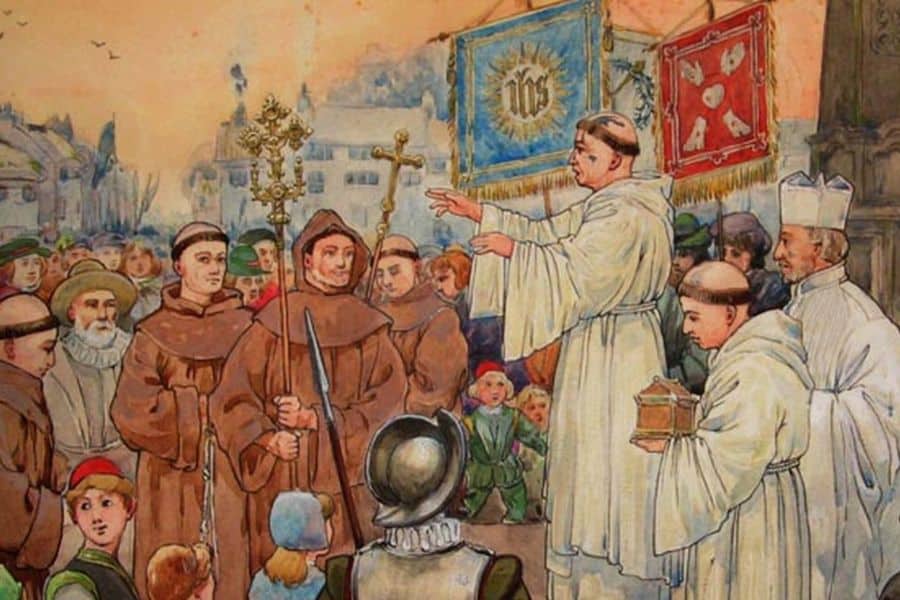
By the autumn of 1536, the north of England had had enough. Henry was closing the monasteries and stripping them bare, and up north, they fed the poor and looked after the sick.
The Pilgrimage of Grace started with riots at Louth in Lincolnshire on October 1. Henry VIII dismissed the Lincolnshire men as “rude commons,” and within 3 weeks they’d gone home.
Up in Yorkshire, though, people weren’t ready to go home. Robert Aske, a lawyer from a good family, started calling the rising a pilgrimage.
His men marched behind banners showing the Five Wounds of Christ. By the end of October, he had about 30,000 armed men. The crown had nowhere near that many soldiers to send against them.
So the Duke of Norfolk played for time. In December, he offered a full pardon and a parliament at York. Aske believed him and sent his people home. Henry even invited him to court for Christmas. Can you imagine sitting down to Christmas dinner with the king you’d just led an army against?
Early in 1537, fresh risings broke out in the East Riding and in Cumberland, and that was all the excuse Henry needed. He treated the pardon as void, and somewhere between 220 and 250 people were executed. Aske was taken back to York and, in July 1537, hanged in chains from Clifford’s Tower, where the people who had followed him could see his body.
2. Margaret Pole, Countess of Salisbury, 1541
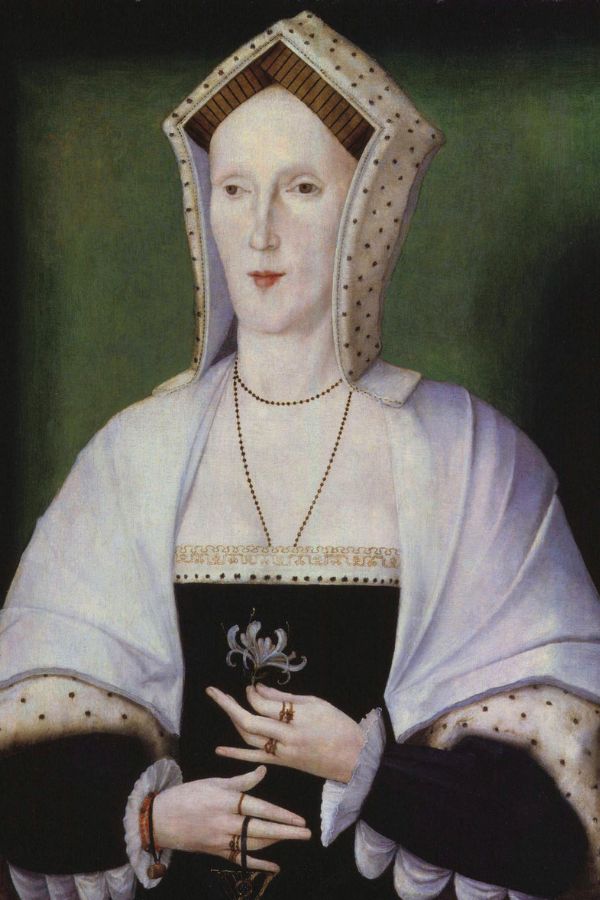
Margaret Pole’s real crime was being born a Plantagenet. Her father was George, Duke of Clarence, so she was Edward IV and Richard III’s niece. Her sons carried that same royal blood, and Henry never could quite ignore it.
The trouble really started with her son Reginald. He was a churchman in Rome, and he wrote furious attacks on Henry’s break with the Pope. Henry couldn’t reach Reginald, so he went after the family still in England instead.
Her son Geoffrey was arrested in 1538, and under questioning he gave evidence against his own brother. By November, Henry Pole, Lord Montagu, was in the Tower with his cousin Henry Courtenay, Marquess of Exeter. Both men were executed in January 1539 for what became known as the Exeter Conspiracy.
Margaret was attainted in May 1539 and spent about 18 months in the Tower. Then, early on May 27, 1541, they took her out to a block inside the Tower walls with almost no warning. She was 67.
The imperial ambassador, Eustace Chapuys, said the job went to “a wretched and blundering youth” who hacked at her head and shoulders. One later story claims it took 11 blows. Historic Royal Palaces thinks that may be an exaggeration, but even so, the thought makes me shudder.
3. Anne Askew, 1546
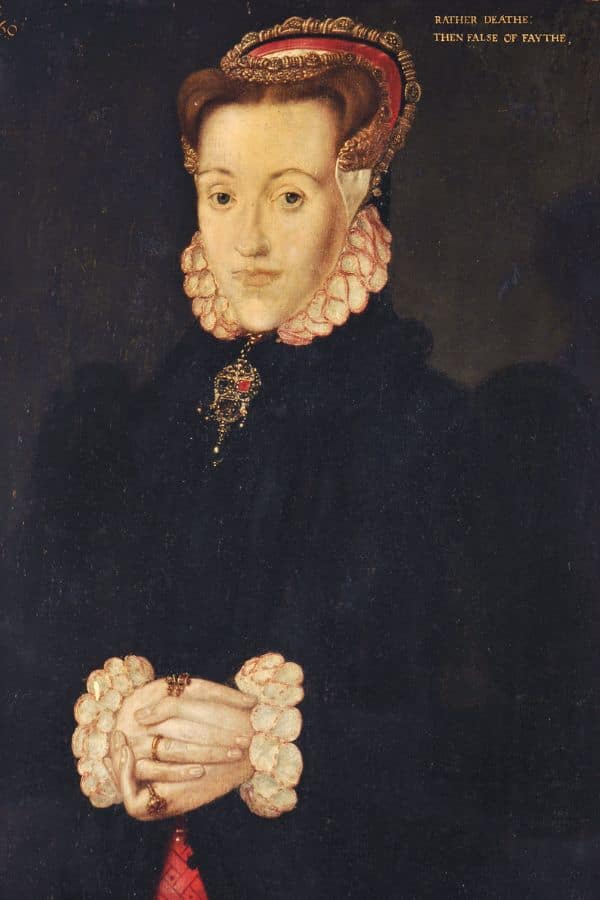
Anne Askew came from a gentry family in Lincolnshire, and she could quote the Bible better than most of the priests who tried to argue with her. That didn’t go down well. Her husband, Thomas Kyme, threw her out of the house over her reformist views, so Anne went to London and carried on arguing scripture with anyone who’d listen.
Her big sticking point was the Mass. She would not accept that the bread and wine turned into the body and blood of Christ, and in 1546, saying so could get you burned.
Her examiners wanted names too. They were convinced she had friends among the women around Catherine Parr, and the conservatives at court would have loved an excuse to bring the queen down. Anne gave them nothing, so they took her to the Tower and put her on the rack.
In her own account, published by John Foxe, she says the Lord Chancellor, Thomas Wriothesley, and Richard Rich turned the handles themselves until she was nearly dead. Two of England’s most powerful men did it with their own hands. I kid you not.
On July 16, 1546, she was carried to Smithfield in a chair because she couldn’t walk anymore, and chained around her middle to the stake. Three men burned with her that day. One was John Lascelles, a courtier. The others were John Adams, a tailor, and Nicholas Belenian, a priest.
They hung bags of gunpowder on the condemned to make the end come quicker, which was about as merciful as a Tudor burning got.
Hooked on the Middle Ages? Get more stories like this one in your inbox.
4. Lady Jane Grey, 1554

Jane was about 16 when she was proclaimed queen on July 10, 1553, 4 days after Edward VI died. It wasn’t her idea. John Dudley, Duke of Northumberland, planned it, marrying her to his son Guildford to keep a Protestant on the throne.
It fell apart almost at once. The country rallied to Mary, the Privy Council switched sides, and on July 19, London proclaimed Mary queen. Nine days, and it was all over.
Jane is usually painted as a helpless victim, but she wasn’t quite the innocent history made her out to be. Mary kept her alive in the Tower for months and might well have pardoned her in time. Then Jane’s father joined Wyatt’s Rebellion in early 1554. After that, Mary wouldn’t risk keeping a living Protestant queen around.
Guildford went first. On the morning of February 12, 1554, he was beheaded on Tower Hill, and Jane saw his body being brought back on a cart past her window. Not long after, it was her turn, and she was executed inside the Tower.
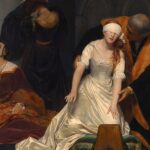
She tied a handkerchief over her own eyes, and when she knelt down, she couldn’t find the block. She put her hands out, feeling for it, and asked, “What shall I do? Where is it?” I find that moment heartbreaking. Someone stepped forward, guided her hands to it, and she said her last words: “Lord, into thy hands I commend my spirit.”
5. Sir Thomas Wyatt the Younger, 1554
Mary’s plan to marry Philip of Spain went down like a lead balloon. Plenty of people feared England would end up as a Spanish province. Several risings were planned for early 1554, but only one took off.
It was led by Sir Thomas Wyatt the Younger, a Kentish gentleman whose father, the poet Thomas Wyatt, is thought to have written verses about Anne Boleyn.
Wyatt marched on London in late January, and by the time he reached Southwark on February 3, he had around 3,000 men. But Mary had already gone to the Guildhall on February 1, told Londoners she wasn’t going anywhere, and had London Bridge barred against him.
So Wyatt marched west to Kingston, crossed the Thames there and doubled back toward the city. By the time he reached the walls, he had fewer than a few hundred men left. He surrendered on February 7.
He was beheaded on Tower Hill on April 11, 1554. According to the London Museum, fewer than 100 of his followers were put to death alongside him.
For me, the most interesting part is what he said on the scaffold. Princess Elizabeth was sent to the Tower in March, suspected of being involved in the plot. Wyatt told the crowd she’d played no part, and that may well have saved her life.
6. Amy Dudley, 1560
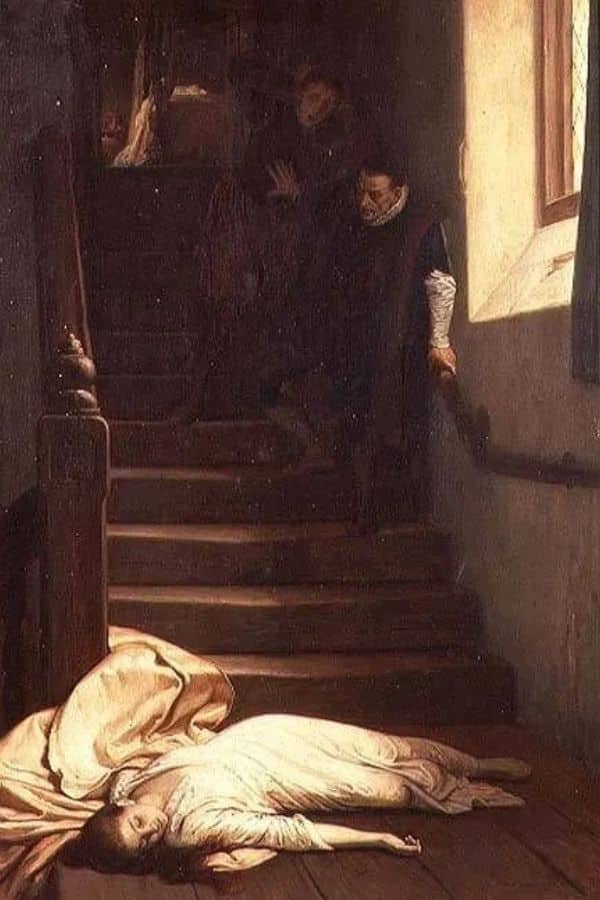
On September 8, 1560, Amy Dudley sent her servants to the fair at Abingdon and stayed behind at Cumnor Place, the house near Oxford where she lived. When they came back, they found her dead at the bottom of the stairs.
Her husband was Robert Dudley, Elizabeth I’s favorite, and people had been gossiping about the two of them for months. Some ambassadors were already reporting that the queen would marry him if he were free. Then, all of a sudden, he was. You can imagine how that went down.
The coroner’s report, which is now at the National Archives, says her neck was broken and she had 2 wounds to the head. One was a quarter of an inch deep, and the other was 2 inches deep. The jury found she had died “by misfortune.”
People have argued about it ever since. Some think she simply fell, and others think she was ill or unhappy enough to take her own life. Plenty of people at the time were convinced Dudley had her killed, or that one of his enemies did it to ruin him. Amy’s story remains one of the age’s great unsolved mysteries.
I’m inclined to think it was a terrible accident. Either way, the scandal meant Elizabeth could never marry him without tarnishing her crown.
7. Mary, Queen of Scots, 1587
Mary was crowned Queen of Scots at Stirling Castle in 1543, when she was just 9 months old. She fled to England in 1568, hoping her cousin Elizabeth would help her win back her throne. Instead, Elizabeth kept her locked up for the next 19 years.
In the summer of 1586, a young Catholic named Anthony Babington was plotting to kill Elizabeth and put Mary on the throne. Mary’s letters were being smuggled in and out of Chartley Hall in beer barrels, and she thought they were safe. They weren’t. Walsingham had set up the whole route himself, and his men opened and read every letter before sending it on.
On July 17, 1586, Mary wrote to Babington and gave the plot her approval. When Walsingham’s code-breaker, Thomas Phelippes, deciphered that letter, he drew a little gallows on the outside of it. He knew exactly what it meant for her.
Babington and his friends were executed that September. In October, Mary was put on trial at Fotheringhay Castle and found guilty. Elizabeth didn’t want to execute an anointed queen, and she put off signing the death warrant for months. She finally signed it on February 1, 1587.
Mary was only told the night before. At 2 in the morning on February 8, she sat down and wrote a last letter to her brother-in-law, Henri III of France. She told him she’d be executed “like a criminal at eight in the morning,” and she asked him to make sure her servants got their wages.
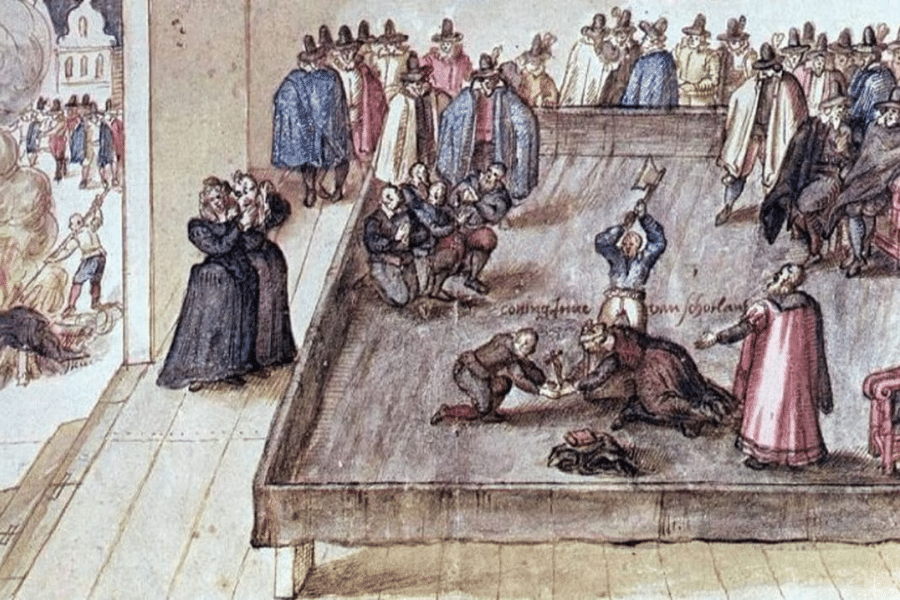
A few hours later, she was taken into the great hall at Fotheringhay. According to one eyewitness, the executioner needed more than one blow. When he held up her head, her auburn hair fell away, and underneath, her own hair was short and gray. Then her little dog crept out from under her skirts and lay down between her head and her shoulders, and it wouldn’t leave her.
Elizabeth was furious, or at least she said she was. She blamed her secretary, William Davison, for sending the warrant off without her say-so, and he ended up in the Tower. Over in Spain, Philip II now had one more reason to send his Armada, and it sailed the following year.
8. Francis Throckmorton, 1584
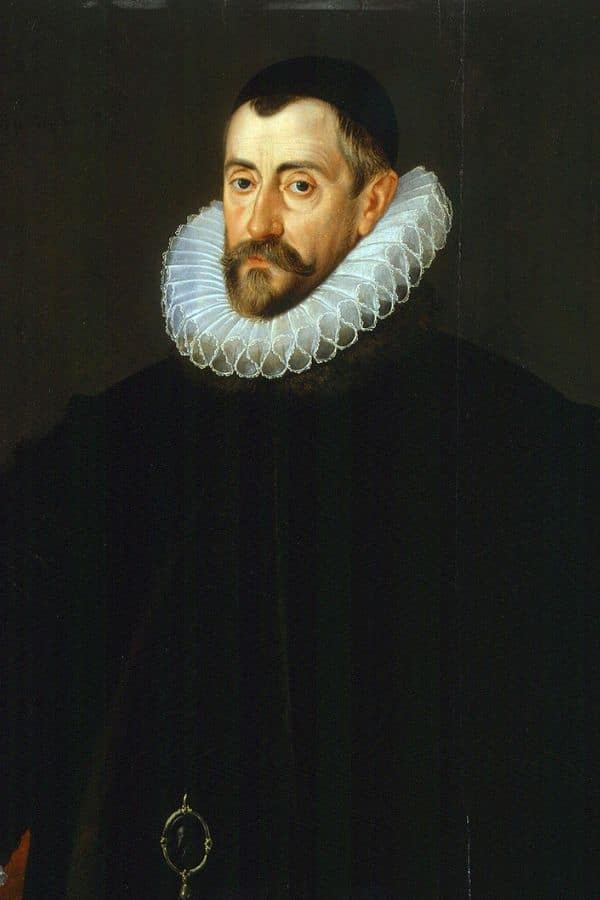
By 1583, Elizabeth had been queen for 25 years, but Catholic powers abroad still wanted her gone, and many English Catholics looked to Mary, Queen of Scots, as their rightful queen. Francis Throckmorton, a young Catholic from a well-known family, was carrying letters between Mary and the Spanish ambassador, Bernardino de Mendoza.
What he didn’t know was that Sir Francis Walsingham, Elizabeth’s spymaster, had been watching him for months. In November 1583, Throckmorton was arrested, and the papers in his house gave the game away.
After he was racked, he confessed to a plan for the Duke of Guise to invade England with a French army, backed by Spain, to free Mary and restore the Catholic Church. English Catholics were meant to rise up at home at the same time. The authorities expelled Mendoza, and Mary was watched more closely than ever.
Throckmorton was tried at the Guildhall in May 1584 and hanged at Tyburn that July. He got the full traitor’s death the Tudors saved for anyone who plotted against the crown. On the scaffold, he took back his confession and said he’d only made it because he hoped for a pardon.
That autumn, Elizabeth’s advisers drew up the Bond of Association. Everyone who signed it swore to hunt down anyone who plotted against the queen, and anyone who stood to gain from it, which meant Mary.
The Throckmorton Plot showed how fragile Elizabeth’s reign remained. A handful of letters and promises from abroad were enough to raise the specter of invasion and regicide.
Love a good medieval story?
Join our readers and get tales of kings, queens, castles and ordinary medieval lives straight to your inbox.

Kylie Lang is a nationally syndicated travel journalist with bylines on the Associated Press Wire & more, a medieval history writer, and the founder and lead author of Tales of the Middle Ages (talesofthemiddleages.com). She holds a BA (Honours) in History from the University of Kent and is a member of the British Guild of Travel Writers.
Related posts:
 Did Amy Dudley Die by Misfortune or Murder? Tudor History’s Unsolved Mystery
 The Execution of Lady Jane Grey: The Teenager Crowned Queen and the Nine Days That Sealed Her Fate
 Why Did Elizabeth I Never Marry and Did She Really Die A Virgin?
 What History Got Wrong About Mary Boleyn: The Other Boleyn Sister Who Outlived Them All