Perkin Warbeck appeared out of nowhere in the 1490s, claiming to be Richard, Duke of York, the younger of the two princes who had vanished from the Tower of London years earlier. That name still carried weight, enough to rattle a king.
And Henry VII? He’d clawed his way to power after decades of civil war. The last thing he needed was a pretender stirring up old loyalties and giving the Yorkists a new banner to rally behind.
Table of Contents
But Warbeck had serious backing. Powerful foreign courts took him in, dressed him up, and paraded him like the real deal. He had money, ships, an army, and a wife from Scottish nobility. For nearly a decade, he was a very real problem for the Tudors and nearly turned Europe’s political mess into a full-blown comeback for the House of York.

Aftermath of the Wars of the Roses: A Fragile New Dynasty
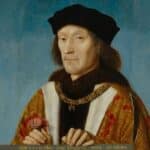
Henry VII’s reign began in 1485 after his victory over Richard III, but his position was anything but secure. Years of civil war had left England divided, and many influential Yorkists were disgruntled at seeing a Lancastrian upstart on the throne.
Memories of sudden reversals of fortune were fresh, after all, who could say the Battle of Bosworth was truly the end of the struggle? Henry’s throne, however, was far from secure in these early years. Yorkist loyalists still held sway in the north of England and especially in Ireland, and they had a powerful ally abroad in Margaret of Burgundy, the sister of the late King Richard III.
Foreign powers eyed Henry’s fledgling regime skeptically. Nearly every major European ruler doubted Henry Tudor’s ability to survive on the throne, and many were perfectly willing to shelter or support rival claimants if it served their interests. In just the first years of his reign, Henry faced a Yorkist uprising in 1486 and a full-blown rebellion in 1487 led by Lambert Simnel, a boy used as a figurehead claiming to be Edward, Earl of Warwick (one of the Yorkist princes).
Henry quelled Simnel’s rebellion at the Battle of Stoke in 1487, the last pitched battle of the Wars of the Roses, and even spared young Simnel, giving him a job in the royal kitchens. But the reprieve was short-lived. By 1491, an even more serious menace was on the horizon: Perkin Warbeck, a pretender groomed to resurrect the Yorkist cause.

A Mysterious Pretender: Perkin Warbeck’s Identity
Perkin Warbeck came out of nowhere. At least, that’s how it seemed. According to what he later told the world, he was born around 1474 in Tournai, in what’s now Belgium. His father worked as a local official. Nothing royal about his background. As a teenager, he drifted through Europe, working for merchants, picking up languages, and eventually landing in Cork, Ireland, in 1491.
And that’s where things got interesting.
Cork was full of Yorkist supporters who were still bitter about the Tudors. They saw this well-dressed, foreign lad with polished manners and started whispering. Maybe he was someone important. Maybe he was someone royal. Whether they genuinely believed it or just needed a figurehead doesn’t really matter.
They convinced him to assume the identity of Richard, Duke of York, the younger of the two princes who had vanished in the Tower of London when Richard III was still on the throne. Why Richard? Because no one could say for certain what had happened to him. If he had survived, he would have had a stronger claim to the throne than Henry VII.
That made him dangerous. A perfect choice for stirring up trouble. Warbeck ran with it. He claimed he’d escaped death, gone into hiding, and was now ready to return as England’s rightful king.
It is hard to say whether Warbeck believed the story he was telling. Some of his followers likely thought he was the real deal. Others probably knew he wasn’t and didn’t care. He looked the part. He acted the part. In a country still recovering from years of war, people were more than ready to back a familiar name.
Foreign Backers: Burgundy, France, and Scotland Weigh In
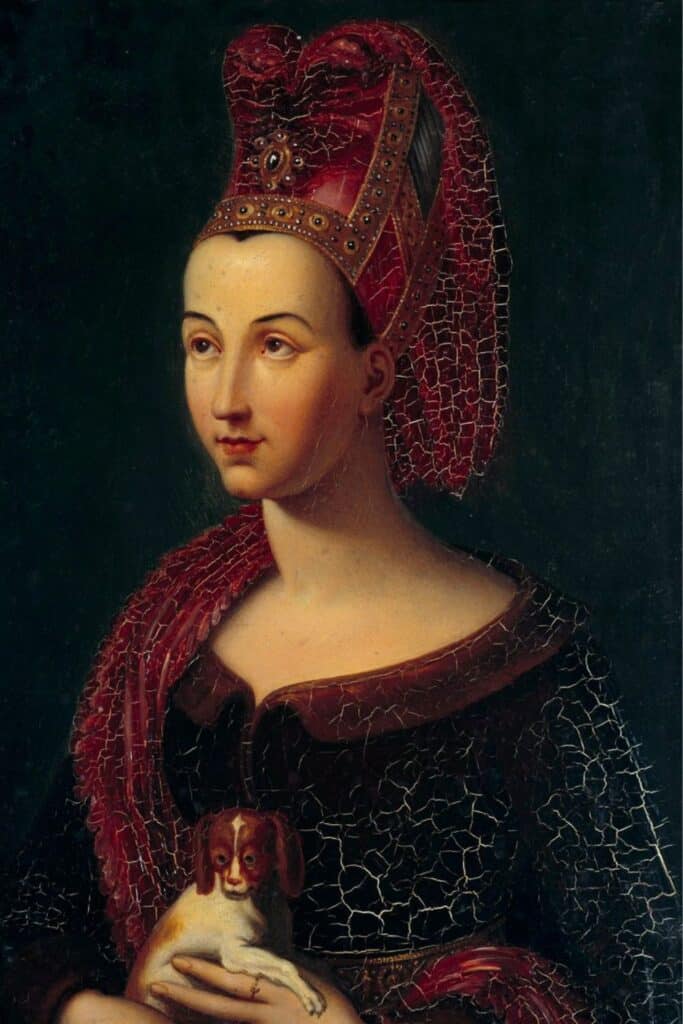
The conspiracy around Perkin Warbeck quickly expanded beyond Ireland. In fact, one reason Warbeck became so dangerous was the enthusiastic support he received from rival powers abroad. Margaret of Burgundy, King Richard III’s exiled sister, was the foremost sponsor of this Yorkist pretender.
Living in Flanders as Dowager Duchess of Burgundy, Margaret never accepted the Tudor takeover. Hearing of the young man claiming to be her nephew Richard, she fully embraced him. By 1490, Warbeck was welcomed at the Burgundian court, where Margaret reportedly tutored him in the manners of the Yorkist royal household to bolster his credibility.

Whether Margaret truly believed Warbeck was her long-lost nephew or simply found him a useful pawn hardly mattered; publicly, she recognized him as Richard, Duke of York, giving his claim a huge dose of legitimacy in European eyes. She even had commemorative coins (jetons) struck in his name in Burgundy.
When Henry’s envoys demanded that Burgundy expel this “impostor,” they were ignored, prompting Henry to slam an embargo on Flemish trade to punish Margaret’s city of Antwerp.
France Plays the Game, Then Bows Out
Across the English Channel, King Charles VIII of France also initially gave refuge to Warbeck. France and England were traditional foes, and in 1491–1492, Charles sheltered Warbeck in hopes of keeping Henry distracted. However, Charles treated Warbeck as a bargaining chip.
The moment Henry and Charles struck the Treaty of Étaples in late 1492, essentially a peace treaty, one of the conditions was that France would cease harboring Henry’s enemies. Thus, Warbeck was unceremoniously kicked out of France, but he landed on his feet in Burgundy under Aunt Margaret’s protection.
The Emperor Adds His Voice
Not to be outdone, the Holy Roman Emperor Maximilian I (Margaret’s son-in-law) also gave Warbeck symbolic support. Maximilian invited Warbeck to attend the funeral of Emperor Frederick III in 1493, and there formally acknowledged him as “King Richard IV of England”, a propaganda blow to Henry’s legitimacy. Maximilian, locked in struggles with France and hoping to reclaim Burgundy’s glory, had every reason to irritate Henry VII by validating a pro-Yorkist pretender.
Scotland Goes All In
Perhaps the most game-changing ally to join Warbeck’s cause was James IV of Scotland. Young, ambitious, and eager to enhance Scotland’s power at England’s expense, James IV welcomed Warbeck with open arms in 1495. The Scottish king saw in Warbeck a chance to destabilize England’s southern borders and maybe even grab a piece of the action if the Tudor regime fell.
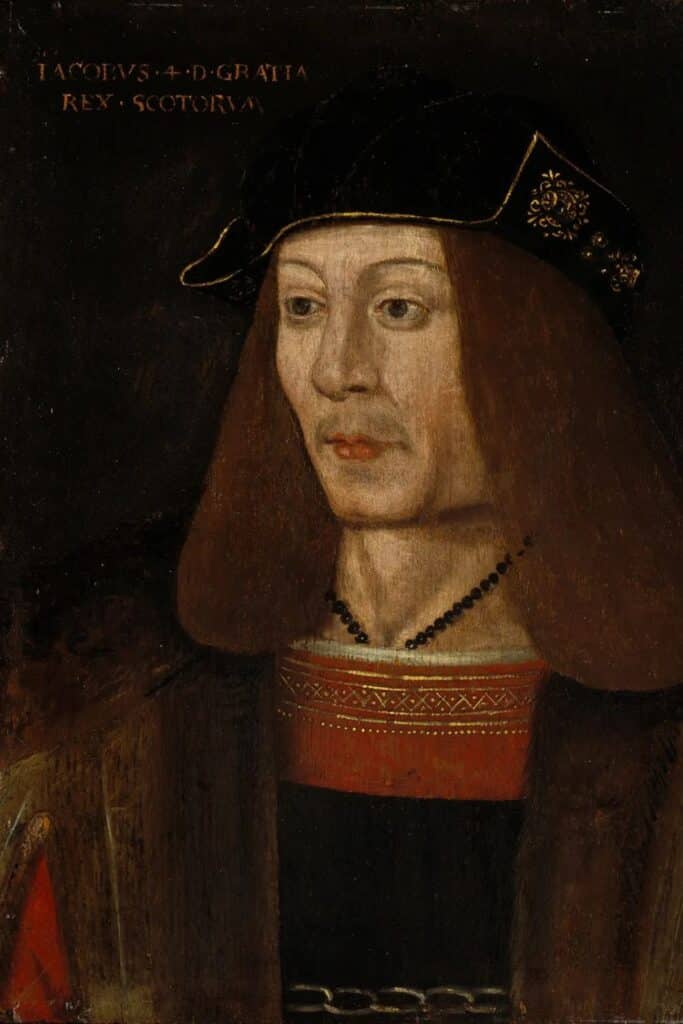
James treated the pretender as a visiting prince: Warbeck was paraded through Scottish court life and even spent Christmas of 1495 feasting in royal castles. In January 1496, James IV went a step further, arranging a marriage between Perkin Warbeck and Lady Catherine Gordon, a distant royal cousin (daughter of the Earl of Huntly).
The wedding was celebrated with great pageantry in Edinburgh; James gave Warbeck fine clothes and armor trimmed with silk and gold for the tournament in his honor. While this alliance was more symbolic than dynastic, marrying a junior Scottish noblewoman was scarcely what might be expected for a potential king of England. It nevertheless signaled that James IV took Warbeck seriously, at least as a political weapon.
Why They Backed Him
Each of these foreign backers had its own motives. France wanted to unsettle Henry when it suited them, Burgundy and Maximilian wanted revenge for Yorkist blood and leverage in trade wars, and Scotland relished any chance to mess with its “auld enemy” to the south.
Together, they ensured that Perkin Warbeck had money, troops, and a safe haven to press his claim as a would-be king. Henry suddenly faced a pretender with powerful international sponsors, which was truly a worst-case scenario for the new Tudor monarch.
Hooked on the Middle Ages? Get more stories like this one in your inbox.
Conspiracy in the Kingdom: Yorkist Support at Home
Foreign help alone wouldn’t have been enough if the English people entirely rejected Warbeck, but they didn’t. In the mid-1490s, a secret Yorkist conspiracy coalesced among some of Henry’s own courtiers and officials. Several influential men, some with Yorkist sympathies and others hedging their bets, began corresponding with Warbeck and were prepared to back him if he invaded.
This clandestine circle included Sir Simon Montfort, Sir Thomas Thwaites (a former Chancellor of the Exchequer), Sir Robert Clifford, Lord FitzWalter, and even Sir William Stanley, Henry’s Chamberlain. Stanley’s involvement was a shock. This was the very man who had helped Henry win at Bosworth!
However, sources state that Stanley said he would not move against Warbeck “if this indeed be the son of Edward IV,” implying that if Warbeck were truly the prince, Stanley might support him. That whiff of treachery was enough for Henry.
By 1494, Henry’s network of spies had infiltrated the plot. Sir Robert Clifford, one of the conspirators who had traveled to meet Warbeck abroad, turned informer and gave the king a list of names. Henry acted swiftly and ruthlessly to snuff out the domestic threat.
In January 1495, he had the conspirators rounded up and put on trial in a series of show trials. Several were condemned to death. While a few minor players were later pardoned or fined, the ringleaders met grim fates: Montfort and others were beheaded, and in February 1495, Sir William Stanley, the king’s one-time savior, was executed for his disloyalty.
Lord FitzWalter was imprisoned and later executed as well for attempting to bribe his jailers. By pruning this “rogue’s gallery” of Yorkist sympathizers from his court, Henry hoped to deprive Warbeck of any inside help. Yet, even as Henry was tightening security in England, Perkin Warbeck was gearing up for a series of dramatic invasions with the backing of his foreign allies.
The stage was set for a high-stakes showdown.
The Pretender Strikes: Warbeck’s Failed Invasions
With support brewing abroad and secret friends in England (now largely exposed by Henry’s crackdowns), Perkin Warbeck made his first attempt to land on English soil in the summer of 1495. Funded by Margaret of Burgundy’s money, Warbeck set sail with a small force of mercenaries and loyalists.
In early July 1495, his ships appeared off the coast of Kent. Warbeck had chosen to land at Deal in Kent, possibly hoping the south of England would rise in his favor. It was a dismal failure. The local Kentish militia, still loyal to Henry, quickly swarmed the invaders on the beach in what became known as the Battle of Deal. Warbeck hadn’t even disembarked from his ship when his advance party of about 300 men was utterly routed.
Around 150 of Warbeck’s troops were killed, and the rest captured or scattered. From the safety of his ship, Warbeck could only watch in horror as his invasion collapsed almost instantly. He immediately weighed anchor and fled, abandoning the Kentish venture. Enraged, Henry had any prisoners from Warbeck’s army hanged as pirates without ceremony. It was a clear warning that England had zero tolerance for the pretender’s followers.
A Second Attempt in Ireland
Undeterred, Warbeck sought to exploit unrest in Ireland, which had been a reliable springboard for Yorkist plots (Lambert Simnel had been crowned in Dublin). After the debacle in Kent, Warbeck sailed to Ireland later in 1495 and found support from the Earl of Desmond and other Irish Yorkists.
He laid siege to the city of Waterford, a stronghold that remained loyal to Henry VII. For 11 days, Warbeck’s forces tried to capture Waterford, but the city held out stubbornly against him.
Meanwhile, appointed Lord Deputy of Ireland, Sir Edward Poynings, was bearing down to relieve the siege. Facing stiff resistance, Warbeck decided to cut his losses again. He lifted the siege of Waterford and sailed away just ahead of Poynings’ troops, his Irish venture foiled.
By this point, Warbeck had twice tried to spark a rising and twice failed to find the broad popular support he needed. But his biggest gamble was yet to come, further north.
The Scottish Incursion (1496)
Warbeck’s failure in England and Ireland led him into the arms of his most militant backer, King James IV of Scotland. Having lavishly hosted Warbeck through the winter of 1495–96 and cemented their alliance with Warbeck’s marriage to Catherine Gordon, James IV was ready to push south militarily.
In September 1496, James gathered a force of Scots (and a few of Warbeck’s men) and launched an invasion of northern England, with Warbeck by his side. They carried a special banner for Warbeck bearing the arms of the Duke of York. This incursion, however, proved to be a brief and almost farcical episode.
James IV’s army crossed the border and spent a couple of days torching a few small fortifications. But English resistance was quickly marshaled, and James lacked the supplies for a long campaign. Within two days, the Scots found themselves retreating back to safety over the border, their grand invasion turning into a hasty retreat. Warbeck’s much-anticipated entry into England alongside the Scots fizzled without any major battle.
Although militarily insignificant, the Scottish attempt had political repercussions. Outraged by James IV’s harboring of the pretender, Henry prepared for full-scale war on Scotland. He summoned a Great Council and secured funding to raise an army to punish the Scots. By early 1497, Parliament granted Henry hefty taxes (totaling £120,000, a huge sum) to wage war.
But this tax demand would have unexpected consequences far in the southwest of England, sparking a local rebellion where Warbeck would soon make his last bid for the throne.
The Cornish Rebellion: Warbeck’s Last Stand
In the spring of 1497, while Henry was mustering troops to march north against Scotland, discontent was brewing in Cornwall. In England’s far southwest, the Cornish people were fed up with shouldering the heavy tax burden for a distant war that hardly concerned them.
Resentment turned into open revolt when an overzealous tax commissioner in Cornwall attempted to collect an exorbitant levy. In May 1497, a Cornish rebellion erupted under the leadership of a blacksmith named Michael An Gof and a local lawyer, Thomas Flamank.
Thousands of angry Cornishmen marched east, vowing to end the “extortionate” taxes for the Scottish war. They gained support as they went, even persuading a minor noble, Lord James Audley, to join as their general. This ragtag Cornish army bypassed the west-country city of Exeter (peacefully, after a standoff) and continued eastward toward London, picking up support in Somerset along the way.
By June 1497, the rebels reached the outskirts of London at Blackheath. There, freshly raised for the Scottish campaign, Henry’s army intercepted them. The king’s forces crushed the ill-armed Cornish rebels in a pitched battle at Blackheath (the Battle of Deptford Bridge). Hundreds were killed or captured, and the rebellion’s leaders were soon executed for treason.

Warbeck Returns to England
Many Cornish rebels, however, fled the battlefield and slipped back home. News of this uprising and its brutal suppression echoed through England. And it gave Perkin Warbeck one last glimmer of opportunity. The defeated Cornish insurgents were still seething and looking for a figurehead to carry their cause forward.
They sent messages to Warbeck, who was still in Scotland then, urging him to come to Cornwall and lead a renewed revolt. Sensing that Cornwall’s grievance could be his ticket to raise an English army of his own, Warbeck agreed. In July 1497, he parted ways with James IV, who by now was making peace overtures to Henry, and set sail from Ireland with a small flotilla of ships.
Warbeck was nearly intercepted by English ships and at one point took refuge aboard a Spanish vessel off the coast. The Spanish captain had been ordered by Henry’s agents to seize Warbeck if found. After all, Spain was aligned with Henry via a pending marriage alliance.
When English officers came to search the Spanish ship, the captain hid Warbeck in an empty wine barrel, swearing he’d “never heard of such a person” as Perkin Warbeck while the fugitive crouched inside the cask! It worked. The searchers left empty-handed, and Warbeck got safely to shore in Cornwall in early September 1497.
King Richard IV (Briefly)
On 7 September 1497, Perkin Warbeck landed at Whitesand Bay, near Land’s End at the tip of Cornwall. He emerged proclaiming himself the savior of the Cornish people, the true king who would end the unfair taxes and avenge them against the Tudor regime. The Cornish, still angry and now impressed to have a would-be king in their midst, rallied quickly. Warbeck was proclaimed King Richard IV on Bodmin Moor in Cornwall, to the cheers of local supporters.
Before long, he had gathered an army of 6,000 Cornishmen ready to fight under his banner. Buoyed by this regional support, Warbeck marched on Exeter, the gateway to southwestern England.
At first, things seemed to go in Warbeck’s favor. The sheriff of Cornwall mustered militia to oppose him, but most of those men promptly defected and joined Warbeck’s side. Their sympathies lay with their neighbors, not with the distant king. The Earl of Devon, sent by Henry to hold Exeter, found himself outnumbered and withdrew behind Exeter’s walls for safety.
The Siege of Exeter
Warbeck’s rebels besieged Exeter, attempting to burn down its gates (an event later depicted in a dramatic painting, with flames licking the medieval battlements). Contemporary reports claimed Warbeck’s army swelled to 8,000 during the siege. The city of Exeter, however, held firm.

For two days in mid-September 1497, Warbeck’s Cornish army assaulted Exeter’s defenses, battering at the gates and forcing their way into parts of the city. The Earl of Devon and the townsfolk fiercely resisted, fighting street by street. Stalemate led to a brief truce.
The Exeter authorities agreed not to pursue Warbeck’s rebels, who in turn agreed to leave the city and continue their march eastward. Warbeck’s forces moved on, heading into Somerset toward Taunton, aiming to march on London.
The Collapse at Taunton
However, King Henry VII had regrouped and was closing in by now. Henry dispatched his top general, Giles, Lord Daubeney, to lead royal troops westward. As Warbeck’s army reached Taunton, they got word that the king’s forces were approaching from the east, and the loyalist Earl of Devon was now rallying forces behind them to the west. The trap was closing.
In the dead of night on 21 September 1497, Perkin Warbeck’s courage finally failed. Realizing his rebel army was about to be caught in a vice, Warbeck abandoned his men and fled. Along with a handful of close advisors, he snuck out of the camp at Taunton and rode hard for the coast.
When Henry’s army arrived, the remaining Cornish rebels, now leaderless, surrendered. Having little sympathy after a second revolt, the king took swift vengeance on the ringleaders. Lord Audley was executed, and others were fined heavily.
The End of the Road
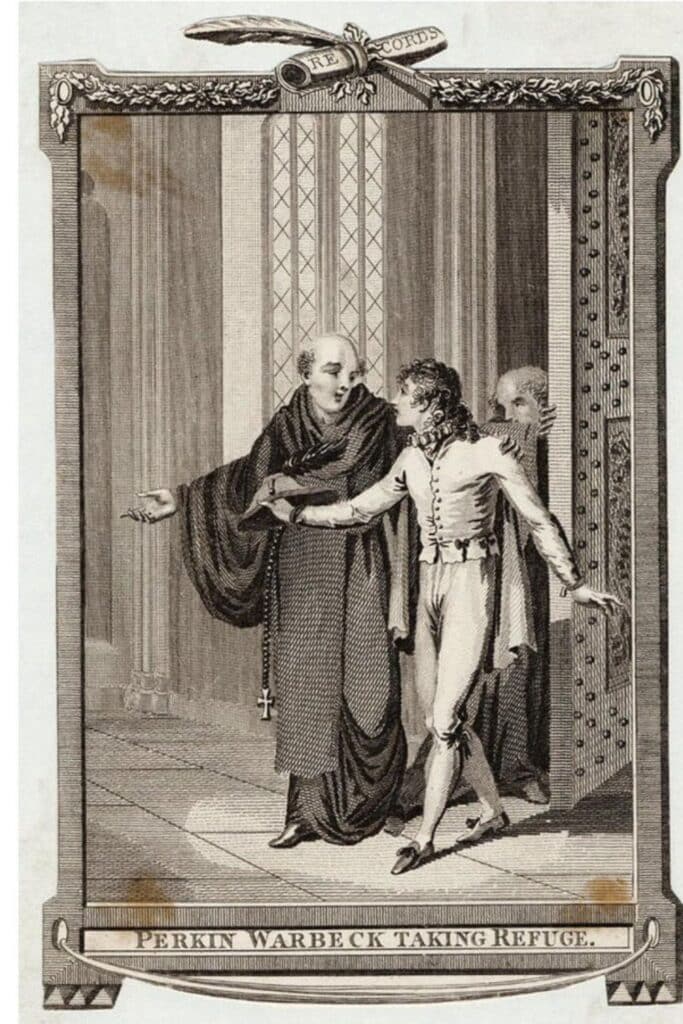
Warbeck, meanwhile, galloped for 60 miles until he reached the sanctuary of Beaulieu Abbey in Hampshire. Exhausted and cornered, he claimed sanctuary in the abbey’s church to escape capture. Henry’s forces surrounded the place. The game was up; Warbeck had no more allies to call on.
After a few days, the pretender and his companions agreed to surrender to King Henry in exchange for their lives. In early October 1497, Perkin Warbeck, the man hailed as King Richard IV by crowds just weeks before, was delivered into Henry VII’s custody as a prisoner.
The Fall of Warbeck: Interrogation, Confession, and Execution
Henry could’ve had Warbeck executed the moment he got his hands on him. Plenty of kings would’ve. But Henry played it smarter. He didn’t want to turn the pretender into a martyr. He wanted to humiliate him.
Warbeck was paraded through the streets in chains, first in Exeter, then London, so the public could get a good look at the man who’d claimed to be their long-lost prince. He was mocked, jeered, and at one point, shoved into the stocks with a paper crown on his head.
Warbeck confessed, publicly and in writing, that he was no prince at all, just the son of a Tournai official. Whether that was true or something he was told to say doesn’t really matter. It did the job. The myth of the missing prince crumbled.
The Royal Trophy
Instead of tossing Warbeck in a cell and throwing away the key, Henry kept him at court. Not as a guest and not as a full prisoner either. More like a living trophy. Someone he could wheel out at banquets to show just how secure his reign was. Even Warbeck’s wife, Lady Catherine Gordon, was treated with respect and folded into the royal household.
But Henry’s patience had limits. In June 1498, Warbeck made a break for it. He was caught almost immediately and thrown into the Tower, this time in shackles. That’s where he met Edward, Earl of Warwick. The last Yorkist with a true claim to the throne.
Two Heads Too Many
In 1499, everything came to a head. Rumors spread that Warbeck and Warwick were plotting to escape together. Whether the plan was real or just the work of a few well-placed informers doesn’t change what happened next. Henry had what he needed.
Warbeck was put on trial for treason and sentenced to death. On 23 November 1499, he was dragged to Tyburn in rough clothes, forced to confess one final time, and then hanged. His Irish supporter, John Atwater, was hanged alongside him.
Five days later, Warwick was taken to Tower Hill and executed too. Many believed Henry only went through with it to keep Spain happy. The Catholic Monarchs, Ferdinand and Isabella, were lining up a marriage between their daughter, Catherine of Aragon, and Henry’s son, Arthur. They wanted no rival claimants left standing.
And now there were none.
Warbeck was buried in a grave at the Austin Friars in London. After nearly a decade of rebellion, royal courts, sieges, and parades, it was over. The final chapter of the Yorkist threat ended not with a battle, but with a rope.

Aftermath: Securing the Tudor Throne
The years of paranoia, plots, and pretenders had hardened the Tudor crown. Henry had proven he could crush rebellion when it came and sniff it out before it started. He signed a peace treaty with Scotland in 1497, sealing it with a royal wedding. His daughter Margaret was married off to James IV in 1503, binding the Scottish throne to the Tudor line instead of another Yorkist gamble.
With Warwick out of the way, Henry’s eldest son, Arthur, was free to marry Catherine of Aragon in 1501, pulling Spain into a powerful alliance. Once riddled with rival factions, England looked like a stable kingdom. No more chaos. No more claimants. Just a king who’d made it clear that the Tudors weren’t going anywhere.
However, chasing Warbeck and shutting his rebellion down wasn’t cheap. It drained over £13,000 from Henry VII’s already fragile treasury, a sum that would run into the millions today and leave a noticeable dent in royal finances.
Lessons from a Pretender
Warbeck’s downfall didn’t just clean up the political mess. It shifted the whole tone of Henry’s rule. He tightened the screws on the nobility with bonds and fines. He built a web of informants across the kingdom. If there was a whisper of conspiracy, Henry wanted to hear it before it had time to breathe.
Warbeck had played the part of a king for nearly eight years. He’d shaken courts, raised armies, and come closer than most to toppling a crown. But in the end, he died like any traitor.
Love a good medieval story?
Join our readers and get tales of kings, queens, castles and ordinary medieval lives straight to your inbox.

Kylie Lang is a nationally syndicated travel journalist with bylines on the Associated Press Wire & more, a medieval history writer, and the founder and lead author of Tales of the Middle Ages (talesofthemiddleages.com). She holds a BA (Honours) in History from the University of Kent and is a member of the British Guild of Travel Writers.