
Unlike her predecessors, Jane Seymour, the third wife of Henry VIII, was neither a well-educated woman nor a great beauty. She was quiet, demure, and of a sweet, gentle disposition. She’d been brought up like many noble women of that period, able to write her own name and read a little, but mainly being taught skills such as needlework.
She was, however, the king’s favorite wife, having given him the son he’d so longed for to succeed him on the throne. It’s said Henry went into a state of mourning for months after her death, refusing to remarry and choosing to wear only black. And when he died, it was Jane whom he was buried alongside.
Table of Contents
But Jane was far from naïve and certainly not stupid. Having seen one Queen banished from court and another beheaded, she made sure to tread carefully. Unfortunately, fate stepped in, and she died just twelve days after giving birth to Edward VI. So, what do we really know about Jane Seymour, Queen Consort of Henry VIII? We’re about to find out.
Early Life at Wolf Hall
Jane Seymour was born around 1508 in Wiltshire, at Wolf Hall, the family’s seat in Savernake Forest. The Seymours weren’t dukes or earls, but they weren’t nobodies either. Her father, Sir John Seymour, had served in Henry VII’s court and fought beside him at the Battle of Blackheath. Her mother, Margery Wentworth, came from old Plantagenet blood, which technically made Jane a distant cousin of Henry VIII. Not that it gave her any particular clout growing up.
Wolf Hall was a rambling old manor house, and Jane’s childhood would’ve been steeped in the rhythms of a well-run estate. There were ten siblings in all, although not everyone survived past infancy. Jane was somewhere in the middle of the pack and never stood out much. She wasn’t known for her wit, charm, or beauty. What she did have was a kind of quiet observation. People noticed she listened more than she spoke.
Jane’s education was typical for a young woman of her status. No Latin lessons or courtly debates. She could sign her name and maybe read some religious texts, but her training was in the domestic arts. Needlework, music, and household management. She knew how to run a nobleman’s household and keep up appearances. In Tudor England, that counted for a lot more than clever banter.
What the Seymours lacked in flash, they made up for in timing. They were loyal to the crown, good at keeping their heads down, and always just close enough to the action. By the time Jane came of age, her brothers, especially Edward, were starting to find their feet in court circles. The family was rising, slowly but steadily, and Jane’s role was to marry well and strengthen their position. No one expected her to catch a king’s eye. Least of all Jane herself.
Life at Court: From the Shadows to the Spotlight
By the late 1520s, Jane was in her early twenties and still unmarried, which was starting to raise eyebrows. Her family arranged for her to join the royal household, which was one of the best places for a noblewoman to be seen and hopefully, find a suitable match.
Jane began her court life in the service of Queen Catherine of Aragon. It would have been a strict, religious household where piety and protocol ruled. Jane kept her head down and did her duty, quietly absorbing the workings of court politics.
When Catherine was pushed aside and Anne Boleyn took her place, Jane stayed on. It was a bold move by the Seymours. Switching allegiance between queens was dangerous, but also a smart move. And Jane played it well. While others gossiped and clashed, she stayed polite. Dutiful. Unremarkable on the surface. But she was watching. She’d seen what happened to Catherine, cast off after years of loyalty, and she saw what was brewing for Anne, too.
By 1535, Henry had grown tired of Anne. She hadn’t given him the son he wanted and was becoming increasingly difficult at court. That’s when he started to notice Jane. She didn’t flirt or provoke. She didn’t argue or push. She offered him something different. Peace. Calm. A sense of order.
Henry began sending her gifts and letters. Jane, coached well, refused them. One account claims she handed back a purse of coins unopened, saying her virtue was more valuable than any gift. It struck the right note. She wasn’t chasing the crown, at least not openly. That made her all the more appealing.
By the start of 1536, Anne’s enemies were circling. Jane stayed close to the king and farther from the queen. When Anne was arrested and executed in May, Jane was already being fitted for her wedding gown. The marriage took place eleven days later.
And just like that, the quiet girl from Wolf Hall became Queen of England.
Hooked on the Middle Ages? Get more stories like this one in your inbox.
Queen Consort: Calm in the Middle of the Storm
Although Jane Seymour was officially Queen of England, she was never crowned. Plans for her coronation were put on hold due to a combination of the political unrest and public health concerns. The north was in turmoil with the Pilgrimage of Grace, and outbreaks of plague occurred in London.
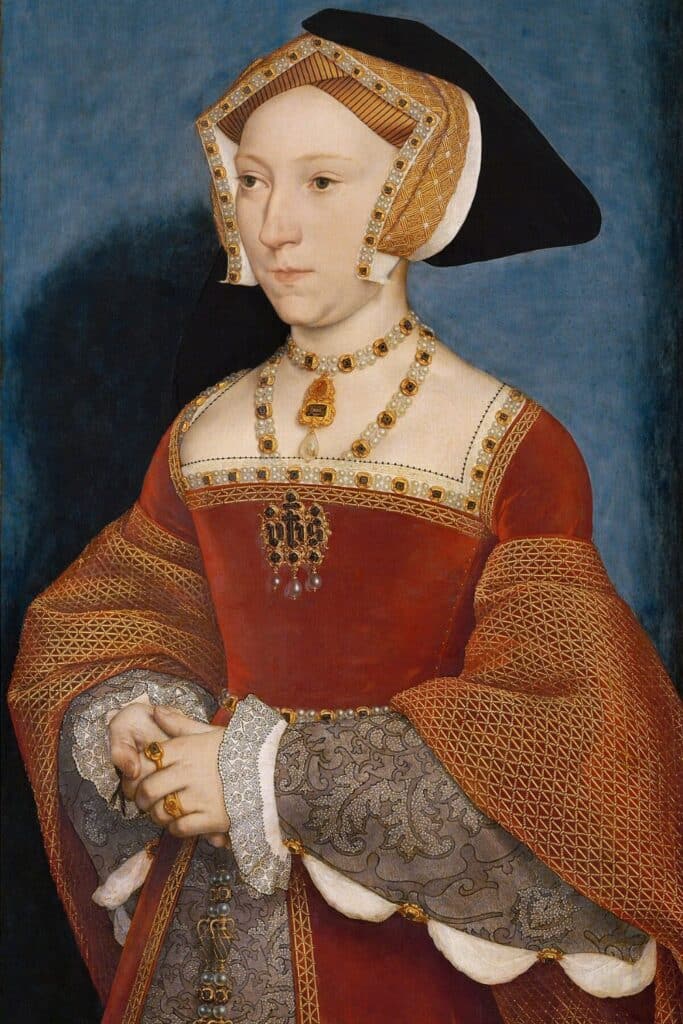
With so much tension in the air, the ceremony was quietly postponed. But with or without a crown, Jane was determined to do things differently. No French fashions, no sharp opinions, no dramatic outbursts. She wore plain English gowns and a gable hood.
At court, Jane kept things calm. She didn’t flood the place with new favorites or stir up rivalries. Instead, she focused on what mattered most to Henry: family. Jane’s first real success as queen came when she helped patch things up between Henry and his daughter Mary. The girl had been cast out, declared illegitimate, and left in the cold after Catherine of Aragon’s fall. Jane convinced Henry to bring her back into the fold. It was no small thing. She was helping heal a very public wound.
Jane also stood firm in her beliefs. She was a traditionalist at heart and likely remained Catholic despite the king’s new church. During the rebellion known as the Pilgrimage of Grace, a huge northern uprising against the dissolution of the monasteries, Jane reportedly begged Henry to show mercy. He shut her down fast, warning her not to meddle in state matters unless she wanted to follow Anne Boleyn to the scaffold. She never brought it up again.
Behind the scenes, Jane created a court that was far less volatile than the one that came before. Her ladies were expected to behave modestly. There was less flirtation, fewer scandals, and more decorum. She wasn’t flashy, but she gave the court a breath of stability it hadn’t seen in years. And Henry, for all his bluster, seemed to value it.
But her real legacy came in the autumn of 1537, when she finally gave him the one thing no other queen had managed, a healthy male heir.

A Son and a Sudden End
Jane became pregnant in early 1537, and the court held its breath. This was it. The chance for Henry to finally have the legitimate male heir he’d broken half of England to get. Jane’s every move was watched. Her meals were monitored. She took no risks. For once, Henry was patient.
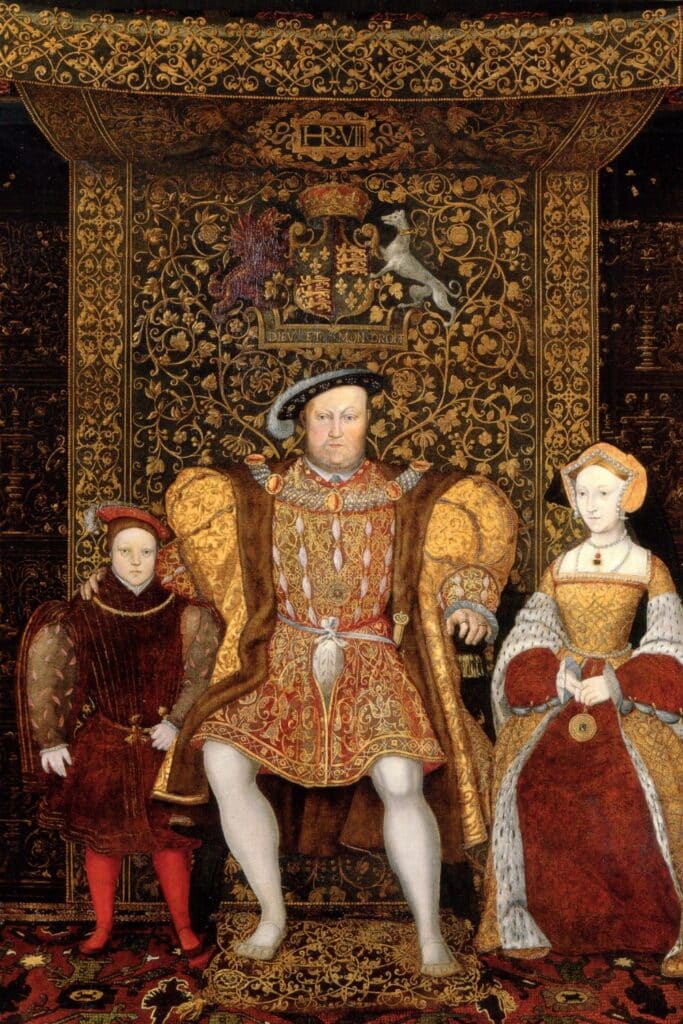
On October 12, she gave birth at Hampton Court to a son. Edward. A living, breathing Tudor heir. The celebrations were massive. Bells rang out across London. Bonfires were lit. Jane had done what Catherine and Anne hadn’t. She’d secured the future of the dynasty.
But behind the joy, things were already turning. Jane hadn’t recovered well from the delivery. The birth had taken two days, and her body was exhausted. Infections after childbirth were common, and the best physicians of the day still didn’t understand how to prevent them. Within days, she developed a fever. She started to slip away.
Twelve days after giving birth, Jane Seymour was dead. Henry was gutted. This wasn’t like the political unpairings of his past. Jane had given him everything he wanted. He wore black for months and didn’t rush to remarry. He gave her the funeral of a proper queen, something neither Catherine nor Anne had been granted. She was buried at St. George’s Chapel in Windsor. Years later, when Henry died, it was beside Jane that he chose to be laid to rest.
Her brothers, especially Edward Seymour, rose high in power thanks to her brief time as queen consort. Her son, Edward VI, would inherit the throne at just nine years old, though his reign would be short.

Jane Seymour in Wolf Hall
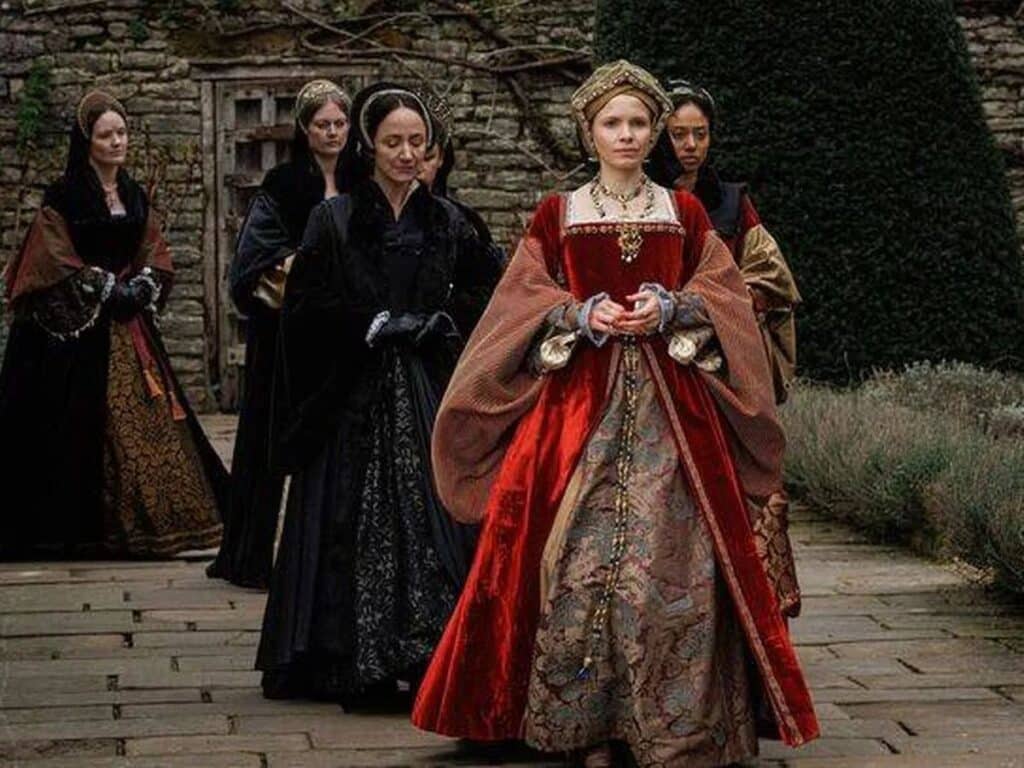
In the BBC series Wolf Hall, based on Hilary Mantel’s novels, Jane Seymour is played by Kate Phillips. Her version of Jane is quiet, observant, and careful with her words, a woman who knows just how dangerous the court has become and moves through it with deliberate caution.
She isn’t presented as naive or passive. There’s a sharpness beneath the surface. In the show, you see her holding back, watching others fall out of favor, and choosing her moments with care. Her scenes with Cromwell hint at someone aware of the stakes, even if she doesn’t play the game as loudly as others.
This version of Jane is less about romance and more about strategy wrapped in silence. She blends into the background until suddenly she doesn’t, and by then, she’s queen.
It’s a portrayal that fits the mood of Wolf Hall perfectly: tense, shadowy, and full of quiet power moves.

How Jane Compared to Catherine and Anne
Jane Seymour couldn’t have been more different from the two queens who came before her, and Henry knew it.
Catherine of Aragon had been a princess of Spain, fiercely educated, proud, and unshakably devout. She stood her ground, even when it cost her everything. Anne Boleyn was fire to Catherine’s stone. Clever, witty, political, and bold, she pushed boundaries and rewrote the rules until the court turned on her.
Jane didn’t have Catherine’s royal birth or Anne’s sharp tongue. What she had was timing, patience, and a deep understanding of what Henry needed. She wasn’t interested in courtly games. She stepped in quietly, with calm hands and steady footing, offering the king peace in a moment of chaos.
Catherine fought. Anne dazzled. Jane endured.
Jane’s Legacy in the Tudor Story
Jane Seymour may have ruled for only a brief moment, but she left a legacy no other wife of Henry VIII could match. She gave him his longed-for son, repaired family rifts, and walked the knife-edge of Tudor politics without losing her head, literally or figuratively.
She didn’t receive a coronation, and she didn’t live long enough to raise her child, but her presence altered the course of the Tudor story. In the end, it was her portrait Henry kept close and her memory he honored most.

Love a good medieval story?
Join our readers and get tales of kings, queens, castles and ordinary medieval lives straight to your inbox.

Kylie Lang is a nationally syndicated travel journalist with bylines on the Associated Press Wire & more, a medieval history writer, and the founder and lead author of Tales of the Middle Ages (talesofthemiddleages.com). She holds a BA (Honours) in History from the University of Kent and is a member of the British Guild of Travel Writers.