When Richard III’s body was slung over a horse and carted off the field at Bosworth in August 1485, the male Plantagenet line didn’t end. It just got more dangerous to belong to. Edward of Warwick was still alive, locked away in the Tower as a ten-year-old. The de la Pole brothers were also out there.
But what about the women? They tend to drift into the background of the standard Bosworth story, mentioned as wives or mothers of someone more interesting. Their stories stretched across decades rather than ending in a single battle.
Table of Contents
This is what happened to the women who carried Plantagenet blood into the Tudor century. The daughters of Edward IV, Margaret Pole, who lived through more than most people could stand, and the de la Pole sisters, who watched their brothers die one by one. And the slow, methodical way two Tudor kings made sure that blood didn’t become a problem.

Elizabeth of York and Her Sisters
Edward IV had five daughters who survived to adulthood: Elizabeth, Cecily, Anne, Catherine, and Bridget. After Bosworth, all of them were technically Plantagenet princesses with a claim potentially stronger than the man who had just taken the throne.
Henry Tudor’s solution to the eldest was to marry her. Elizabeth of York became queen in January 1486, and her body did the political work of merging two houses.
Elizabeth’s marriage gets romanticized, but the contemporary record is sparser than the legend. She and Henry seem to have built something workable. He paid her debts, kept her in his household, and reportedly grieved hard when she died in childbirth in 1503 on her 37th birthday. Whether that counts as love or partnership or just a king mourning the woman who’d given him heirs, I’ll let you decide.
What’s clear is that her position was always tied to her usefulness. The minute she stopped being useful, she’d have been a problem.
Her sisters were handled differently. Cecily, who’d already been betrothed and unbetrothed more times than was decent, was married off to Henry’s half-uncle’s stepson, John Welles. When Welles died, she made the mistake of marrying a man named Thomas Kyme without royal permission.
Henry VII was furious. She lost her lands and her place at court, and faded from the historical record on the Isle of Wight. Anne was married to Thomas Howard, the future Duke of Norfolk, and died young. Catherine married William Courtenay, whose family promptly got tangled up in treason charges and landed in the Tower. Bridget, the youngest, was placed in Dartford Priory as a child and lived out her life as a nun.
Putting a royal daughter in a convent was a tidy way to neutralize her bloodline. She couldn’t marry, couldn’t breed, couldn’t be used as the figurehead for a rebellion. Bridget of York died around 1517, having spent almost her entire life behind cloister walls.
Margaret Pole and the Long Shadow of Clarence
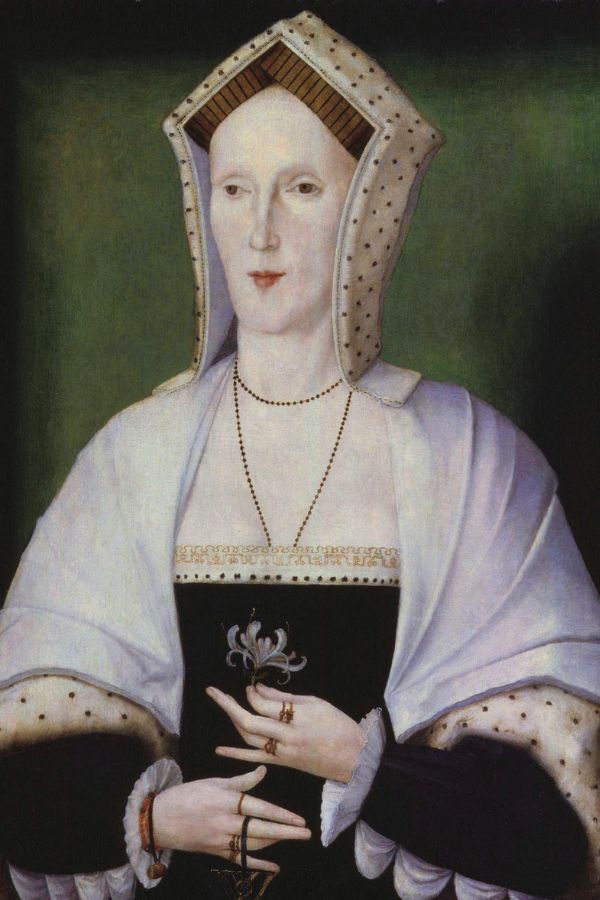
Margaret Pole is the one who haunts me. She was the daughter of George, Duke of Clarence, the brother of Edward IV and Richard III, who got himself executed in 1478, allegedly drowned in a butt of malmsey wine. That made her a niece of two kings and the sister of Edward of Warwick, the boy in the Tower.
Her brother was executed in 1499 on charges most historians find flimsy. He’d been in the Tower since he was ten. By the time Henry VII had him killed at twenty-four, he reportedly didn’t know a goose from a capon, having spent his formative years in isolation.
The execution cleared the way for Catherine of Aragon’s marriage to Arthur Tudor. Ferdinand and Isabella had made it clear they wouldn’t send their daughter into a court where rival claimants were still breathing. Warwick died for a Spanish marriage contract.
Margaret survived because Henry VII married her off to Sir Richard Pole, a loyal Tudor cousin. The match was deliberately beneath her station. A knight, not a duke. She had five children, was widowed in 1504, and managed to claw her way back into favor under Henry VIII, who restored her to the earldom of Salisbury in her own right in 1513. She became governess to Princess Mary and was, for a stretch of years, one of the wealthiest women in England.
Then the Reformation happened. Her son, Reginald Pole, safe on the continent, wrote a vicious attack on Henry VIII’s break with Rome. Henry couldn’t reach Reginald, so he reached for the family instead. Margaret’s son, Henry, Lord Montagu, was executed in 1538.
Her grandson, Henry’s young son, disappeared into the Tower and is presumed to have died there. Margaret herself was arrested, held for two and a half years, and finally executed in May 1541. She was 67 years old.
The execution was a disaster. The regular executioner was away, and an inexperienced young man hacked at her head and shoulders eleven times before she died. She was the last surviving child of a Plantagenet prince, and she was butchered on a scaffold by a boy who didn’t know how to swing an axe. Beatification came in 1886. It was four centuries too late to matter.
The de la Pole Sisters and the White Rose Disaster
John de la Pole, Duke of Suffolk, had married Elizabeth, sister of Edward IV and Richard III. Their sons became the great Yorkist hope of the Tudor period. John, Edmund, Richard, William.
The eldest, John, died fighting Henry VII at Stoke in 1487. Edmund fled abroad, was handed back by Maximilian, and sat in the Tower until Henry VIII had him beheaded in 1513.
Richard, the White Rose, died at Pavia in 1525 fighting for the French. William died in the Tower in 1539 after thirty-seven years of imprisonment, the longest stretch any English prisoner served there.
The sisters lived through all of it. Anne de la Pole had been betrothed to James IV of Scotland under her uncle Richard III, and after Bosworth, that match was quietly dropped. She entered Syon Abbey and became its prioress.
Catherine de la Pole married William Stourton and lived into her sixties. Both women watched their brothers die one by one, by battle, by axe, and by slow attrition in stone cells.
What strikes me reading about them is how little of their own voices survives. We have wills, marriage contracts, and the occasional letter. We don’t have what they thought when Edmund was led out to the block, or how Anne, the prioress, prayed for William as the years stacked up in his Tower cell.
The convent had served the same function for Anne as it had for Bridget of York. Take the woman out of the breeding pool, and the threat she represents gets smaller.
The de la Pole line essentially burned itself out. By the time William died in 1539, the immediate male line was gone. The bloodline passed down through the female line and was diluted into the gentry, which is exactly what the Tudors wanted.
Catherine of York and the Courtenay Problem
Catherine of York, 4th daughter of Edward IV, married William Courtenay, Earl of Devon. The Courtenays were one of the great West Country families, and the marriage was meant to bind them to the new dynasty. It did the opposite.
William was arrested in 1502 on suspicion of conspiring with Edmund de la Pole and spent the rest of Henry VII’s reign in the Tower.
He wasn’t released until Henry VIII took the throne in 1509. Catherine had spent years as the wife of a state prisoner, raising their children in reduced circumstances while the court she’d grown up in carried on without her.
William died in 1511, barely two years after his release. Catherine took a vow of chastity, which in practical terms meant she wouldn’t remarry and produce more Plantagenet-blooded children. She lived at Tiverton until her death in 1527.
Her son, Henry Courtenay, Marquess of Exeter, did well under Henry VIII for a while. He was a close companion of the king in their younger years and held a high office. Then he got caught up in the same Pole conspiracy that destroyed Margaret. He was executed in 1538.
His son Edward Courtenay was thrown into the Tower as a twelve-year-old and stayed there for fifteen years. Mary I let him out in 1553, and he died in Padua in 1556, probably of poison, possibly of natural causes. The records are murky.
The Courtenay story tells you something about how Plantagenet blood worked across generations. You could marry a Plantagenet woman and seem to benefit from the connection. Two generations later, your descendants would be paying for it with their heads.
How Two Tudor Kings Managed the Problem
Henry VII’s approach was systematic. Marry the eldest daughter and make her queen. Marry the others to loyal men or to men whose ambitions could be controlled, and place the youngest in a convent.
Keep the Warwick boy in the Tower until a diplomatic moment made it convenient to kill him, and keep a watchful eye on the de la Poles abroad. Make sure no Plantagenet woman of marriageable age and royal blood was unaccounted for.
Henry VIII was less patient and more paranoid. The Reformation gave him a reason to see treason in every corner of the old nobility, and the families with Plantagenet blood were exactly the families most likely to oppose his religious changes.
The 1538-39 conspiracies, real or imagined, wiped out the Pole and Courtenay men in a single sweep. Margaret Pole’s execution in 1541 was almost the final act. Her death cleared the last serious adult Plantagenet claimant from English soil.
I find it striking how often the women outlived the men. Margaret Pole watched her brother, her son, and her grandson go to the Tower before she did. Catherine of York buried her husband and watched her son rise in favor, knowing what favor at the Tudor court could cost.
The variation in outcomes wasn’t really about who they were as people. It was about how much blood ran through them, who they’d married, what their sons did, and whether they were useful or threatening at any given moment.
A Plantagenet woman in Tudor England could end up as queen, as a nun, as a prisoner, or as a corpse on a scaffold. Often, she ended up as more than one of those things across a single lifetime.
Related posts:
 The Daughters of Elizabeth Woodville: Marriage, Power, and Survival in Tudor England
 Six Women Who Dodged a Bullet, or Axe, by Not Marrying Henry VIII
 The Story of Margaret Pole: The Heartbreaking End of the Last Plantagenet
 The Ones That Got Away. The Six Women Who Kept Their Heads, By Not Marrying Henry VIII