The Plantagenet women have always fascinated me, and it’s hard to pick just one who stands out in medieval history. The stories of these women are filled with power struggles, betrayals, and wars that tore kingdoms apart. But behind the kings who sat on the throne stood women who were every bit as formidable.
Queens, mothers, and daughters who fought, schemed, and endured in ways that shaped the course of medieval history. Some ruled in their own right, others held kingdoms together when the men failed, and more than a few took up causes that put their lives at risk. They were survivors in a brutal world where alliances could turn deadly overnight.
Table of Contents
I’ve chosen twelve Plantagenet women who proved themselves to be true heroines. Each one left her mark on the dynasty and on Europe itself, leaving behind a legacy that continues to fascinate us.

Matilda of England (1102–1167)
Matilda was the daughter of King Henry I of England and Matilda of Scotland. Sent to Germany at eight years old, she became Holy Roman Empress by marriage to Henry V, learning politics in a ruthless imperial court. When her husband died young, she returned to her father’s side as his chosen heir. It was an extraordinary position for a woman in twelfth-century England, but it set her on a path that would consume the rest of her life.

When Henry I died in 1135, her cousin Stephen of Blois seized the throne. What followed was nearly two decades of war, known as The Anarchy. Castles were burned, towns destroyed, and ordinary people starved. Matilda fought for her rights with everything she had, but the struggle took its toll. Her half-brother Robert of Gloucester was her greatest champion, commanding her armies and holding her cause together. His death in 1147 was devastating, leaving her campaign without the steady leadership it needed.
The fighting was brutal, and so were the risks she faced personally. In 1142, trapped in Oxford Castle under siege by Stephen’s forces, Matilda staged one of the most perilous escapes of the Middle Ages. With the castle surrounded and supplies gone, she slipped out at night with a small band of knights. In the dead of winter, she crossed the frozen Thames dressed in white, blending into the snow as enemy soldiers hunted for her. That escape saved her life, but it also showed how far she had been pushed: a princess and empress reduced to a fugitive in her own land.
Matilda never wore the crown, but she endured longer than anyone expected. Even after defeat, she refused to renounce her claim. Years of grinding conflict ended with a compromise: Stephen kept the throne, but he recognized Henry, her son, as his heir. It was not the victory she wanted, but it ensured the survival of her line. When Henry II became king in 1154, it was largely due to Matilda’s unrelenting fight, and the Plantagenet dynasty was born from her struggles.
Eleanor of Aquitaine (1122–1204)
It is no big secret that I’m a huge fan of Alienor, and I don’t live far from her court at Poitiers. She is the only woman to have been Queen of both France and England, albeit at different times in her life. She was born the heiress of Aquitaine, one of the largest and wealthiest territories in Europe.
When her father died, she inherited it at fifteen, instantly becoming the most sought-after bride in Christendom. She married Louis VII of France and became queen, but life at the French court was stifling. Eleanor’s independent spirit clashed with Louis’s piety, and their marriage fell apart during the Second Crusade.

Rumors swirled about her conduct in Antioch, where she supported her uncle Raymond, and was rumored to have embarked on an incestuous affair. But what mattered was the failure of the campaign and her inability to produce a male heir. The marriage was annulled in 1152.
Weeks later, she married Henry, Duke of Normandy, who would soon become Henry II of England. Together, they built an empire that stretched from the Scottish border to the Pyrenees. Yet being queen of this vast dominion brought as much pain as power. Henry was unfaithful, and their marriage descended into open conflict. Eleanor encouraged her sons to rise against their father, a rebellion that nearly toppled the king. For her defiance, she spent more than fifteen years imprisoned by Henry, being released only when their son, Richard, took the throne.
She managed kingdoms while Richard fought abroad, traveling constantly despite her age to secure alliances and keep order. When John, her youngest, turned against Richard, she worked to hold the dynasty together. Even in her seventies, she rode across the mountains of Castile to bring back her granddaughter, a marriage prize for the future of the Plantagenet line.
Few medieval women held power for so long or in so many different roles: queen of France, queen of England, duchess in her own right, regent, and diplomat. She lived into her eighties, a staggering age for the twelfth century, and died at Fontevraud Abbey, where she was buried beside Henry and Richard.
Joan of England (1165–1199)
Joan was the daughter of Henry II and Eleanor of Aquitaine, which made her the sister of Richard the Lionheart and King John. Like most royal daughters of the Plantagenet line, her life was predetermined for her early on. At twelve years old, she was married to William II of Sicily, carried off to a kingdom she had never seen and surrounded by people who spoke a language she did not know. For over a decade, she was queen of Sicily, but when William died in 1189, her security vanished overnight.

The new king, Tancred of Lecce, stripped her of her lands and kept her under guard. It was only through the arrival of her brother Richard on the way to the Third Crusade that she was released. From there, her story became entwined with the chaos of the Crusade. Joan accompanied Richard and his new wife, Berengaria of Navarre, across the Mediterranean, caught between political negotiations, military campaigns, and the harsh conditions of life on campaign.
Her second marriage to Raymond VI of Toulouse presented her with a different kind of challenge. Toulouse was a turbulent region, already under pressure from the growing tensions that would lead to the Albigensian Crusade. Joan was not content to stay in the shadows. In 1199, heavily pregnant, she tried to secure control of lands for her son against the wishes of the local nobility. Her efforts collapsed in violence, and she fled to a convent at Fontevraud, where she gave birth to a son but died soon after, at only thirty-three.
Buried at Fontevraud Abbey near her mother, she remains a reminder of the cost borne by Plantagenet daughters. Their blood tied kingdoms together, but the price they paid was often their freedom, their security, and sometimes their lives.
Isabella of Angoulême (c. 1188–1246)
Isabella was the only daughter of Aymer, Count of Angoulême, and her inheritance made her a valuable pawn in the game of medieval power. She was betrothed to Hugh de Lusignan, a powerful noble in Poitou, but in 1200, King John of England swept in and married her himself.
Isabella was probably no more than twelve years old. She was taken to England, crowned queen, and thrust into a court that viewed her with suspicion. John’s cruelty and his disastrous reign meant she quickly became a scapegoat, accused of extravagance and blamed for his failures.
When John died in 1216, Isabella was only in her twenties with five young children, including the future Henry III. She returned to France and reclaimed her role as Countess of Angoulême. There, she shocked Europe by marrying Hugh de Lusignan, the very man who had once been promised to her daughter. The union caused a scandal, and chroniclers branded her the “Helen of Troy of the Middle Ages,” a woman whose beauty and ambition sparked wars.
The truth was less romantic and more brutal. Isabella lived through endless conflict, her second marriage tying her to the Lusignan resistance against both the French crown and, at times, her own son’s authority in England. She raised children who would go on to hold powerful positions across Europe, binding the Plantagenets to French nobility. Yet chroniclers accused her of scheming and even of poisoning Louis VIII of France, though evidence is thin.
Married off as a child, widowed young, hated in England, and distrusted in France, she lived at the center of storms she did not entirely create. Isabella died in 1246 and was buried at Fontevraud Abbey, alongside Richard the Lionheart, under Eleanor of Aquitaine and Henry II.
Eleanor of Provence (1223–1291)
Eleanor was the daughter of Ramon Berenguer IV, Count of Provence, and Beatrice of Savoy. Like her three sisters, she was married off into European royalty, each match strengthening their family’s influence. At just thirteen, Eleanor crossed the Channel to marry Henry III of England. She was crowned at Westminster soon after, still a child, entering a court and kingdom that would never fully accept her.
From the start, Eleanor was criticized. She brought with her a household of Provençal relatives who were given positions and influence at court. English barons resented them, and by extension, her. She was blamed for draining the treasury, and her foreign birth made her a target for xenophobia.
In 1263, during the Barons’ War, a London mob attacked her barge on the Thames, pelting her with stones, mud, and rotten food until she had to be rescued. Few queens endured such public humiliation.
She acted as regent when Henry was abroad, defended her children’s interests, and played a steadying role during her husband’s long and troubled reign. She raised five children, including Edward I, who inherited the Plantagenet crown. Eleanor also nurtured a love of books and learning, leaving behind a reputation for fostering culture as well as survival in hostile conditions.
She spent decades fending off hostility, lived through civil war, and saw her husband repeatedly undermined by his barons. Still, she outlived Henry by nearly twenty years, spending her later life quietly at Amesbury Priory.
Eleanor of Castile (1241–1290)
Eleanor was the daughter of Ferdinand III of Castile and Joan of Ponthieu. She married Edward, the future Edward I of England, when she was around thirteen. Unlike many royal marriages, theirs evolved into a genuine partnership, although it was forged in the midst of constant travel, war, and upheaval. She followed him everywhere, from Gascony to Wales and even on crusade in the Holy Land, where both of them nearly died of illness.
Eleanor bore at least sixteen children, though most died young, leaving her with grief upon grief. She spent much of her marriage moving from one royal manor to another, because the business of ruling demanded constant presence across the kingdom. She also took an active role in managing estates and finances, building a reputation as a shrewd and sometimes ruthless landholder. Her methods sparked resentment, with chroniclers accusing her agents of sharp practice against tenants.
Her final journey was typical of her life. She was traveling with Edward through northern England when she fell ill. She died at Harby, near Lincoln, in 1290, at only forty-nine. Edward’s grief was real and lasting. To mark each place where her body rested on its way to Westminster, he ordered the building of stone crosses. These Eleanor Crosses became her most visible legacy.
Isabella of France (1295–1358)
Isabella was the daughter of Philip IV of France and Joan I of Navarre, married to Edward II of England when she was just twelve. The marriage was meant to bind two powerful kingdoms, but it quickly soured. Edward lavished lands and wealth on his favorites, first Piers Gaveston and later Hugh Despenser the Younger, while Isabella was left sidelined and humiliated at court. Her position as queen meant little when her husband’s loyalty lay elsewhere.

The danger became personal during the Despensers’ rise. Isabella’s lands and income were seized, and she was left effectively powerless. In 1325, she traveled to France to negotiate on Edward’s behalf, but once there, she refused to return. Instead, she formed an alliance with the exiled Roger Mortimer, a move that shocked Europe. Together they raised an army, invaded England in 1326, and forced Edward II to abdicate in favor of their teenage son, Edward III.
Her victory came at a price. Edward II was imprisoned and later murdered, a death that hung over Isabella’s reputation for the rest of her life. With Mortimer, she ruled England as regent, but their dominance was short-lived. In 1330, Edward III seized power for himself, had Mortimer executed, and confined Isabella. She lived out her final years in relative obscurity, though with considerable wealth, until her death in 1358.
Married to a king who openly rejected her, stripped of power, and forced into rebellion just to survive, she walked a perilous line between queen and traitor. Her trailblazing was in daring to act when few medieval women had the means or the will to overthrow a king. History remembered her as a she-wolf, but behind the insult lies the reality of a woman who refused to be destroyed by a brutal husband and an unforgiving court.
Margaret of Anjou (1430–1482)
Margaret was the daughter of René of Anjou and Isabella of Lorraine, married to Henry VI of England at just fifteen. She stepped into a troubled kingdom. Henry was pious, gentle, and prone to mental collapse. The marriage gave him a queen, but not the strong king England needed. That burden fell on Margaret, who soon became the driving force behind the Lancastrian cause in the Wars of the Roses.

Her hardships were relentless. As Henry slipped into long bouts of incapacity, Margaret was left to defend his crown and their son’s inheritance. She faced barons who dismissed her authority and enemies who painted her as a foreign schemer. When open war broke out, she raised armies, led campaigns, and even fought at the Battle of Tewkesbury. Chroniclers cast her as ruthless, and perhaps she was, but she had no choice. Every defeat meant not just political loss but the threat of execution for her family.
The most devastating blow came in 1471. After years of fighting, her only son, Edward of Westminster, was killed in battle. He was seventeen. With his death, her cause collapsed. Captured and imprisoned, she was eventually ransomed back to France, where she lived out her remaining years in obscurity, stripped of power, wealth, and purpose.
Anne Neville (1456–1485)
Anne was the younger daughter of Richard Neville, Earl of Warwick, the man known as the “Kingmaker.” From birth, her destiny was bound to the shifting fortunes of her father’s ambitions. As a teenager, she was married to Edward, Prince of Westminster, son of Henry VI and Margaret of Anjou, thereby tying her to the Lancastrian cause. The marriage was short. Edward was killed at Tewkesbury in 1471, leaving Anne a teenage widow in the middle of a war.
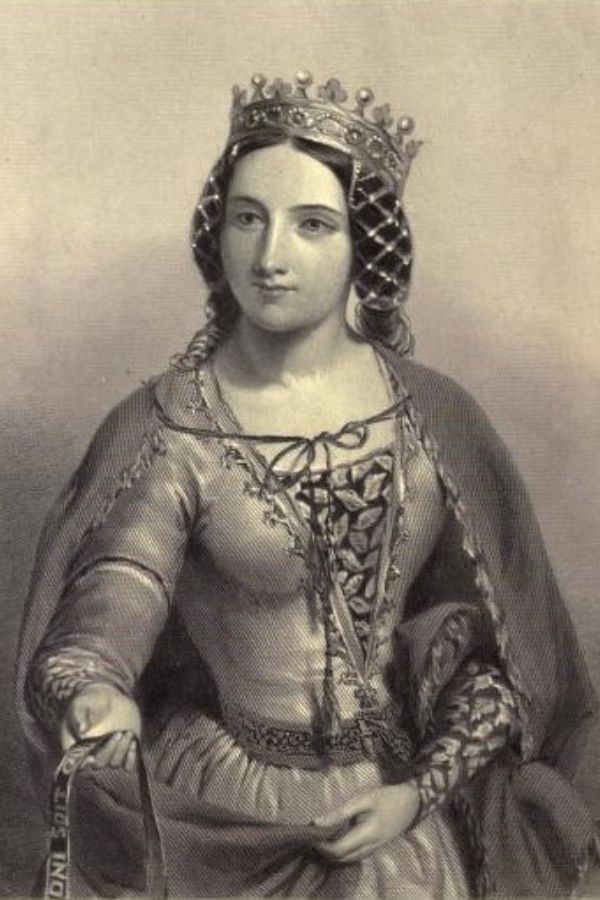
Her hardships only deepened. After her husband’s death, she was taken into the custody of her brother-in-law, George, Duke of Clarence, who kept her hidden to block her inheritance. She was eventually rescued by Richard, Duke of Gloucester, her cousin and soon her second husband. Richard’s marriage to Anne gave him part of the Neville estates, but for Anne, it meant survival.
When Richard seized the throne in 1483 as Richard III, Anne became queen of England. Yet the crown brought her little peace. Their only son, Edward of Middleham, died young, a devastating loss for a mother who had already buried her first husband. Within two years, Anne herself was dead at just twenty-eight, likely from tuberculosis. Rumors swirled that Richard poisoned her to remarry, though there is no proof.
Anne’s life was marked by coercion, loss, and survival in a game she never chose to play. She went from princess of Wales to pawn of her in-laws, then queen beside a king who is remembered as one of the most controversial rulers of the Middle Ages.
Elizabeth of York (1466–1503)
Elizabeth was the daughter of Edward IV and Elizabeth Woodville, born into the turmoil of the Wars of the Roses. As a girl, she enjoyed the security of her father’s reign, but that stability was shattered when he died in 1483. Her brothers, Edward V and Richard of Shrewsbury, were placed in the Tower of London by their uncle Richard, Duke of Gloucester. They vanished soon after, becoming the Princes in the Tower. Elizabeth, barely a teenager, was left vulnerable in a court reshaped by Richard’s usurpation.

With her brothers gone and her family’s position broken, Elizabeth became the focus of marriage rumors, including talk that Richard himself might take her as his queen. Instead, she was married to Henry Tudor after his victory at Bosworth in 1485. The union ended the wars by uniting the houses of York and Lancaster, and together they founded the Tudor dynasty.
As queen, Elizabeth produced children who would secure the dynasty’s future, including Henry VIII, but she also endured constant loss. Several of her children died young, and the death of her eldest son, Arthur, in 150, devastated her. She herself died in childbirth the following year at just thirty-seven.
Katherine Swynford (c. 1350–1403)
Katherine was born the daughter of a minor knight, not a princess or duchess. She entered the household of John of Gaunt, Duke of Lancaster and son of Edward III, first as a governess to his daughters. Her position should have kept her in the background, but her life took a different turn. After the death of her husband, Hugh Swynford, she became John’s mistress. For years, they lived openly together, even as chroniclers condemned her and court opinion turned against them.

Her relationship with John made her a target of gossip and resentment, especially during the Good Parliament of 1376, when her influence was publicly denounced. She was forced into exile more than once and lived with uncertainty over her children’s futures, since they were born out of wedlock.
Yet Katherine held her ground. She raised her Beaufort children with care, and in 1396, John of Gaunt finally married her, legitimizing their children with papal approval. The Beaufort line went on to play a central role in the Wars of the Roses, and from them came Margaret Beaufort, mother of Henry VII. Through Katherine, a governess and mistress who became a duchess, the Tudor dynasty claimed its right to the throne.
She had no great inheritance, no royal birth, and no expectation of power. Yet through persistence and survival, she changed the course of English history.
Margaret Beaufort (1443–1509)
Margaret Beaufort was the great-granddaughter of John of Gaunt and Katherine Swynford, born into a family with royal blood but complicated legitimacy. She inherited vast estates as a child, which made her a valuable prize for ambitious men.
At only twelve, she was married to Edmund Tudor, half-brother of Henry VI. By thirteen, she was a widow and pregnant, forced to give birth in harsh conditions that nearly killed her. Her son, Henry Tudor, was the only child she ever bore.

From then on, her life became a long fight to secure Henry’s survival. The Wars of the Roses put him in constant danger. As a teenager, he was forced into exile in Brittany, and Margaret lived under Yorkist rule, walking a razor’s edge between loyalty to the crown and her determination to protect her son’s claim. She endured surveillance, restrictions, and even forced marriages designed to keep her under control. Yet she never let go of Henry’s cause.
Her perseverance paid off. In 1485, Henry returned to England, defeated Richard III at Bosworth, and became Henry VII. Margaret, who had risked everything for decades, finally saw her son crowned. But even then, she did not fade into the background. She remained a formidable presence in his reign, managing estates, influencing politics, and securing the future of the Tudor line.
Margaret’s hardships were extraordinary: a child marriage, a dangerous childbirth, years of powerlessness under hostile kings, and the constant threat of execution if her plotting was uncovered. Yet she endured. Without her unrelenting will, the Tudors might never have taken the throne.