
If there was ever a woman who deserved the title of trailblazer, it’s Eleanor of Aquitaine, or Alienor to give her her French name. Not only was she a great beauty, but she had the brains to match and willpower to envy. She led an extraordinary life for a woman in the Middle Ages.

She married two kings, was imprisoned for over fifteen years, and crossed a mountain into her eighties. Nobody put Alienor in the corner. She was a force to be reckoned with, and through her line, she shaped the course of English history.
Table of Contents
So whenever life gets hard, I ask myself, What would Eleanor do. How would she deal with whatever challenge I’m facing? She gives me the strength to carry on because nothing in my life is as hard as some of the things she faced.
So what was it about her that made her one of the biggest female names in history, up there with Joan of Arc and Cleopatra? Let’s test your Eleanor knowledge and see which of these facts about her surprises you.

16 Facts About Eleanor of Aquitaine That May Surprise You
It’s little wonder that Eleanor didn’t play by the rules because neither did her family. Her father was William X, Duke of Aquitaine, and her grandfather, William IX, was one of the first troubadours, writing poems that were anything but proper. He ran off with a woman called Dangereuse, yes, that was really her name, and later married her, despite the scandal it caused. This was the world Eleanor came from. Power, poetry, politics, and plenty of drama.
She Was A Duchess In Her Own Right
Most medieval women got their titles through marriage. Not Eleanor. She inherited the Duchy of Aquitaine and the County of Poitou when she was still a teenager. When she was about fifteen, her father, William X, died unexpectedly while on pilgrimage to Santiago de Compostela in 1137.
She inherited the Duchy of Aquitaine and the County of Poitou when she was still a teenager. That meant land, power, and vassals all swearing loyalty to her, not her future husband.
It also meant she had a target on her back. Controlling Aquitaine was a political jackpot, and plenty of men wanted her hand for exactly that reason. She didn’t have a brother to keep the wolves at bay. However, in his will, her father requested that King Louis VI of France protect her and her lands, so the French king, Louis VI, stepped in as her guardian.
He arranged for Eleanor to marry his son, Louis the Dauphin. He inherited the throne when his father passed away shortly after their wedding. That’s how Eleanor became Queen of France, because she was already Duchess of Aquitaine. She brought the land, the influence, and the wealth. The crown followed.
She Advocated For Her Sister, Petronilla, When She Had an Affair With a Married Man
Eleanor didn’t shy away from scandal, especially when it involved her family. Her younger sister, Petronilla, fell in love with a man called Raoul of Vermandois. The problem? He was already married. His wife also happened to be the niece of the powerful Count of Champagne, so this wasn’t just messy, it was political dynamite.
Petronilla and Raoul went ahead with the relationship anyway, and Eleanor backed them. She used her influence as Queen of France to pressure the court into supporting their union, even though the Church was firmly against it. The fallout was massive. Petronilla and Raoul were excommunicated, Champagne rebelled, and a short but bitter war broke out.
Eleanor never sat on the sidelines when it came to the people she loved. Even if it meant taking on the Pope.
She Went On Crusade With Louis VII
In 1147, Eleanor joined her husband, Louis VII, on the Second Crusade. And not alone either. She took a full entourage of knights from Aquitaine with her, many of them loyal to her, not to Louis. That raised eyebrows.
They made it as far as Antioch, where Eleanor’s uncle, Raymond of Poitiers, ruled. He welcomed her with open arms, and she returned the favor by pushing Louis to support Raymond’s military plans in the region. Louis refused. The tension between the couple, already strained, hit breaking point.
Rumors started to swirl. Whispers of an affair between Eleanor and Raymond spread through the camp, though there’s no real evidence for it. What mattered is that Louis believed them, or wanted to. Their marriage was already strained, and the Crusade exacerbated the situation.
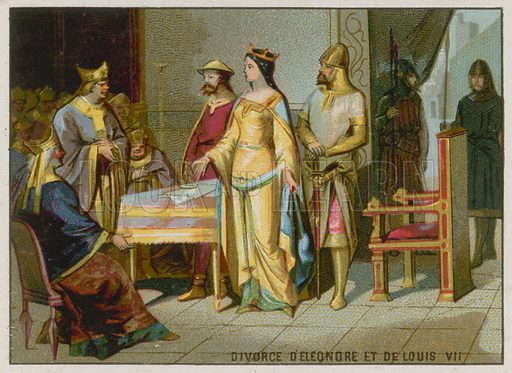
Back in Europe, the couple appealed to Pope Eugene III to save their marriage, but they were unable to produce a son. On March 21, 1152, the Church officially annulled the marriage on the technical grounds of consanguinity. Eleanor walked away with her titles and lands restored. Within weeks, she headed back to Aquitaine, her future wide open, and the David against Goliath drama that followed would shape her next chapter.
She Was Nearly Captured & Forced Into Marriage With Geoffrey of Anjou
After her annulment from Louis VII, Eleanor didn’t hang around the French court. She set off for Poitiers straight away, probably with a small guard, maybe even by river to avoid the main roads. She was one of the richest women in Europe, unmarried, and in charge of some of the most desirable land in France. That made her a prime target.
Geoffrey of Anjou, the younger brother of Henry Plantagenet, saw an opportunity. He tried to intercept her on the road and force her into marriage. If he’d pulled it off, he would have gained Aquitaine and power well beyond what he was due.
But Eleanor got wind of the plot and managed to slip past him. Within weeks, she chose her own path and married Henry instead. No one forced her hand. Not then. Not ever.
She Was the Only Woman to Wear the Crowns of England & France
Many medieval queens had influence, but none had quite the résumé that Eleanor did. She was crowned Queen of France in 1137, just after marrying Louis, and held that title for fifteen years. After their annulment, she didn’t lose time or power. She gained it.
In 1152, she married Henry Plantagenet. Two years later, he became King of England, and Eleanor was crowned queen a second time, this time with significantly more power. That made her the only woman in history to have been queen consort of both France and England.

She Put William Marshal, the Greatest Knight, On the Map
In 1168, Eleanor was riding between her castles in Aquitaine with a small escort when rebels from the de Lusignan clan ambushed them. William Marshal, a young knight serving in her party, threw himself between them and Eleanor. He fought off attackers, bought her time to escape, and got hit with a thigh wound. His uncle, Patrick of Salisbury, was killed on the spot
Marshal survived but was taken captive. Eleanor heard about his bravery and personally paid his ransom. She also equipped him with fresh horses, new armour, and money, and brought him into her household. Soon, he was tutoring Henry, the Young King, the eldest son, in chivalry. That young knight who once saved her life would go on to become one of the most celebrated knights in England.
Hooked on the Middle Ages? Get more stories like this one in your inbox.
She Sided With Her Sons In a Rebellion Against Her Husband, Henry II
By the early 1170s, Eleanor’s marriage to Henry II had soured. He had taken mistresses, sidelined her politically, and kept a tight grip on her lands. Her sons were growing up, and tensions were running high, especially with Henry the Young King, who had the title but no real power.
In 1173, Eleanor made a bold move. She backed her sons, Henry, Richard, and Geoffrey, when they rose up against their father in what became known as the Revolt of the Sons. Some say she even helped organize it. Either way, she didn’t stay neutral. She chose a side.
She was captured while trying to flee Aquitaine in disguise and was placed under house arrest.

She Was Imprisoned By Her Second Husband for Almost 16 Years
After her capture, Eleanor vanished from public life. Henry kept her under tight control, moving her between castles across England. She spent time at Winchester, Old Sarum, Ludgershall, and various royal manors in Buckinghamshire and Nottinghamshire. These weren’t dungeons, but they weren’t palaces either. Cold stone walls. Limited space. A reduced household. She had ladies-in-waiting and some comforts, but no political voice and no freedom to travel or rule.
She wasn’t entirely cut off. She was allowed out for Easter at Winchester to see her daughter Joanna, and she spent Christmas 1184 at Windsor with the family. But those events were rare and tightly managed. Most of her time was spent in quiet confinement, far from court, her influence muted.
Despite that, she never lost her grip on what mattered. She kept informed, maintained ties through letters, and waited. When Henry died in 1189, Richard sent orders straight away. She was released and immediately stepped back into power, proving that sixteen years of silence hadn’t dulled her edge.
She Acted As Vice Regent When Richard the Lionheart Was On Crusade
The moment Henry was gone, Eleanor was back in charge. Richard may have worn the crown, but he trusted his mother to keep the kingdom running while he went off to the Third Crusade. She was in her mid-sixties by then, but age didn’t slow her down.
Eleanor took control of the royal court, managed day-to-day affairs, dealt with nobles sniffing around for more land, and even kept her youngest son, John, in check, no easy task. She issued writs in Richard’s name, raised funds for the war effort, and made sure the fragile peace Henry had left behind didn’t fall apart.
She was ruling. And everyone knew it. While Richard was off fighting in the Holy Land, it was Eleanor who held England together.

In Her 70s, She Arranged the Ransom Payment For Richard, Who Was Taken Prisoner in Austria
Richard didn’t make it home from the Crusade the way he planned. On his way back through Europe in 1192, he was captured by Duke Leopold of Austria and handed over to the Holy Roman Emperor. The demand? One hundred and fifty thousand marks, an enormous sum at the time.
Eleanor was in her seventies, but once again, she took charge. She coordinated the effort to raise the ransom, which meant squeezing nobles, taxing the clergy, and collecting silver from every corner of the kingdom. She oversaw it all, piece by piece, until the money was gathered. Then she personally escorted the payment to Germany and saw her son released. She didn’t let age, politics, or distance stop her.
At 80, She Crossed the Pyrenees To Arrange the Marriage Of Her Granddaughter, Blanca
Most people slow down at eighty. Eleanor didn’t. In 1200, with tension rising between England and France yet again, she saddled up and crossed the Pyrenees into Castile. Her mission? To choose one of her granddaughters to marry the future king of France.
She selected Blanca, the daughter of her daughter Eleanor and King Alfonso VIII of Castile. Then she brought the girl north herself, through winter mountain passes and long stretches of hostile territory, to meet the French king. The marriage sealed a fragile peace.
She Saved Anjou and Aquitaine for King John against French Threats
After Richard died in 1199, the crown passed to Eleanor’s youngest son, John. But not everyone accepted him. The French king backed Arthur of Brittany’s claim, and war was looming.
Eleanor didn’t waste time. She travelled through Anjou and Aquitaine, meeting with lords and reminding them of their loyalty, not to John personally, but to her. She had ruled those lands long before John was born, and the local nobles still held her in high regard.
Thanks to her reputation and political skill, she kept the western half of the Plantagenet empire from falling into French hands. Without her intervention, John might have lost everything within months of taking the throne.

She Was Attacked By Her Grandson
By the early 1200s, Eleanor was caught in the next generation’s power struggles. Her grandson, Arthur of Brittany, the son of her late son Geoffrey, had a claim to the English throne and wanted it badly. With backing from the French king, Arthur made his move.
In 1202, Eleanor was staying at Mirebeau Castle in Anjou when Arthur and his allies launched a surprise attack. They surrounded the castle and tried to force her surrender. She was nearly eighty, with little time to escape, but she held out long enough for King John to reach her. He arrived just in time, captured Arthur and his men, and rescued his mother.
The family drama didn’t end there. Arthur vanished in John’s custody not long after, likely murdered.
She Developed a Uniform Weights & Measures System & Granted Charters to Towns
Eleanor knew how to govern. While ruling Aquitaine, she introduced a standardized system of weights and measures. Trade relied on fairness, and this was one way to reduce disputes and corruption. She also granted charters to towns across her duchy, giving them more autonomy and rights in return for loyalty and taxes. It was a clever move. It kept the towns on her side and helped stabilize the region at a time when rebellions were always simmering.
Eleanor understood power wasn’t just about swords and crowns. It was about the people, and she knew how to keep them on her side.
She Had 10 Children and Outlived All But Two Of Them
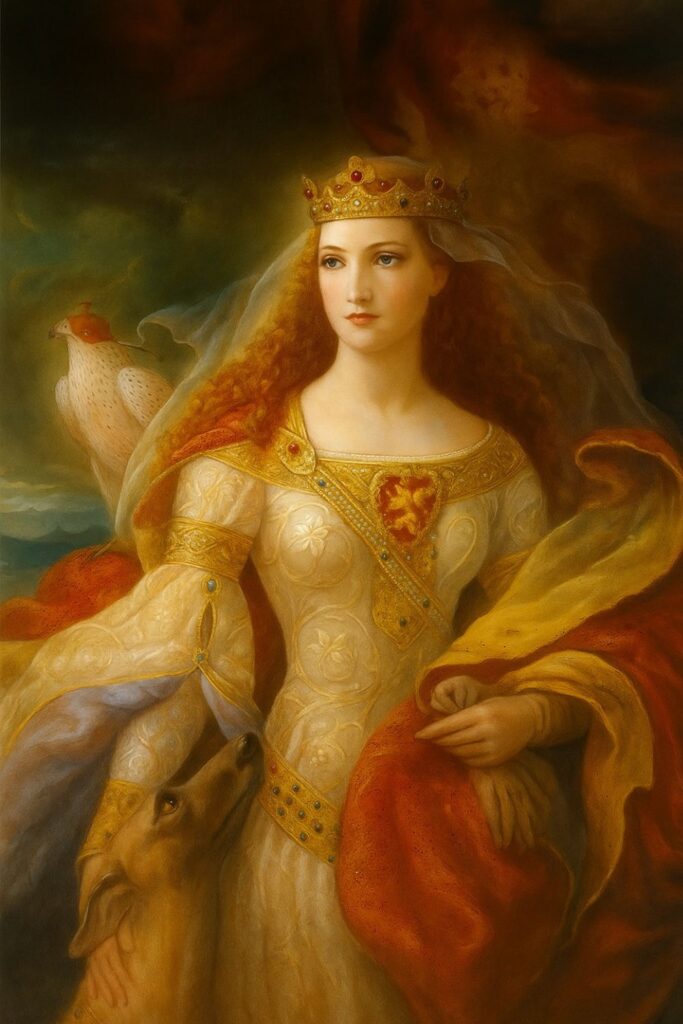
Eleanor had ten children in total. Eight with Henry II, three daughters and five sons, plus two daughters from her earlier marriage to Louis VII. Sadly, she outlived eight of her ten children. When she died in 1204, only John of England and Eleanor of Castile were still alive.
By Louis VII of France (two daughters):
- Marie of France (1145 – 11 March 1198) became Countess of Champagne
- Alix of France (1150 – 1198) became Countess of Blois
By Henry II of England (nine children):
- William IX, Count of Poitiers (17 August 1153 – April 1156), died in early childhood
- Henry the Young King (28 February 1155 – 11 June 1183), crowned but predeceased his father
- Matilda (June 1156 – 13 July 1189), married Duke Henry the Lion
- Richard I (“Lionheart”) (8 September 1157 – 6 April 1199), King of England
- Geoffrey II, Duke of Brittany (23 September 1158 – 19 August 1186), father of Arthur of Brittany
- Eleanor of England (13 October 1162 – 31 October 1214), Queen of Castile
- Joan (October 1165 – 4 September 1199), Queen of Sicily
- John of England (“Lackland”) (24 December 1166 – 19 October 1216)
She Didn’t Get On With Either of Her Mother-in-Laws, Adelaide and Empress Matilda
Eleanor had no shortage of political rivals, but two of the trickiest women she had to deal with were right inside the family. Her first mother-in-law, Queen Adelaide of Maurienne, didn’t hide her dislike. Adelaide still held influence at the French court when Eleanor married Louis, and the two women clashed almost immediately. Adelaide thought Eleanor was too outspoken and too powerful. Eleanor likely thought Adelaide was past her time.
Then came Empress Matilda, Henry II’s mother and a force in her own right. Matilda had fought for her own right to the English throne and didn’t take kindly to sharing the spotlight with another strong-willed woman. Both were used to being the smartest person in the room. Neither backed down.

She Died at Fontevraud Abbey in France
Eleanor spent her last years at Fontevraud Abbey, deep in the Loire Valley. After a lifetime of ruling, negotiating, surviving rebellions, wars, and heartbreak, she finally stepped back. But even in old age, she didn’t retreat completely. She continued to sign documents, issue orders, and protect her lands until the very end. She even designed her own effigy, ensuring she was raised slightly above Henry, looking intelligent, with a book in her hand.
She died in 1204, likely in her early eighties. By then, she had outlived almost everyone, two kings, most of her children, and many of her enemies. She was buried at Fontevraud beside Henry II and her son Richard the Lionheart. Their effigies still lie there, carved in stone, side by side.
After everything she lived through, Eleanor chose where she would rest. And like everything else in her life, she did it on her own terms.
Love a good medieval story?
Join our readers and get tales of kings, queens, castles and ordinary medieval lives straight to your inbox.

Kylie Lang is a nationally syndicated travel journalist with bylines on the Associated Press Wire & more, a medieval history writer, and the founder and lead author of Tales of the Middle Ages (talesofthemiddleages.com). She holds a BA (Honours) in History from the University of Kent and is a member of the British Guild of Travel Writers.
Related posts:
 Eleanor of Aquitaine: The Queen Who Ruled Two Kingdoms
 King Arthur’s Dark Side: 7 Shocking Decisions That Almost Destroyed His Kingdom
 The Forgotten Daughter of Eleanor of Aquitaine: Joanna Plantagenet Survived Betrayal, Crusades, and Imprisonment
 Did They or Didn’t They? Was Catherine of Aragon Still a Virgin When She Wed Henry VIII?