When we learned history at school, we learned that nearly everything, especially in the medieval world, was about evil kings, brave knights on horseback, and deadly battles. I remember my history teacher recounting endless tales of scheming queens and deadly kings who beheaded everyone in sight. It all seemed very dark and depressing.
What we didn’t learn was that this was only part of the Middle Ages, and that many rulers, the ones who made a difference, left a very different kind of legacy. Their choices weren’t always popular, but they changed history.
Table of Contents
So why didn’t we hear about them? Probably because they weren’t as exciting as Ivan the Terrible or Vlad the Impaler. Instead, they invested in schools while others plotted a siege, built systems that helped their country succeed, and understood that not every big decision was won or lost on the battlefield.

Alfred the Great (England, 871–899)
Alfred didn’t inherit an easy throne. When he became King of Wessex in 871 after the death of his brother King Æthelred, England was on its knees. Viking armies had torn through Anglo-Saxon kingdoms for decades, toppling one after another. By the time Alfred put on the crown, Wessex was the last stronghold standing between the Danes and total domination of England.
The situation was dire. Viking longships plundered the rivers while their warriors ravaged the countryside, demanding tribute and wreaking havoc. Despite suffering defeats, Alfred refused to surrender. When the Great Heathen Army threatened to overwhelm Wessex, he retreated into hiding, rallied loyal followers, and launched a guerrilla campaign.

But things changed at the Battle of Edington in 878. After a crushing defeat of the Danes, he forced their leader, Guthrum, to convert to Christianity as part of the peace treaty.
Alfred then set about rebuilding his shattered kingdom, starting with his defenses. He built a network of fortified towns known as burhs to protect the realm against future raids. He reformed many of the laws and advocated education.
It was unusual for rulers at that time to read, but Alfred had Latin works translated into English and pushed the nobility and clergy to become literate. He strongly believed in education and learning, arguing that without them a kingdom would collapse from within.
For a man who spent his life in the shadow of invasion, Alfred left behind more than victories; he left the roots of English law and culture.
Charlemagne (Frankish Empire, 768–814)
When King Pepin the Short died in 768, Charlemagne and his brother Carolman ruled together.
However, in 771, Carolman died rather unexpectedly, leaving Charlemagne the sole ruler.
But he didn’t inherit a stable kingdom, and although it was a dominant force in Western Europe, it faced constant threats of rebellion, so Charlemagne had a decision to make. Would he sit back and see what happened, or make his realm stronger?
He chose strength, but not in the way you might think. He knew that if he ruled through fear, his empire would eventually collapse. So although he waged campaigns into Italy and what we now know as Germany, that was only a part of his plan.

So he started with money bringing in a new silver penny, the denier, and fixing it at 240 to the pound. Britain used that same system right up until decimalization in 1971, the year I was born.
Next came weights and measures. A bushel of grain should be a bushel of grain, whether you were buying it in Aachen or down in Aquitaine.
But laws are only any good if someone checks people follow them, of course. Charlemagne’s answer was the missi dominici, which simply means “the lord’s envoys.” They rode out in pairs, usually a churchman and a nobleman, to keep an eye on things.
Historians now call it the Carolingian Renaissance. Charlemagne gathered the best scholars he could find at his court, led by Alcuin of York, an English monk he met in Italy in 781. In 789, he issued the Admonitio Generalis, which told monasteries and cathedrals to open schools and teach boys to read.
His scribes also created a clear new script, Carolingian minuscule, with neat, rounded lowercase letters. You’re reading its descendant right now.
His biographer Einhard tells us Charlemagne kept wax tablets under his pillow so he could practice his letters in bed. But he started too late in life and never really got the hang of it. I find that oddly touching. The most powerful man in Europe, struggling with his handwriting like a schoolboy.
His monks copied out ancient Roman books by the hundred, and many classical Latin texts survive today only because a Carolingian scribe made a copy.
On Christmas Day in 800, Pope Leo III crowned him Emperor of the Romans in St. Peter’s Basilica. His empire fell apart within a generation of his death in 814. His schools, his books, and his handwriting lasted more than a thousand years.
Louis IX (France, 1226–1270)
Louis IX was twelve when his father, Louis VIII, died of dysentery in November 1226.
His mother, Blanche of Castile, ran the kingdom for him. It was not an easy job. Powerful barons rebelled against her, and the Albigensian Crusade in the south did not end until 1229. She held on, and Louis took full control in the mid-1230s.
Justice was the thing he cared about most. His friend Jean de Joinville wrote that after Mass, Louis often sat under an oak tree in the woods at Vincennes and heard complaints from anyone who came. No officials stood in the way. People simply talked to the king.

He also worked to fix the system. In 1247, he sent out investigators, the enquêteurs, to hear complaints against his own royal officials. In 1254, he set out strict rules for how those officials should behave.
In 1258, he banned trial by combat in his lands and told his courts to use witnesses and evidence. Under Louis, the royal court that heard appeals grew into a separate body, the Parlement of Paris. It stayed the highest court in France until the Revolution.
He was a king who actually got things done and wasn’t all talk. He often had poor men brought in to eat, and he served them their food himself. When monks were building Royaumont Abbey, north of Paris, the king helped carry the stones.
Around 1260, he founded the Quinze-Vingts in Paris, a home for 300 blind people. The name comes from the old French habit of counting in twenties, and fifteen twenties makes 300.
He backed his chaplain, Robert de Sorbon, too, when Robert opened a small college for poor theology students in 1257. That little college is where the Sorbonne gets its name.
He went on crusade twice, and both went badly. On the Seventh Crusade, the Egyptians captured him at Mansurah in 1250, and he returned home only after paying a huge ransom. On the Eighth Crusade, he died of disease outside Tunis on August 25, 1270.
Pope Boniface VIII canonized him in 1297, just 27 years after his death. On the other side of the Atlantic, the city of St. Louis, Missouri, still carries his name.
Frederick II (Holy Roman Empire, 1220–1250)
Frederick II was born on December 26, 1194, in Jesi, Italy. His father, Emperor Henry VI, died before Frederick turned three. In 1198, the little boy was crowned King of Sicily in Palermo, and a few months later his mother, Constance, died too. Pope Innocent III became his guardian.
Arabs ruled Palermo for over 200 years before the Normans took it, and when Frederick was a boy, people there still spoke Arabic as well as Greek and Latin. His guardians were too busy fighting over his kingdom to bring him up properly, and he is said to have spent much of his childhood roaming the city on his own.
Later in his life, the English monk Matthew Paris called him stupor mundi, the wonder of the world. I think he earned it. He’s one of the most extraordinary rulers of the Middle Ages, and his story is far stranger than most.

In 1220, at 25, Frederick was crowned Holy Roman Emperor. His lands now ran from Germany down through Italy to Sicily, and the popes did not like an emperor on both sides of them. He spent most of his reign at odds with Rome and was excommunicated more than once.
In Sicily, he put the law in writing. The Constitutions of Melfi in 1231 gave the whole kingdom one legal code, run by trained royal judges instead of local barons.
He was hungry to learn. In 1224, he founded the University of Naples so he could train his own lawyers and officials. He wrote a book about falconry himself, based on years of watching his birds. Poets at his court wrote in Sicilian, and one of them, Giacomo da Lentini, is often credited with the first sonnet. He even took an elephant with him on his travels.
The crusade shows him at his most unusual. Pope Gregory IX excommunicated him in 1227 for delaying it, and Frederick sailed the next year anyway. He didn’t fight. In February 1229, he made a treaty with the Sultan of Egypt, al-Kamil, and Jerusalem passed back to Christian hands for ten years. The pope was furious.
Hooked on the Middle Ages? Get more stories like this one in your inbox.
Alfonso X “The Wise” (Castile, 1252–1284)
Alfonso X became King of Castile and León in June 1252, when his father, Ferdinand III, died in Seville. Ferdinand had spent his life fighting. He took Córdoba in 1236 and Seville in 1248, so his son inherited cities that had been Muslim for more than 500 years.
Alfonso wanted what was in their libraries. He brought Christian, Jewish, and Muslim scholars to Toledo and Seville to work for him, translating Arabic and Hebrew books. Most of these translations went into Castilian, the language people spoke every day, not Latin. That helped turn Castilian into a written language of learning, and it’s the root of the Spanish spoken today.
His astronomers in Toledo also created new tables to predict planetary movements. Europe used the Alfonsine Tables for about 300 years, and Copernicus owned a copy.

Alfonso wrote, too. More than 400 songs to the Virgin Mary, the Cantigas de Santa Maria, came out of his court, and he probably wrote some of them himself. In 1283, he commissioned a book on chess, dice, and board games. Its pictures show Christians, Muslims, and Jews sitting down to play together.
His lawyers drafted the Siete Partidas, the “Seven Parts,” a massive legal code. It took decades to fully take effect, but it shaped Spanish law for centuries and even crossed the Atlantic. Courts in Louisiana were still quoting it in the 1800s.
Politics went less well. In 1257, some German princes elected him King of the Romans, the first step toward becoming Holy Roman Emperor. He spent nearly 20 years and much of Castile’s money chasing that crown before giving up in 1275.
That same year, his eldest son, Ferdinand, died. Alfonso’s second son, Sancho, claimed the throne ahead of Ferdinand’s young boys, and in 1282 he rebelled. Most of the nobles went with him. Alfonso was so short of friends and money that he pawned his crown to the sultan of Morocco for a loan.
He died in Seville in April 1284. He had disinherited Sancho, and Sancho became king anyway.
Saladin (Sultan of Egypt and Syria, 1174–1193)
Saladin was a Kurd, born in Tikrit, in what is now Iraq, around 1137. He went to Egypt as a young officer under his uncle, Shirkuh, and when Shirkuh died in 1169, Saladin became vizier, the chief minister of Egypt’s Fatimid caliph.
Two years later, he ended the Fatimid caliphate altogether and brought Egypt back under the Sunni caliph in Baghdad. When his old master, Nur al-Din of Damascus, died in 1174, Saladin marched into Syria. It took him more than ten years of fighting and bargaining with other Muslim rulers before he held both Egypt and Syria.
Then he turned on the Crusader kingdom. On July 4, 1187, at the Battle of Hattin near the Sea of Galilee, his army trapped the Crusaders on a dry, hot hillside, cut off from water. Almost the whole Christian army was killed or captured, King Guy of Jerusalem among them.

Jerusalem surrendered on October 2, 1187. When the Crusaders took the city in 1099, they killed most of the people inside. Saladin did not. Christians could buy their freedom, ten dinars for a man, five for a woman, and one for a child, and leave. Saladin and his brother freed thousands of poor people who could not pay. Many thousands more could not raise the money and were sold as slaves.
The fall of Jerusalem shocked the West, and a new crusade set out. Richard the Lionheart, Eleanor of Aquitaine’s son, landed at Acre in June 1191.
Richard and Saladin fought each other for more than a year, but they never met face to face. Their two sides talked a lot, though. Richard got on well with Saladin’s brother, al-Adil, and at one point he suggested that al-Adil marry his sister Joan and that the two of them rule Jerusalem together. Joan flatly refused.
In September 1192, they agreed a truce. Saladin kept Jerusalem, and Christian pilgrims could visit freely. Richard never went to see the city himself.
Saladin died in Damascus on March 4, 1193. His friend and biographer, Baha al-Din ibn Shaddad, wrote that he left just 47 silver coins and one piece of gold. There wasn’t enough to pay for his funeral, so his family had to borrow the money.
Akbar the Great (Mughal Empire, 1556–1605)
Akbar inherited the Mughal throne in 1556 when he was just thirteen, after the sudden death of his father, Humayun. His empire was fragile, its future hanging by a thread. Afghan warlords and Rajput chiefs were circling like wolves, eager to tear the Mughal state apart.
Many rulers in his position would have ruled through fear, crushing rivals and forcing conformity. Akbar chose a different path. He believed strength came from inclusion, not exclusion, and that belief transformed his reign into one of the most remarkable in medieval history.
His first task was survival. Akbar fought hard to secure the empire’s borders, but he didn’t stop there. Once stability came, he focused on binding his people together. In a land divided by religion and caste, he abolished the hated jizya tax on non-Muslims and welcomed Hindus, Muslims, Sikhs, and Christians into his administration.

In 1562, he married a Rajput princess, the daughter of the Raja of Amber, and she kept her Hindu faith at court. Her nephew, Man Singh, became one of Akbar’s most trusted generals.
Akbar could not read. He had books read aloud to him every day and built up a huge library all the same. In 1575, at his new city of Fatehpur Sikri, he built a hall just for religious debate. Muslim scholars argued there with Hindus, Jains, and Zoroastrians, and later with Jesuit priests who traveled up from Goa.
His finance minister, Raja Todar Mal, had the land measured, and from 1580 each farmer paid tax based on what his fields had grown on average over the past ten years. At court, painters made about 1,400 large pictures for a single book, the Hamzanama.
Fatehpur Sikri didn’t last. Akbar left it in 1585, after only about 14 years, and it still stands near Agra, almost empty. He died in Agra on October 27, 1605, after 49 years on the throne.
Isabella I of Castile (Spain, 1474–1504)
Isabella was born in 1451 in Madrigal de las Altas Torres, a small town in Castile. Nobody expected her to rule. Her half-brother, Henry IV, was king, and her younger brother Alfonso was next in line until he died in 1468.
Henry wanted to marry her off to suit himself. Isabella had other plans. In October 1469, she married her cousin Ferdinand, the heir to Aragon, in Valladolid, without Henry’s permission. Ferdinand is said to have crossed Castile dressed as a servant to reach her, and the papal permission they needed to marry as cousins seems to have been forged.
When Henry died in December 1474, Isabella had herself proclaimed queen in Segovia within two days. Ferdinand was away in Aragon at the time. Many nobles backed Henry’s daughter, Joanna, and so did the King of Portugal. It took four years of war before Isabella held the throne of Castile safely.

She and Ferdinand never merged their kingdoms. Castile and Aragon kept their own laws and their own money, but the two of them ruled as a team.
Castile was lawless after years of civil war. In 1476, Isabella set up the Santa Hermandad, a “Holy Brotherhood” of armed men paid by the towns to police the roads. She also took back lands and incomes that nobles had grabbed during the chaos.
As an adult, she studied Latin with a scholar called Beatriz Galindo, a rare thing for a woman in the late Middle Ages. People nicknamed Beatriz “La Latina,” and the La Latina district of Madrid still carries her name.
Then came 1492. In January, Granada, the last Muslim kingdom in Spain, surrendered after a ten-year war. In March, Isabella and Ferdinand ordered every Jew in their kingdoms to become Christian or leave within four months, and tens of thousands left. In August, Christopher Columbus sailed west with her backing.
The Inquisition, which the couple had set up in 1478, watched closely over those who converted. In 1502, Muslims in Castile were given the same choice the Jews had been given.
Isabella died at Medina del Campo in November 1504. She is buried in Granada, the city she spent ten years trying to take.
Cosimo de’ Medici (Florence, 1434–1464)
Cosimo never wore a crown, but make no mistake, he ruled Florence as firmly as any king ruled a kingdom. Born into one of the wealthiest banking families in Europe, Cosimo turned his financial power into political dominance when he returned from exile in 1434. At that time, Florence was a republic in name, but the reality was far more complicated.
In 1433, the Albizzi family, his main rivals, had Cosimo arrested and locked in a small cell high in the tower of the Palazzo Vecchio. He was sure they would poison him and barely ate for days. In the end, he bribed his way out of a death sentence and into exile, first in Padua and then in Venice.
A year later, the mood in Florence turned; a friendly government called him home, and it was the Albizzi who were sent away.

He had learned his lesson. Florence still held its elections, but Cosimo’s friends decided whose names went into the bags that officials were drawn from. He lent money to allies and helped them out of debt, while his enemies often found themselves with crushing tax bills. Pope Pius II wrote that political matters in Florence were settled at Cosimo’s house and that he was a king in all but name.
Cosimo spent a fortune on buildings. He paid for most of the rebuilding of San Lorenzo, the Medici family church, to designs by Brunelleschi. He also rebuilt the friary of San Marco and filled its library with books that scholars could come in and read, which made it one of the first public libraries in Europe. Fra Angelico painted the friars’ cells, and Cosimo kept one for himself, where he went to pray and be quiet.
He was careful about how things looked. When Brunelleschi drew up plans for a new Medici palace, Cosimo turned them down as too showy and gave the job to Michelozzo, who built something much plainer on the outside.
He also loved old books. He paid the scholar Marsilio Ficino to translate all of Plato’s works from Greek into Latin and gave him a house near his own villa at Careggi so the two of them could talk. When Cosimo lay dying at Careggi in August 1464, Ficino read to him.
Cosimo asked for a simple funeral. He lies in the crypt of San Lorenzo, and the following year the city gave him the title Pater Patriae, Father of his Country.
Margaret I of Denmark (Queen of Denmark, Norway, and Sweden, 1387–1412)
Margaret was born in 1353, the youngest daughter of King Valdemar IV of Denmark. At six, she was promised to King Haakon VI of Norway, and at ten, she married him in Copenhagen. She grew up in Norway, raised by Merete Ulvsdatter, a daughter of St. Bridget of Sweden, who was said to be very strict with her.
Married life wasn’t comfortable. A letter survives in which the young queen tells her husband that she and her servants are short of food and drink and asks him to send money.
When her father died in 1375, Margaret pushed hard to have her five-year-old son, Olaf, chosen as King of Denmark, and she ran the country for him. Haakon died in 1380, and Olaf became King of Norway too. Then, in August 1387, Olaf died suddenly at seventeen.

Within months, the Danes made Margaret ruler in her own right, and Norway soon followed. Its German-born king, Albert of Mecklenburg, mocked her as “King Breechless,” a king without trousers. In 1389, her army beat his and took him prisoner.
With no children left, she adopted her great-nephew, a boy from Pomerania, and renamed him Erik. In June 1397, at Kalmar in southern Sweden, Erik was crowned king of all three countries. This was the Kalmar Union. Margaret kept the real power until the day she died.
In 1402, a man turned up claiming to be Olaf, back from the dead. Margaret had him burned.
She died of plague in 1412, on board a ship in Flensburg harbor, and her stone tomb is in Roskilde Cathedral. Sweden left the union for good in 1523. Denmark and Norway stayed together until 1814.
Love a good medieval story?
Join our readers and get tales of kings, queens, castles and ordinary medieval lives straight to your inbox.
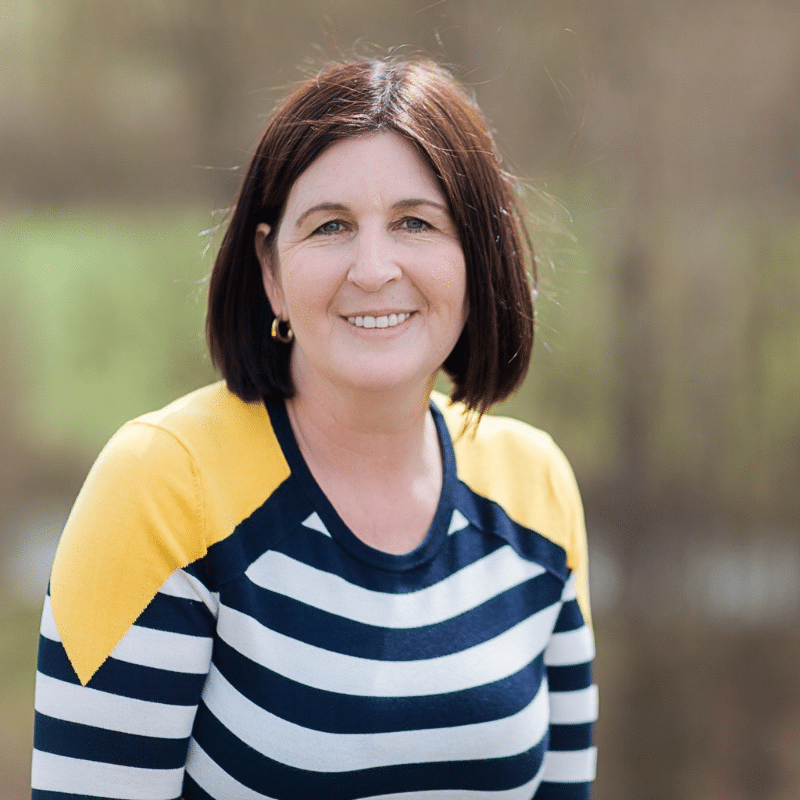
Kylie Lang is a nationally syndicated travel journalist with bylines on the Associated Press Wire & more, a medieval history writer, and the founder and lead author of Tales of the Middle Ages (talesofthemiddleages.com). She holds a BA (Honours) in History from the University of Kent and is a member of the British Guild of Travel Writers.