If you love a royal mystery, few come richer than this one. For forty-four years, Elizabeth I ruled England alone, dangling the promise of her hand in front of half of Europe and never once going through with it. Kings, archdukes, and ambitious Englishmen all tried their luck. Every last one of them went home disappointed.
So why did Elizabeth I never marry? The short version is this. A husband would have taken power from her in an age that expected wives to obey, and she would not share her throne with any man alive.
Table of Contents
Marrying a foreigner risked war and foreign meddling in English affairs. Marrying an Englishman risked jealousy and unrest at court. And the one man she truly wanted, Robert Dudley, came trailing a dead wife and a scandal she could not survive.
The Short Answer: Why Elizabeth I Never Married
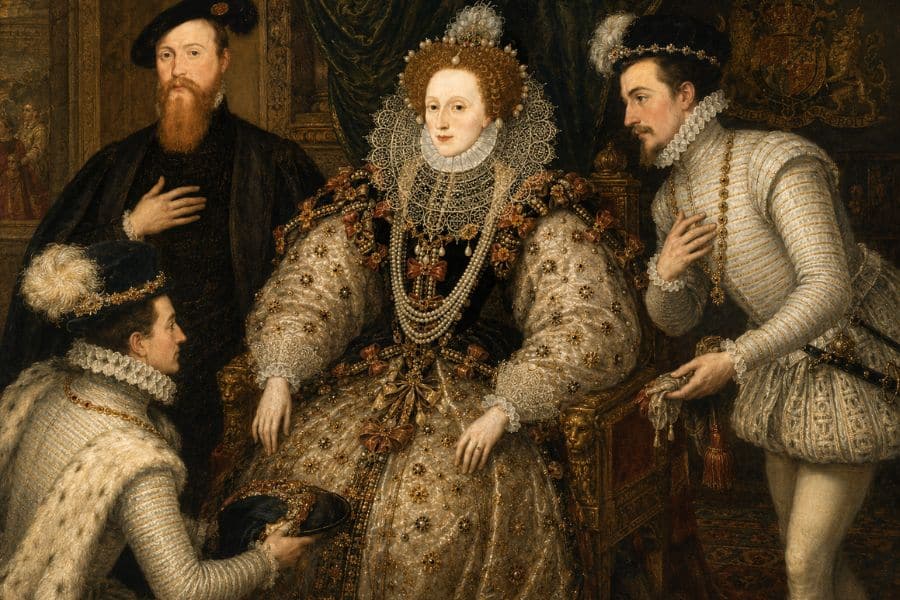
Strip away the romance, and Elizabeth’s choice came down to power. A queen who took a husband was expected, by the laws of God and man as her age understood them, to obey him. Marriage meant handing her crown to a master. She had spent too long clawing her way to that throne to give it away in a wedding vow.
So she did something cleverer. She turned her unmarried state into the sharpest tool in her diplomatic box. A dangled engagement could buy an alliance, cool a rival, or simply buy time.
For decades, she kept suitors and their countries hopeful, negotiating, and just a little off balance. A husband would have been a full stop. A possible husband was a comma she could hold for years.
Her own family taught her the rest. Her father sent two of his six wives to the block, one of them Elizabeth’s own mother. Her half-sister Mary married Philip of Spain and got only heartbreak, a lost war, and a country that turned against her for it.
Elizabeth watched all of it as a girl. She drew her conclusions. Marriage, religion, the succession, and one steward’s son named Robert Dudley. Pull any thread and the whole story unspools.
Did Elizabeth I Ever Want to Get Married?
Answer first: yes, almost certainly, at least for a while. This was no woman coldly indifferent to men. She considered marriage seriously more than once, and she plainly relished the courtship game, so it is a mistake to paint her as a lifelong spinster by conviction.
Early in her reign, she told a delegation from Parliament that she was already bound to a husband, the kingdom of England, and she held up her coronation ring as her wedding band. It was a beautiful piece of theater. It was also a warning.
Yet the doubt was real. In 1563, she confided to an imperial envoy that if she followed her own nature, she would rather be a beggar-woman and single than a queen and married. That does not sound like a woman playing a part. It sounds like one who dreaded the bargain marriage would force on her.
The trap here is reading history backward. Because we know she died unwed, it is easy to assume she always meant to. She did not know the ending. For years, the question of whom Elizabeth would marry was the biggest in Europe, and she may well have meant it each time.
Robert Dudley and the Death That Ruined Everything
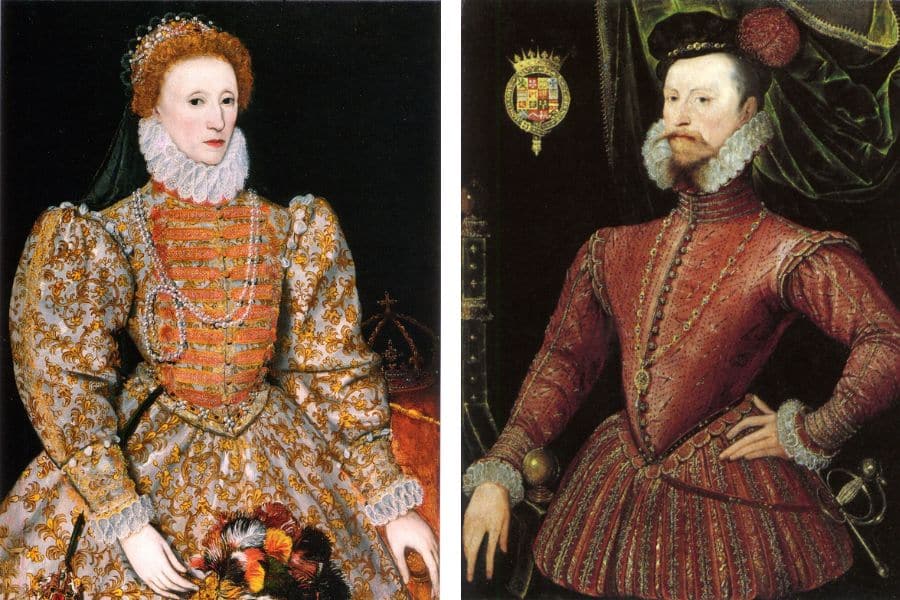
Robert Dudley was the man Elizabeth most likely loved, and the one she came closest to marrying. It was the death of his wife that made it impossible.
She called him her Eyes and her sweet Robyn. They had known each other since childhood, and by the early 1560s, the whole court could see which way her heart leaned.
Then came the morning that ruined it. On 8 September 1560, Amy Robsart, Dudley’s wife and only 28, was found dead at the foot of a staircase at Cumnor Place near Oxford, her neck broken and two wounds to her head.
She had sent her servants off to a local fair that day and died with no one there to see how.
Accident, suicide, or murder? People have argued the point ever since, and the coroner’s own report only resurfaced in 2008.
The jury of the day settled on misfortune. It made no difference. The rumor ran to every court in Europe that the queen’s favorite had killed his wife to clear his path to the throne. Even cleared in law, Dudley was ruined for the one thing he wanted.
To marry him now would be to share the guilt. The Dudley name already carried the stain of treason, too, his brother having married the nine-day queen, Lady Jane Grey, and gone to the block for it.
She never did marry him. She never quite let him go either. When Elizabeth died in 1603, a small letter was found in a casket beside her bed, marked in her own hand: “His last letter.” Dudley had written it to her weeks before his own death in 1588. She had kept it by her pillow for fifteen years.
Hooked on the Middle Ages? Get more stories like this one in your inbox.
How Many Suitors Did Elizabeth I Have?
Across her reign, she fielded something like two dozen serious marriage proposals, from English gentlemen to the crowned heads of Europe. She turned down every single one.
The foreign names were dazzling. Philip II of Spain, her late sister’s widower, offered himself almost before Mary was cold. Eric XIV of Sweden sent love letters and, at one point, a fleet. Archduke Charles of Austria was dangled and discussed for years.
Closer to home, Sir William Pickering had his brief moment as court favorite, though he saw the truth of it plainly enough, telling ambassadors that the queen would laugh at him and all the rest, for he knew she meant to die a maid.
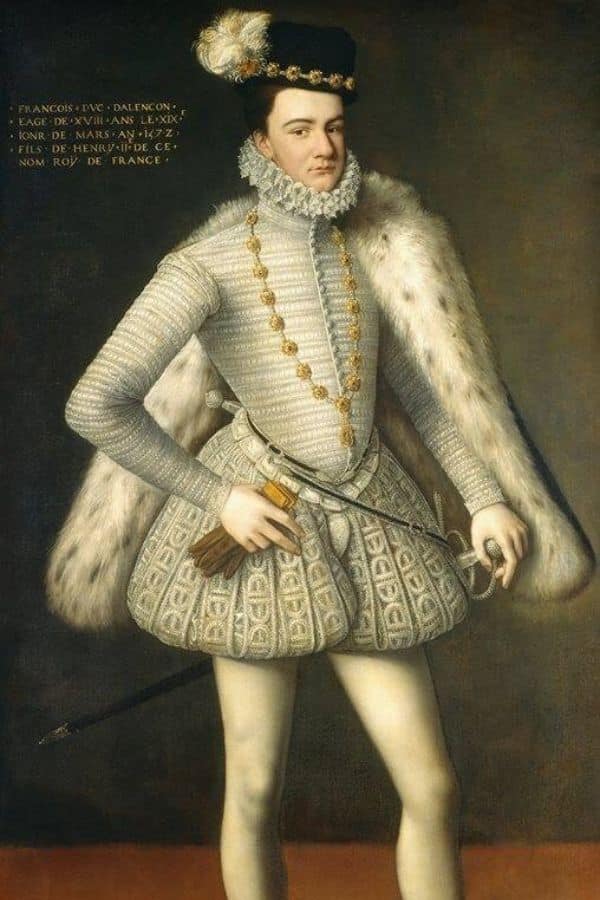
The last serious courtship was the strangest and, in its way, the most touching. Francis, Duke of Anjou, was a French prince 22 years her junior, and she was in her forties when he came wooing.
She nicknamed him her frog. He was the only suitor in a lifetime of them to actually turn up and court her face-to-face, and by every sign, she grew deeply fond of him. It still came to nothing.
Why a Husband Was a Political Minefield
Every possible match came with a poison pill baked in, whether religion, foreign control, or jealousy at home. There was no safe choice, which is exactly why waiting so often beat choosing.
A foreign king or prince would expect a hand in governing England, and neither Elizabeth nor her council could stomach a Spaniard or a Frenchman with a say over English policy. Marrying a Catholic threatened the fragile Protestant settlement on which she’d built her reign.
Yet marrying an Englishman was scarcely safer, since raising one noble family above all the others was a fast route to resentment and feud.
The French courtship showed just how fast the ground could shift. When it looked as if she might truly take Anjou, the pamphlets flew, and the country seethed. One Puritan writer, John Stubbs, attacked the match so fiercely that he had his right hand struck off for it.
He is said to have lifted his hat with the hand he had left and cried, God save the Queen. A wrong marriage, Elizabeth could see, might turn her own people against her overnight.
Did Thomas Seymour Put Her Off Marriage for Good?
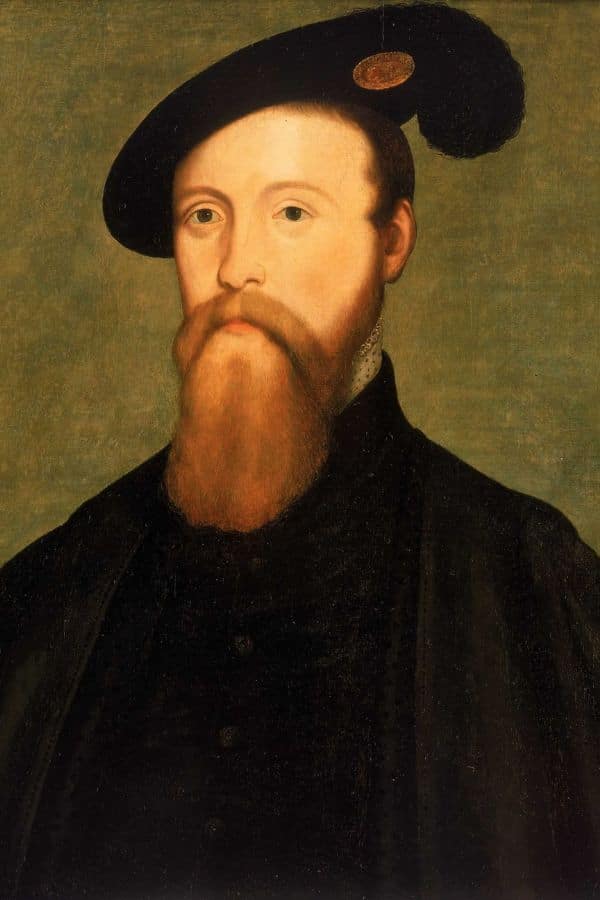
As a girl of fourteen, Elizabeth was caught up in the reckless scheming of Thomas Seymour, and more than one historian has wondered whether it left her wary of men and marriage for life.
Seymour was the dashing, dangerous husband of her stepmother, Catherine Parr.
After Catherine died, his attention to the teenage Elizabeth turned into something closer to a pursuit, and in 1549, he was arrested on a long list of treason charges, including a plot to marry her and seize control of the boy king, Edward VI.
He went to the block that same year, one of the era’s many brutal ends.
Hauled in for questioning at Hatfield, the teenage Elizabeth gave her interrogators nothing. Not a tear, not a confession, not a careless word. It was a chilling display of self-control in a girl so young, and I am inclined to think an experience like that leaves a mark.
It’s one plausible thread among several, though, not the whole answer. Blaming everything on one bad man is too neat for a woman this complicated.
Marriage, Succession, and the Gamble That Paid Off
For decades, Parliament begged her both to marry and to name an heir, and she flatly refused to do either, judging an open succession safer than a settled one. It was an enormous gamble, and it paid off.
Her reasoning was cold and shrewd. As early as 1559, she told the Commons that if her successor were known to the world, she would never think her own throne safe again. Name an heir, and you hand every malcontent a figure to rally behind.
Better to keep them all guessing. By 1570, even her own councilors had privately accepted that she would never marry and never name a name.
They were right, and she was vindicated. The undecided succession that so terrified her ministers never brought the civil war they feared. Instead, she reigned long and, for her age, remarkably stably, outlasting nearly everyone who had nagged and plotted against her.
When she died in 1603, the crown passed smoothly to James VI of Scotland, the great-grandson of her aunt Margaret Tudor, and England barely broke stride.
So, Did She Really Die a Virgin?
Here is the question everyone actually wants answered, and the honest reply is that nobody knows, and nobody ever will.
The title of Virgin Queen was half-truth and half theater. She never married and never bore a child; that part is plain fact. The rest she built herself, presenting a queen wedded to her country and untouchable by any man, an image that grew until it half-replaced the old devotion to the Virgin Mary in Protestant England. It was propaganda, and it was brilliant.
Did the literal claim hold? Her enemies whispered for a lifetime about Dudley, about Seymour, about a string of favorites. Set against that is the sheer impossibility of privacy in her world. A queen was watched and waited upon every waking and sleeping hour, surrounded by ladies who dressed her, slept in her chamber, and missed nothing. A secret carried on under those conditions, for decades, strains belief.
So the truth went into the grave with her, sealed as tight as Dudley’s last letter in its casket. Perhaps that is exactly how she wanted it. The woman who spent her whole reign refusing to give herself away was not likely to give away this, of all things.
She kept the kingdom guessing while she lived. Four centuries on, she is still keeping us guessing.
Frequently Asked Questions
Why did Elizabeth I never marry?
She refused to hand her power to a husband in an age when wives were expected to obey. A foreign match risked war and Catholic influence, an English one risked jealousy at court, and the man she loved, Robert Dudley, came with a dead wife and a scandal she could not survive. She also used courtship itself as a diplomatic weapon, dangling her hand for years without ever committing.
Did Elizabeth I love Robert Dudley?
By every account, yes. She called him her Eyes and her sweet Robyn, and many believed he was her one true love. She came closest to marrying him, but his wife Amy Robsart’s suspicious death in 1560 made any marriage impossible without implicating them both. Dudley’s last letter was found in a casket by her bed when she died, kept for fifteen years.
How many suitors did Elizabeth I have?
Over her reign, she considered roughly two dozen serious marriage prospects, from English noblemen to European royalty. The major names included Philip II of Spain, Eric XIV of Sweden, Archduke Charles of Austria, and Francis, Duke of Anjou, her last serious courtship when she was in her forties. She turned every one of them down.
How did Amy Robsart die?
On 8 September 1560, Amy Robsart was found dead at the foot of a staircase at Cumnor Place near Oxford, her neck broken and two wounds to her head. She had sent all her servants to a fair that day. The coroner’s jury ruled accidental death, but accident, suicide, and murder have all been argued ever since.
Why is Elizabeth I called the Virgin Queen?
The nickname stuck because she never married and never had children, remaining single for her entire reign despite constant pressure and dozens of suitors. She cultivated the image deliberately, presenting herself as wedded to England rather than to any man. Whether the literal meaning was ever true is something historians still debate.
Who succeeded Elizabeth I if she had no children?
Because she never married or bore an heir, the crown passed on her death in 1603 to James VI of Scotland, who became James I of England. He was her first cousin twice removed. Her refusal to name a successor during her lifetime was deliberate, since she believed a known heir would make her own throne unsafe.
Love a good medieval story?
Join our readers and get tales of kings, queens, castles and ordinary medieval lives straight to your inbox.

Kylie Lang is a nationally syndicated travel journalist with bylines on the Associated Press Wire & more, a medieval history writer, and the founder and lead author of Tales of the Middle Ages (talesofthemiddleages.com). She holds a BA (Honours) in History from the University of Kent and is a member of the British Guild of Travel Writers.
Related posts:
 Did Amy Dudley Die by Misfortune or Murder? Tudor History’s Unsolved Mystery
 The Execution of Lady Jane Grey: The Teenager Crowned Queen and the Nine Days That Sealed Her Fate
 7 Rumors and Scandals from the Tudor Court You Won’t Believe
 8 Tudor Deaths That Shocked a Kingdom: Plots, Power Struggles, and Bloody Politics