Stirling Castle, Scotland, has seen its fair share of drama and history over the years. Whilst you’ve always been able to look around, many areas have been hidden away under lock and key, and not part of the standard tour. All that has now changed.
Just a couple of days ago, the castle launched its brand new tour, Secret Stirling Tours, where, depending on the weather, you’ll see ten never-before-seen areas. Hidden chambers, secret passageways, and a peek into the life of servants, musicians, and entertainers who served the nobles who once called the castle home.
Table of Contents
It’s history up close and personal in a way many don’t get to see. Tours are limited to just 12 people running twice a day, so it’s about as personalized as it gets. If you’re planning a trip to Scotland and heading to Stirling, this is your chance to see places used by Mary Queen of Scots and James VI.
The Secret Stirling Tour
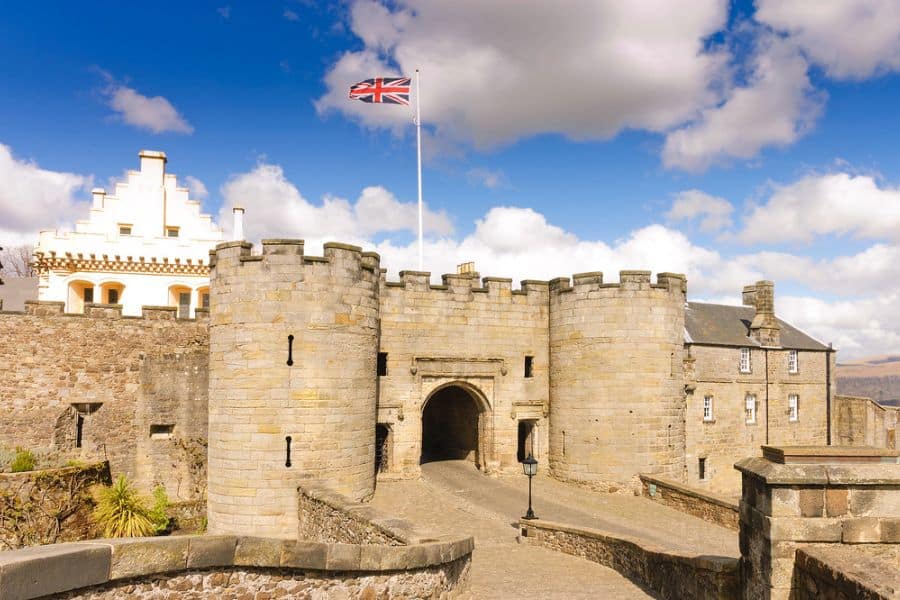
The new Secret Stirling Tours run twice daily, with just twelve spots available on each walk. Priced at £15 on top of castle admission, they set off at 11 a.m. and 2 p.m. Small groups are guided through around ten spaces that have until now been closed to the public. No two tours are exactly the same, since the route depends on weather conditions and which areas can safely be accessed.
One highlight is the chance to step onto the wall walk above the Great Hall roof. From her, the whole sweep of Stirling opens out, with views across the royal palace and the town below. Another stop is the caponiers, stone galleries built in the 18th century so defenders could aim muskets at attackers pushing toward the castle walls.
Visitors also enter the King’s Closet, a tiny chamber off the royal bedchamber believed to have been used for private prayer. Mary, Queen of Scots, is thought to have spent time here during her stays at Stirling. A narrow staircase links the closet to the upper palace, offering a hidden route for monarchs like James VI to slip between their own rooms and those of their courtiers without being seen.
The tour explores the Governor’s Kitchen as well. Built in the 1700s, it was raised over the ruins of a medieval chapel. When archaeologists investigated the site in 1997, they uncovered nine burials, dating from the 13th to the 16th centuries. Some believe the graves could include a 14th-century English knight killed in the Wars of Independence, or even Matthew Stewart, Earl of Lennox and grandfather of James VI.

Other stops follow the paths used by servants hauling food from the 16th-century kitchens up into the Great Hall, the largest surviving medieval banqueting hall in Scotland. The group then visits the musicians’ gallery, where fanfares once marked royal entrances and filled the hall with sound during feasts and ceremonies.
One of the most unusual moments comes in the Prince’s Tower. Here, scratched into the plaster of a former schoolroom, survives the name “James 6.” Some historians think it might even have been carved by the young king himself while he was a student within these walls.
Tickets can be booked here >>>
Hooked on the Middle Ages? Get more stories like this one in your inbox.
The History of Stirling Castle
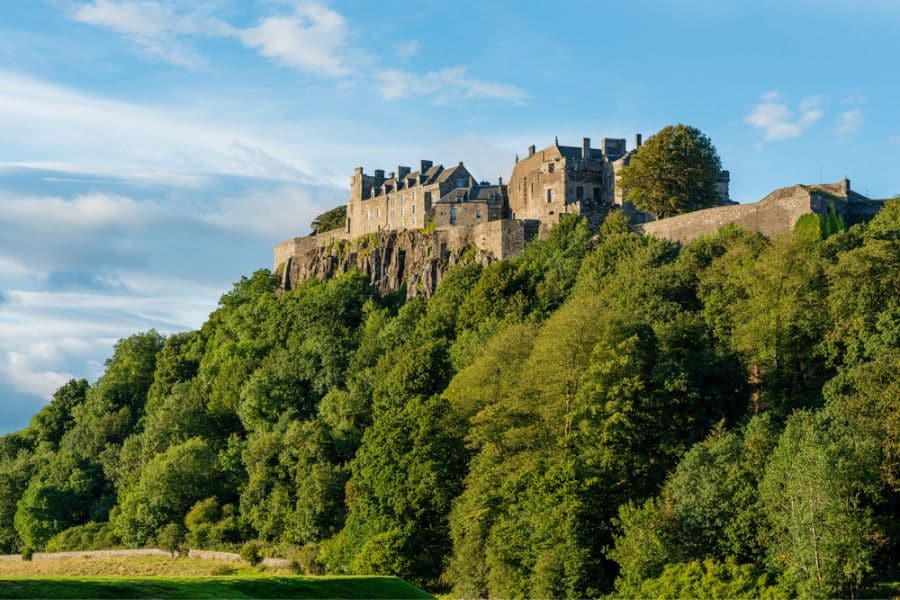
Stirling Castle has stood on its volcanic rock since at least the 12th century, guarding the River Forth crossing that linked the Highlands to the Lowlands. Its walls have seen coronations, royal births, and bloodshed. William Wallace and Robert the Bruce both fought for control of the stronghold during the Wars of Independence, and James IV and James V turned it into a Renaissance palace that could rival anything in Europe.
Mary, Queen of Scots, was crowned here in 1543, and her son James VI spent much of his childhood within these halls before uniting the crowns of Scotland and England. In later centuries, the castle shifted from royal residence to military barracks, enduring sieges right into the Jacobite risings of the 18th century.
Today, it is one of Scotland’s most visited historic sites, with restorations that pull back the layers of power, pageantry, and survival that defined its past.
The Green Lady
The walls of Stirling also come with ghosts. The most famous is the Green Lady, said to drift through stairwells and battlements in a pale dress. The story places her in the household of Mary, Queen of Scots. One night, she supposedly sensed danger and stayed awake outside the queen’s chamber.
Exhausted, she dropped a candle and set the bed curtains alight. Mary survived, but the maid did not. There is a real record of a fire in the queen’s chambers, though no name for the girl has ever surfaced.
A Football in the Queen’s Chamber
Not everything found in Stirling Castle tells a story of kings and battles. Sometimes it is the smaller things that reveal the most. During restoration work in the queen’s chamber, builders uncovered a small leather ball tucked high into the rafters. Experts date it to the mid-16th century, making it one of the earliest known footballs in Scotland. It was stitched from cowhide, stuffed tight, and barely bigger than a modern softball.
Its presence suggests that courtiers, servants, or even young royals might have kicked it around the private halls when no one important was watching. That scuffed little ball now rests in a museum, but for a brief moment, it carried the noise of play into the heart of royal chambers.

Behind the Scenes of Stirling Castle
As part of the brand new tour, you’ll discover servants’ tunnels, hidden chambers, secret staircases, and the musicians’ gallery.
1. The Servants’ Tunnels
Beneath the grandeur of the royal apartments ran a network of passages used by cooks, laundresses, and messengers. These hidden routes kept the engine of court life moving while the nobles above staged politics and ceremony.
Servants carried trays of food, jugs of ale, and linens through dark corridors, often in silence so as not to disturb the feasts upstairs. It was the back end of power, where the castle smelled of sweat, smoke, and boiled meat rather than perfume.
2. The Forgotten Staircases
Stirling is full of narrow, twisting staircases that once linked private chambers to guard posts or service rooms. Some were so tight that soldiers had to climb single file, shields angled awkwardly against the stone.
The steep steps were built to slow intruders, but for those who used them daily, it meant bruised shins, stubbed toes, and the constant echo of boots on stone. These staircases gave the castle its defensive spine, even if most visitors never saw them.
3. The Musicians’ Galleries
Music was essential to court life, and hidden galleries above the main halls allowed players to perform without being seen. From these cramped balconies, lutes, shawms, and drums filled the air during feasts or ceremonies.
The musicians themselves lived in a liminal space, vital for royal image yet kept out of sight, their sweat and calloused fingers hidden behind carved screens. Step into one of these spots and you can still imagine the hum of strings vibrating against cold stone.
4. The Overlooked Chambers
Not all rooms at Stirling were gilded halls. Some were small, windowless cells used to store weapons, documents, or even unlucky prisoners. Scratched initials have been found on stonework, reminders of men who waited out punishment or confinement in the bowels of the fortress.
These rooms tell the less glamorous side of power: for every monarch crowned in splendor, someone else endured the dark, damp spaces below.
5. The Siege Scars
Hidden corners of Stirling still bear the marks of cannon fire and desperate defense. Blocks of stone are cracked, and in some places, you can see where repairs patched over damage from the Jacobite siege of 1746. In those days, soldiers crowded into barracks with lice, stale bread, and fear of bombardment.

Love a good medieval story?
Join our readers and get tales of kings, queens, castles and ordinary medieval lives straight to your inbox.

Kylie Lang is a nationally syndicated travel journalist with bylines on the Associated Press Wire & more, a medieval history writer, and the founder and lead author of Tales of the Middle Ages (talesofthemiddleages.com). She holds a BA (Honours) in History from the University of Kent and is a member of the British Guild of Travel Writers.
Related posts:
 The Top 10 Baby Names in the Middle Ages (And Your Medieval Match)
 6 Forgotten Scottish Queens: The Women Who Sat on the Stewart Throne and What It Cost Them
 The Explosive Story of King James I and Robert Carr, the Scandal That Rocked Stuart England
 Margaret Tudor: The Sister Who Changed British History