
We’ve all seen the famous painting of a pale teenage girl in a white gown, blindfolded, groping for the block while a crowd watches in silence. A reluctant queen, pushed onto a throne she never wanted, dispatched by a Catholic cousin who couldn’t risk leaving her alive.
It’s a portrait painted in the Victorian era and varnished ever since. Paul Delaroche’s famous canvas hangs in the National Gallery, and it has done more to shape Jane’s reputation than any contemporary source. Words that spring to mind are tragic, passive, pious, and others along a similar line. A victim of greedy adults without a care for Jane.
Table of Contents
The trouble is that the evidence, when you actually sit with it, shows a sharper young woman than the legend allows. Jane Grey had opinions, and she wasn’t afraid to express them. She also had a temper and wrote theological tracts at the age of sixteen. The story of her downfall is messier than the martyrdom suggests, and she’s a more interesting figure once you get past the poor, hard-done-by Jane story.

The Martyr Was Built After the Fact
Most of what people think they know about Lady Jane Grey comes from sources written after her death, by men with reasons to shape her memory. John Foxe’s Acts and Monuments, the great Protestant martyrology of the Elizabethan age, was a large part of this.
Foxe needed saints for the new church, and Jane fit the bill perfectly: young, learned, Protestant, executed by a Catholic queen. He gave her speeches, letters, and a serenity at the block that suited his purpose.
Now that’s not to say Foxe was lying outright. Jane really was learned, really was devout, really did die well by the standards of the day. But he carefully selected and polished his prose. The angry letters got softened, the political maneuvering of her family got pushed offstage, and what emerged was an historical icon, not a person.
Victorian writers took the icon and turned up the saccharine levels big time. So, when Delaroche painted her in 1833, Jane had become a kind of secular saint, a symbol of innocence destroyed by cynical power.
The painting is magnificent, but is also almost entirely invented. Jane wasn’t executed indoors on a satin cushion, nothing like it. She was beheaded on Tower Green, on a scaffold, in February, and she walked to it herself.

She Was Not Dragged to the Throne, Kicking and Screaming
The standard line is that Jane fainted when told she was queen, wept, refused, and only gave in under pressure from her parents and her father-in-law, John Dudley, Duke of Northumberland. The fainting and weeping are in the record, in a letter Jane herself wrote to Mary after the collapse of the coup.
But think who she was writing to. What would you write to a woman who essentially held the decision of whether you lived or died? Mary held Jane’s life in her hands, so a little embellishment would hardly go amis. A letter emphasizing her own reluctance and the wickedness of others was the only sensible thing to write in this case.
The political reality was that Jane had been groomed for a major marriage and a major role for years. Her parents, Frances and Henry Grey, had positioned her carefully, and her education was the kind given to girls expected to move in important circles.
Her marriage to Guildford Dudley in May 1553 was part of Northumberland’s larger plan to lock the Protestant succession in place, and Jane was not so naive that she failed to see it. How could she be given how intelligent she was?
Once she accepted the crown, regardless of what the initial scene looked like, she acted like a queen. She signed documents as Jane the Queen, refused, point-blank, to make Guildford king alongside her, offering him a dukedom instead.
That is not the behavior of a girl being passively wheeled through a coronation. That is a 16-year-old drawing a constitutional line in the sand and holding it against her husband, her mother-in-law, and her own father-in-law. The Dudleys were furious, but Jane didn’t budge. Hardly the poor innocent victim.
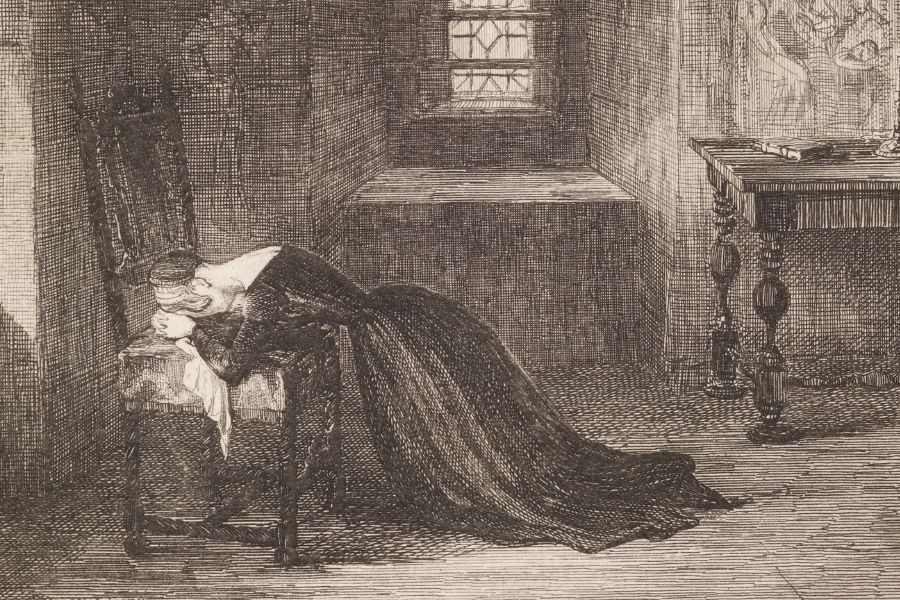
Hooked on the Middle Ages? Get more stories like this one in your inbox.
The Religious Convictions Were Real
If there’s one part of the legend that holds up, it’s Jane’s Protestantism. She was a serious evangelical, schooled by tutors like John Aylmer and in correspondence with reformers on the continent, including Heinrich Bullinger in Zurich. By her mid-teens, she was writing about doctrine with a confidence most adult clerics couldn’t muster.
The famous example is her exchange with Thomas Harding, her former chaplain, who had converted to Catholicism under Mary. Jane wrote him a letter that called him a ‘white-livered milksop’ and a ‘deformed imp of the devil,’ among other things.
This is not the voice of a meek girl, but of someone who believed she was right, believed her opponent was damned, and wasn’t going to soften it for politeness sake. In my eyes, she sounds more like a ballbuster than a victim.
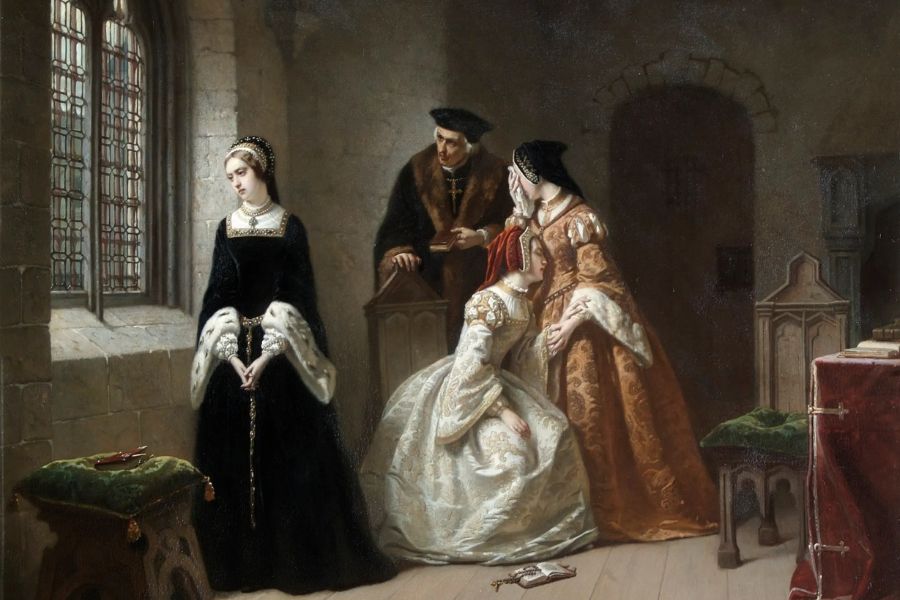
Her final weeks in the Tower produced more of the same. She debated John Feckenham, the abbot Mary sent to convert her, and refused to give an inch. She wrote a letter to her sister Katherine in the back of a Greek New Testament, urging her to hold the faith.
She prepared a scaffold speech that was clear about why she was dying and what she believed. The piety was not a costume put on for the executioner, but had been there for years, and it was militant.
The Adults Around Her Were the Real Problem
None of this means Jane chose her fate. The plot to put her on the throne was Northumberland’s, with the dying Edward VI’s enthusiastic backing. Edward, sixteen and fading from tuberculosis, was the one who drafted the ‘Devise for the Succession’ that cut his Catholic half-sister Mary out of the line.
Northumberland made sure Jane was married to his son, Guildford, in time to benefit from it.
Her parents come out badly in almost every version of the story. Henry Grey, Duke of Suffolk, signed up to the coup willingly, abandoned his daughter when it collapsed, then got himself involved in Wyatt’s rebellion the following January.
It was the second rebellion that sealed Jane’s fate. Mary had been inclined to spare her, treating her as a victim of the older men. Suffolk’s rebellion made Jane too dangerous to leave breathing, and her father effectively signed her death warrant by picking up a sword again.
Frances Grey, her mother, has been called everything from a monster to a survivor. Within weeks of her daughter’s execution and her husband’s, she had remarried to her master of horse, a man fifteen years her junior and well beneath her in rank.
The marriage may have been a deliberate step down to defuse any threat she posed to Mary, and whatever it may have looked like on the outside, it probably saved her life.

Nine Days Were Enough to Show Her Spine
The reign itself is usually waved away as a non-event, a technicality between Edward and Mary. Look closer, and there’s more going on. Jane held the throne from 10 July to 19 July 1553, and in those nine days, she made decisions. The refusal to crown Guildford was one, but there were also council meetings, attempts to raise troops, and proclamations in her name.
The coup failed because Mary moved faster and smarter than anyone expected. She rode into East Anglia, gathered support from gentry who saw her as the legitimate heir regardless of religion, and rolled toward London with an army.
Northumberland marched out to meet her, and his forces melted away. The Privy Council in London, sensing the wind, switched sides and proclaimed Mary Queen on 19 July. Jane was in the Tower. She stayed there, but now as a prisoner rather than a sovereign.
What strikes you, reading the accounts of those nine days, is how little Jane fits the trembling-victim mold once she’s actually on the throne. She argued with her council, wrote letters, and made a big point of distinguishing her authority from her husband’s. Whether she wanted the crown when it was offered or not, she behaved as if she meant to wear it properly for as long as it lasted.
The Scaffold Speech Was the Work of a Sixteen-Year-Old Theologian
On 12 February 1554, Jane watched from her window as Guildford was led out to Tower Hill. She saw the cart bring his body back, headless, wrapped in cloth. Then she walked to her own scaffold on Tower Green, where the executioner was waiting.
The speech she gave there is preserved in several versions, and its core remains consistent. She admitted she’d broken the law by accepting the crown, but insisted she’d never desired it.
She asked the crowd to pray for her, affirmed her Protestant faith, and then recited Psalm 51, removing her gown herself, tying her own blindfold, and asking the executioner to dispatch her quickly.
The famous moment where she couldn’t find the block and cried, ‘What shall I do? Where is it?’ is in the contemporary account by an anonymous eyewitness. Hardly cut and dried evidence.
This is a death that has been read as pure pathos for centuries, and it is pathetic in the old sense, the sense that makes you feel for her.
But it is also the deliberate, prepared performance of a young woman who knew exactly what she was doing and exactly what she wanted the watching world to remember about her. She made her own ending, within the limits she had, and the speech she chose to give was a piece of Protestant witness as carefully composed as anything she ever wrote.
So Was Jane Grey Really an Innocent Victim?
The Jane Grey who emerges from the actual sources is harder to love than the porcelain saint of Delaroche’s painting, and far more worth knowing. She was clever, sharp-tongued, devout to the point of cruelty toward those who disagreed with her, and brave when it counted.
She was used by adults who should have protected her, and she was also, in her own narrow way, a participant in her own story.
The Protestant martyr is real, as is the political pawn. Underneath both is a teenage girl who wrote like a scholar, ruled like she meant it for nine days, and went to her death with a speech she’d composed herself. The tragedy isn’t diminished by giving her credit for any of that. If anything, it gets worse because she becomes a person instead of a symbol.
That is the Jane the textbooks tend to lose, and the one the Victorian painters had no use for.

Love a good medieval story?
Join our readers and get tales of kings, queens, castles and ordinary medieval lives straight to your inbox.

Kylie Lang is a nationally syndicated travel journalist with bylines on the Associated Press Wire & more, a medieval history writer, and the founder and lead author of Tales of the Middle Ages (talesofthemiddleages.com). She holds a BA (Honours) in History from the University of Kent and is a member of the British Guild of Travel Writers.
Related posts:
 The Execution of Lady Jane Grey: The Teenager Crowned Queen and the Nine Days That Sealed Her Fate
 17 Gruesome Tudor Executions and the Horrific Stories Behind Them
 For Jane Seymour the Most Dangerous Place in England Was Henry VIII’s Bedchamber
 Was Jane Boleyn the Victim or Villian of Henry’s Tudor Court