
I only have one brother, and the worst thing we ever did to each other involved a stolen Wagon Wheel and a bit of hair-pulling. I can’t, with the best will in the world, picture a version of family life where one brother locks another in a tower, drowns him in a barrel of sweet wine, and then the surviving brother takes the throne from his own nephews a few years later.
And yet that’s the actual paper trail left behind by Edward, George, and Richard of York. Three brothers raised in the same nursery, bound by the same cause, who ended up dismantling their own house with a thoroughness no Lancastrian army ever managed.
Table of Contents
We tend to tell the Wars of the Roses as red against white, Lancaster against York. The real wreckage, the thing that finished the Plantagenets off after more than 300 years on the throne, came from inside the family. From the three boys at the top of the family tree.
Three Boys, One Cause, One Very Dangerous Inheritance
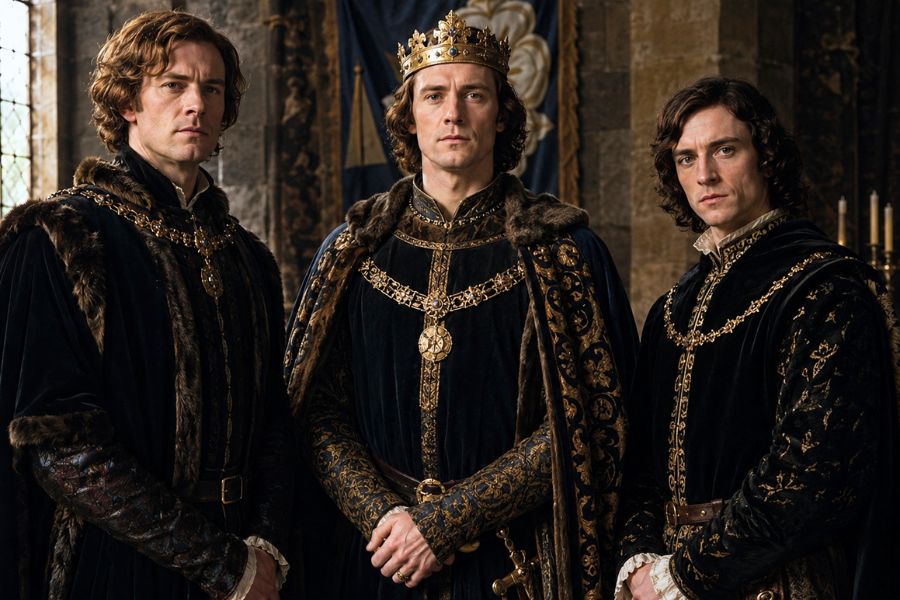
Edward was born in 1442 at Rouen, George in 1449 at Dublin, Richard in 1452 at Fotheringhay. Their father, Richard, Duke of York, was the senior adult male of royal blood, married to Cecily Neville, sister of the Earl of Salisbury and aunt to the Earl of Warwick.
On paper, the boys had every advantage going. In practice, they were born into a family already at war with the king they were supposed to serve.
By December 1460, that war had cost them their father and their second brother, Edmund of Rutland. Both were killed at the Battle of Wakefield, and York’s head was stuck on Micklegate Bar in a paper crown, on the orders of the queen, Margaret of Anjou. Edward was 18. George was 11. Richard was 8.
Within four months, Edward had won the throne at Towton, in a snowstorm, on Palm Sunday, in a fight that left somewhere between 20,000 and 28,000 men dead in the fields around Tadcaster.
He was 19 years old and the king of England. George and Richard, still children, were created Duke of Clarence and Duke of Gloucester respectively, and shipped off to be raised in the household of their cousin, the Earl of Warwick. That was the man who would, before the decade was out, try to put Clarence on his brother’s throne.

The Marriage That Cracked Everything Open
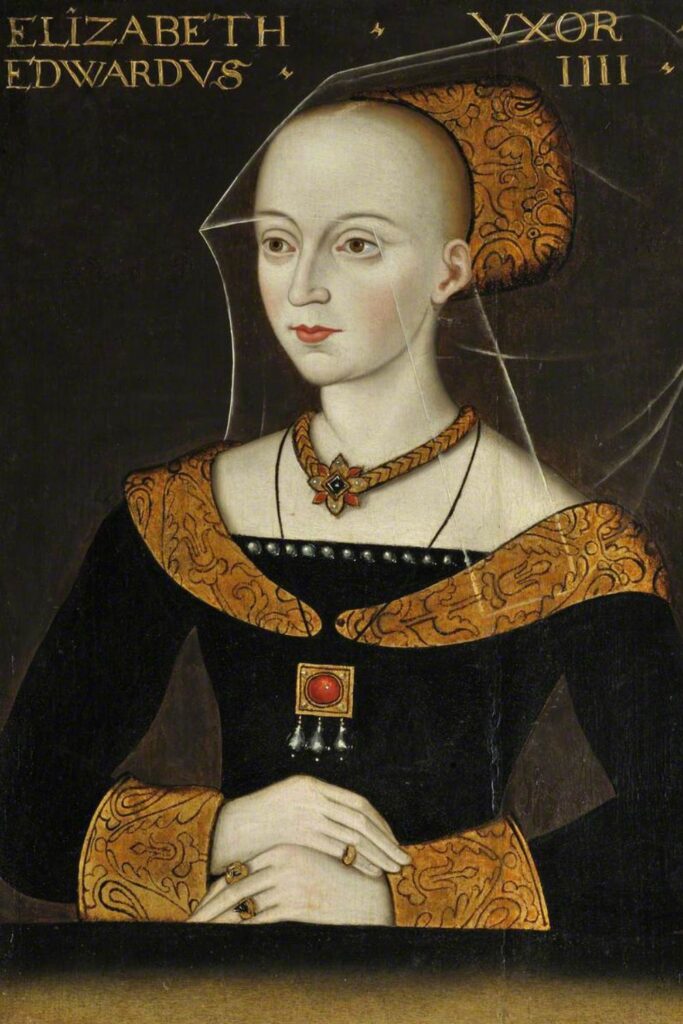
In May 1464, Edward IV slipped away from his council and married Elizabeth Woodville in secret. She was a Lancastrian widow with two sons by her first marriage and a vast family of brothers and sisters all looking for advancement.
He kept the marriage hidden for months while Warwick was on the Continent negotiating a French match for him. When the news finally came out in September, Warwick was publicly humiliated. So, in a different way, was George of Clarence.
George was 15 when Edward married Elizabeth, just old enough to understand that his own marriage prospects, his own influence, and his own place near the throne had been downgraded so half a dozen Woodvilles could climb the ladder he was already on.
Elizabeth’s sisters were married off in quick succession to the heirs of half the great houses of England. Her 20-year-old brother John was paired with the dowager Duchess of Norfolk, who was in her sixties. Her son Thomas Grey was steered toward the king’s own niece. Every match was one less great heiress for George.
Warwick spotted his opening. By 1469, he had pulled Clarence into open rebellion, married him to his own daughter Isabel Neville in Calais against Edward’s express wishes, and within months, the two of them were in arms against the king.
They beat a royal army at Edgcote, captured Edward, and tried to govern in his name. It didn’t hold. Edward wriggled free, and the awkward family reunion that followed in late 1469 was the first time these three brothers had to sit in a room together and pretend none of it had happened.

Hooked on the Middle Ages? Get more stories like this one in your inbox.
George Switches Sides, and Then Switches Back
By spring 1470, Warwick and Clarence were in open rebellion again, and when that collapsed, they fled to France. There, Warwick did something nobody saw coming. He knelt to Margaret of Anjou, the woman whose troops had killed his uncle of York and his cousin Edmund, and offered to put her husband, Henry VI, back on the throne. The price was George’s claim.
Clarence, who had been promised the crown a year earlier, was now told he would be next in line after Margaret’s son, Prince Edward of Lancaster. He had been used, and he knew it.
Warwick invaded in September 1470 and chased Edward IV into exile in Burgundy. Henry VI was pulled out of the Tower, blinking, and propped back on the throne in what people called the Readeption.
Richard of Gloucester, then 18, went into exile with Edward. George stayed in England as a Lancastrian duke who was no longer the heir to anything much, watching his father-in-law run the country on behalf of a king who barely knew what day it was.
When Edward landed at Ravenspur in March 1471 with a small force, George was supposed to march against him. Instead, somewhere outside Banbury, the two brothers met in the open field with their armies drawn up, and George took off his Lancastrian colors and embraced Edward. Within weeks, Warwick was dead at Barnet, Prince Edward of Lancaster was dead at Tewkesbury, and Henry VI was dead in the Tower under circumstances nobody has ever been able to explain politely. The house of York had won, and the three brothers were back in the same room.
The Quarrel Over the Neville Inheritance
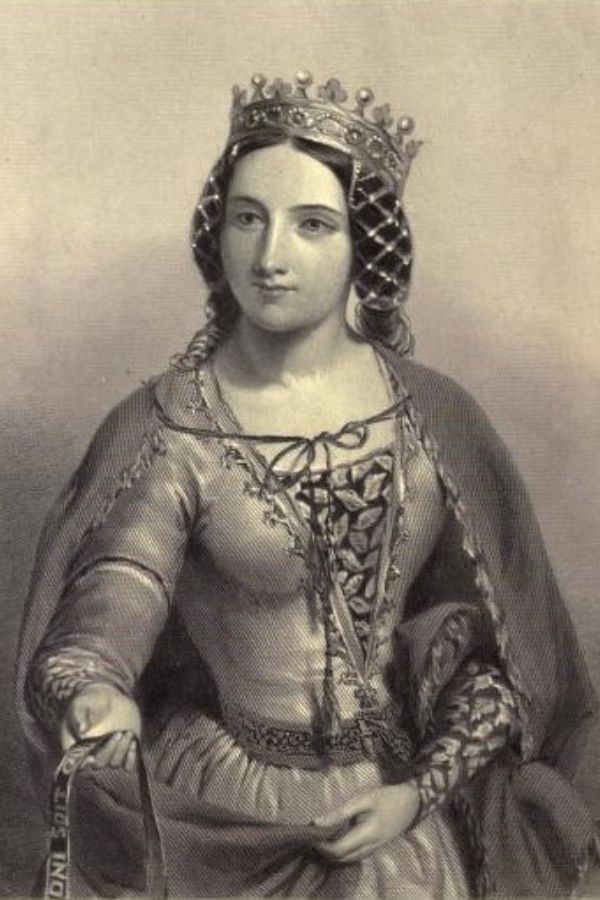
The peace lasted about as long as you’d expect. Warwick had left two daughters, Isabel and Anne. Isabel was already married to George. Anne, briefly married to the dead Prince of Wales, was the great heiress now, and Richard of Gloucester wanted her.
More to the point, he wanted half the Neville lands that came with her. George, who had been planning to keep the lot, was furious.
The quarrel that followed is one of the strangest episodes in the whole period. According to the Croyland Chronicle, George hid Anne Neville in London, disguised as a kitchen maid, to keep her away from Richard. Richard found her, got her out, and lodged her in sanctuary at St Martin’s.
By 1472, they were married, and the brothers spent the next two years arguing in front of Edward over which manor each would get. Edward eventually carved the inheritance up between them, which pleased nobody and stored up a grudge in George that he never let go of.
George’s behavior in the years that followed reads, even at this distance, like a man unraveling. His wife Isabel died in December 1476, shortly after giving birth, and George became convinced she had been poisoned by one of her servants, Ankarette Twynyho.
He had Ankarette dragged from her home in Somerset, tried by a jury he had bullied, and hanged within three hours. It was a flat usurpation of the king’s justice, done by a royal duke who seemed to think he was above his brother’s law. Edward had warned him before. This time, he’d had enough.

A Barrel of Malmsey and a Brother in the Tower
In June 1477, Edward had George arrested and taken to the Tower. The charges, when they came at the start of 1478, were a stew of accusations: that George had spread rumors the king was a bastard and his marriage invalid, that he was plotting to send his small son abroad and substitute a changeling, that he had defied the king’s courts.
Edward presented the bill of attainder himself in Parliament. No one spoke for the duke, and he was condemned, and on 18 February 1478, he was executed privately inside the Tower.
The famous story that he drowned in a butt of malmsey wine comes from chroniclers writing within a few years of the event, including the Burgundian Philippe de Commines and the Croyland writer, who reports it as the manner of death generally believed at the time.
We can’t say for certain it happened. We can say that the rumor was widespread enough to be recorded as fact by men close to the court, and that no one ever produced a different version.
Whether it was wine or rope or an ax behind a closed door, Edward IV had killed his own brother. Richard, by all accounts, was not in London when it happened, and one near-contemporary writer, Dominic Mancini, later claimed he was openly displeased at the death and never forgave the Woodvilles for pushing for it.
George left two small children, Edward, Earl of Warwick, and Margaret, later Countess of Salisbury. Both would die on the block, decades apart, the boy executed by Henry VII in 1499 and Margaret butchered by Henry VIII’s headsman in 1541 at the age of 67.
Richard, the Nephews, and the End of the Line
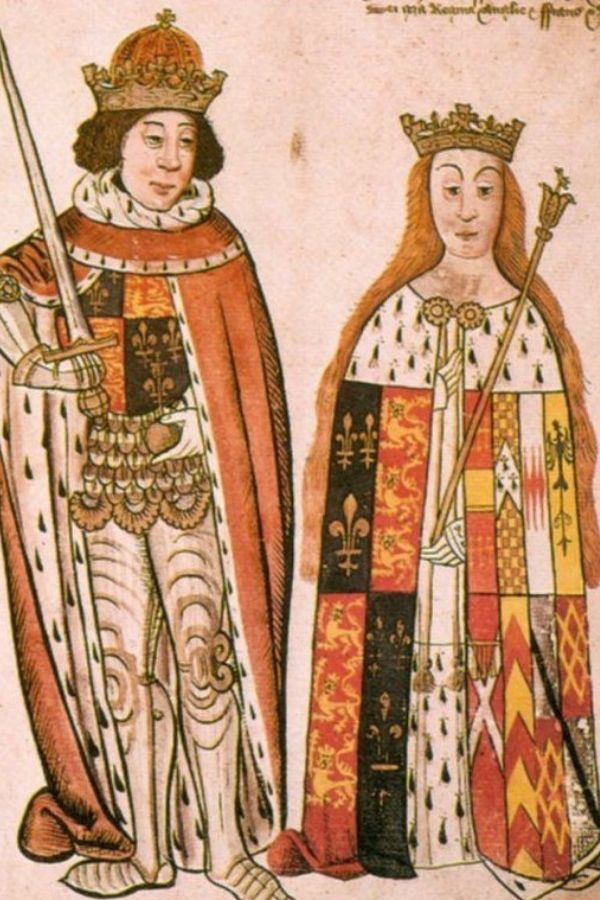
Edward IV died suddenly on 9 April 1483, probably aged 40. His elder son, Edward V, was 12 and at Ludlow with his Woodville uncle, Anthony, Earl Rivers. Richard, who was up at Middleham, intercepted the boy and his guardian at Stony Stratford, arrested Rivers, and rode into London with his nephew.
Within weeks, Rivers was dead, executed at Pontefract without trial. Within weeks more, the boy king and his younger brother Richard of Shrewsbury were lodged in the Tower ‘for their safety,’ a bishop had declared their parents’ marriage invalid on the grounds of a prior betrothal of Edward IV’s, and Parliament had passed the Titulus Regius declaring the boys illegitimate.
Richard III was crowned on 6 July 1483.
By the autumn, the princes were no longer being seen at the windows of the Tower, and they were never reliably seen again. We don’t know what happened to them. We have Mancini, writing in late 1483, recording that men in London were already weeping when they spoke of the older boy because they feared he was dead.
We have Sir Thomas More’s later account, written a generation on, naming Sir James Tyrell as the killer on Richard’s orders. We have bones found under a staircase in 1674. None of it is proof.
All of it is the kind of evidence that has kept the argument going for more than 500 years.
What we can say is that the third son of York had taken the throne off the line of the first son of York, and that the second son of York was already dead at the first son’s hand.
Whatever Richard did or didn’t do to his nephews, he was the man left holding the crown when the family ran out of brothers. He held it for two years and two months.
At Bosworth on 22 August 1485, he charged Henry Tudor’s bodyguard with a small group of household men, killed Tudor’s standard-bearer with his own hand, and was hacked down within yards of his target. His circlet was picked up on the field.
The Plantagenet line, the male line that had ruled England since Henry II rode in from Anjou in 1154, ended in the mud outside Market Bosworth because three brothers, born to the most powerful family in the kingdom, had spent 20 years tearing each other to pieces over who got what.

Love a good medieval story?
Join our readers and get tales of kings, queens, castles and ordinary medieval lives straight to your inbox.

Kylie Lang is a nationally syndicated travel journalist with bylines on the Associated Press Wire & more, a medieval history writer, and the founder and lead author of Tales of the Middle Ages (talesofthemiddleages.com). She holds a BA (Honours) in History from the University of Kent and is a member of the British Guild of Travel Writers.
Related posts:
 The Rise and Fall of the Kingmaker: Richard Neville’s Ruthless Game of Thrones
 How George Plantagenet, Duke of Clarence, Ended Up Dying in a Wine Barrel
 Why Did the Plantagenet King Edward IV Kill His Own Brother In a Barrel of Wine?
 The Story of Anne Neville, the Forgotten Queen of the Wars of the Roses