I live on the grounds of what was once a 13th-century castle here in the Charente. All that’s left now is a stretch of the old rampart wall, the well, and the bread oven, and I can’t walk past that oven without thinking about the women who kept it going. Somebody had to bake for everyone inside those walls, and I very much doubt it was the lord.
I went into this one thinking I knew the answer, and I was wrong about quite a bit. I’d always assumed most girls were married off at 13, for one, and that’s mostly a nobility thing. The average English bride in the 1400s was about 21.
Table of Contents
I also had no idea women worked on building sites, or that a woman called Agnes Ramsey ran a mason’s workshop in London for 50 years and built Queen Isabella’s tomb. The law kept wives under their husbands’ thumbs; I won’t pretend otherwise, but the women in the records worked, earned, and argued their corner far more than I’d been led to believe.
The trouble is that a lot of what you read online about medieval women is either wildly gloomy or wildly overblown.
Marriage as a Family Business
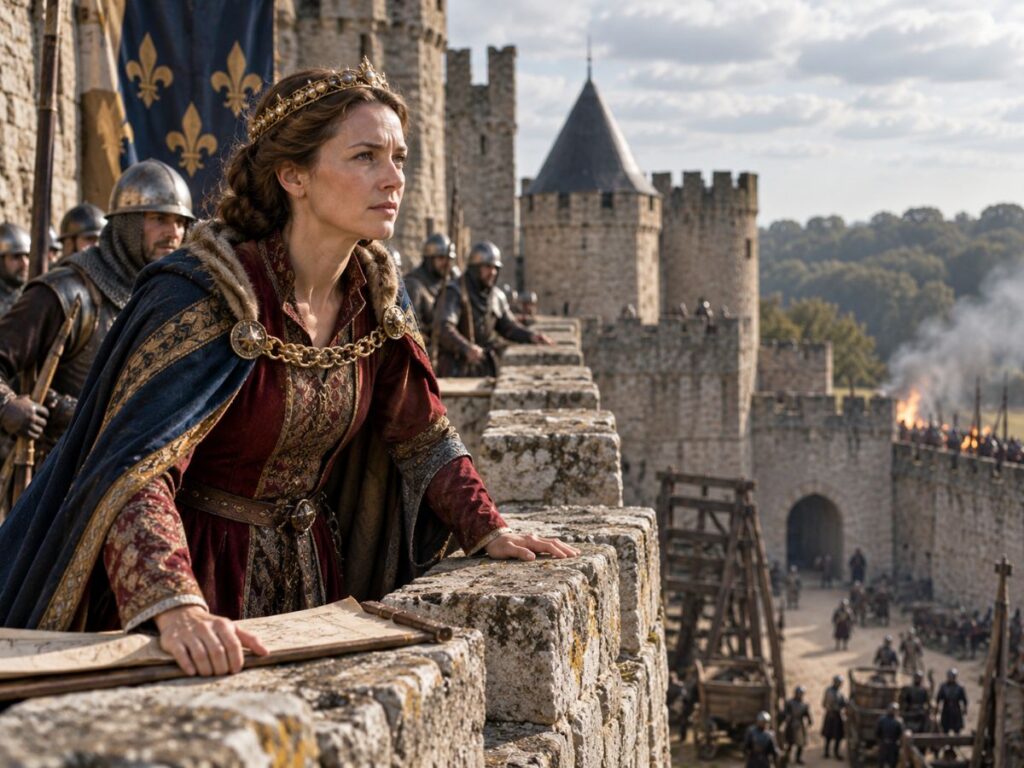
For a girl from a noble family, marriage was about land and alliances, not love. Church law said a girl could be betrothed from the age of seven and married from 12, and plenty of noble children were promised to each other long before they understood what it meant.
Margaret of Anjou is a good example. She married Henry VI at 15 and arrived in England with no dowry, as part of a peace deal with France. Within ten years, she was leading the Lancastrian side in the Wars of the Roses.
Running the Estate When the Men Were Away
Lords spent much of their time away at court, at war, or on crusade, and many never came back. Someone had to collect rents, sell produce, feed the household, and settle disputes with tenants. Very often, that someone was his wife.
The best record we have of this comes from the Paston family of Norfolk. Margaret Paston wrote 104 of their surviving letters, and while her husband was in London, she ran the family’s estates.
In 1448, with the household under threat at Gresham, she wrote asking him to send crossbows, pole-axes, and armor. She asked for sugar and almonds in the same letter. I love that. It’s so practical.
If you want to know what life inside a medieval castle was really like, it was much more about storerooms and accounts than banquets.
Queens Who Ruled in Their Husband’s Absence
Some women went far beyond running a household. Eleanor of Aquitaine was queen of France and then of England. Henry II kept her under guard for about 16 years after she backed her sons’ rebellion, but when Richard the Lionheart went on crusade, she helped govern England in his absence and raised the money for his ransom. She died in 1204, at around 80.
In France, Blanche of Castile ruled as regent for her son, Louis IX, from 1226, when he was 12, and again from 1248 while he was away on crusade.
Isabella of France ruled England with her lover, Roger Mortimer, in her young son’s name until she had Mortimer arrested in 1330.

Not Child Brides, Mostly
The image of every medieval girl being married off at 13 applies mostly to the nobility. Ordinary English women usually married much later. Evidence from Yorkshire in the 14th and 15th centuries shows most brides were between 18 and 22, and by the 1400s, the average English bride was about 21.
Once married, babies came regularly, and childbirth was dangerous whether you were a peasant or a royal. Births happened at home, with the local midwife and the women of the village. Plenty of babies didn’t survive their first years, and every pregnancy was a risk to the mother.
Women Who Earned a Living
Brewsters and Alewives
Before the Black Death, women brewed much of England’s ale. Ale went off in a few days, so it was made at home in small batches, and a woman with a little extra could sell the rest to her neighbors. These women were called brewsters or alewives.
Historian Judith Bennett spent years studying them, and her book Ale, Beer, and Brewsters in England shows how the trade changed after the plague. As ale became a bigger business, and later as beer brewed with hops arrived, men moved in, and women were slowly pushed out.
Not every brewster made a fortune, either. Margery Kempe, the mystic from Bishop’s Lynn in Norfolk, set up a brewery in the 1390s and boasted she was one of the town’s greatest brewers. She lost a lot of money. Then she tried a horse-powered mill, and that failed too, when the horses refused to pull.
She decided God was telling her something. I’d have decided I needed better horses.
The Silkwomen of London
Silk work in 15th-century London was very much a women’s trade. These women took raw silk, spun it into thread, and turned it into ribbons, laces, and tassels, and even the little silk cords that hung wax seals from official documents.
Girls were sent to them as apprentices to learn the craft, just as boys went to a carpenter or a goldsmith. And when cheap foreign silk started flooding in, the silkwomen didn’t just put up with it. In 1455 they took their complaint all the way to Parliament.
They never had a guild of their own. Historians have found that most skilled female trades never formed one, and by the 16th century, men had taken over the silk trade and formed a guild for themselves.
Masons, Tilers, and Building Sites
I’d never pictured a woman on a medieval building site, but they were there, and in some places, in large numbers. When a new college was going up in Toulouse, nearly half the laborers were women.
Most did the heavy, unskilled work, hauling water and stone and digging ditches, and almost always for less money than the men beside them. A few had proper trades, though. The Paris tax lists for 1296 and 1313 name two women masons, a woman tiler, and a woman plasterer.
And back in London in 1383, a woman called Katherine Lightfoot supplied 2,000 painted tiles for a bath in the king’s palace. I’d love to know what that bathroom looked like.
And then there’s Agnes Ramsey. When her father, William Ramsey, the king’s chief mason, died of the plague in 1349, Agnes took over his London workshop, along with his debts. In the late 1350s, Queen Isabella hired her to build the queen’s tomb at Greyfriars in London, a job worth more than £100.
Agnes ran the business for 50 years and is counted among the leading masons of 14th-century London.
Wives, Widows, and the Femme Sole
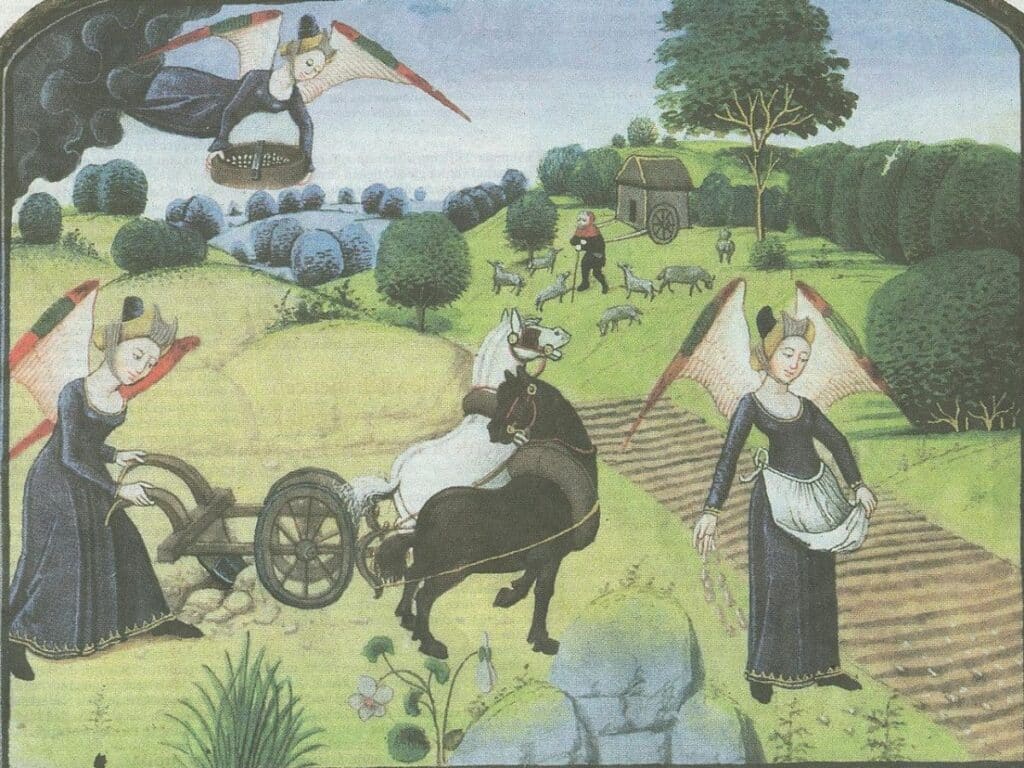
Most of the time, a married woman’s earnings belonged to her husband. But London had an unusual custom. A married woman could trade as a femme sole, a “woman alone” in the eyes of the law.
She could run her own business, make contracts, and was responsible for her own debts.
Widows had the most freedom of all. A craftsman’s widow could often carry on his workshop and train apprentices. In 13th-century Paris, unmarried women or widows headed 13.6% of workshops on the royal tax rolls.
Midwives and Healers
Women did most of the everyday healing. They treated their families with herbs, and midwives delivered almost every baby. Midwives weren’t formally licensed in England until the 1500s. They learned by watching older women, and they passed their knowledge on by word of mouth.
Male doctors trained at universities, which women couldn’t attend, and their methods weren’t always better.
Hooked on the Middle Ages? Get more stories like this one in your inbox.
Nuns, Abbesses, and Mystics
The Best-Educated Women in Europe
For a girl who wanted an education, the convent was the best option. Nuns learned to read, often in Latin, copied books, and kept the accounts of large estates. An abbess could be a very powerful woman.
At Fontevraud Abbey in Anjou, the abbess ruled over the monks as well as the nuns. It’s where Eleanor of Aquitaine is buried, and you can still visit it today.
Hildegard and Catherine
Hildegard of Bingen was a German abbess, born in 1098, and she started having visions as a little girl. She kept quiet about them for years, then in her forties she started writing them down.
She also wrote music, and you can still buy recordings of it today. On top of that, she wrote books about plants and medicine, founded her own convent, and found time to send letters to popes and Emperor Frederick Barbarossa, telling them where they were going wrong.
She died in 1179, at 81.
Catherine of Siena was the daughter of a dyer. She had no title or money, yet by the 1370s, she was writing to the pope and urging him to return to Rome from Avignon. In 1377, he did.
Women and the Law
Property, Marriage, and Widowhood
Under English law, a wife was “covered” by her husband. In most cases, she couldn’t own property, make a contract, or go to court without him. As a widow, though, she was entitled to dower, usually a third of her husband’s land, for life.
Magna Carta even included a promise in 1215 that widows couldn’t be forced to remarry. The rules weren’t the same everywhere, though.
In parts of France, women could inherit land in their own right, and if a marriage went wrong, getting out of it wasn’t easy, as you’ll see from how medieval divorce worked.
Punishment and the Witch Hunts
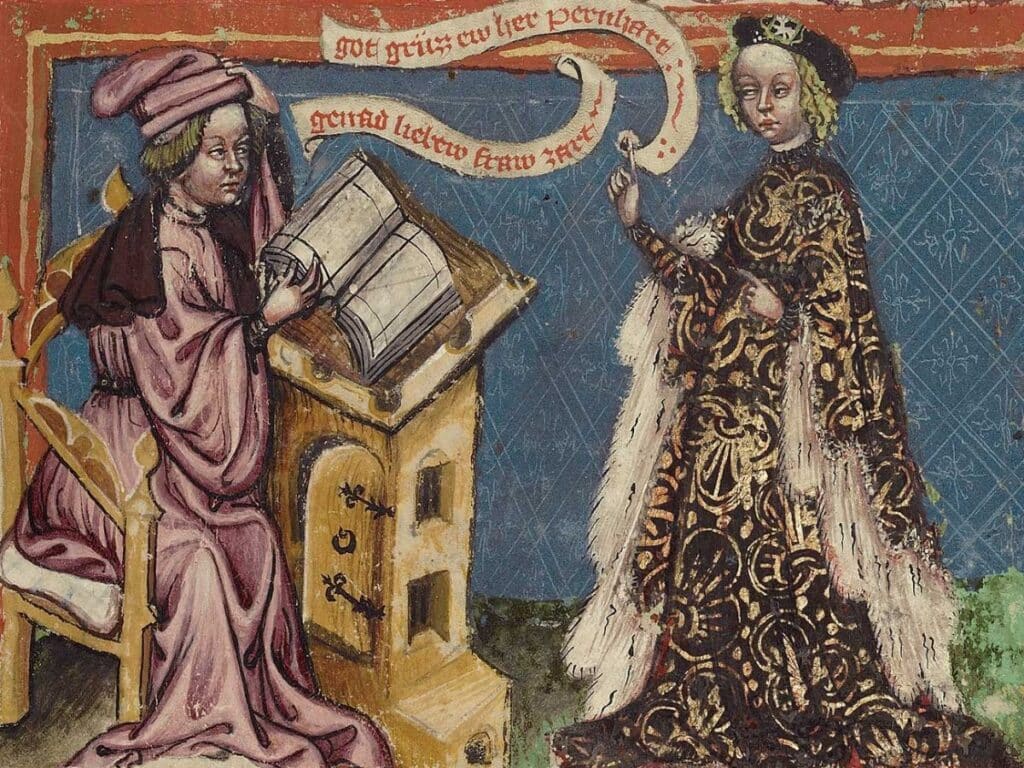
Women faced fines and public shaming for slander, scolding, and selling bad ale. The cucking stool, where an offender was strapped to a chair and shown to the neighbors, was mainly used on women.
The great witch hunts came later than most people think. Witchcraft trials did happen in the Middle Ages, but the worst persecution occurred between about 1560 and 1630, well after the medieval period ended. Most of those accused were women, many of them older, poor, or widowed.

Castle Defenders
Nicholaa de la Haye at Lincoln
Nicholaa de la Haye inherited her father’s job as constable of Lincoln Castle. She defended it against attackers in 1191 and again in 1216, and King John made her Sheriff of Lincolnshire in her mid-sixties.
In 1217, French troops and rebel barons held the city of Lincoln, and her castle was the last royalist stronghold left there. She held out for months, until William Marshal arrived on 20 May 1217 and beat the besiegers at the Battle of Lincoln.
Four days later, the Earl of Salisbury replaced her as sheriff. Typical.
Black Agnes of Dunbar
My favorite is Agnes Randolph, Countess of Dunbar, known as Black Agnes. In January 1338, with her husband away, an English army under the Earl of Salisbury laid siege to Dunbar Castle in Scotland.
When the English catapults struck the walls, Agnes sent her ladies to dust the battlements with handkerchiefs.
The English captured her brother and threatened to hang him unless she surrendered. Agnes pointed out that if he died, she’d inherit his earldom. They didn’t hang him. After five months, Salisbury gave up and went home on 10 June 1338.
Advice From Christine de Pizan
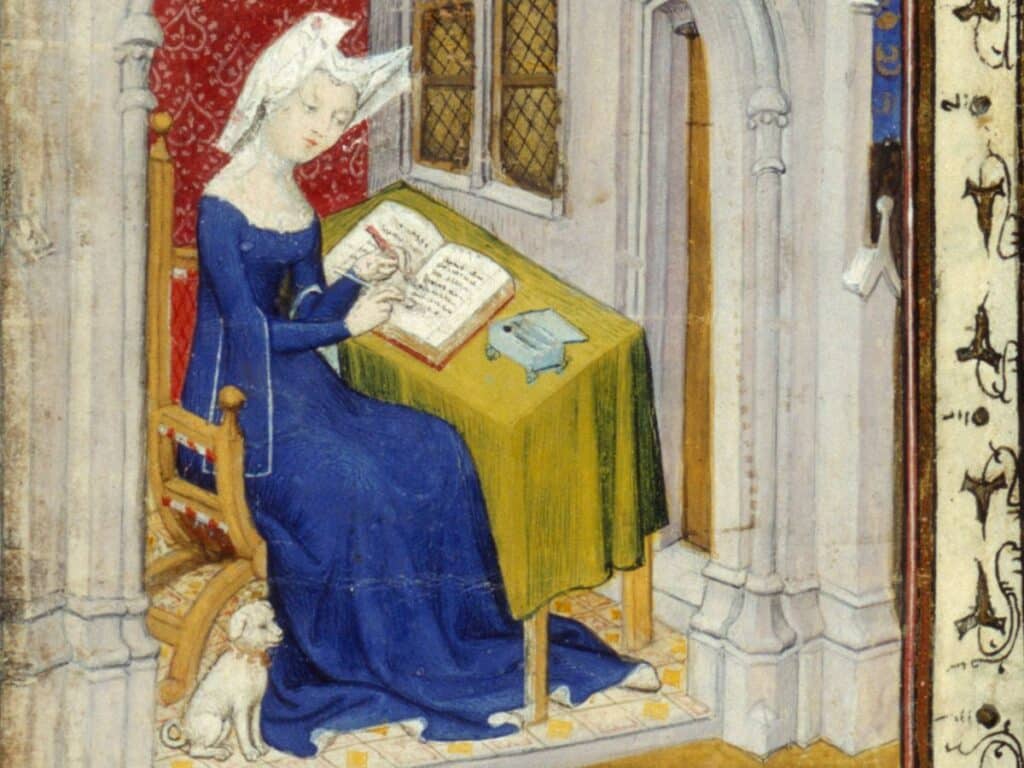
Women weren’t expected to fight, but they were expected to cope. In 1405, Christine de Pizan advised noblewomen in The Treasure of the City of Ladies to learn to use weapons so they could defend their lands while their husbands were away.
She’s often called the first woman in Europe to earn her living as a writer, so she knew a thing or two about getting on in a man’s world.
You may also have heard of Jeanne de Clisson, the Breton noblewoman who supposedly turned pirate after the French king executed her husband in 1343. It’s a great tale, but much of it comes from later writers, so I’d take it with a pinch of salt.
So Were Medieval Women Powerless?
No, medieval women weren’t powerless, but they weren’t secretly running Europe either. Most women spent their lives under the authority of a father or husband, worked very hard, and earned less than men for the same work. The law was against them in a hundred small ways.
But inside those limits, they ran households and estates, brewed and sold ale, built tombs, made silk, wrote books, and held castles.
The records are patchy because men wrote most of them, and the men weren’t very interested in what women did.
FAQs About Medieval Women
What jobs did women do in the Middle Ages?
The jobs women did in the Middle Ages was mostly farm work, because many lived in the countryside. They looked after the animals, spun wool, cooked, and helped in the fields at harvest.
Town women had more choice. You’d find them brewing and selling ale, baking, making silk, washing other people’s laundry, and working as servants and midwives. A few even worked on building sites, and the Paris tax records list women masons and a woman tiler.
Could medieval women own property?
Single medieval women and widows could own property. Married women in England usually couldn’t, because the law treated a wife’s property as her husband’s, but widows were entitled to a share of their husband’s land, called dower.
At what age did medieval women marry?
Noble girls were often married in their early teens, but ordinary English women usually married in their late teens or early twenties. In the 1400s, the average English bride was about 21.
Did medieval women fight in wars?
No, medieval women rarely fought in battle, but some noblewomen commanded the defense of castles. Nicholaa de la Haye held Lincoln Castle in 1217, and Black Agnes held Dunbar Castle for five months in 1338.
Were there women in medieval guilds?
Women could join some medieval guilds, usually as widows carrying on a husband’s trade. Women-only trades like the London silkwomen never formed their own guild, though in Paris, women dominated the silk industry.
Love a good medieval story?
Join our readers and get tales of kings, queens, castles and ordinary medieval lives straight to your inbox.

Kylie Lang is a nationally syndicated travel journalist with bylines on the Associated Press Wire & more, a medieval history writer, and the founder and lead author of Tales of the Middle Ages (talesofthemiddleages.com). She holds a BA (Honours) in History from the University of Kent and is a member of the British Guild of Travel Writers.
Related posts:
 How Medieval Women Inherited Land in France, Salic Law and the Exclusion of Women from the Crown
 What Happened to the Widows of the Wars of the Roses: The Women Left Behind When the Men Died on the Wrong Side
 9 Medieval Girls’ Names That Vanished Because of a Scandal (the Downfall of Powerful Women in the Middle Ages)
 The 10 Most Notorious Villains of the Middle Ages: The Killers, Tyrants and Traitors Medieval Europe Couldn’t Forget