
My hubby snores like a freight train, and on the bad nights, I’ve muttered about drawing up divorce papers before breakfast. In medieval England, I might have thought it, but that’s as far as I’d have got.
No, you couldn’t get divorced in medieval England, at least not in the way we know it now. A valid marriage was considered unbreakable, so instead of divorce, there were two other routes.
Table of Contents
Annulments, where a church court ruled the marriage had never counted, on grounds like being underage, too closely related, or forced into it. And legal separations, which allow a couple to live apart without remarrying.
Everything ran through the church courts, not a lawyer’s office. And the church’s whole ethos was to hold a marriage together, not to help you out of it. But, as with all things, there were always ways around things, especially if you were a king.
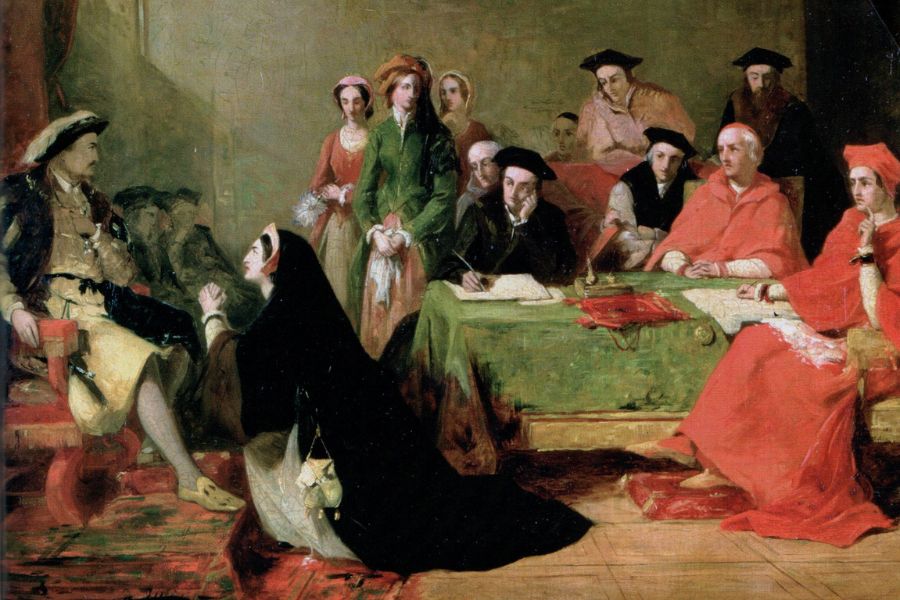
So, Could You Actually Get Divorced in Medieval England?
There was simply no legal way to end a good, valid marriage and walk away free to wed someone new. The marriage bond was for life, full stop.
What you had instead were two very different things. An annulment, or divorce a vinculo, was a ruling that the marriage had never been valid in the first place. A separation, or divorce a mensa et thoro, from bed and board, acknowledged the marriage was real but allowed the couple to live apart.
Those were the only two forms medieval law recognized, and the gulf between them was everything.
Here’s the irony: making a marriage was astonishingly easy. Two people exchanging words of consent, even in a field with no priest in sight, were married in the eyes of the church. Unmaking one was the hard part. The church would strain every muscle to keep a couple together whenever possible.
Where Did You Go to End a Marriage?
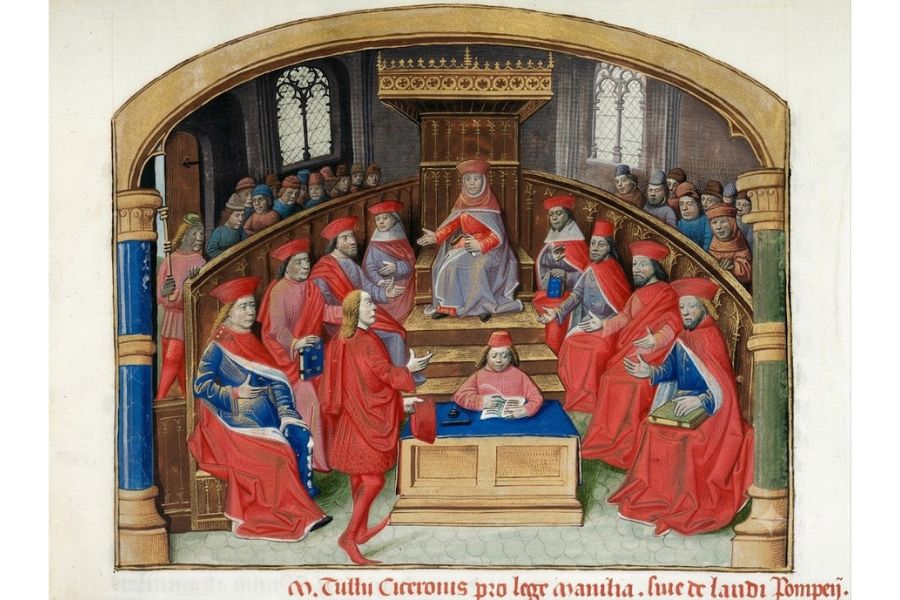
You went to a church court. Not a lawyer, not the crown, but the ecclesiastical courts run under the bishops, because marriage was a holy sacrament and there was no such thing as a civil marriage to unwind.
An instance case, as they called a private suit, ground along slowly. You petitioned, you brought witnesses, called deponents who swore their statements, and you paid at every single stage while the delays mounted.
Money and property, mind you, often fell to the secular courts, so a full split could end up straddling two systems at once. Nothing about it was quick or cheap.
Most of what we know comes from one extraordinary archive. The York cause papers are the largest such collection in the country, holding records for over 14,000 church court cases between 1300 and 1858.
Just over 1,500 of them are matrimonial cases, and around 200 reach back into the medieval period before 1500.

What Were the Grounds for an Annulment?
To annul a marriage, you had to prove it had never been valid to begin with. The main grounds were consanguinity, being too closely related by blood. Affinity, related by marriage or through a previous sexual link. Pre-contract, having already promised yourself to someone else. Coerced consent, forced into it against your will. And impotence, where the marriage simply could not be consummated.
The blood rules mattered enormously. In 1215, the Fourth Lateran Council pulled the forbidden degrees of kinship back to the fourth degree, which redrew the map of who could and couldn’t marry, and made some annulments harder to win.
But here’s a list of common reasons to annul a marriage, or in modern terms, “get divorced” in medieval England.
1. Consanguinity (being too closely related)
This was one of the most common reasons for annulment among nobles. For much of the Middle Ages, the Church prohibited marriage between relatives as distant as the seventh degree of kinship, later reduced to the fourth degree (roughly equivalent to third cousins).
How was it investigated?
The court would examine:
- Family trees.
- Parish records where available.
- Witness testimony from relatives and neighbors.
- Noble genealogies.
Among the aristocracy, detailed family histories often made this easier to prove.
Interestingly, some noble families only “discovered” a forbidden relationship years after the wedding, when a political reason to end the marriage arose.
2. Affinity (relationship through marriage)
Affinity meant becoming related through marriage rather than blood.
For example:
- A man could be barred from marrying his deceased wife’s close relatives.
- Sexual relations outside marriage could also create certain forms of affinity under medieval canon law.
Evidence used
Courts relied on:
- Marriage records.
- Testimony.
- Family witnesses.
- Admissions by the parties involved.
3. A previous valid marriage
If one spouse had already been legally married and that spouse was still alive, the second marriage was invalid.
How was it proved?
Church courts looked for:
- Marriage witnesses.
- Parish records.
- Priests who performed the earlier ceremony.
- Living spouses.
- Local testimony.
This became easier to prove as parish record-keeping improved in the later Middle Ages.
4. Lack of free consent
Marriage required both parties to consent freely. A marriage could be challenged if someone had been:
- Forced.
- Threatened.
- Kidnapped.
- Coerced into agreeing.
Investigation
Judges questioned:
- The bride.
- The groom.
- Family members.
- Wedding witnesses.
The court looked for evidence that consent had been genuine at the time of the ceremony. However, proving coercion could be difficult if the couple had lived together willingly afterward.
5. Underage marriage
Canon law set minimum ages at:
- 12 for girls.
- 14 for boys.
Children could be formally betrothed before this age, but a valid marriage generally required reaching the legal age and giving consent.
Evidence
Courts examined:
- Baptism records where available.
- Family testimony.
- Local knowledge about the person’s age.
Because birthdays were often not precisely recorded, witness testimony was common.
6. Fraud or mistaken identity
A marriage could be invalid if consent had been obtained through serious deception.
Examples included:
- Marrying the wrong twin.
- Concealing an existing marriage.
- Pretending to be someone else.
Simply exaggerating wealth or social status was usually not enough.
Investigation
Courts heard:
- Witness testimony.
- Evidence of deception.
- Statements from both spouses.
Cases involving mistaken identity were rare but legally recognized.
7. Holy Orders
A man who had already received certain major religious orders could not validly marry. Likewise, someone who had taken solemn monastic vows generally could not enter marriage.
Evidence
The court checked:
- Ordination records.
- Monastery records.
- Testimony from bishops or abbots.
These cases were usually straightforward.
8. Vow of perpetual chastity
Someone who had taken a binding vow of lifelong celibacy before marriage could not normally marry without being released from that vow.
Evidence
The Church examined:
- Religious records.
- Witnesses to the vow.
- Statements from church authorities.
9. Spiritual relationship
Serving as someone’s godparent created a spiritual kinship that could prevent certain individuals from marrying. This rule reflected the Church’s belief that spiritual family ties carried legal weight.
Investigation
Courts reviewed:
- Baptism witnesses.
- Parish records.
- Testimony from priests.
10. Non consummation after marriage
Unlike impotence, this ground usually applied only in special circumstances.
For example:
- One spouse entered religious life with papal approval.
- The marriage had never been physically consummated.
How was it investigated?
Courts examined:
- Medical evidence.
- Testimony from both spouses.
- Statements from witnesses.
- Evidence that the couple had lived together without sexual relations.
These cases often required papal involvement, especially in later centuries.
Hooked on the Middle Ages? Get more stories like this one in your inbox.
And Then There Was Pre-Contract
Pre-contract was one of the most fascinating and controversial grounds for annulment in medieval Europe because, under canon law, a promise to marry could sometimes carry almost as much weight as the marriage itself.
A pre-contract was a legally binding agreement to marry someone else before the current marriage took place.
The medieval Church believed that marriage was created by the free consent of the couple, not simply by the wedding ceremony. If two unmarried people exchanged present-tense vows such as “I take you as my husband” or “I take you as my wife,” the Church could regard them as already married, even if no priest or church service was involved.
Future-tense promises, such as “I will marry you,” were generally less binding. However, if that promise was followed by sexual intercourse, canon lawyers often treated it as creating a valid marriage.
How was a pre-contract proved?
Since there was usually no written contract, courts relied heavily on witness testimony.
Evidence could include:
- People who heard the vows.
- Friends or relatives who knew about the agreement.
- Letters or written promises, if they existed.
- Admissions by either party.
- Evidence that the couple had lived together as husband and wife.
Because marriage depended so much on consent, testimony from reliable witnesses was often the strongest evidence.
Were secret marriages legal?
Surprisingly, yes. The medieval Church strongly discouraged clandestine marriages, but until the reforms of the Council of Trent, a private exchange of valid marriage vows between two legally free people could create a binding marriage, even without:
- A priest.
- A church.
- Family approval.
- Official registration.
This created endless legal disputes because there was often little proof beyond the couple’s word.
What did the court investigate?
Judges would ask questions such as:
- Exactly what words were spoken?
- Were they spoken in the present tense or the future tense?
- Were there witnesses?
- Had the couple had sexual relations afterward?
- Had either person later denied the agreement?
- Was either person free to marry at the time?
Canon lawyers could spend months arguing over the exact wording of a conversation that had taken place years earlier.
Could someone invent a pre-contract?
Yes, and this became a major problem.
Because proving a private promise often depended on witnesses, false claims occasionally appeared when:
- A wealthy marriage became politically inconvenient.
- Families wanted to break an alliance.
- Someone stood to inherit land or titles.
Church courts therefore, looked carefully at the credibility of witnesses and whether the alleged agreement was consistent with the couple’s later actions.
Famous example
Perhaps the best-known pre-contract case involves Edward IV of England. After his death, it was claimed that Edward had entered into a binding pre-contract with Lady Eleanor Talbot before marrying Elizabeth Woodville.
If true, Edward’s marriage to Elizabeth would have been invalid, making all of their children illegitimate.
This claim formed the legal basis for Richard III to take the English throne in 1483. Parliament later recorded the claim in the statute Titulus Regius. Whether the pre-contract actually existed remains one of the great historical debates, with historians divided over the evidence.
Why did the pre-contract disappear?
The confusion caused by secret marriages and disputed promises led the Catholic Church to tighten the rules.
After the Council of Trent’s decree Tametsi in 1563, a valid Catholic marriage generally had to be celebrated before a priest and witnesses in places where the decree had been promulgated. This made it much harder for someone to claim years later that a private promise had created a binding marriage.
Pre-contract cases never disappeared entirely, but after the 16th century, they became far less significant because marriages were increasingly documented and formally celebrated.
What If the Marriage Was Real but Miserable?
Say the marriage was undeniably valid but utterly wretched. Then your only door was a separation, a mensa et thoro, granted on grounds of adultery, cruelty, or heresy, which let you live apart under one roof no longer.
Neither spouse could remarry while the other still drew breath. You could escape the house, but never the marriage. And before granting even that, the church courts would push hard to reconcile the couple first, sending them home to try again.
You can guess who suffered most. A woman tied to a violent husband had no clean exit, only the slow, uncertain mercy of a court that would rather patch things up.
There’s a reason historians have spotted a post-Christmas rush of separation and annulment suits going back to at least the 14th century. Nothing tests a bad marriage like a long winter cooped up together. Some things really don’t change.

Did Women Have Any Chance in These Courts?
They did have a chance, and the records prove it. Women often petitioned the church courts, with their families standing right behind them. This was never simply a case of men divorcing women.
But the law was stacked against them. Under coverture, once a woman married, her legal identity was largely swallowed up into her husband’s, and her property became his. She was, in the eyes of the law, half-erased.
Worse still, helping a woman leave her husband was perilous for everyone involved. A relative who assisted could be accused of ravishment, or raptus, a felony, even when no violence at all had taken place.
And yet medieval women fought anyway, petitioning, testifying, and enduring, which tells you how desperate and how brave they could be. They were never the meek bystanders the storybooks painted.
What Was “Self-Divorce” and How Common Was It?
Plenty of couples skipped the courts altogether and simply parted ways without a shred of paperwork. Historians call it self-divorce, and it may have been far more common than the records can ever reveal.
That’s the catch, of course. No lawsuit means no document, so it left almost no paper trail, and we’re left guessing at how widespread it truly was. The danger came later. If you remarried after a self-divorce, that new marriage could be challenged and ruled invalid down the line, and any children declared illegitimate at a stroke.
How Did Kings Get Around the Rules?
Believe it or not, Kings didn’t get a special divorce. They used the very same annulment grounds as everyone else; they just had better lawyers and far more political muscle to force them through.
Even that was no guarantee. Back in the 9th century, King Lothar II spent years trying to shed his wife Teutberga, and the church dug in and refused him, a striking early sign that not even a king could simply command his way out of a marriage.
Which brings us, inevitably, to Henry VIII and his six wives. What Henry actually wanted from Rome over Katherine of Aragon was a declaration of nullity, an annulment, on the argument that her earlier marriage to his brother Arthur made his own marriage invalid.
Rome refused, less because the pope doubted him than because Katherine’s nephew was the Holy Roman Emperor and the politics were lethal. So Henry, with Thomas Cromwell engineering the legal machinery, broke with Rome entirely and made himself head of the Church of England in 1534.
He demolished the pope’s authority in England rather than be told no. Even a king couldn’t just order a marriage undone, and that is exactly why the whole business mattered so much.
What Happened to You After a Medieval Divorce?
After an annulment, things got tangled fast. There were questions of restoring the dowry, and, most painfully, the children of a marriage now deemed never to have existed could face real trouble over their legitimacy.
After a separation, you lived apart but remained legally bound and often in a financially precarious position, unable to move on. And whichever route you took, a long social shadow followed: the gossip, the dented reputation, even the defamation suits that the church courts also heard, spinning out of a single marital row.
Where she could, a woman would have land returned to her, though a separated wife’s position was far shakier than a widow’s would later be.
Not every ending was a disaster, mind. When Henry annulled his marriage to Anne of Cleves, she took the settlement, kept her head, was styled the King’s Sister, and outlived the whole cast in comfortable independence. Proof that, now and then, walking away from a medieval marriage was the smartest thing a woman ever did.
Frequently Asked Questions
Could You Get Divorced in Medieval England?
You could not get divorced in medieval England the way we mean today. A valid marriage was treated as unbreakable, so there was no legal ending of a good marriage that freed you to remarry. What you could pursue was an annulment, a church ruling that the marriage never counted, or a separation that let you live apart. Both ran through the church courts, and neither came easily.
What Were the Grounds for Annulment in Medieval England?
The grounds for annulment in medieval England all rested on the marriage never having been valid in the first place. The main ones were consanguinity, being too closely related by blood, affinity, related by marriage, or a previous sexual link, a pre-contract to marry someone else, consent that had been forced, or impotence. Prove one convincingly, and the court could rule the marriage had never truly existed.
What Is the Difference Between Annulment and Separation in the Middle Ages?
The difference between annulment and separation in the Middle Ages came down to remarriage. An annulment, called divorce a vinculo matrimonii, declared the marriage had never been valid and wiped it out entirely. A separation, divorce a mensa et thoro, from bed and board, accepted the marriage was real but let the couple live apart, usually for adultery or cruelty. After an annulment, you could remarry. After a separation, you could not, not while your spouse still lived.
Where Did Medieval People Go to Get a Divorce?
Medieval people went to a church court, run under the authority of the bishops, because marriage was a religious matter and no civil marriage existed to unwind. These courts handled annulments, separations, and disputes over reputation. The largest surviving records are the York cause papers, which run from 1300 to 1858 and let historians trace real medieval couples fighting to get out.
Could Medieval Women Divorce Their Husbands?
Medieval women could petition the church courts, and the records show many tried, often with relatives backing them at real personal risk. The law was stacked against them: under coverture, a wife’s legal identity was largely folded into her husband’s, and her property passed to him. Helping a woman leave could even expose her family to accusations of a felony. Women still fought anyway.
Did Henry VIII Really Divorce His Wives?
Henry VIII didn’t technically divorce his wives. What he sought from Rome over Katherine of Aragon was a declaration of nullity, an annulment saying the marriage was never valid, not a modern divorce. The pope refused, which pushed Henry to break with Rome and found the Church of England in 1534. His marriages to Katherine of Aragon and Anne of Cleves were annulled, not ended by divorce.
Love a good medieval story?
Join our readers and get tales of kings, queens, castles and ordinary medieval lives straight to your inbox.

Kylie Lang is a nationally syndicated travel journalist with bylines on the Associated Press Wire & more, a medieval history writer, and the founder and lead author of Tales of the Middle Ages (talesofthemiddleages.com). She holds a BA (Honours) in History from the University of Kent and is a member of the British Guild of Travel Writers.
Related posts:
 Did They or Didn’t They? Was Catherine of Aragon Still a Virgin When She Wed Henry VIII?
Did Catherine of Aragon Lie About Her Virginity?
Did They or Didn’t They? Was Catherine of Aragon Still a Virgin When She Wed Henry VIII?
Did Catherine of Aragon Lie About Her Virginity?
 Did Catherine of Aragon Marry Henry VIII as a Virgin? Or Did She Have Us All Fooled?
 The Rehabilitation of Joan of Arc: How a Heresy Conviction Was Overturned 25 Years After the Burning By Her Mother, Isabelle Romée