Who killed the Princes in the Tower is one of the biggest debates in English history. Nobody agrees, with each camp fiercely defending its side.
There are a fair few people with a motive, so who do you choose? Is it Richard III, who, by popular theory, smothered them in their beds? Or was it Henry VII who finished them off after Bosworth? Or possibly the Duke of Buckingham, who apparently did it and owned up to it.
Table of Contents
Pick a villain and a motive, and the story can be skewed neatly so it fits the plot.
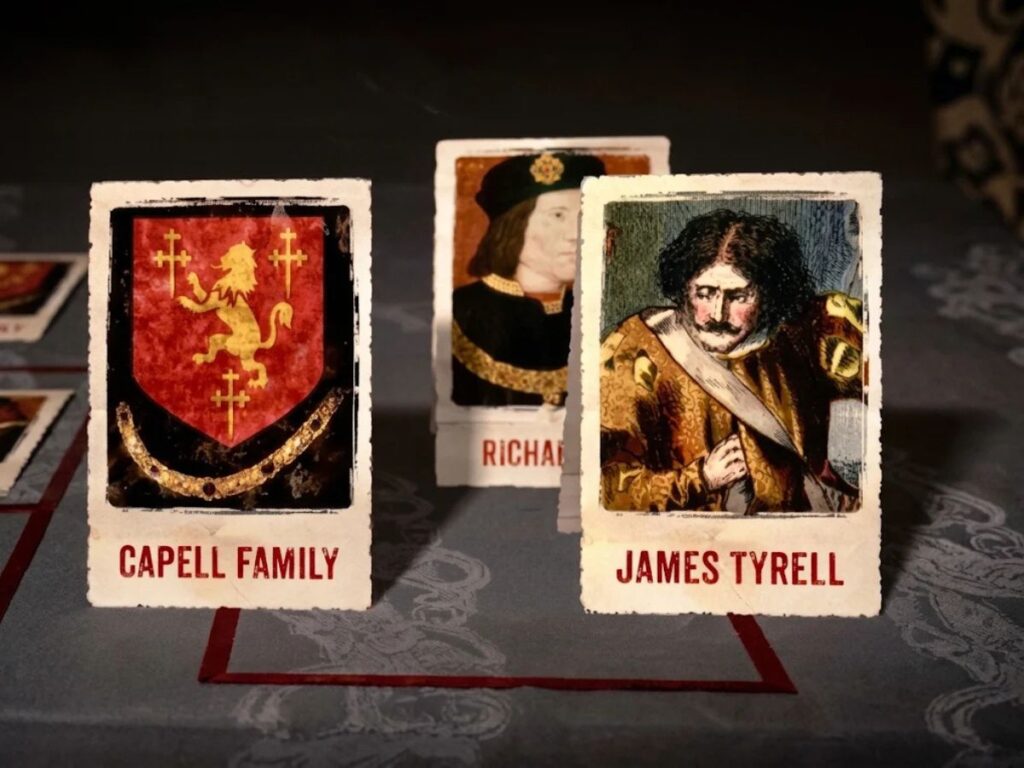
And then a document turns up that doesn’t fit any of the three. A will, written by a gentlewoman called Margaret Capell in 1516, mentions a gold chain that had belonged to King Edward V. The twelve-year-old who was supposed to have died in the Tower of London more than thirty years earlier.
So what does the will mean, who was Margaret Capell, and does it really mean what some historians now think it might?
What the Margaret Capell Will Tells Us
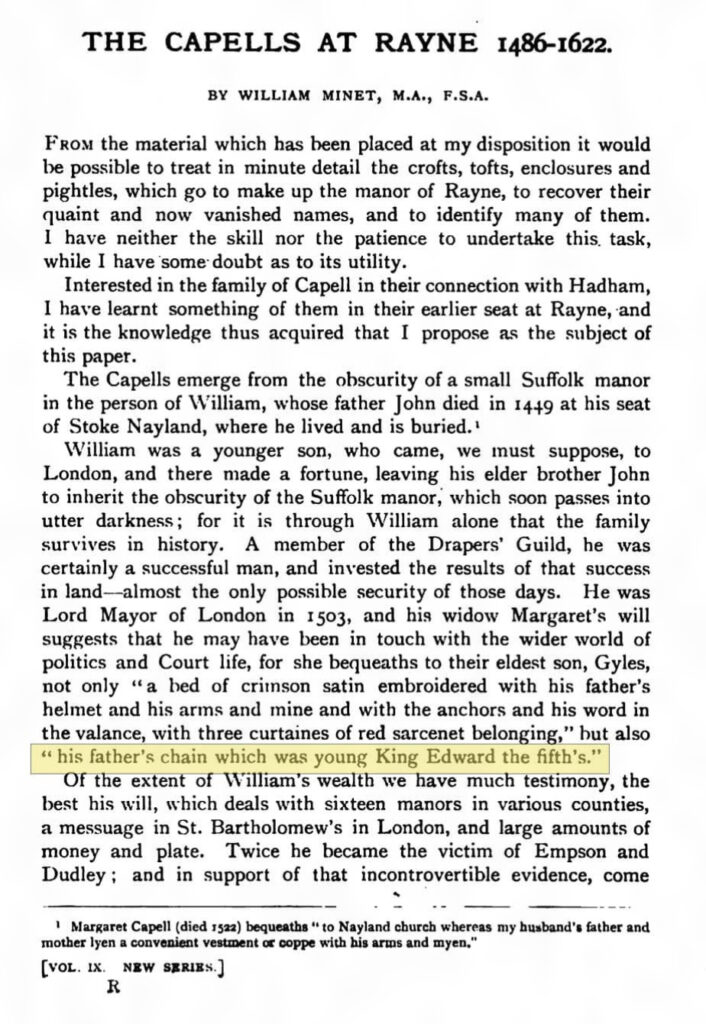
Margaret Capell was the widow of Sir William Capell, a London draper who had twice served as Lord Mayor of the City. She died in 1516, leaving a will that was proved at the Prerogative Court of Canterbury and which has sat in the National Archives for five centuries without reason to look into it further.
In that will, she left her son Giles a specific item: a gold chain she described as having once belonged to King Edward V, and that’s where it gets interesting, because she didn’t call him Edward, eldest son of Edward IV, or Edward, Prince of Wales.
Oh no, she used his regnal title, the one he’d held for just eleven weeks between his father’s death in April 1483 and his own deposition by Richard III in June of the same year.
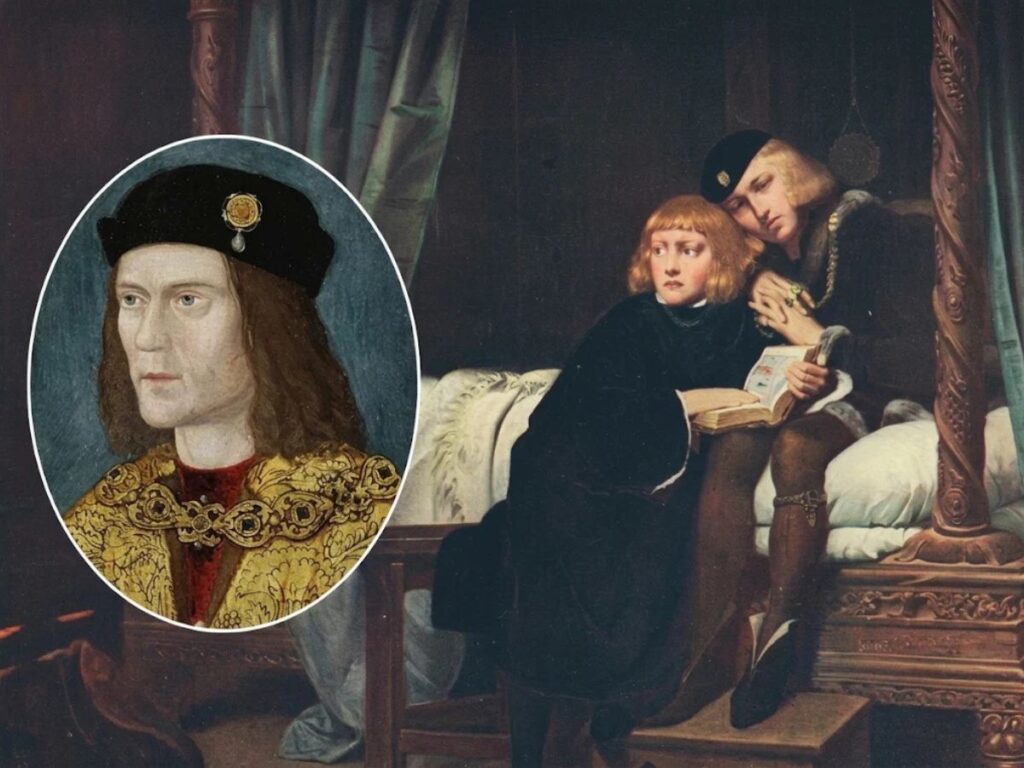
The will gained wider attention through the work of historian Philippa Langley, who led the team that found Richard III under a Leicester parking lot in 2012 and has since turned her research to the fate of Richard’s nephews.
Her book The Princes in the Tower: Solving History’s Greatest Cold Case, published in 2023, drew on an international project of volunteer researchers combing archives in Britain, the Low Countries and beyond.
The Margaret Capell will was one of the documents that emerged from that search, and Langley argues it belongs to a cluster of evidence suggesting Edward V didn’t die in the Tower in 1483 at all.
Who Was Margaret Capell and How Did She Get a King’s Chain?
Margaret was the daughter of Sir John Arundell of Lanherne in Cornwall, from a family well connected at court. Her husband William rose from the London cloth trade into civic power, serving as Lord Mayor in 1503 and again in 1510 under Henry VII and Henry VIII.
He was the kind of merchant-prince who moved between the Guildhall and the royal household, and the family had strong links to the Tudor court.
Their son Giles Capell, to whom the chain was bequeathed, was a known figure at Henry VIII’s court. He jousted at the Field of the Cloth of Gold in 1520 alongside the king himself, and was later knighted.
So the chain passed from a well-connected widow to a man who moved in the highest circles, which is one reason the item is hard to dismiss as a misremembered heirloom.
The question of how Margaret or her husband came by a chain that had belonged to Edward V is the one nobody can yet answer.
One possibility is that William Capell, as a leading London merchant, acquired it through the trade in royal goods after 1483; the household of a deposed king would have been broken up and its contents dispersed.
Another possibility is more interesting: that the chain came from Edward himself, alive and in possession of his own property, at a date after the point at which most histories have him dead.
Hooked on the Middle Ages? Get more stories like this one in your inbox.
What Happened to the Princes in the Tower in 1483?
Edward IV died unexpectedly on April 9, 1483, leaving two sons: Edward, aged twelve, and Richard, Duke of York, aged nine. The elder boy was proclaimed Edward V.
Their uncle Richard, Duke of Gloucester, took custody of them, lodged them in the royal apartments of the Tower of London, and in June 1483 had Parliament declare them illegitimate on the grounds that their father’s marriage to Elizabeth Woodville had been invalid.
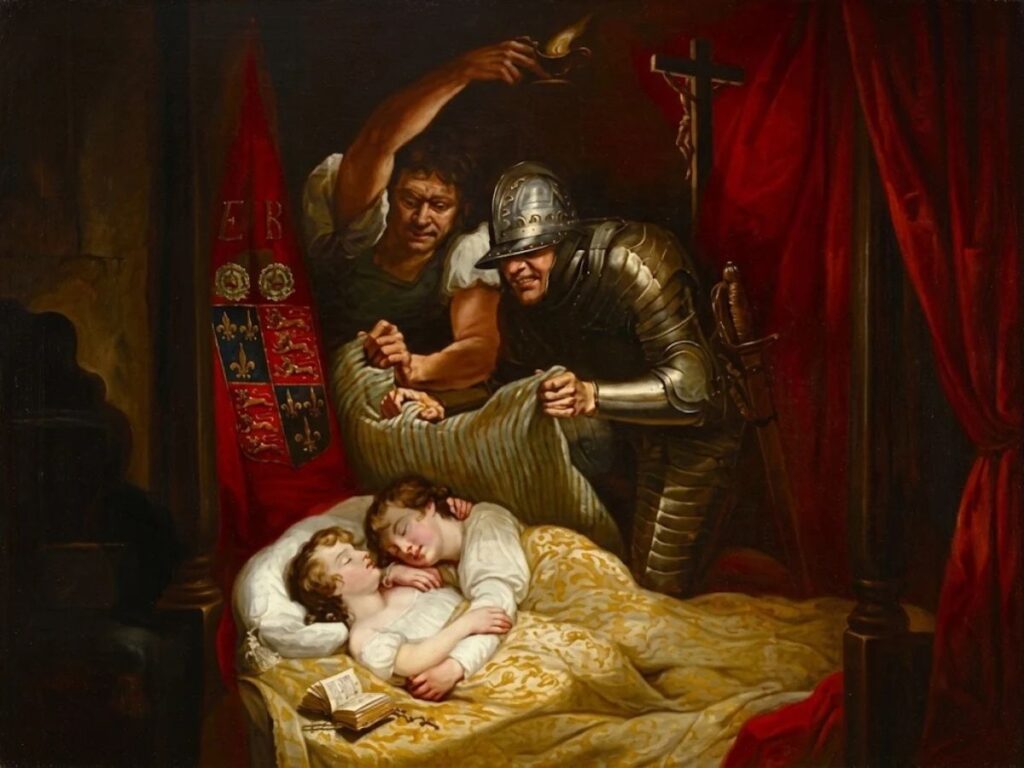
Richard was crowned Richard III on July 6. The boys were seen in the Tower gardens through the summer of 1483 and then, according to the Italian visitor Dominic Mancini, writing in December of that year, were seen less and less, and eventually not at all.
Mancini records that the young king was reported to be confessing his sins daily, believing death was coming. Then Mancini left England, and the record goes quiet.
The story that Richard III had them murdered comes mainly from two sources written well after the fact. Polydore Vergil, an Italian humanist commissioned by Henry VII to write a history of England, finished his account in the 1510s.
Thomas More’s History of King Richard III, written around 1513 to 1518 and never published in his lifetime, gave the version everyone remembers: Sir James Tyrell arranging two men, Miles Forest and John Dighton, to smother the boys in their beds. More admitted he was piecing the story together from hearsay a generation old.
What Other Evidence Has Philippa Langley’s Project Uncovered?
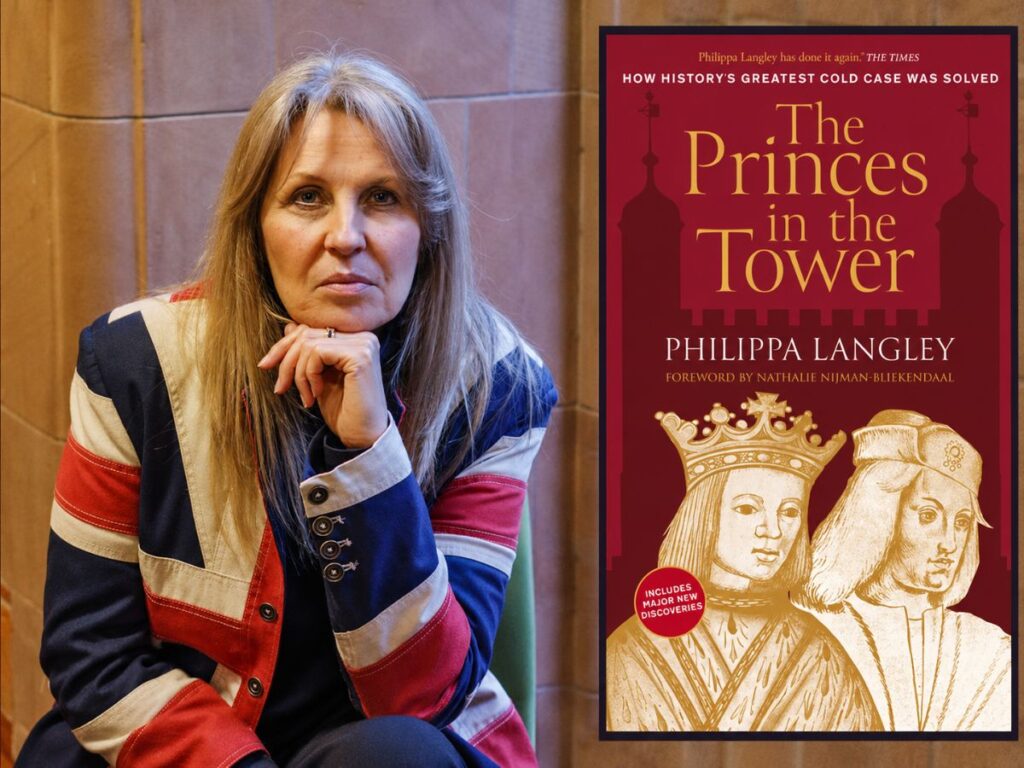
The Capell will doesn’t really provide solid proof on its own. Langley’s Missing Princes Project assembled a body of documents that, taken together, forms the case she makes for survival.
The most important is a receipt from Lille, dated December 1487, recording a payment of 400 livres from Maximilian I, King of the Romans, to a man described as the son of King Edward, late king of England, to equip him for a campaign to recover his kingdom.
The campaign in question ended at the Battle of Stoke in June 1487, when a young man crowned in Dublin as Edward VI was defeated by Henry VII.
That young man is traditionally identified as Lambert Simnel, a joiner’s son from Oxford put forward as a pretender claiming to be Edward, Earl of Warwick, the imprisoned nephew of Edward IV.
Langley’s argument, following research into continental sources, is that the identification of the boy as Simnel may itself be Tudor spin, and that the figure backed by Margaret of York, Duchess of Burgundy and sister of Edward IV, was her nephew Edward V.
The other well-known pretender, Perkin Warbeck, claimed from 1491 onward to be the younger prince, Richard of York. He was recognized as such by Margaret of Burgundy, by the kings of France and Scotland, and by the Holy Roman Emperor Maximilian.
He was captured in 1497 and hanged in 1499. The Tudor line, then and since, was that he was the son of a Tournai boatman. Langley and others argue that the continental recognition is more consistent than the Tudor story allows, and that the Warbeck confession, extracted under duress, shouldn’t be taken at face value.
What About the Bones Found in the Tower?
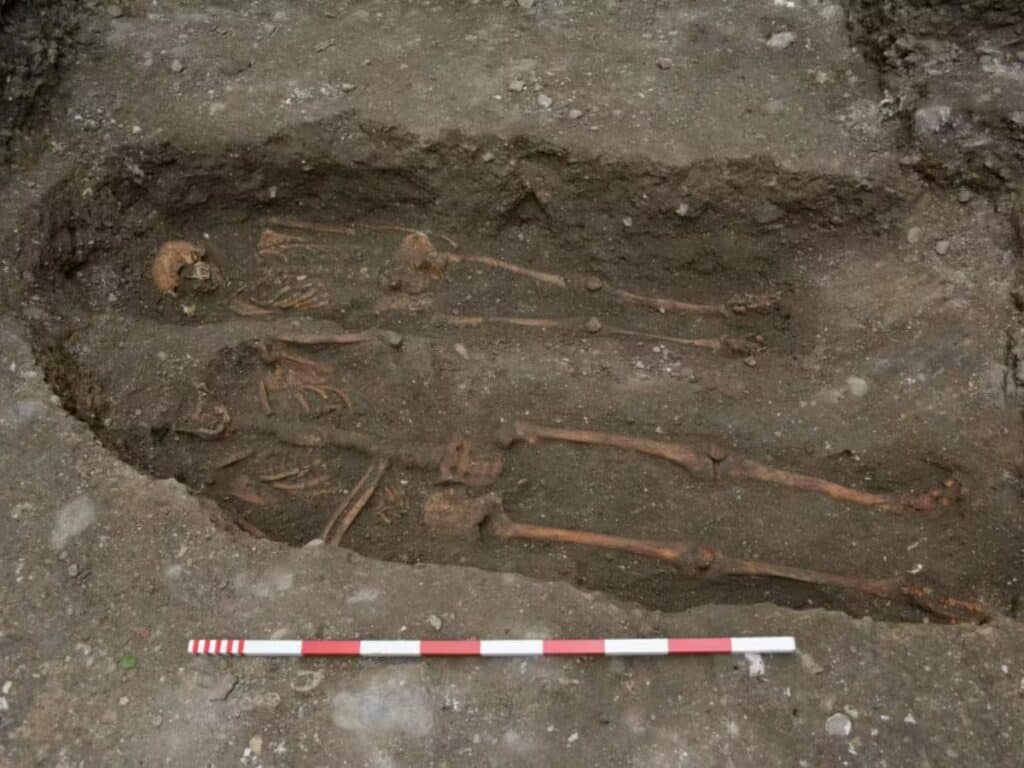
In 1674, workmen demolishing a staircase at the White Tower, the Norman keep at the heart of the Tower of London, found a wooden chest containing the bones of two children.
Charles II, on the advice of the antiquary and herald Sir Thomas Wriothesley’s successors, declared them to be the remains of the princes and had them interred in Westminster Abbey in an urn designed by Christopher Wren.
They lie there still, in the Henry VII Chapel, under an inscription naming them as Edward V and Richard of York.
The bones were examined in 1933 by Lawrence Tanner, the Abbey archivist, and a professor of anatomy at the London Hospital Medical College. The examination concluded the bones were consistent with children of the right ages, and noted a stain on the elder child’s facial bones that was thought might indicate suffocation.
The 1933 examination has been criticized since on almost every methodological ground, and no DNA testing has been done.
The Abbey has consistently refused permission to reopen the urn, on the grounds that such requests set a precedent for disturbing every royal tomb on request. Elizabeth II declined, and the current position hasn’t changed.
Until the bones are tested against mitochondrial DNA from a known maternal-line relative of the princes, which would be perfectly possible given that the DNA used to identify Richard III came through just such a line, the identification of the Westminster bones rests on 1674 workmen and a 17th-century king.
What Do Historians Make of the New Evidence?
Reaction to Langley’s book and the documents she presents as evidence has predictably been split.
Michael Hicks, Emeritus Professor of History at the University of Winchester and author of Richard III and his Rivals, has remained skeptical, pointing out that none of the documents amounts to proof that either boy survived, and that the Tudor case for murder, though circumstantial, is coherent.
Hicks has argued for years that Richard III is the most likely culprit, and nothing in the recent material has changed his view.
A 2021 article in the journal History examined Thomas More’s claimed sources for the murder story, and found that More had direct connections to the Tyrell family who could have given him real information; but that work is about the strength of the More tradition, not against it.
Matthew Lewis, author of The Survival of the Princes in the Tower, has worked in parallel with Langley and agrees the case for survival is stronger than it has been for centuries.
The Margaret Capell will, the Lille receipt, the Warbeck recognitions and the rest don’t solve the case. For most of the 20th century, the question was treated as settled: Richard III did it, the bones in Westminster were the princes, and the pretenders were impostors.
The documents of the last few years have made that settlement harder to defend without actually proving the opposite.
Could the Mystery Ever Actually Be Solved?
The one thing that would come close to settling it is the urn in Westminster Abbey. Mitochondrial DNA from the bones, compared against a living descendant of Cecily Neville, Duchess of York, the princes’ paternal grandmother, would tell us whether the children in the chest in 1674 were related to the House of York in the female line.
That wouldn’t tell us how they died or who killed them, but it would answer the question of whether they died in the Tower, so it starts to narrow it down and rule out certain theories.
Short of that, the search has to continue in the archives: in the wardrobe accounts of Margaret of Burgundy, in the records of the Habsburg court, in the household books of English gentry families who, like Margaret Capell, may turn out to have inherited things they shouldn’t have been able to inherit.
Love a good medieval story?
Join our readers and get tales of kings, queens, castles and ordinary medieval lives straight to your inbox.

Kylie Lang is a nationally syndicated travel journalist with bylines on the Associated Press Wire & more, a medieval history writer, and the founder and lead author of Tales of the Middle Ages (talesofthemiddleages.com). She holds a BA (Honours) in History from the University of Kent and is a member of the British Guild of Travel Writers.
Related posts:
 Did Richard III Really Kill the Missing Princes in the Tower? Or Was It the Tudor PR Machine At Work?
 The Real Margaret Beaufort: The Woman Who Built the Tudors
From Teenage Widow To Tudor Powerbroker: The Real Margaret Beaufort Story (Not The Villain You Think)
 The Princes in the Tower: 7 Suspects Who Could Be Guilty in History’s Darkest Unsolved Mystery