
The Battle of Bosworth in 1485 did more than end the Wars of the Roses. It drew a line between two very different kings. Richard III, the last Plantagenet, fell in the mud with a crown torn from his head. Henry Tudor, a man with a shaky claim, picked it up and began a dynasty that would dominate England for the next century.
But who was the better king? Richard is remembered as the villain with the crooked spine, thanks in no small part to Shakespeare. Henry is remembered as the cautious founder of the Tudor age, the man who secured his line through marriage and money. Both reputations were shaped by propaganda, and both men were more complicated than the caricatures we’ve been left with.
Table of Contents
Richard’s reign was short, just over two years, yet in that time, he made reforms that gave ordinary people more access to justice. Henry reigned for over twenty years, creating stability but also squeezing his subjects with relentless financial controls. One man is accused of killing children, the other of bleeding the country dry. Neither escapes with a spotless record.
To weigh them properly, you have to look past the myths. Strip away the Shakespearean lines and the Tudor spin, and compare them head to head: their laws, their taxes, their punishments, their marriages, their diplomacy, and the legacies they left behind. Only then can you decide which king left England better off.

Claim to the Throne and Legitimacy
Neither Richard III nor Henry VII began their reign with an unshakable claim. Both had to convince the country that they had the right to wear the crown.
Richard’s path to power was swift and brutal. When his brother Edward IV died in 1483, Richard was named Protector for the young Edward V. Within months, Edward and his brother were taken to the Tower of London, declared illegitimate through an act of Parliament, and never seen again. Richard was crowned king that summer. His supporters argued that he had rescued England from a boy king propped up by power-hungry Woodvilles. His critics called it theft of the crown and suspected murder.
Henry’s claim was weaker on paper. His royal blood came through his mother, Margaret Beaufort, a descendant of John of Gaunt, but the Beaufort line had been barred from inheriting the throne. What Henry had was determination and timing. After years in exile, he landed in England and defeated Richard at Bosworth.
To strengthen his position, he married Elizabeth of York, daughter of Edward IV, uniting the red rose of Lancaster and the white rose of York. This marriage gave his rule the legitimacy his bloodline lacked.
Both men ruled under shadows. Richard faced suspicion over the fate of the princes and accusations of seizing power unjustly. Henry faced whispers that he was a usurper who had won the throne by force. Legitimacy, for both kings, was never a birthright. It was something they had to hold onto with iron hands.
Life Under the Two Kings
Law and Order
Both kings came to power during one of England’s most unstable centuries.
Richard III had a short reign but left his mark with reforms. He set up the Court of Requests, where poor people could bring cases without the crushing costs of the common law courts. He passed laws to stop landowners from forcing juries and to make sure property disputes were handled more fairly. His aim was clear: build support by showing himself as a protector of ordinary subjects, not just the nobility.
Henry VII took a different path. He relied heavily on Justices of the Peace, unpaid local officials, to enforce order in the countryside. He tightened control with bonds and recognizances, financial penalties that made nobles think twice about causing trouble. It worked, but it left a reputation for harshness. People obeyed because they feared the cost of disobedience, not because they loved their king.
Both strategies reveal the realities of the time. Richard won loyalty through reforms, while Henry controlled behavior with financial pressure. One sought popularity, the other stability. Neither approach was perfect, but both were effective in their own way.
Money and Taxes
Every king needed money, but how they got it often shaped how they were remembered.
Richard III tried to win favor by easing financial burdens. He canceled some royal debts and promised not to demand forced loans. He also sought to prevent officials from abusing their positions for personal gain. His reign was too short to prove whether these measures could last, but they suggested he was conscious of the resentment that heavy taxation created.
Henry VII went the opposite way. Determined to secure the Tudor dynasty, he built a treasury that could withstand rebellion or foreign invasion. He revived old feudal dues, tightened customs, and made sure royal income was collected efficiently. He also used bonds and fines not only to control behavior but to swell his coffers. To his supporters, this made him a wise steward who left the crown rich and secure. To his critics, he was a miser who drained his people for every penny he could.
In the end, Richard’s generosity may have won him goodwill but cost him long-term financial strength. Henry’s financial discipline gave England stability but also bred resentment that lingered long after his death.
Hooked on the Middle Ages? Get more stories like this one in your inbox.
Use of Power and Punishment
Kingship in the fifteenth century was a dangerous business. Mercy could be seen as weakness, and brutality could keep the crown secure. Both Richard III and Henry VII demonstrated their willingness to go to great lengths.
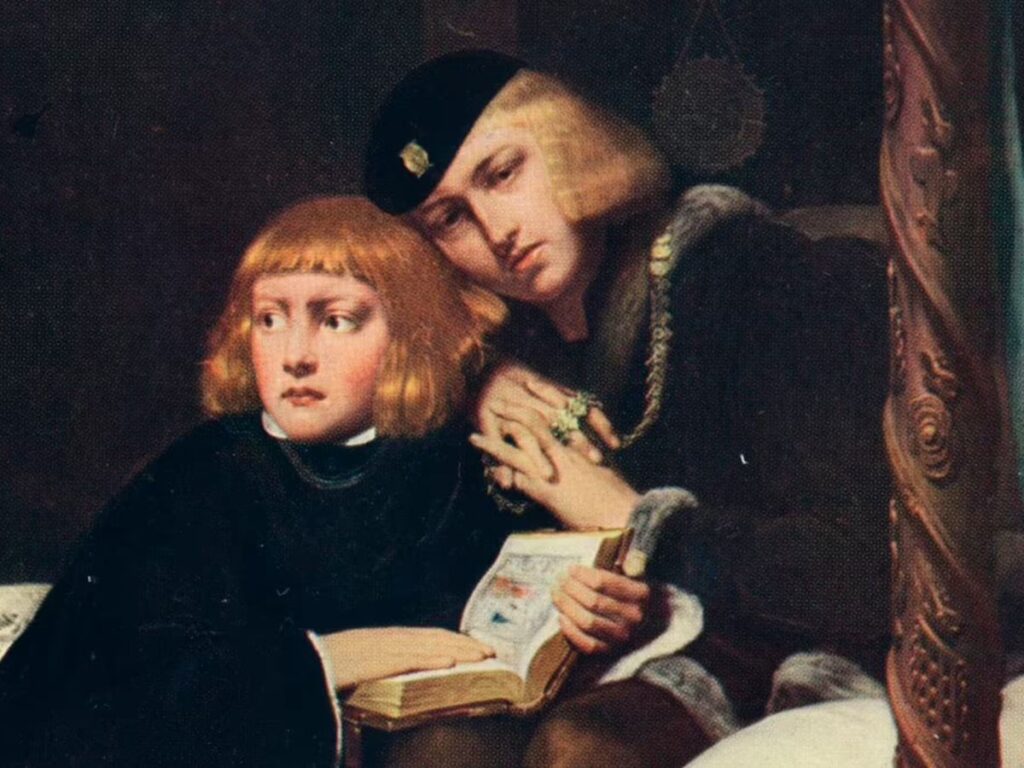
Richard’s reign was marked by sudden and ruthless action. Lord Hastings, once a close ally, was executed without trial after being accused of conspiracy. Anthony Woodville, Earl Rivers, and others tied to the young Edward V were also eliminated. The mystery of the princes in the Tower has haunted his reputation ever since. Whether he ordered their deaths or not, suspicion has followed his name for centuries.
Henry VII proved just as uncompromising. He dealt harshly with pretenders to his throne. Lambert Simnel was paraded in mockery after his rebellion failed, while Perkin Warbeck was eventually executed after years of defiance. Henry also relied heavily on acts of attainder, stripping nobles of lands and titles if they opposed him. These punishments enriched the crown and weakened potential rivals.

Both men knew survival meant striking first and striking hard.
Foreign Policy and Diplomacy
No king could rule in isolation. England’s fortunes were tied to France, Scotland, and the wider European stage, and both Richard and Henry understood that survival depended as much on foreign ties as battles at home.
Richard looked to Burgundy for support, a natural move since it was a strong ally of the Yorkist cause. He sought peace with Scotland through truces but also prepared for war when border raids broke out. His approach was pragmatic. Secure the north, lean on continental allies, and keep England strong without overextending.
Henry took a different tack. He worked to legitimize his dynasty by arranging high-profile marriages. The Treaty of Medina del Campo in 1489 allied him with Spain through the betrothal of Prince Arthur and Catherine of Aragon. The Treaty of Etaples in 1492 with France brought both peace and a healthy pension for the crown. His diplomacy was less about warfare and more about weaving England into Europe’s power network through treaties and marriages.
Both strategies reflected their situations. Richard needed military strength to defend his throne from threats close to home. Henry needed recognition abroad to reinforce a dynasty still viewed with suspicion. Each king, in his own way, worked to shield England from isolation and invasion.
Marriage and Family
Royal marriages in the Middle Ages were weapons of politics, ways to build alliances or secure heirs.
Richard III married Anne Neville, daughter of the powerful Warwick the Kingmaker. The match bound him to one of the most influential families in England. Their only son, Edward of Middleham, died young, leaving Richard without a direct heir. This weakened his position, since rival claimants could argue the Yorkist line might die with him. Anne’s death in 1485, only months before Bosworth, fueled rumors that Richard planned to marry his niece Elizabeth of York, though no solid proof exists.
Henry VII’s marriage was one of the most significant unions in English history. By marrying Elizabeth of York, he brought together Lancaster and York, ending decades of civil war in a single ceremony. Their children strengthened the dynasty: Arthur, who died young; Henry, who became Henry VIII; Margaret, who married into the Scottish royal line; and Mary, who became queen of France for a brief time. The Tudor claim to the throne, shaky at the start, grew solid through these heirs.
For Richard, family ties could not secure his dynasty. For Henry, family became the foundation of a dynasty that outlived him by more than a century.
Reputation and Legacy
Few English kings have reputations as divided as Richard III and Henry VII. Both left behind images that were shaped less by what they did and more by how later generations wanted to remember them.
Richard became the villain of English history. Tudor chroniclers painted him as a usurper and child killer, and Shakespeare turned him into a hunchbacked monster on stage. For centuries, that was the Richard people knew. Yet modern historians and the discovery of his skeleton in 2012 have forced a reevaluation.

His legal reforms, his attempts to curb corruption, and his loyalty to the north of England have won him defenders. He is now seen by some not as a monster, but as a capable ruler undone by bad luck and poor timing.
Henry VII, by contrast, secured his dynasty and built a reputation as the founder of the Tudor age. His careful diplomacy and tight control of finances gave his son Henry VIII a kingdom far more stable than the one he inherited. Yet his reputation is not without shadows.
He is remembered as cautious, controlling, and obsessed with money, a king respected more than loved. His legacy lies less in his personal character and more in the dynasty he established.
Both men left marks that lasted well beyond their lifetimes. Richard’s reputation has swung between villain and reformer. Henry’s has remained steady as the shrewd founder of Tudor power. Their legacies reflect not just their reigns, but how history has chosen to tell their stories.
Final Thoughts
Richard III and Henry VII ruled in different ways, but both were shaped by the turbulence of their times. Richard’s reign was brief, marked by bold reforms and ruthless decisions that left him either admired or hated, depending on who told the story. Henry’s reign was long and steady, building a dynasty on diplomacy, marriage, and money, but remembered for its cold control as much as its stability.
One lost his crown on the battlefield, the other secured his by building a system no one could easily topple. Richard’s name is forever tied to the mystery of the princes, while Henry’s is bound to the dynasty that produced Henry VIII and Elizabeth I. Both kings carried the weight of legitimacy, suspicion, and survival on their shoulders.
So who was the better king? That depends on how you measure greatness. By justice and reform, Richard has his case. By stability and dynasty, Henry establishes his own. In the end, both left legacies that still divide opinion today. The answer is less about right or wrong and more about how we choose to see the rulers who shaped the end of the Middle Ages.
Love a good medieval story?
Join our readers and get tales of kings, queens, castles and ordinary medieval lives straight to your inbox.

Kylie Lang is a nationally syndicated travel journalist with bylines on the Associated Press Wire & more, a medieval history writer, and the founder and lead author of Tales of the Middle Ages (talesofthemiddleages.com). She holds a BA (Honours) in History from the University of Kent and is a member of the British Guild of Travel Writers.