
The Tower of London has stood on the edge of the Thames since the 1070s, a witness to rebellion, plague, and more than a few grisly executions. Its walls have held some of the most infamous figures in England’s history, many of whom never walked out alive. The mystery of the two young Plantagenet princes who vanished within the Tower remains one of the darkest legends of the Tower.
Yet behind the bloodshed and high politics, the fortress was also home to ordinary people. Guards, clerks, and their families lived out their days in the shadow of its walls, shaping a quieter side of Tower life that rarely makes it into the history books.
Table of Contents
For centuries, daily life inside the Tower during the Middle Ages remained largely unknown, with few details available. That is beginning to change. A recent archaeological excavation, led by Historic Royal Palaces, the organization that manages the Tower, has begun to reveal what it meant to live and die within this medieval stronghold.
Uncovering Medieval England at the Tower of London
Whenever new evidence is discovered that sheds light on how people lived in the Middle Ages, I’m excited. So much of what we read and see on TV about this period is from people’s imaginations of what they think life was like. So when we get cold, hard evidence, it sends shivers down my spine, making me wonder what we’re going to find out.
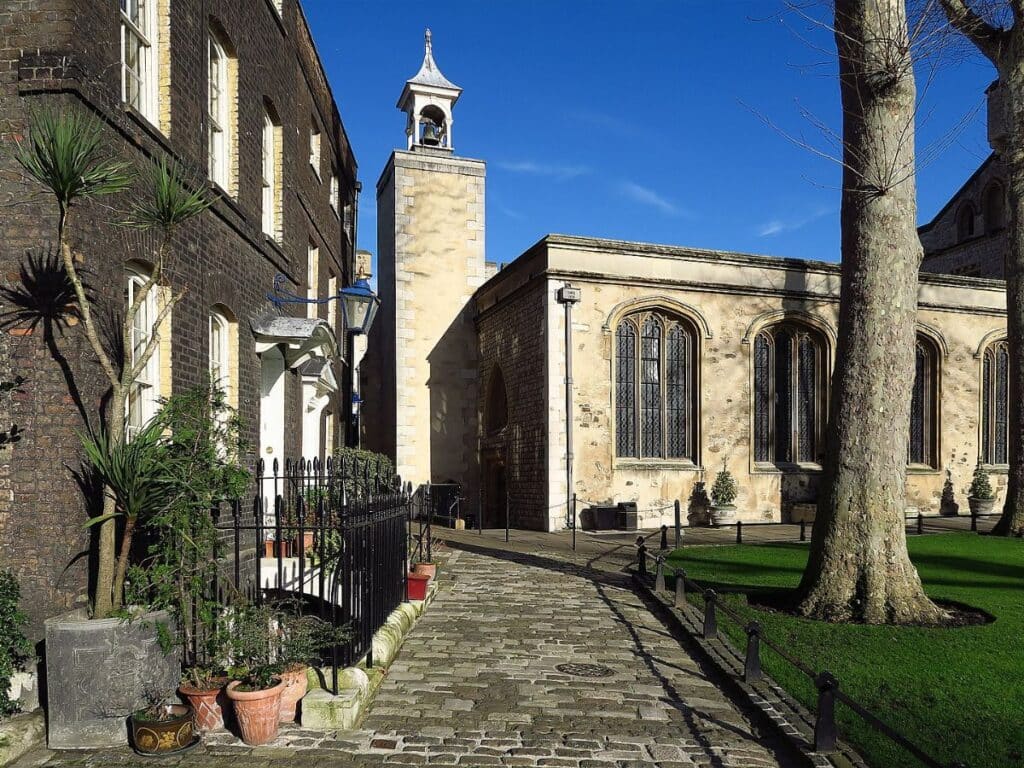
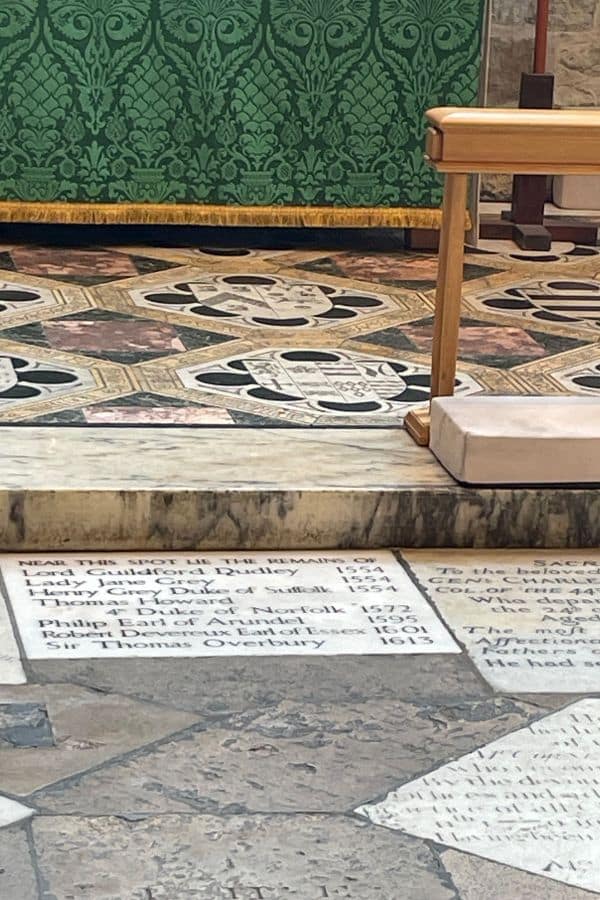
This new excavation is centered on the Chapel Royal of St. Peter ad Vincula, also known as “Saint Peter in chains,” which served as the parish church for those who lived and worked within the Tower. Today, it is remembered most as the burial place of Anne Boleyn, Catherine Howard, and Sir Thomas More, all of whom were condemned to death for treason under Henry VIII.
Yet the chapel’s history stretches back much further. The building that stands today was commissioned by Henry VIII and completed in 1520; however, earlier versions of the chapel had stood on the site for centuries, possibly dating back to the ninth century. Its history runs so deep that it may even outdate the White Tower itself.
Archaeologists are now piecing together what those earlier centuries looked like. Samples taken from the dig, now being studied at Cardiff University, are beginning to fill in gaps about life and death inside the fortress.
The evidence suggests that wealthy residents may have worshipped in the chapel, that burial customs followed medieval traditions, and that plague victims were laid to rest hurriedly in graves far below the Tower’s grounds.
Hooked on the Middle Ages? Get more stories like this one in your inbox.
What the Dig Revealed Beneath the Chapel
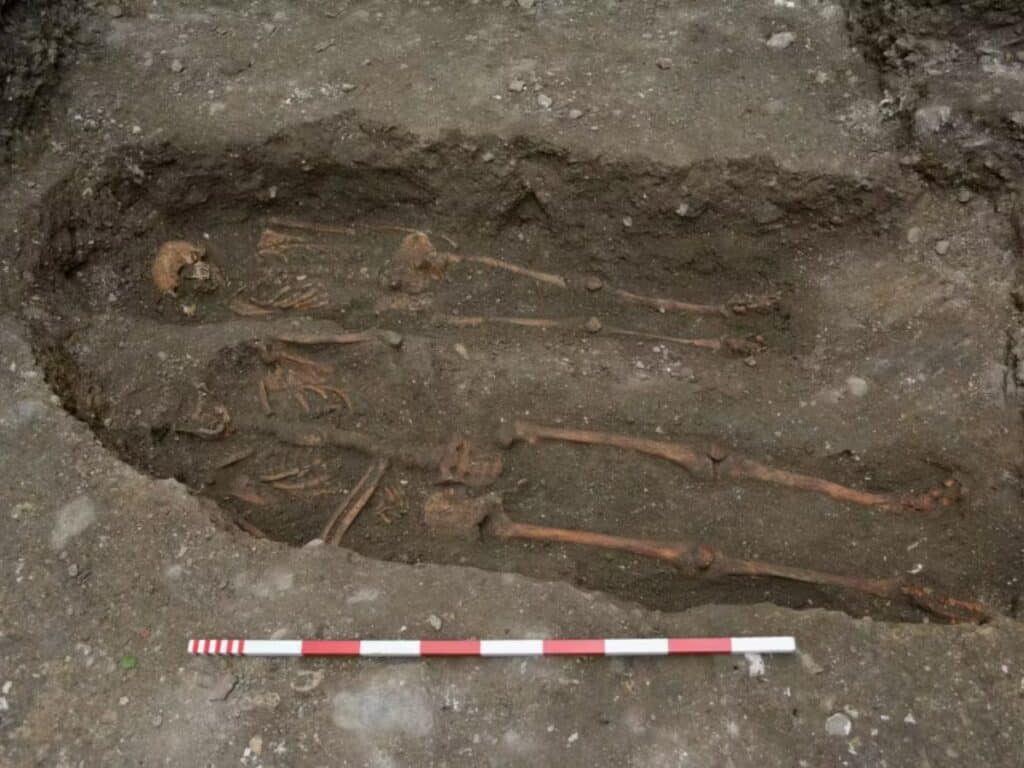
Records indicate that the Tudor chapel replaced a 13th-century structure destroyed in a fire during the 1510s. That, in turn, had likely taken the place of an even earlier chapel, perhaps more than one. Excavation has now shown this to be true. Archaeologists uncovered traces of up to four successive high-status medieval buildings, each one layered on top of the other, with each version representing a different iteration of the chapel that stood before Henry VIII’s.
Burials at St. Peter ad Vincula had long been part of its story, but the site itself had never been excavated until this project. The dig only happened because an elevator was being added to improve access.
Archaeologists were given the chance to dig deeper than is normally possible at the Tower, reaching down nearly ten feet across an area of 650 square feet. That depth took them all the way back to the early 13th century, an opportunity that rarely comes along in such a heavily protected site.
The finds covered nearly every part of medieval life. Fragments of jewelry, pieces of stained glass, and even scraps of burial shrouds emerged from the clay. The survival of the textiles was unexpected, as fabric usually decays unless preserved in sealed or waterlogged conditions. In this case, the positioning of the remains in the soil seems to have protected them by sheer chance.
Excavators also uncovered the remains of 22 individuals, along with a large amount of charnel, all dating between the 13th and 16th centuries. Many appear to have been people of higher social standing, as several were buried in coffins rather than the more common shrouds.
The oldest burials were likely inside an earlier version of the chapel itself, another sign of their importance. Status in death mirrored status in life: the closer a person was buried to the church, the more important they were considered, with those laid to rest beneath the altar holding the highest rank of all.
Archaeologists also found a pair of funerary incense pots dating between 1150 and 1250. Grave goods were rare in medieval England, making this a remarkable find. Similar vessels have only ever been identified twice before, once in Oxford and once in Scotland.
Their presence suggests that the individual buried with them may have had links to Northern France or Denmark, where the practice of including grave goods was more common. If the remaining charcoal inside the pots is suitable, specialists may even be able to reconstruct the incense once burned during the burial rites.
Science Opens a Window Into Daily Life at the Tower
Written records provide plenty of detail about London, the Tower, and its residents, but they don’t always reveal the most personal details of medieval life. Archaeology helps fill those gaps. Trade records, for example, can tell us what goods passed through the city, but they don’t show what an individual was actually eating or how diet varied with social standing.
This is where the human remains recovered at the Tower come in. Archaeologists see the bones as untold stories, each one holding information about health, origins, and diet. Unlike the broader sweep of documents, skeletal evidence can reveal where a person may have lived, what they consumed, and the state of their health in remarkable detail.
The project first broke ground in 2019 with a test trench that uncovered the remains of two individuals, which were sent to Cardiff University for study. Researchers combined bone analysis, which helps determine age, sex, and disease, with isotope testing. Isotope science might sound complex, but it follows a simple truth: people carry the chemical imprint of what they eat, drink, and where they live. Food, water, and even the soil of different landscapes leave unique markers in human teeth and bones, which can be read centuries later.
From this analysis, the first individual was identified as a middle-aged woman who lived between 1480 and 1550. She was likely well-off, buried in a coffin, and nourished by a diet that included sugar, a luxury at the time. Chemical signals suggest she wasn’t originally from London and had moved at least twice in her lifetime, possibly between areas such as Cornwall, Devon, or Wales.
The second individual was a younger man, about apprenticeship age, from the same period. His origins may have been in the north of England, or perhaps closer to London in places like Kent. His remains show signs of childhood stress and a diet far less rich than the woman’s. He was probably buried in a simple shroud.
Together, their stories highlight the diverse lives connected to the Tower. Neither shows evidence of a violent death, suggesting that both were parishioners of the chapel rather than prisoners.

Clues Pointing to the Black Death
The test trench dug in 2019 was only the beginning. The remains uncovered in the most recent excavation will now undergo the same detailed analysis at Cardiff University. The first two skeletons studied provided researchers with vivid life stories, revealing movement between regions, dietary differences, and traces of hardship. The question now is whether those cases were unusual or whether they reflect the wider experiences of people buried at the Tower.
One key mystery is the makeup of the Tower’s community. Were the residents long-term, forming a close-knit population, or were they a shifting group of people passing through from all over? Archaeologists are especially interested because the remains represent what was effectively a middle-class community.
While a few individuals were buried in coffins, the majority were not elite, making them particularly valuable for study. Researchers hope to learn about everyday families, including the youngest children, whose burials speak to the high infant mortality rate of the period. By examining dentine, they can even determine details such as when children were weaned and what they were fed.
Among the most intriguing questions is whether some of these people were victims of the Black Death. The plague first tore through London in 1348, and archaeologists uncovered seven burials from that century that appear to have been rushed. DNA testing can confirm, one way or the other, the presence of Yersinia pestis, the bacterium responsible for the pandemic.
If so, these individuals could represent some of the earliest plague victims in the city. Their presence inside St. Peter ad Vincula is unusual, since most plague dead were quickly taken to emergency burial grounds created outside the Tower. If confirmed, these burials may capture the confusion of the initial outbreak, before such systems were implemented.
The remains from the 2025 dig will be studied in the coming months at Cardiff, before they are reinterred in the chapel’s crypt. Although the excavation covered a relatively small area, researchers believe the results could significantly reshape our understanding of daily life at the Tower.
The evidence has the potential to shed light not only on its residents but also on the wider networks of trade, movement, and community that tied medieval London to the rest of England and beyond.

Love a good medieval story?
Join our readers and get tales of kings, queens, castles and ordinary medieval lives straight to your inbox.

Kylie Lang is a nationally syndicated travel journalist with bylines on the Associated Press Wire & more, a medieval history writer, and the founder and lead author of Tales of the Middle Ages (talesofthemiddleages.com). She holds a BA (Honours) in History from the University of Kent and is a member of the British Guild of Travel Writers.
Related posts:
 Unearthing the Last Plantagenet King: The Story of How Richard III Was Found After 500 Years
 The Reality of Life in a Medieval Castle, the Sounds, Smells, and Struggles of Daily Life
 The Top 10 Baby Names in the Middle Ages (And Your Medieval Match)
 The Best and Worst of Life in the Middle Ages. Would You Have Made It?