
The 15th century in England wasn’t all battlefields and crown-swapping. Behind the armor and alliances stood women who helped to shape the power. Among them was a duchess born at a northern stronghold, the youngest of a famously ambitious family. Her name was Cecily Neville, and for most of her eighty years, she held a front-row seat to England’s bloodiest political drama.

She lived through five kings, mothered two of them, and buried most of the people she loved. She made enemies, carried grudges, and used every tool at her disposal to survive. She was both deeply devout and politically ruthless, pushing sons toward thrones while navigating betrayal, civil war, and scandal. Cecily wasn’t a queen, but the story of England’s monarchy can’t be told without her.
Table of Contents
If you think you know the Wars of the Roses, think again. Cecily’s story was built on strategy, loss, resilience, and sheer nerve. She played the long game, and she played it well.

The Roots of a Matriarch
Cecily Neville was born into an influential and ambitious family. Her father, Ralph Neville, was the 1st Earl of Westmorland. Her mother, Joan Beaufort, was the legitimate daughter of John of Gaunt, one of the most powerful men in England and the son of King Edward III. That gave Cecily royal blood, even if it came through a back door. It also placed her at the center of Plantagenet politics before she could walk.
She was the youngest of at least twenty-two children, yes, twenty-two, and part of a sprawling network of half-siblings, full siblings, and strategic marriages. This wasn’t a quiet northern household. It was a factory of alliances. Her brothers became earls and barons. Her sisters married into other great families, tightening the grip of the Nevilles on land, money, and influence.
Cecily grew up at Raby Castle in County Durham. It was a massive, stone-walled fortress with towers that loomed over the countryside; the kind of place designed for both feasting and fighting. Life there would have been cold, loud, and filled with people: servants, clerics, warriors, squires. But also strict.
Cecily’s upbringing combined the discipline of highborn expectation with the training of someone who would one day be a duchess. She was taught to manage households, hold her tongue, speak when it mattered, and carry the weight of family ambition. Raby raised women who knew how to survive the shifting loyalties of the crown.
Marriage and Ambition
Cecily Neville was betrothed young, like most girls of her rank, at the tender age of nine. Her match with Richard Plantagenet, Duke of York, was arranged when she was still a child. He was just a few years older but already high on the ladder of royal politics. The two were married by the time Cecily was fourteen years old. It was a political alliance, but it turned into a working partnership that would define the course of her life.
Richard had royal blood through both his parents. His claim to the throne was stronger than that of the reigning Lancastrian king, Henry VI, and he knew it. Cecily knew it too. At first, they played their roles without pushing too hard. Richard held important posts under the crown and gained land, titles, and prestige. Cecily ran their estates, raised their growing family, and kept a careful eye on court politics. When needed, she stepped in and signed letters, negotiated finances, and handled tenant issues.
In the early 1440s, Richard was appointed governor of the English-held territories in France, and Cecily joined him there. They lived in Rouen, which at the time was a major English stronghold in Normandy. She gave birth to at least two sons while living abroad, including Edward, the future king. Rouen was no backwater. It was a political and military base filled with pressure, tension, and expectation.
Cecily was expected to play the role of high-born Englishwoman abroad, upholding the prestige of York while her husband tried to keep a crumbling English empire from falling apart. She did it all while raising children and managing courtly appearances.
As Richard’s ambitions hardened, so did Cecily’s position. She was no longer just the wife of a nobleman. She was the partner of a man whose eyes were firmly on the throne. The risks were growing, but so was the sense that this family could be something more than just another aristocratic branch. Cecily was ready to back her husband’s claim and bear the consequences if it failed.
A Mother in the Crossfire
Cecily gave birth to twelve children, though only seven lived beyond infancy. Among them were Edward, George, and Richard, three boys whose fates would shape the history of England. Raising a family in the 15th century was no easy task. Cecily was preparing her sons for war, marriage, and the brutal reality of court politics. Her daughters, too, were married off with care, stitched into a web of alliances that served the Yorkist cause.
When tensions between the rival houses of Lancaster and York boiled over, Richard took up arms to push his claim. Cecily stayed behind at Ludlow Castle, managing affairs in his absence and caring for the younger children. She oversaw the estate, received envoys, and weighed political options.
When things turned dangerous, she made a bold move. In 1459, after Richard fled into exile, Cecily went to London to plead directly with King Henry VI. She asked for protection, for her family and her future. The appeal didn’t save Richard’s position, but it did protect Cecily and the children. She secured a personal allowance and avoided imprisonment.
That alone tells you how seriously she was taken. Most noblewomen in her position would have been cast aside. Cecily stood her ground. Even when her husband was declared a traitor and their lands were seized, she refused to retreat from public life. She remained at the center of the storm, waiting for the next turn. And it came.

Triumph and Devastation
In the summer of 1460, Cecily’s fortunes took a sharp turn. Her husband and his allies won a major victory at the Battle of Northampton, capturing King Henry VI. For a brief moment, the balance of power shifted. Richard returned from exile and rode into London with enough force behind him to push his claim to the crown. Cecily arrived in the city before him and made a public entrance, carrying the royal arms and presenting herself as England’s future queen. It wasn’t a subtle message.
Parliament agreed to a compromise. Richard would not depose Henry immediately, but would be named heir. Cecily now had every reason to believe her son Edward would one day be king. But things unraveled fast. In December, Richard and their second son, Edmund, marched north to confront a Lancastrian army at Wakefield. They were both killed in the fighting. Their heads were placed on spikes above the gates of York, a message to anyone else who thought they could take the crown by force.
News of their deaths reached Cecily in London. She gathered what strength she had left and made a decision. Her eldest son Edward was only eighteen, but he had support from seasoned commanders. Cecily worked to secure the capital and protect her younger children. She sent her sons, George and Richard, away for safety and backed Edward’s next move.
Just months after his father was killed, Edward led the Yorkist army to a crushing victory at Towton. He claimed the throne as Edward IV, the first Yorkist king. Cecily, now the king’s mother, had lost a husband and a son, but her family’s grip on power had never been stronger.

The King’s Mother
With Edward IV on the throne, Cecily entered a new phase of life. She was no longer just a duchess or the widow of a would-be king. She was now the mother of a reigning monarch. That came with status, wealth, and influence. Edward gave her Baynard’s Castle in London, a prime riverside residence where she set up her own court. It became a political hub, a place where decisions were made and alliances forged. Cecily was not content to simply fade into the background.
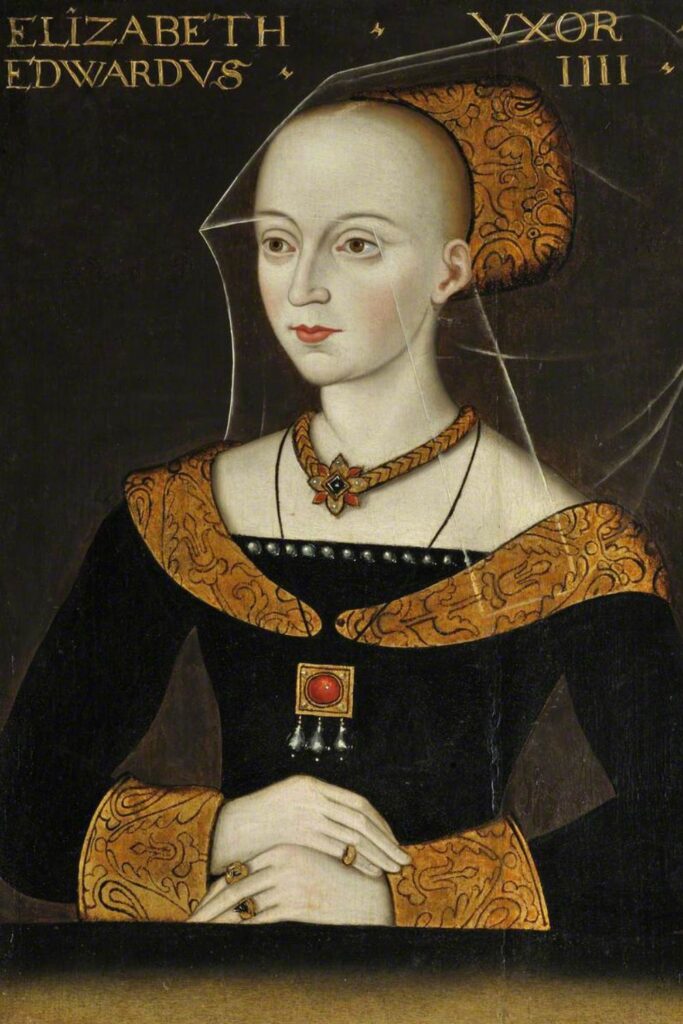
At court, she maintained the dignity of her position while navigating the delicate politics of a new regime. Her relationship with Edward stayed mostly strong, but when he secretly married Elizabeth Woodville, everything shifted. Cecily had expected him to marry a European princess, someone whose alliance would strengthen the Yorkist position. Instead, he chose a Lancastrian widow with no political value. Cecily was furious. She considered it beneath him and made no effort to hide her opinion.
Though she never directly challenged the marriage, Cecily quietly distanced herself. She kept her own household and made her preferences known. There were even whispers that she supported claims that Edward was illegitimate. She never publicly confirmed it, but the rumor cast a long shadow. Her position remained secure, her wealth untouched, and her influence intact.
The Family Fractures
Cecily’s second surviving son, George, Duke of Clarence, never accepted being second to Edward. Ambitious and unpredictable, he saw himself as just as worthy of the crown. Cecily, perhaps still grieving the loss of her son Edmund, seemed to favor George. She supported his early rise, helped negotiate his marriage to Isabel Neville, and kept him close even when his loyalty began to crack.
Tensions deepened when George sided with his father-in-law, the Earl of Warwick, in a rebellion against Edward. For Cecily, it was a nightmare unfolding in public. Her sons were no longer united. They were choosing sides. She tried to step in. In 1469, Cecily personally traveled to Sandwich and offered her home as neutral ground for a meeting between Edward and George. She wanted peace between them. She believed the family could still hold together. But the rift had gone too far.
George’s ambition eventually became his undoing. After years of scheming and shifting loyalties, he was arrested for treason. In 1478, Edward ordered his execution. Some said it happened in private, others claimed it involved a barrel of wine. Cecily never spoke publicly about it. She had now lost three sons, two to war and one by order of the crown her own family had fought to claim.

Richard III and the Fall of York
When Edward IV died suddenly in 1483, Cecily was in her late sixties. She had already buried her husband and three sons. Now her grandson Edward, just twelve years old, was named king. Cecily knew better than anyone that child kings rarely held the crown for long. Power doesn’t wait politely for boys to grow up.
Her youngest surviving son, Richard, Duke of Gloucester, was appointed Lord Protector. At first, it seemed like a safe choice. Richard had always been loyal to Edward and had proven himself in battle. Years earlier, Cecily had watched him marry Anne Neville, the younger daughter of the Earl of Warwick. That marriage had joined two great Yorkist houses and helped heal a rift caused by Warwick’s rebellion. Cecily likely approved. Anne had royal blood and political value, and she knew how to navigate the world her husband moved in.
But power shifted fast. Within weeks of Edward’s death, Richard took control of the boy king and his younger brother. The boys were placed in the Tower of London. Elizabeth Woodville fled into sanctuary with her daughters. Richard declared his nephews illegitimate and took the crown for himself. Anne stood beside him at his coronation. She was crowned queen, and Cecily’s daughter-in-law now wore the crown Cecily had once expected for herself.
What Cecily truly thought of all this is lost to time. She made no public comment. She didn’t oppose Richard, nor did she withdraw from court. She kept her titles, maintained her estates, and adapted to the new order. Whether she supported him or simply accepted the reality of it, she remained a quiet presence behind the throne.
But Richard’s reign didn’t last. In 1485, he was killed at the Battle of Bosworth. His death ended the Yorkist hold on the crown, leaving Cecily with no sons and no direct power. Everything she had helped build had crumbled.

Survival and Silence
By the time Richard fell at Bosworth, Cecily had lost all four of her sons. The crown that her family fought so hard to claim was now in the hands of a Tudor. Cecily didn’t protest. She had outlived too many battles to fight another. Instead, she shifted her focus to the only piece of legacy she had left, her granddaughter Elizabeth of York.
Elizabeth’s marriage to Henry Tudor in 1486 united the rival houses of York and Lancaster. It brought an uneasy peace and helped legitimize Henry’s shaky claim to the throne. Cecily supported the match. She knew it was the only way the Yorkist line could survive. Through Elizabeth, Cecily’s blood would continue to run through every English monarch that followed. It wasn’t the victory she once envisioned, but it was a survival. That counted for something.
In her final years, Cecily retreated from public life. She devoted herself to religion, gave generously to religious institutions, and followed a strict routine of prayer. She lived quietly at Berkhamsted Castle, managing her estates and staying out of politics. She died on 31 May 1495 at the age of eighty, one of the last living links to a generation of rulers, rebels, and royal chaos.
She was buried beside her husband at Fotheringhay, far from the court she had once helped to steer. Cecily didn’t get the title of queen, but she shaped the monarchy more than many who did. She didn’t win every battle. But she outlasted almost everyone.


Kylie Lang is a nationally syndicated travel journalist with bylines on the Associated Press Wire & more, a medieval history writer, and the founder and lead author of Tales of the Middle Ages (talesofthemiddleages.com). She holds a BA (Honours) in History from the University of Kent and is a member of the British Guild of Travel Writers.