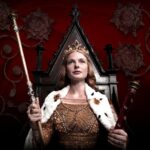
I didn’t really know much about Jacquetta of Luxembourg until I watched the White Queen and the White Princess on Starz. She struck me as someone who had way more of a story than just being the mum of Elizabeth Woodville, and it turns out that she does. Her story stands on its own, and it’s full of decisions that shaped the course of English history.

She moved in circles where power shifted overnight, where marriages carried more weight than battles, and where family ties could make or break a crown. And somehow, Jacquetta always found her way into the middle of it.
Table of Contents
Her’s is a story of a woman whose name appears in trial records, royal pardons, and even in the margins of rare manuscripts. Once you start following the threads of her life, you’ll realize how much she shaped the story we think we know.
Origins and Family Power Web
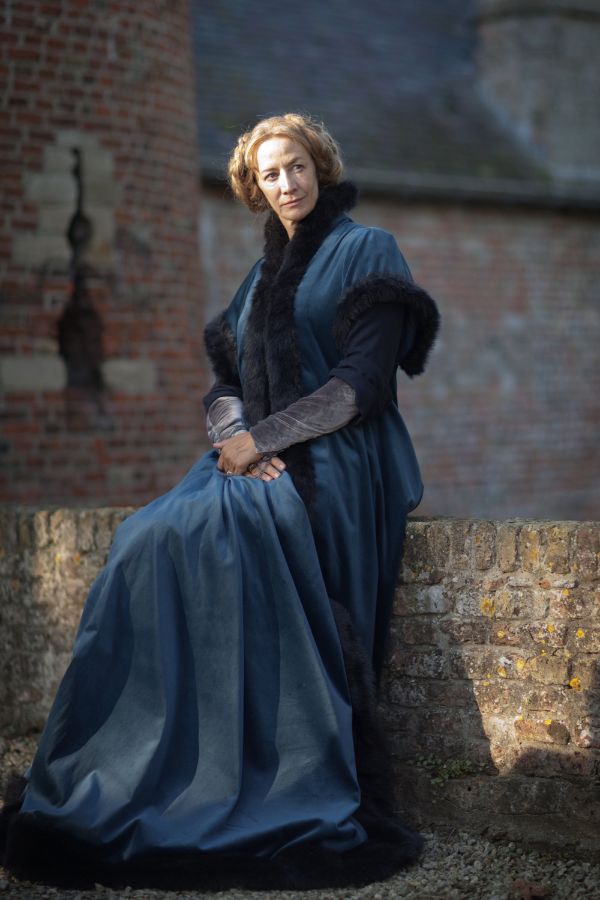
Jacquetta of Luxembourg was born around 1415 or 1416, the eldest of nine children of Pierre of Luxembourg, Count of Saint-Pol, Conversano, and Brienne, and Margaret of Baux of Andria. Her family held lands in northern France and southern Italy, so from the start her life was tied to a wide network of influence. Being the eldest daughter meant she carried expectations early on, from household management to marriage negotiations that could shift alliances across Europe.
Her childhood isn’t recorded in detail, but we can piece together some likely settings. The family’s holdings in Brienne, in northern France, were probably where she spent much of her early life. The region was deeply affected by the Hundred Years’ War, so she would have grown up against a backdrop of soldiers on the move, castles under pressure, and nobles balancing loyalty and survival.
Education for a girl of her rank would have included languages, the running of estates, and court etiquette. It’s clear she learned quickly how to navigate a world where her future was as much about politics as it was about family.
Her uncle John II of Luxembourg is remembered for holding Joan of Arc prisoner at Beaurevoir and eventually selling her to the English for 10,000 livres. That single act speaks volumes about how her family operated: power and wealth often came before loyalty or principle. Jacquetta would have grown up knowing that hard choices and ruthless decisions were part of her bloodline.
Her mother’s family, the Baux of Provence, claimed descent from the Magi, and the Star of Bethlehem shone in their coat of arms. In their Provençal world, it was a point of pride, a link to a holy story. Later in England, however, Jacquetta’s enemies twisted those same threads of legend into whispers of sorcery and witchcraft. What began as a badge of honor in her childhood would eventually be used as a weapon against her.
First Marriage, Duchess of Bedford
In April 1433, Jacquetta married John of Lancaster, Duke of Bedford, in Thérouanne Cathedral. He was the uncle of Henry VI and one of the most powerful men in Europe. For Bedford, the match was about more than romance. It pulled Jacquetta’s Luxembourg family into the English camp and tightened ties to Burgundy. At least, that was the idea. Burgundy’s Duke, Philip the Good, took offense at not being consulted, and the alliance soured.
Jacquetta moved to England soon after. She was made an English denizen and given robes of the Garter, something Bedford’s first wife never had. Coventry welcomed her with a gift of money and a silver-gilt cup, a public nod to her new role in England’s royal family. For a teenager, it was a swift rise to the top.
Two years later, in September 1435, Bedford died in Rouen. Jacquetta was nineteen and a widow, but she kept the rank of Duchess of Bedford for the rest of her life. That title gave her precedence at court second only to the queen. Bedford even tried to secure her future with lands across England and France, though the crown did not let her keep them all.
Her official dower was confirmed in 1436. It included estates in England, Calais, and the Channel Islands, but there was one catch. She could not remarry without royal permission.
The Scandal That Made a Dynasty
On March 23, 1437, Jacquetta remarried without the king’s consent. Her choice was Richard Woodville, a knight from Northamptonshire who had served as steward in the household of her first husband, the Duke of Bedford. For a woman who still carried the title of Duchess of Bedford, this was explosive. She had married far beneath her rank, and everyone at court knew it.
The question is why. Unlike most high-born marriages of the fifteenth century, this one offered Jacquetta no clear political or financial gain. She already had wealth and standing of her own. Richard’s family, while respectable, was not powerful enough to strengthen her position.
The secrecy of the match and the huge risk she took suggest something unusual for the time: she married for affection. It’s telling that she and Richard went on to have more than a dozen children and stayed together for over thirty years.
The crown came down hard at first. The couple was fined one thousand pounds, a massive sum, but on October 24, 1437, they received a pardon. Jacquetta kept her dower, which included estates in England, Calais, and the Channel Islands. With that income secured, she and Richard built their household at Grafton Regis in Northamptonshire.
From there, they began raising the family that would change English history. What began as a scandal in 1437 became the foundation of a dynasty, one that would eventually put Elizabeth Woodville on the throne.
Service at Two Courts
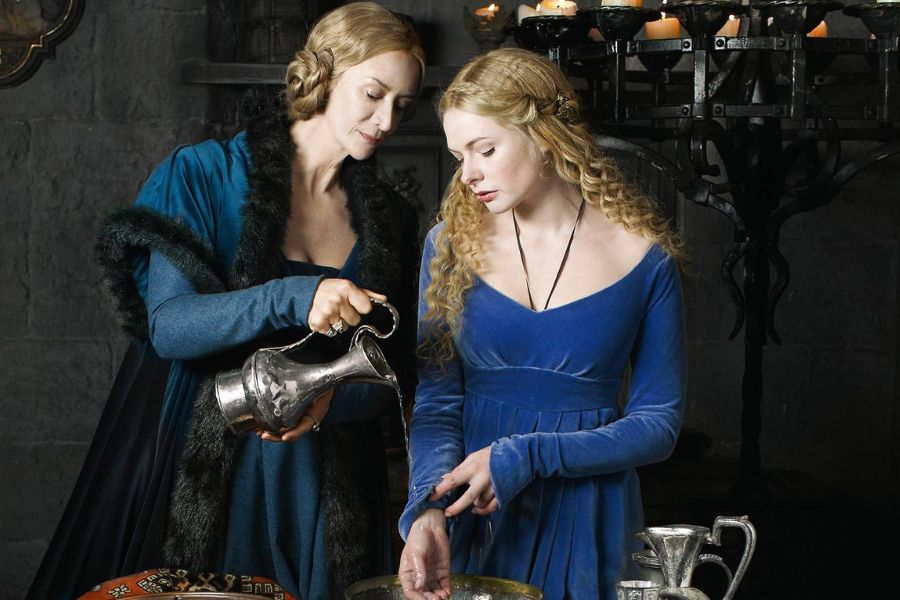
In November 1444, Jacquetta joined the fleet sent to bring Margaret of Anjou to England. The duchess of Suffolk reserved the Swallow for Jacquetta and her own retinue. Richard Woodville sailed in a smaller boat. Margaret reached England in spring 1445 and married Henry VI at Titchfield Abbey on April 23.
Court life paid attention to rank and to who stood where. Between 1445 and 1453, Margaret’s jewel accounts show how high Jacquetta sat. Her servants received New Year gifts almost every year and at the top rate of 66 shillings and 8 pence.
In 1447, Jacquetta herself took a silver cup worth more than thirty-five pounds. In 1452, she received a gold tablet set with sapphires. These are the little records that tell you who mattered in the room.
Richard became Lord Rivers on May 9, 1448. He took the Garter on August 4, 1450. At the same time, Jacquetta raised a growing family at Grafton Regis. By 1453, the year Margaret gave birth to Prince Edward, Jacquetta had several young children and a secure base in Northamptonshire that kept her within reach of London.
February 1461 shows her political weight in action. As Margaret’s army moved on the capital, London’s leaders sent a small delegation to ask for mercy. The Great Chronicle names three women among the envoys. The widowed Duchess of Buckingham. Lady Scales. And Jacquetta. It is one of the rare moments where we see women used as direct go-betweens in a crisis.
There is a London story from 1468 that shows how people saw her influence. During the prosecution of the wealthy alderman Thomas Cook, a chronicler claimed Jacquetta and Lord Rivers were angry when the judge acquitted Cook of treason. The tale says they pushed for his removal from office and that a dispute over rich tapestries fed their fury.
Children and the Web Jacquetta Built
Jacquetta and Richard Woodville had at least fourteen children together, and nearly every one of them was used to cement alliances. Through her daughters’ marriages, Jacquetta tied the Woodvilles to some of the most powerful families in England. Through her sons, she planted her line at the heart of politics, literature, and war.
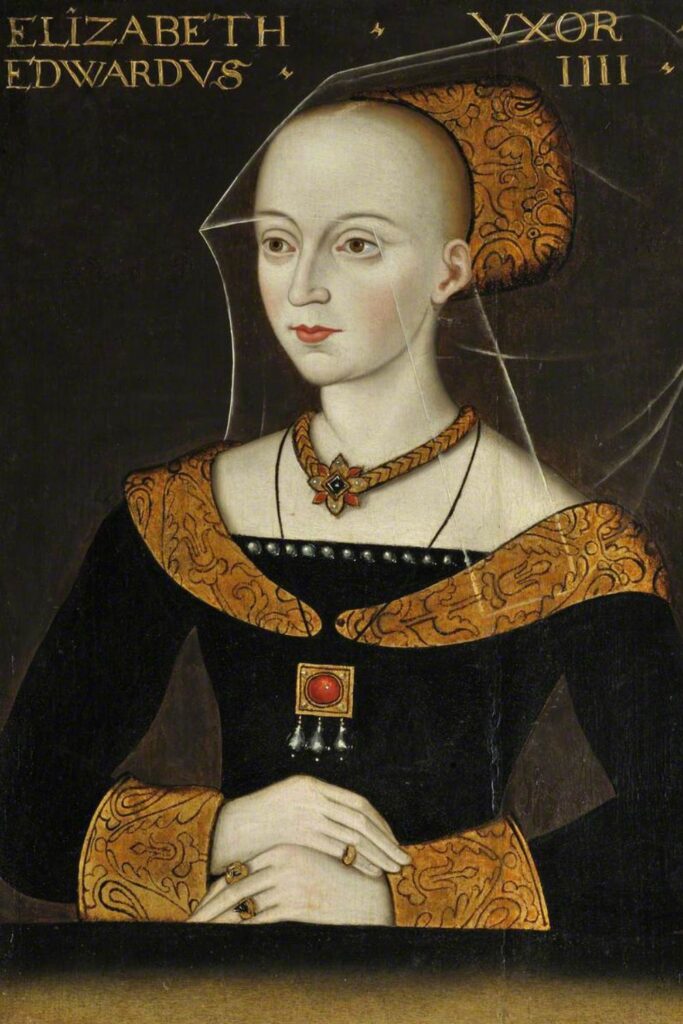
Their eldest and most famous child was Elizabeth Woodville. In 1464, she secretly married Edward IV, making Jacquetta’s daughter queen of England. That single union launched the Woodvilles into the royal family and set off years of tension with the nobility, who resented their sudden rise.
Anthony Woodville, later the 2nd Earl Rivers, became one of the most cultured figures of the age. He was a soldier, diplomat, and literary patron who translated works into English and supported William Caxton, England’s first printer. His influence gave the printing press an early foothold in England. Anthony stayed loyal to Edward IV but was captured and executed by Richard III in 1483.
John Woodville’s marriage was one of the most notorious matches of the century. In 1465, at about twenty, he married Katherine Neville, dowager Duchess of Norfolk, who was at least sixty. The union was widely ridiculed and inflamed hostility toward the Woodvilles. John paid for it with his life when Warwick rebelled in 1469. Captured at the Battle of Edgecote, he was executed alongside his father.
The daughters of Jacquetta spread her influence even further. Jacquetta Woodville married John le Strange, Lord Strange of Knokyn, binding the family into the marcher lords on the Welsh border. Anne Woodville married William, Viscount Bourchier, tying the Woodvilles to a family with royal Plantagenet blood.
Katherine Woodville married Henry Stafford, 2nd Duke of Buckingham. That made Jacquetta the grandmother of the future Duke of Buckingham, who would play a major role in the events of 1483, turning against Richard III before being executed himself.
Mary Woodville married William Herbert, Earl of Pembroke, whose father had been one of the king’s strongest allies in Wales. Margaret Woodville married Thomas FitzAlan, heir to the Earl of Arundel, linking Jacquetta’s descendants to another powerful earldom. Martha, Agnes, and Eleanor Woodville made advantageous marriages as well, each one strengthening the family’s grip across regions.
By the time of her death in 1472, Jacquetta had secured a network of marriages that reached into nearly every corner of the English nobility. What began as a scandalous match with a knight had multiplied into a dynasty. Through her children, Jacquetta’s hand touched the throne, the printing press, and some of the most dramatic rebellions of the Wars of the Roses.
The Witchcraft Case, 1469 to Early 1470
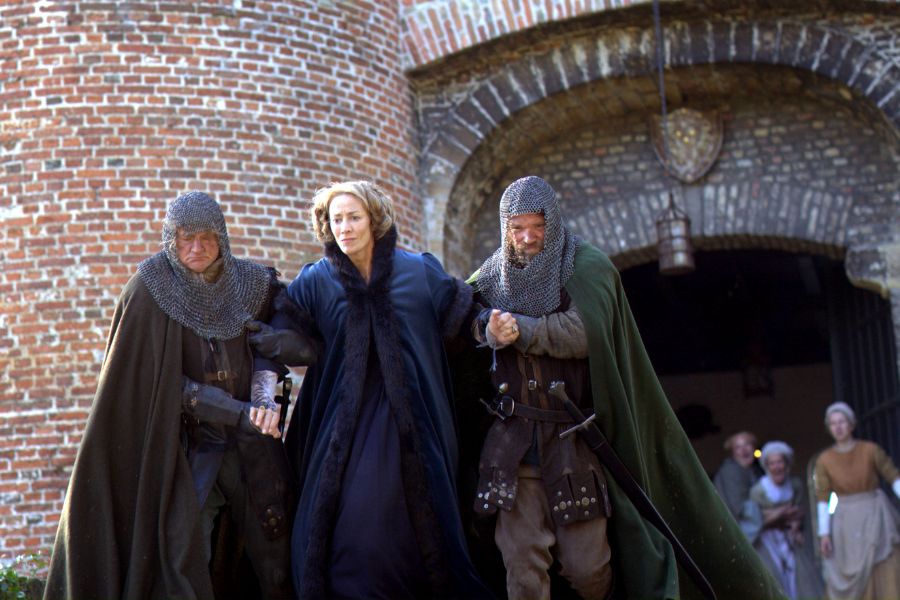
By the summer of 1469, the Woodvilles were at the height of their influence, and their enemies had had enough. The Earl of Warwick, once Edward IV’s strongest ally, had turned against him. After Warwick’s forces defeated a royal army at the Battle of Edgecote in July 1469, he moved to cut down the Woodville family. Richard Woodville, Earl Rivers, and his son John were captured and executed without trial. With the men gone, Warwick’s regime turned on Jacquetta.
The charge they chose was witchcraft. It was a powerful weapon in fifteenth-century politics because it mixed fear, scandal, and the idea of hidden influence. A Northamptonshire man named Thomas Wake brought forward a small lead “image,” claiming it was evidence of sorcery made by Jacquetta.
Local men from the Woodvilles’ own neighborhood gave statements: Henry Kyngeston and John Daunger of Stoke Bruerne, just a short ride from the Woodvilles’ estate at Grafton Regis. The geography mattered, as these were not outsiders; they were men who lived in the shadow of Woodville lands, and their involvement gave the accusations weight.
The records don’t describe the image in detail, only that it was meant to represent the king and queen and was linked to spells or enchantments. That alone was enough to stir suspicion. In a climate where Warwick needed to justify his coup, pointing to witchcraft gave a simple explanation: the Woodvilles had bewitched the king into marrying Elizabeth and lifting her family to power.
By early 1470, the case collapsed. Edward IV regained control and moved quickly to clear Jacquetta’s name. A royal proclamation declared her innocent, and the charges were dismissed. Yet the stain of the accusation lingered. Years later, in 1484, Richard III’s parliament revived the story in the Titulus Regius, repeating the claim that Elizabeth Woodville’s rise was the result of “sorcerie and witchcrafte” practiced by her mother.
For Jacquetta, the episode showed how fragile status could be. One year, she was the mother of the queen and the matriarch of a powerful family. Next, she was accused of using magic to control a king.
Myth, Propaganda, and the Melusine Thread
Accusations of witchcraft didn’t appear in a vacuum. They had a ready-made story to lean on, one that had followed Jacquetta since birth. The Luxembourg family carried with it the legend of Melusine, a mythical water spirit said to have married into their line. In French lore, Melusine was half-woman, half-serpent, cursed to reveal her true form only in secret. The myth had been used for generations to give the family an aura of wonder and power.
For Jacquetta’s enemies, it was too good to resist. A woman descended from a mysterious figure who could transform at will fits perfectly with claims of hidden influence and sorcery. What had once been a family legend of prestige in Luxembourg and Burgundy became, in England, a tool to darken her reputation. It gave a familiar face to the suspicion that she and her daughter had used unnatural means to win the king’s favor.
This was not the first time Melusine had been bent to political use. In Burgundy, dukes used her as a founding ancestor to bolster their dynastic story. In England, the same legend was turned inside out. Where one court saw legitimacy, another saw danger. Jacquetta found herself caught between myth and propaganda, a living woman forced to carry the weight of a family story that others twisted into proof of witchcraft.
Final Years and Death
By the early 1470s, Jacquetta had lived through upheavals that would have broken many families. She had watched her husband and son executed in 1469, endured a public witchcraft case in 1470, and stood by her daughter when Edward IV was driven into exile and Elizabeth sought sanctuary at Westminster.
When Edward reclaimed the throne in April 1471, the Woodvilles were restored to favor. Jacquetta’s place at court was secure again, though the scars of the previous years must have been deep.
Her last known public appearance comes from those turbulent months in 1470 when she entered sanctuary with Elizabeth. After that, she slips from the record. Jacquetta died on May 30, 1472, probably at her estate at Grafton Regis in Northamptonshire. She was around fifty-six years old.
Despite her prominence, her final resting place is unknown. No monument or tomb survives, which is striking for a woman of her rank. It may have been a deliberate choice to avoid drawing attention at a time when her family still faced hostility.

Kylie Lang is a nationally syndicated travel journalist with bylines on the Associated Press Wire & more, a medieval history writer, and the founder and lead author of Tales of the Middle Ages (talesofthemiddleages.com). She holds a BA (Honours) in History from the University of Kent and is a member of the British Guild of Travel Writers.