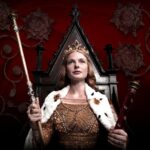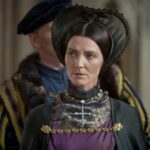
I love it when TV shows shine the spotlight on women in history, especially the ones that are often overshadowed by their more famous counterparts. Anne Boleyn and Joan of Arc, I’m looking at you. So, when Starz created the series, The White Queen and The White Princess, followed by The Spanish Princess, I was thrilled. Finally, someone was discussing these remarkable women who played a significant role in the Tudor dynasty in England.
Since watching all three shows and reading Philippa Gregory’s books on which they were based, I’ve realized just how much theatrical license was taken with these shows. Now, of course, I understand that we need a bit of drama, otherwise people won’t watch. However, these people had enough drama in their lives without inventing it. I’m a history gal, and I want my history to be based on fact, then you can embellish the costumes and language a little after that.
Table of Contents
Which leads me to the question, what did The White Princess get right about Elizabeth of York, and what did they get wrong? What’s complete and utter fiction, and what has a basis of truth? I’ve done my research and I have ten facts, some true, some complete and utter….garbage!

Sorting Fact from Fiction in The White Princess
For most people, The White Princess was the first time Elizabeth of York stepped into the spotlight on screen. That makes it easy to take the series at face value, but her real story is far more complicated than the scripts suggest. Some of the drama has roots in fact, while other parts are pure invention. Here are eight claims made about Elizabeth, and how they stack up against the history.
Elizabeth of York: The Most Eligible Princess in Europe – True
Elizabeth of York had the kind of pedigree that made her the ultimate marriage prize of her day. She was the eldest daughter of King Edward IV and Elizabeth Woodville, a couple whose own union caused quite the stir. Edward was expected to make a political match, but instead, he fell for a widowed commoner. Elizabeth Woodville turned down his advances until he offered her marriage, which shocked the court and set tongues wagging.
From that scandalous beginning came Elizabeth of York, who grew up with beauty and influence in her bloodline. Contemporary accounts describe her as blonde, blue-eyed, and striking. Chroniclers also praised her intelligence and kindness, pointing out her devotion to her many brothers and sisters. With her royal status and looks, it’s no wonder she was considered the catch of Christendom.

Elizabeth Slept With Richard III – Probably False
Few stories about Elizabeth of York are as sensational as the claim that she had an affair with her uncle, Richard III. Richard was the man accused of taking the throne from her brothers, the young princes who vanished from the Tower of London. After their disappearance, Elizabeth and her sisters were brought to Richard’s court, which gave rise to rumors that he showed her more than an uncle’s attention.
The strongest piece of “evidence” is the so-called Croydon letter, in which Elizabeth supposedly begged the Duke of Norfolk to help her marry Richard, calling him her “only joy.” The problem is that the letter vanished long ago. People claimed to have seen it in the sixteenth century, but it has never been found.
Without it, the story is impossible to prove. Philippa Gregory leaned into this version in The White Queen, but the scene of Elizabeth sneaking into Richard’s tent on the eve of Bosworth is pure invention. In reality, she was hundreds of miles away at Sheriff Hutton Castle in Yorkshire.

Hooked on the Middle Ages? Get more stories like this one in your inbox.
Margaret Beaufort as the Wicked Mother-in-Law – False
Television loves a villain, and Margaret Beaufort often gets cast in that role. On screen, she’s cold, scheming, and forever clashing with Elizabeth of York. The reality is far less dramatic. Margaret and Elizabeth Woodville, Elizabeth’s mother, were the ones who struck the deal to marry their children in the first place. Undermining that match would have gone against everything Margaret worked for.
Margaret certainly held unusual power for a woman of her time. As “My Lady, the King’s Mother,” she enjoyed influence, wealth, and her own household. She was deeply religious and highly educated, which set her apart in a male-dominated court. But she wasn’t simply a domineering figure.
She took a personal interest in Elizabeth’s sisters, particularly Cecily of York, who caused a scandal by marrying a commoner. Instead of turning her back, Margaret gave Cecily a home and even rooms at her palace of Collyweston.
Far from being the snarling matriarch of TV drama, Margaret was a forceful but pragmatic woman who helped secure the Tudor dynasty. She could be strong-willed, but there’s no evidence of the endless battles with Elizabeth that make good television.

Elizabeth of York, the Witch – False
The White Princess leans hard into the idea that Elizabeth of York inherited magical powers from her mother, Elizabeth Woodville. The show paints the Woodville women as witches constantly casting spells to influence the throne. It makes for great drama, but there’s no evidence that Elizabeth or her mother ever practiced witchcraft.
The roots of the rumor go back to Elizabeth Woodville’s sudden rise. She was a commoner and a widow when Edward IV married her, which upset powerful nobles who expected him to make a dynastic match. Her swift climb to queenship seemed suspicious to critics who didn’t want to accept that Edward might have married for love. Whispers began that she used sorcery to ensnare him, and some even claimed she dabbled in darker magic to protect her family’s interests.
Those accusations never translated into formal charges, and Elizabeth Woodville continued to wield influence as queen consort and queen mother. But the slander stuck, and centuries late, storytellers found it irresistible. Linking Elizabeth of York to those same tales gave her an air of mystery that the TV series exploited. In reality, Elizabeth’s reputation was built on loyalty, piety, and diplomacy, not potions and spells.
Henry VIII Was a Mama’s Boy – True
Arthur, the firstborn, was always meant to be king. From a young age, he had his own household, his own tutors, and even a Spanish bride lined up by the time he was ten. Henry, the second son, grew up in a different world. He spent much more time with his mother and sisters, and his bond with Elizabeth of York was close.
Henry inherited the tall build and confident presence of his grandfather, Edward IV, more than the cautious personality of his father. When Elizabeth died suddenly after childbirth in 1503, Henry was only eleven. Her loss hit him hard. He rarely spoke about her, but years later, he admitted to Erasmus that the news of his mother’s death had been “hateful intelligence.”
Some historians suggest that Henry held onto an idealized image of Elizabeth for the rest of his life. John Matusiak argued that Henry sought the same perfection in his wives that he had once seen in his mother, which left him constantly disappointed. Whether or not that’s true, there’s no doubt that Elizabeth’s presence shaped the young prince who would one day become England’s most infamous king.

Henry VII Raped Elizabeth – False
In The White Princess, Henry VII is shown as forcing himself on Elizabeth of York, threatening her, and treating her with contempt. It makes for shocking television, but history doesn’t support it, and there is no account of him raping her. Their marriage lasted 17 years, and there are no records of Henry being unfaithful or cruel. By all accounts, it was a stable royal partnership, which was rare enough in their world.
Elizabeth gave birth to seven children, four of whom survived into their teens and beyond. When she died at 36, after complications in childbirth, Henry was devastated. He withdrew from public life for a time, never remarried, and is said to have mourned her deeply. That in itself was unusual for a king who could have secured another alliance by taking a second wife.
Elizabeth’s role as queen was largely domestic. She focused on her children and courtly duties while Henry leaned on his mother, Margaret Beaufort, for political guidance. Given Elizabeth’s childhood, which was scarred by the violence of the Wars of the Roses, she may have welcomed a quieter role away from the brutal world of politics.
Elizabeth Helped Poison Queen Anne – False
When Richard III and Queen Anne lost their only son, whispers began that Richard might look to remarry. Court gossip quickly turned to Elizabeth of York, his teenage niece. That possibility grew louder as Queen Anne’s health failed, and some even suggested Elizabeth might benefit if her aunt conveniently died.
Shakespeare’s Richard III added fuel centuries later by portraying Anne as the doomed wife of a ruthless, power-hungry king. In reality, Queen Anne died in 1485, most likely from tuberculosis or another common illness of the time. There’s no evidence Richard murdered her, and certainly nothing to suggest Elizabeth was involved.
In fact, Richard made a public statement after Anne’s death, declaring in a clear voice that he had no intention of marrying his niece. Soon after, he began discussing marriage to the sister of the king of Portugal. Elizabeth, meanwhile, was removed from his court, which hardly fits the image of a secret co-conspirator.
Elizabeth and Henry Traveled to Spain – False
One of the more adventurous storylines in The White Princess shows Elizabeth of York and Henry VII sailing to Spain to meet Ferdinand and Isabella. It makes for a dramatic setting and heightens the tension around Arthur’s betrothal to Catherine of Aragon, but it never happened.
In truth, neither Henry nor Elizabeth ever went to Spain. Ambassadors, letters, and careful diplomacy carried out negotiations for the marriage. Arthur and Catherine’s union was too important to leave to chance, but it was handled the way most royal marriages were in the period: at a distance.
Elizabeth herself never left England during her reign. Travel for queens was rare and often dangerous, with politics handled through envoys. The first English monarch to actually set foot in Spain was Queen Victoria centuries later, during the nineteenth century. So while the series gives Elizabeth and Henry a dramatic trip abroad, the real story was one of paperwork, politics, and patience.

Two Other Fascinating Facts You Probably Didn’t Know About Elizabeth of York
Queen Elizabeth II Is Descended From Elizabeth of York
The late Queen Elizabeth II could trace her ancestry directly back to Elizabeth of York. The link runs through Elizabeth’s daughter Margaret Tudor, who married James IV of Scotland. Their descendants became the Stuart kings, and when James VI of Scotland also became James I of England, the two crowns were united.
From there, the line passed through the Stuarts, then the Hanoverians, and eventually to the Windsors. Elizabeth of York sits at the root of that family tree, connecting the Plantagenets, the Tudors, and the Stuarts. Without her, there would be no unbroken royal line leading to the modern British monarchy.
Elizabeth of York as the Queen of Hearts
Playing cards arrived in Europe in the fourteenth century, and the suits we know today, hearts, diamonds, spades, and clubs, were first used in France in the late 1400s. Not long after, a familiar image began appearing on the Queen of Hearts card: a woman with the same pointed gable hood that Elizabeth of York often wore.
While no original Tudor decks survive, later sets strongly resemble her likeness. The story goes that Henry VII, who was devastated by Elizabeth’s death, had her image fixed on the Queen of Hearts because she loved card games. Whether or not that detail is true, the resemblance is striking enough that Elizabeth of York is still thought to be the face we see every time we shuffle a deck.
Love a good medieval story?
Join our readers and get tales of kings, queens, castles and ordinary medieval lives straight to your inbox.

Kylie Lang is a nationally syndicated travel journalist with bylines on the Associated Press Wire & more, a medieval history writer, and the founder and lead author of Tales of the Middle Ages (talesofthemiddleages.com). She holds a BA (Honours) in History from the University of Kent and is a member of the British Guild of Travel Writers.