
Born in the glittering court of Spain, Anne of Austria arrived in France at fourteen with the weight of two empires on her shoulders and a marriage contract in her hand. Her name promised grandeur, but her early years were anything but golden. Life at the French court was cold, political, and riddled with mistrust. And for Anne, it was just the beginning of a life caught between duty and survival.
Her story is one of whispered betrayal and a rivalry with one of the most powerful men in Europe. There were years of silence in her marriage, endless pressure to produce an heir, and scandals that tied her name to daring plots. She fought for power when everyone expected her to fade into the background, and she did it at a time when loyalty could cost you everything.
Table of Contents
By the time she died, Anne had outlived her enemies and seen her son become the most powerful monarch in Europe. But the road there was brutal, and the truth is far more gripping than the romantic myths spun by novels and films. Ready to meet the real woman behind the crown?
Early Life & Marriage
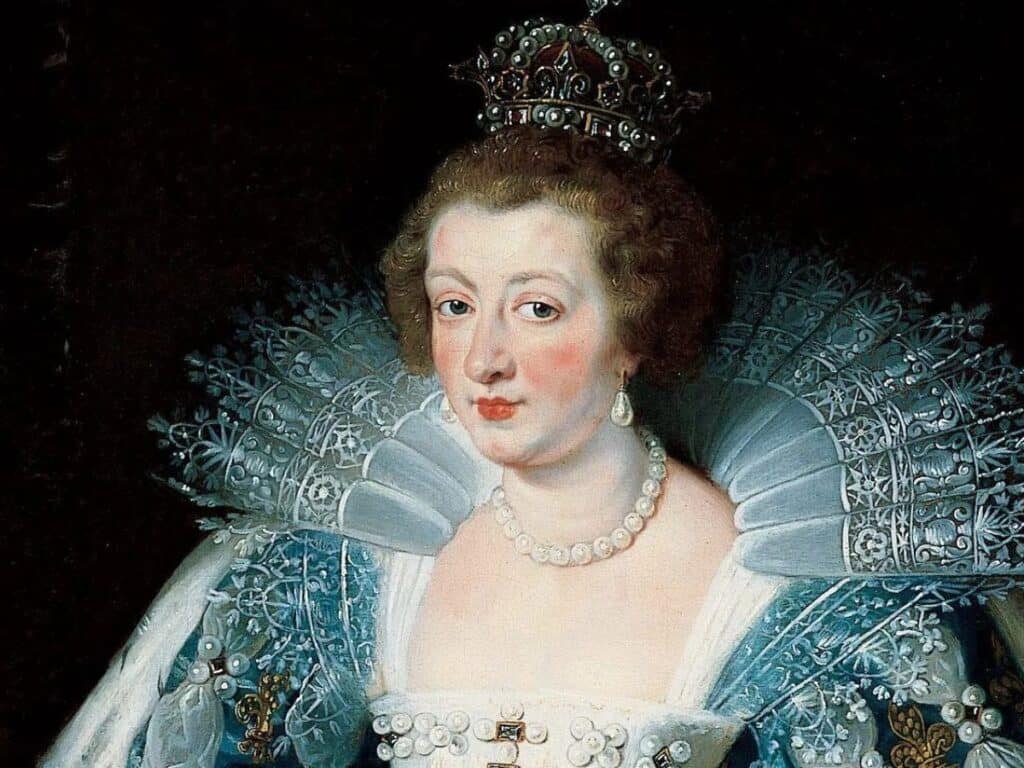
Anne was born on September 22, 1601, in Valladolid, Spain, into one of the most powerful dynasties in Europe. Her father, Philip III of Spain, ruled over a vast empire that stretched across continents, and her mother, Margaret of Austria, came from the Austrian branch of the same Habsburg family. The Habsburgs were all about strategy, and Anne was a key piece on their political chessboard from the moment she entered the world.
She grew up in a court steeped in Catholic tradition and strict Spanish etiquette. Every movement, every word was measured. It was a world where duty was prized above happiness, and Anne learned early that her life was not her own. At eleven, her future was sealed: she was promised to Louis XIII of France. The marriage was meant to ease tensions between the Habsburgs and the Bourbons, two dynasties that rarely saw eye to eye. Anne probably understood the weight of it, but what choice did she have?
In November 1615, at just fourteen, Anne left Spain for her new life in France. The wedding was staged with opulence in Bordeaux. There were jousts, fireworks, and pageantry that left onlookers dazzled. But what they didn’t see was the awkwardness between the bride and groom once the festivities ended.
Louis was painfully shy, withdrawn, and already more devoted to hunting and his beloved hunting dogs than to any notion of romance. Anne, raised in an intensely Catholic and ceremonious world, expected her husband to play the role of gallant king. Instead, she met a boy who kept his distance.
The first night should have sealed the union. It didn’t. Accounts suggest that the marriage went unconsummated for years. The reasons remain debated: was it Louis’s extreme reserve, youthful hesitation, or lack of interest? Whatever the truth, it left Anne exposed to court gossip. In a society where queens were judged by their ability to produce heirs, the delay was a public humiliation. Her position, already fragile as a Spanish outsider, became even more precarious.

Anne’s Early Years at Court
Anne’s early years at court were marked by isolation. She spoke little French and clung to her Spanish ladies, whose presence irritated the French nobility. Her household followed Spanish customs, from dress to protocol, which set her apart and earned whispers that she was too proud or too rigid.
Louis rarely visited her apartments, and when he did, conversation was stilted. They shared formal meals and ceremonies, but not intimacy. Observers at court described Anne as graceful yet remote, a queen consort who smiled out of duty but betrayed little warmth.
Small missteps became fodder for criticism. Anne once tripped during a court dance, and the story spread as proof she was unsuited to French refinement. Her devotion to Catholic ritual was another point of contention in a court where political factions vied for influence.
Even her wardrobe choices were dissected, with some accusing her of flaunting Spanish style as a quiet act of defiance. Underneath it all was a current of hostility stoked by her mother-in-law, Marie de’ Medici, who kept a firm grip on her son and saw Anne as a rival for influence.
Behind the scenes, Anne faced relentless pressure. Letters from this time hint at her growing unhappiness. She was young, far from home, with a husband who offered little companionship and a court eager to see her fail. Yet, for all the coldness of her marriage, Anne learned to endure. She was living a life dictated by others, but she was already learning the skills that would one day make her a formidable political figure.
Anne’s Relationships with Women at Court
For Anne, the women around her could be anchors or whirlpools. At a court obsessed with gossip and appearances, every friendship carried weight, and hers were no exception.
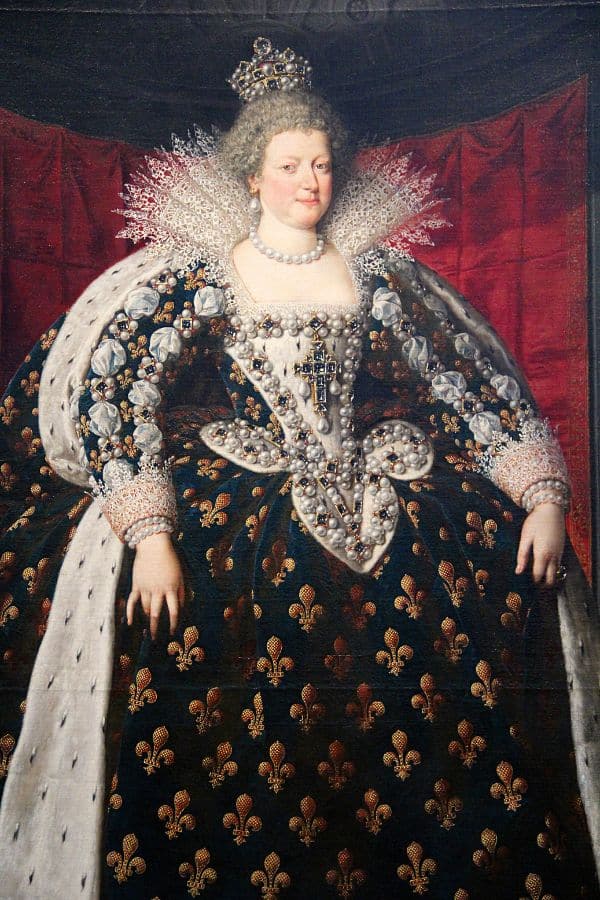
Her most challenging relationship was with Marie de’ Medici, her mother-in-law. Marie had been queen regent before Louis came of age, and she wasn’t ready to surrender influence to a teenage Spanish bride. From the beginning, she treated Anne with suspicion. Marie saw her as a Habsburg plant, a threat to French interests, and she acted on that belief.
She meddled in Anne’s household, replacing loyal Spanish attendants with French ladies who owed her allegiance. To Anne, it felt like living under constant watch, and letters from her early years hint at how oppressive that scrutiny became. Publicly, Anne played the dutiful daughter-in-law, but their relationship never warmed. Every gesture between them was calculated, every word weighed like a weapon.
Then there was the Duchesse de Chevreuse, the friend who brought color to Anne’s gray existence. Marie de Rohan was everything Anne was not: daring, flamboyant, and drawn to risk like a moth to flame. She loved scandal as much as she loved adventure, and the young queen found her intoxicating.

With Chevreuse, Anne laughed, plotted minor rebellions against rigid etiquette, and escaped the crushing loneliness of her marriage. It was the kind of friendship that courts thrive on; close enough to fuel whispers, bold enough to cause trouble. Chevreuse was fiercely loyal to Anne, but her taste for intrigue would pull the queen into dangerous waters later.
Other women hovered in Anne’s circle, some allies, some opportunists. Ladies-in-waiting played their own games, aligning with factions, trading secrets for favor. In a world where alliances shifted like sand, Anne had to navigate layers of pretense just to find a confidante.
Trust was a luxury she could barely afford, yet friendship was something she craved. Isolated from Louis, alienated from much of the court, these women became her lifeline, though as history would show, they also became the source of her greatest troubles.
Her Battles with Richelieu and the Chevreuse Connection
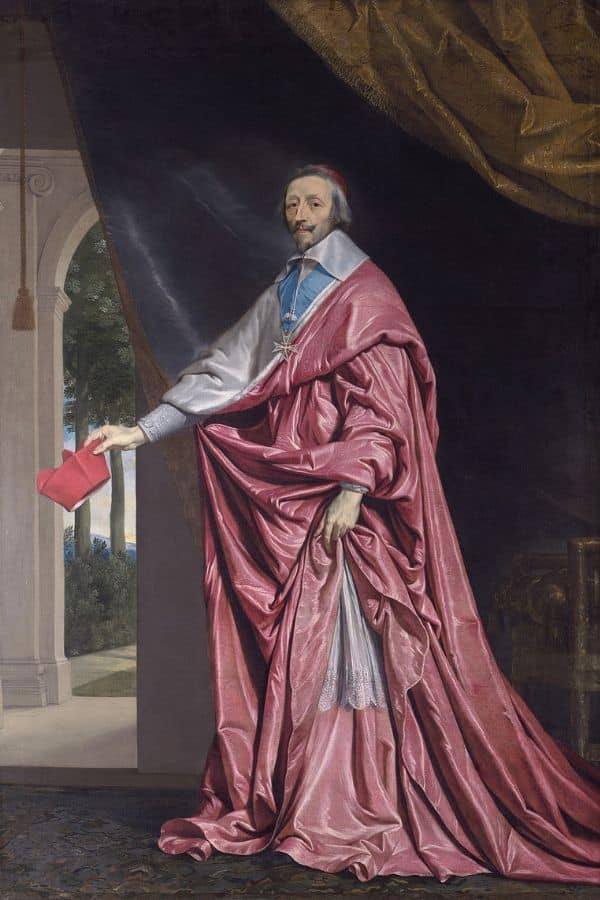
Anne’s early years as queen were marked by cold indifference from Louis XIII, but her real battles began with Cardinal Richelieu. Richelieu was the iron hand behind the throne, a man determined to crush anything that threatened royal authority, even if it meant clashing with the queen herself. Anne became one of his obsessions, and their relationship was built on mutual distrust.
Richelieu saw Anne as a potential traitor. She was Spanish, the sister of Philip IV, and France was at war with Spain for much of her marriage. In his eyes, that made her loyalty suspect. He had reason to worry because Anne did nothing to dispel the rumors. She had a secretive nature and surrounded herself with people who loved intrigue, none more so than the Duchesse de Chevreuse.
Marie de Rohan, Duchesse de Chevreuse, was the firebrand who dragged Anne into plots that could have toppled her. Chevreuse thrived on scandal and rebellion. She despised Richelieu and saw Anne as a useful ally in her war against him. Together, they dabbled in schemes, some laughably naive, others dangerously bold. When Chevreuse backed a conspiracy to overthrow Richelieu, Anne’s name surfaced as a silent supporter. She didn’t act openly, but her sympathy for the plotters gave Richelieu the ammunition he needed to keep her under surveillance.
Things escalated in 1637 with the infamous Affair of the Spanish Letters. Anne had been secretly corresponding with her brother, the King of Spain, through coded letters hidden inside the covers of devotional books. The letters passed through the hands of friars and couriers before reaching Spain; a network as risky as it was elaborate.
When Richelieu uncovered the operation, the scandal exploded. Anne was interrogated in a formal inquiry that left her humiliated. She swore under oath that she would never again write to Spain, but the damage was done. Richelieu had broken her circle of friends, driven Chevreuse into exile, and left Anne politically isolated.
For the rest of Richelieu’s life, Anne lived under his shadow. Every move she made was watched. Every friendship was questioned. She played the part of the subdued queen, but inside she seethed. It was a lesson in survival: trust no one completely, and keep your enemies closer than your friends. That lesson would shape how she ruled when her own turn for power finally came.
Hooked on the Middle Ages? Get more stories like this one in your inbox.
The Pressure of Producing an Heir
Not only was she dealing with Richelieu and a husband who seemingly had no interest in her, but she also had the pressure of producing an heir. From the day Anne married Louis XIII, her purpose in the eyes of France was clear: give the king a son. Everything else, her beauty, her lineage, even her piety, meant little compared to that single expectation. In a kingdom still haunted by memories of civil war, the line of succession was sacred. If Anne failed, France risked instability, and everyone knew it.
Years passed, and the cradle in the royal nursery stayed empty. At first, the court murmured excuses. They were both young, barely more than children themselves. But as time dragged on, whispers hardened into accusations. Some blamed Louis for his coldness, others hinted Anne was cursed or incapable. Her rivals used it to undermine her standing. Even the smallest show of indifference from the king became a public humiliation.
Behind closed doors, the strain was relentless. Anne endured miscarriages in silence, each one more crushing than the last. They were treated not as personal tragedies but as failures of duty. There was no counseling available in those days, and no sympathy or understanding either.
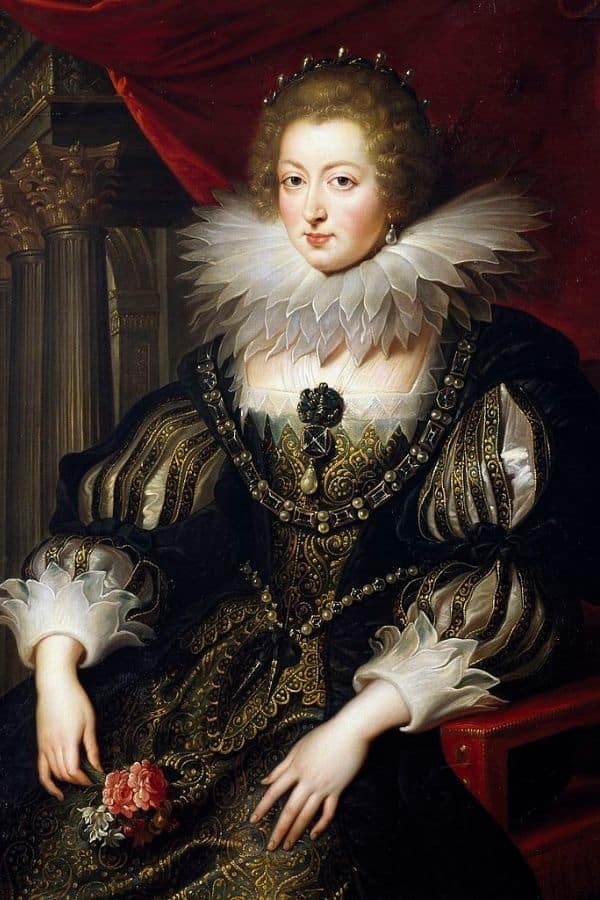
When years stretched into decades without a living child, rumors grew wild. Pamphlets suggested annulment. Courtiers speculated about who Louis might marry instead. Some accused Anne of being too devoted to her Spanish family, as if her womb refused to serve France out of loyalty to Madrid. In reality, she carried the burden of a marriage that lacked intimacy and a husband who kept his distance except when duty called.
By the late 1630s, the situation was desperate. Anne was in her thirties, past what most considered her prime childbearing years. The pressure to produce an heir had become almost grotesque in its intensity. Prayers were ordered across France. Holy relics were paraded in processions. At Val-de-Grâce, a convent Anne cherished, she vowed that if God gave her a son, she would dedicate the church to Him in gratitude. That vow would one day shape one of Paris’s great baroque monuments, but in that moment it was an act of raw hope.
Anne as Mother of the Sun King and Her Shift in Power
It took 23 years, but in 1638, the impossible happened. Anne gave birth to a son, Louis-Dieudonné, the future Sun King, meaning “God-given”. Bells rang across France. Priests held processions of thanksgiving. For Anne, it was vindication after decades of misery.
Louis XIII was overjoyed, too, though his joy didn’t mend the years of coldness between them. Their marriage never turned tender, but at least it now had a purpose fulfilled. And when a second son, Philippe, arrived two years later, Anne’s position was secure beyond question. The queen who once seemed powerless now held the future of the monarchy in her arms. It gave her something she had never truly possessed at court: authority.
Anne leaned into her new role as mother. She was fiercely protective of both boys, especially the frail Philippe, but her focus was always on the heir. Letters from this time reveal an almost obsessive devotion to Louis. She saw in him more than a son; he was her redemption, her legacy, and her shield against those who had belittled her for years.
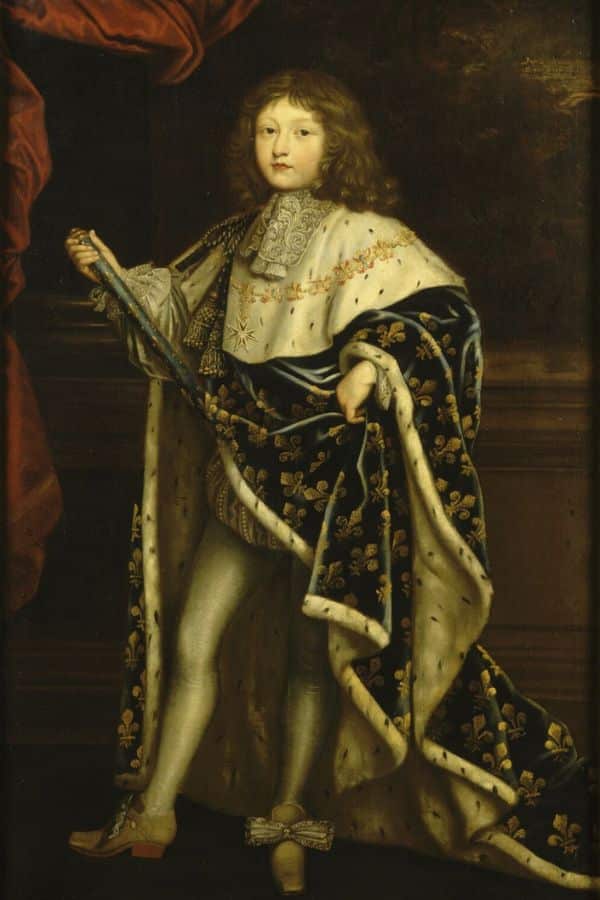
While Louis XIII remained distant, Anne began to exercise influence over her children’s upbringing. She oversaw their tutors, shaped their household, and instilled in young Louis the sense of sacred destiny that would later define his reign. If anyone taught the future Sun King that kingship was absolute, it was Anne.
Still, her triumph came with tension. The same courtiers who once mocked her now flattered her, but not all out of affection. Power draws parasites, and Anne knew it. She had clawed her way from a position of vulnerability to one of strength, but the court remained a snake pit.
Every decision, every favor granted, created allies and enemies. And beyond the glitter of her success, a shadow loomed: Louis XIII’s health was failing. When death came in 1643, Anne would step into a role no one thought she could handle, regent of France during one of its most unstable chapters.
Louis XIII’s Death and the Battle for Regency
When Louis XIII’s health began to fail in the early 1640s, the question of who would rule for the young heir became urgent. Everyone assumed Anne would take the role of regent; it was tradition, after all, but tradition doesn’t always hold when power is at stake. The king distrusted his wife deeply, a resentment rooted in decades of distance, political suspicion, and her past ties to Spain. In his final months, he tried to strip her of absolute authority.
Louis drafted a will that set up a council of regency rather than giving Anne complete control. The council would include nobles and ministers, leaving her little more than a figurehead. For Anne, it was a brutal insult after years spent enduring humiliation and clawing back her position through motherhood. She wasn’t about to let it stand.
The king died on May 14, 1643. Anne acted fast. She appealed directly to the Parlement of Paris, the judicial body that had the authority to register royal decrees. In a bold move, she asked them to annul the restrictive clauses of the king’s will. It was a gamble, but it paid off. Parliament sided with her, not out of love but because many judges feared the chaos a divided regency council might bring. Overnight, Anne shifted from a queen consort who had spent most of her life sidelined to the undisputed regent of France.
Anne and Mazarin: Partnership or Something More?
When Anne became regent in 1643, she needed an ally she could trust. Her choice was Cardinal Jules Mazarin, the man who had stepped into Richelieu’s shoes as chief minister. On paper, it was a practical decision. Mazarin had been Richelieu’s protégé, a diplomat with years of experience smoothing tensions between France and Italy. He understood the machinery of government better than anyone left in the kingdom. But Anne’s loyalty to him ran deeper than politics, and that loyalty defined her regency.
Mazarin was nothing like Richelieu, who had treated Anne as an enemy for much of her marriage. Where Richelieu ruled through intimidation, Mazarin charmed. He flattered Anne, listened to her, and treated her like a partner rather than a pawn. For a woman who had spent most of her life ignored by her husband and overshadowed at court, that attention mattered. She placed her complete confidence in him, a decision that raised eyebrows from the very start.

It wasn’t long before rumors began to spread. Pamphlets accused Anne of taking Mazarin as her lover, a scandal that courtiers gleefully whispered about behind fans. The idea of a widowed queen and an Italian cardinal sharing not just power but a bed was irresistible to a court hungry for intrigue.
Was it true? Historians have debated it for centuries. No proof exists beyond gossip, but the closeness between them was undeniable. They dined together daily, corresponded constantly, and trusted each other when no one else could be trusted. To their enemies, that bond was enough to brand Anne as corrupt and Mazarin as a foreign usurper.
What mattered more than rumor was the reality: Anne and Mazarin ruled as a team. He handled diplomacy and war, while she wielded the authority of the crown to back him. When their policies stirred resistance, she stood firm, refusing to dismiss him even when it would have saved her reputation.
This loyalty came at a price. Mazarin was Italian, and his foreign birth made him an easy target for xenophobia. His rise to power fueled resentment among French nobles who already hated Anne’s Spanish background. Together, they became the perfect villains in the eyes of a restless court and an anxious public; a queen and her minister accused of scheming in private while France slid into turmoil.
That turmoil would soon erupt into open rebellion. The Fronde was coming, and Anne’s alliance with Mazarin would be tested in ways neither of them could have imagined.
Regency & the Fronde
Anne’s first years as regent were deceptively calm. With Mazarin as her chief minister, she consolidated authority and continued Richelieu’s policies of centralization. But that meant curbing the privileges of nobles and parlements. When Mazarin introduced new taxes to fund France’s war against Spain, resentment boiled over. Judges refused to register edicts, pamphlets accused the regent of corruption, and whispers about her rumored intimacy with Mazarin turned into public mockery. By 1648, Paris was ready to erupt.
The spark came when Anne ordered the arrest of key magistrates from the Parlement of Paris. It was a miscalculation. The city exploded in fury. Barricades went up in the streets, and armed mobs demanded the release of the prisoners. This first wave of unrest became known as the Fronde Parlementaire. Anne, Mazarin, and the royal household were trapped in the Louvre as crowds surged outside. To buy time, Anne feigned conciliation, agreeing to some reforms, but she never intended to yield.
When negotiations failed, she acted. In the dead of night, Anne fled Paris with the young king and his brother. It was the first of several desperate flights during these years. The future Sun King never forgave those who drove his family from their palace. For Anne, the experience was even more harrowing. Supplies ran low. Loyal troops were scarce. And all the while, pamphlets spread poison across the kingdom, calling her a tyrant, a foreigner, and worse.
The unrest spiraled into a second, bloodier phase: the Fronde des Princes. High-ranking nobles, led by the Great Condé, joined the rebellion, not for liberty but for power. They raised armies, struck alliances, and plunged France into civil war. Anne faced betrayals on every side. She was forced to negotiate with men who had insulted her publicly, then turn on them when they broke faith. Through it all, she clung to Mazarin, even when exiling him temporarily was the only way to calm the storm. Their bond infuriated her enemies and fueled endless rumors, but Anne never wavered.
By 1653, the Fronde collapsed under its own contradictions. The nobles returned to court, defeated and humiliated. Paris fell silent again, but the scars remained. For Anne, the regency had been a baptism of fire. She emerged hardened, exhausted, and determined never to let her son face such chaos again. In the shadow of the Fronde, the foundations of Versailles and absolute monarchy were laid.
Anne’s Relationship with Louis XIV as He Came of Age
For all the chaos of the regency years, one truth remained constant: Anne’s devotion to her eldest son. She had spent half her life under suspicion, pushed aside and humiliated, but as mother to the king, her position was unshakable. Louis XIV was her redemption and her reason for enduring everything.
During his childhood, Anne was fiercely protective. She shielded him during the Fronde, enduring sleepless nights in freezing rooms, hiding him from mobs, and rationing food when supplies ran thin. Louis never forgot those years. They left a scar, but they also forged a bond of gratitude and dependence. When Mazarin returned from exile and resumed his role as first minister, Louis watched his mother govern with calm authority and unshakable loyalty to her chosen ally. Those lessons would stay with him long after her death.
As Louis grew into a young man, Anne’s role began to shift. The boy who once clung to her skirts became a king in his own right, and that brought friction. Anne wasn’t ready to step back completely. For nearly two decades, she had ruled in his name, and surrendering control wasn’t easy.
But in 1661, everything changed. Mazarin died, leaving a power vacuum that the court assumed Anne would fill. Instead, Louis stunned everyone. At twenty-two, he declared that he would rule alone. It was the dawn of absolutism, and Anne had to accept that her influence would now be limited to the private sphere.
If there was resentment, it never showed. Anne adored her son too much to oppose him. She encouraged his sense of grandeur, shared his taste for theater and ceremony, and supported his decision to assert full royal authority. When he built Versailles, he was following a path shaped by her experiences; her struggles during the Fronde had convinced him that a king could never share power.
By the early 1660s, Anne’s health was failing, and she spent more time at the convent of Val-de-Grâce, the abbey she had vowed to build in gratitude for Louis’s birth. Louis visited often, and their closeness endured to the end. When she died in January 1666, the Sun King wept. The woman who had fought, schemed, and sacrificed to protect his crown was gone.
Anne’s Final Years and Death
Years of stress had taken their toll, and by the early 1660s, she was battling breast cancer. Treatments at the time were crude: bloodletting, poultices, and attempts at surgery without anesthesia. None of it worked.
She withdrew more and more to Val-de-Grâce, the convent became her sanctuary, a place of prayer and preparation for death. Even then, she didn’t cut herself off from the world entirely. She received visitors, including her son, who came often. Louis XIV adored his mother.
Anne of Austria died on January 20, 1666, at the age of sixty-four. Her death shook Louis deeply. Contemporaries wrote that he fainted when the news reached him. She was buried in the royal necropolis at Saint-Denis, though her heart was placed in Val-de-Grâce. During the Revolution, her tomb was desecrated along with those of other royals, a grim postscript to a life spent navigating the dangers of power.
Anne and the Musketeers: Myth vs Reality
For many people, Anne of Austria is remembered as the queen caught in a whirlwind of romance and danger in Alexandre Dumas’s The Three Musketeers. In the novel, Anne is at the center of intrigue, secretly in love with the Duke of Buckingham and relying on d’Artagnan and his musketeers to save her honor from the villainous Cardinal Richelieu. It’s gripping fiction, but that’s all it is.
The real Anne lived a life full of drama, but not the kind Dumas imagined. There is no evidence she ever had a romantic relationship with Buckingham or anyone else during her marriage. In reality, Anne was under constant scrutiny from Richelieu and the French court. If she had dared to engage in the kind of love affair Dumas describes, it would have been political suicide and likely cost her the crown.
That doesn’t mean Anne’s world was free of scandal. She loved company, and her friendships with bold women like the Duchesse de Chevreuse did drag her into risky conspiracies. Her secret letters to Spain almost destroyed her. But these were political moves, not romantic escapades. The musketeers themselves were real elite soldiers of the king’s household, but they were never Anne’s guardians or rescuers.
So why does the legend persist? Because Dumas understood something about Anne that history books often miss: she was a queen living in a cage, craving loyalty in a world of treachery. He turned that hunger into passion and gave her protectors who fought for her with swords and bravado. It made for a brilliant story, even if the truth was far less glamorous.

Love a good medieval story?
Join our readers and get tales of kings, queens, castles and ordinary medieval lives straight to your inbox.

Kylie Lang is a nationally syndicated travel journalist with bylines on the Associated Press Wire & more, a medieval history writer, and the founder and lead author of Tales of the Middle Ages (talesofthemiddleages.com). She holds a BA (Honours) in History from the University of Kent and is a member of the British Guild of Travel Writers.


