Cecily of York doesn’t get as much airtime as her famous sister, but she lived through some of the most cutthroat years in English royal history. Born a princess under the House of York, she saw the crown passed like a hot stone from one hand to the next.

Her father was killed in battle. Her brothers vanished into the Tower. And her sister became queen by marrying the very man whose family helped bring theirs down.
Table of Contents
Cecily was once promised to the future king of Scotland. Then married off to a nobleman with royal ambitions of his own. Alliances, ambition, and fallout shaped her life. And when the Tudors took the throne, her world was turned inside out. So who was Cecily of York really?

A Royal Beginning in Unstable Times
Cecily of York was born on March 20, 1469, the third child of King Edward IV and Elizabeth Woodville. She arrived after two older sisters, Elizabeth and Mary, which made her gender a disappointment to those hoping for a male heir.
Still, Edward wasn’t one to react like Henry VIII. He had two capable younger brothers, and Cecily was named for her formidable grandmother, Cecily Neville, Duchess of York. At birth, she was described as a very handsome child.
That year marked yet another eruption in the Wars of the Roses. The family drama turned public when Edward’s cousin and ally, Richard Neville, Earl of Warwick, turned against him. Warwick had joined forces with Edward’s own brother, George, Duke of Clarence, to try and replace him with George.
Warwick even married his daughter Isabel to Clarence, defying the king. Edward ended up under house arrest in the north, while Elizabeth Woodville and her daughters waited in limbo. Eventually, public sentiment turned against Warwick and Clarence. Edward was released, and the rebellion failed.

Sanctuary and Exile
Despite a temporary peace, Warwick and Clarence broke with Edward again in 1470. This time, Edward had to flee England entirely, finding refuge in Burgundy, where his sister Margaret was married to Duke Charles. Warwick aligned with the Lancastrians and helped restore Henry VI to the throne. His daughter Anne was married to Prince Edward, the Lancastrian heir.
Back in London, Elizabeth Woodville sought sanctuary at Westminster Abbey. She brought Cecily and her two sisters with her, along with a handful of servants. While confined in a few cramped rooms, Elizabeth gave birth to a son, also named Edward. It wasn’t until the spring of 1471 that Edward IV reclaimed the throne. The York family emerged from hiding, and a rare period of peace followed.

Education in a Royal Household
Cecily grew up alongside her sisters, and their mother was actively involved in their education. All the girls learned to read and write. French was probably part of Cecily’s instruction, though Latin likely wasn’t.
We know more about her sister Elizabeth’s education, and it’s possible Cecily received similar training. The younger girls, Anne, Katherine, and Bridget, may not have had the same advantage due to the chaos that followed in the 1480s.
Cecily’s letters later in life show poor spelling and handwriting. Whether this was due to a lack of skill or a focus on Elizabeth’s education is unclear. Still, literacy was valued in the York household. Edward IV collected manuscripts, and the family owned several books. Some were inscribed with Cecily’s name, and Queen Elizabeth supported Queen’s College at Cambridge. Cecily would have grown up seeing her mother advocate for scholars.
Betrothed to Scotland
In October 1474, when Cecily was five, she was betrothed to the son of James III of Scotland. The plan was to prevent Scotland from aiding France in the event of a war. Edward IV was preparing a campaign against France and wanted to keep the northern border quiet. The invasion didn’t amount to much, but England did gain a generous annuity from France, and Cecily’s sister Elizabeth was betrothed to the dauphin.

Cecily and Elizabeth were styled as future queens, Princess of the Scots and the Dauphine of France. They were present in January 1478 when their younger brother, Richard, married Anne Mowbray, heiress to the Duke of Norfolk. Cecily sat beside her family in Westminster’s chapel for the wedding. In 1480, all three elder daughters, Elizabeth, Mary, and Cecily, became Ladies of the Garter.
By the early 1480s, royal marriage negotiations were in full swing. Elizabeth remained pledged to France. Cecily was still engaged to Scotland. Mary was briefly betrothed to the future King Frederick I of Denmark. Their brother Edward was promised to Anne of Brittany. These were ambitious plans, and had Edward IV lived longer, the York dynasty might have reshaped the political balance of Western Europe.
The Broken Betrothal
Cecily turned 12 in March 1481, the age considered suitable for marriage. James III began pressing Edward IV to send Cecily north. But trouble was brewing between the two countries. By 1482, England was at war with Scotland, backing a rival to James III. Cecily’s engagement was broken. Instead, she was briefly considered as a bride for the Duke of Albany, James III’s rival brother.
She never went to Scotland and remained in England during the next phase of the civil war. Then tragedy struck. Her sister Mary died in May 1482 at just 14. The cause isn’t known, only that she became ill.
When her tomb was opened in the 1700s, pale blonde hair and light blue eyes were visible until exposure to air turned them to dust. It gives us a haunting image of what Cecily and her siblings may have looked like.
The King’s Death and a Power Grab
Edward IV died in April 1483. His son Edward V was too young to rule, and Richard, Duke of Gloucester, took control. What followed was a swift power grab. Edward V and his brother were sent to the Tower of London. Elizabeth Woodville took her daughters, including Cecily, back into sanctuary at Westminster.
At this point, Cecily was around 14 or 15. Old enough to feel the danger closing in. During this time, Elizabeth Woodville made a deal with Margaret Beaufort to marry her daughter Elizabeth to Margaret’s son, Henry Tudor. Henry, from abroad, pledged to marry Elizabeth, and if she were unavailable, he would take Cecily instead.

Court Life Under Richard III
By late 1484, Elizabeth Woodville came out of sanctuary. Richard III promised not to harm her daughters, and the family moved to Heytesbury in Wiltshire. That Christmas, Cecily and her sisters were at court. It would have been uncomfortable. Richard had declared Cecily and her siblings illegitimate. The halls they once called home were now ruled by someone who denied their status.
During this time, Cecily’s former fiancé, the Duke of Rothesay, became engaged to her cousin, Anne de la Pole. Anne’s family had supported Richard. Richard arranged marriages for his nieces to secure alliances and reduce the chance of their being used against him. Cecily’s younger sister Anne was betrothed to Thomas Howard. Cecily herself was married to Ralph Scrope of Upsall, second son of a minor nobleman.
We don’t know how Cecily felt about the match, but going from a potential queen of Scotland to wife of Ralph Scrope likely felt like a sharp fall. The marriage probably was consummated, but there’s little sign they lived together long.

The Tudor Shift
In August 1485, Henry Tudor defeated Richard III at Bosworth and was crowned King Henry VII. He immediately overturned the Titulus Regius, the law that had declared Cecily and her siblings illegitimate. Cecily, still technically married to Ralph Scrope, returned to court and served as lady-in-waiting to her sister, now Queen Elizabeth.
That marriage didn’t last. Henry annulled it, and there’s no record that Cecily objected. She stayed at court through 1485 and into 1486. When Prince Arthur was born, Cecily carried him at his christening and returned him to Elizabeth in the queen’s chamber.
The Welles Marriage
Sometime in late 1487, Cecily married John, Viscount Welles, the half-brother of Margaret Beaufort. She stepped down from her court position and moved to the countryside. John was older, perhaps by two decades, but the match restored some status.
They had two daughters: Elizabeth and Anne, born around 1489 and 1491. Both died in the 1490s. It’s possible they succumbed to the same illness that claimed their father in February 1499. John left everything to Cecily and allowed her to choose where he was buried. That suggests at least some affection.
Back to Court and Into the Shadows
With her family gone, Cecily returned to court life. She missed her mother’s funeral in 1492, possibly due to illness or pregnancy, but her husband attended. She resumed duties in her sister’s household and was present for key events, including the arrival of Catherine of Aragon in 1501 to marry Prince Arthur.
She also saw envoys arrive from Scotland to arrange the marriage of her niece, Margaret Tudor, to James IV, Cecily’s former betrothed. By now in her thirties, Cecily would have been seen as past childbearing age. Still, she made a bold choice.
A Scandalous Final Marriage
In 1502, Cecily married Sir Thomas Kyme, a man far below her station. She didn’t ask permission from the king. When Henry VII found out, he reacted with fury. He banished her from court and stripped her of income from the Welles estate. Margaret Beaufort once again stepped in. She offered the couple refuge and worked on a financial settlement with the king.
By early 1504, Cecily regained some rights to the Welles lands, though only for her lifetime. She couldn’t pass them to her children. Records mention two children from this marriage, Richard and Margaret, but they remain obscure.
Quiet Exit From History
Elizabeth of York died in 1503. Cecily died four years later, on August 24, 1507, on the Isle of Wight. She was buried in Quarr Abbey. Her final years were quiet, without court status or political clout.
No one knows what Cecily thought of her life. Maybe she regretted the path not taken. Maybe marrying for love was her final act of rebellion. What we do know is that she outlived most of her family. She played roles in major events but was always just off to the side. Not quite a queen. Not quite forgotten either.

Cecily in The White Princess
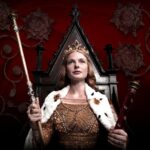
In the STARZ adaptation of The White Princess, Cecily of York was portrayed with a mix of defiance and calculation that doesn’t always line up with what we know from historical records. She’s shown as being deeply resentful of her sister Elizabeth’s rise and even as a romantic rival for Henry VII’s attention. The series plays up the idea that Cecily and Henry had a personal relationship, a choice likely made for dramatic tension rather than accuracy.
While there’s no evidence that Cecily ever tried to seduce Henry or undermine her sister in this way, the show captures one truth: Cecily was a woman with lost potential. The show exaggerates her ambition and bitterness, but it does reflect the instability and emotional fallout experienced by many royal women during this period. Cecily’s real life wasn’t full of scandal, but it was full of twists that no dramatist could resist.


Kylie Lang is a nationally syndicated travel journalist with bylines on the Associated Press Wire & more, a medieval history writer, and the founder and lead author of Tales of the Middle Ages (talesofthemiddleages.com). She holds a BA (Honours) in History from the University of Kent and is a member of the British Guild of Travel Writers.