
It enraged Henry VIII, went down in British history, and nearly ended in the Tower of London. Dive into the history of one of the greatest royal scandals!
Henry VIII might have been the star of the Tudor show, but his little sister Mary Tudor had a life that could have been ripped straight from the pages of a historical drama. A princess expected to play by the rules, a marriage that put her on the French throne, and a scandal that nearly brought the wrath of her infamous brother crashing down on her. She may not be the most talked-about Tudor, but her story is one you won’t forget.
Table of Contents
From the moment she was old enough to be useful, Mary was treated like a bargaining chip in the game of European politics. A glittering match was arranged, a crown was placed on her head, and duty came before everything else. But what happens when a Tudor princess decides she’s had enough? Let’s just say she managed to send shockwaves through the royal court.
What did she do that was so outrageous? How did she go from a royal pawn to one of the boldest women of her time? And, more importantly, how did she manage to get away with it?
Mary Tudor: The Youngest Surviving Sister of Henry VIII
Mary Tudor may have been born into privilege, but when it came to her future, she had about as much control as a chess piece on a royal game board. As the youngest daughter of Henry VII and Elizabeth of York, she was raised in Tudor luxury: music, dancing, fine clothes, and the best education money could buy. She was fluent in French and Latin, excelled in courtly charm, and knew how to navigate the dazzling, dangerous world of royal politics.
Her marriage had been planned almost as soon as she could walk. At just five years old, Mary was betrothed to Charles of Castile, the future Holy Roman Emperor. It was a glittering match that would tie England to one of the most powerful dynasties in Europe. Henry VIII, who adored his sister, took a personal interest in arranging the marriage, ensuring she would be sent off in style.

By 1514, everything was in place. A trousseau fit for a queen had been prepared, her ladies-in-waiting had been selected, and her wardrobe was nothing short of spectacular. But then disaster struck, and the wedding was called off.
Charles’ grandfather, Maximilian I, the Holy Roman Emperor, kept stalling. Delay after delay, excuse after excuse, until finally, Henry had enough. A perceived political betrayal was the last straw, and humiliated and furious, he called the entire thing off. But if Mary thought she was free to choose her own future, she was mistaken. A new marriage plan was already in motion, and there would be no backing out this time.
At the same time all this was happening, Mary had spent years surrounded by Henry’s closest friend, Charles Brandon, a man who, unlike her royal suitors, wasn’t a distant figure on a political map but a real presence in her life. He was older, dashing, and everything a Tudor courtier should be: skilled with a sword, silver-tongued, and just the right amount of reckless. She admired him, perhaps more than she should have. But it didn’t matter. Whatever feelings she had, whatever future she might have wished for, was irrelevant. Henry had made his decision.
Her next stop? France. A throne awaited her, a crown would be placed on her head, and an aging king would become her husband. But before she left, she made Henry promise her one thing: that if she ever became a widow, she would be allowed to marry whomever she chose. And Mary already knew exactly who that would be.
Marriage to King Louis XII of France
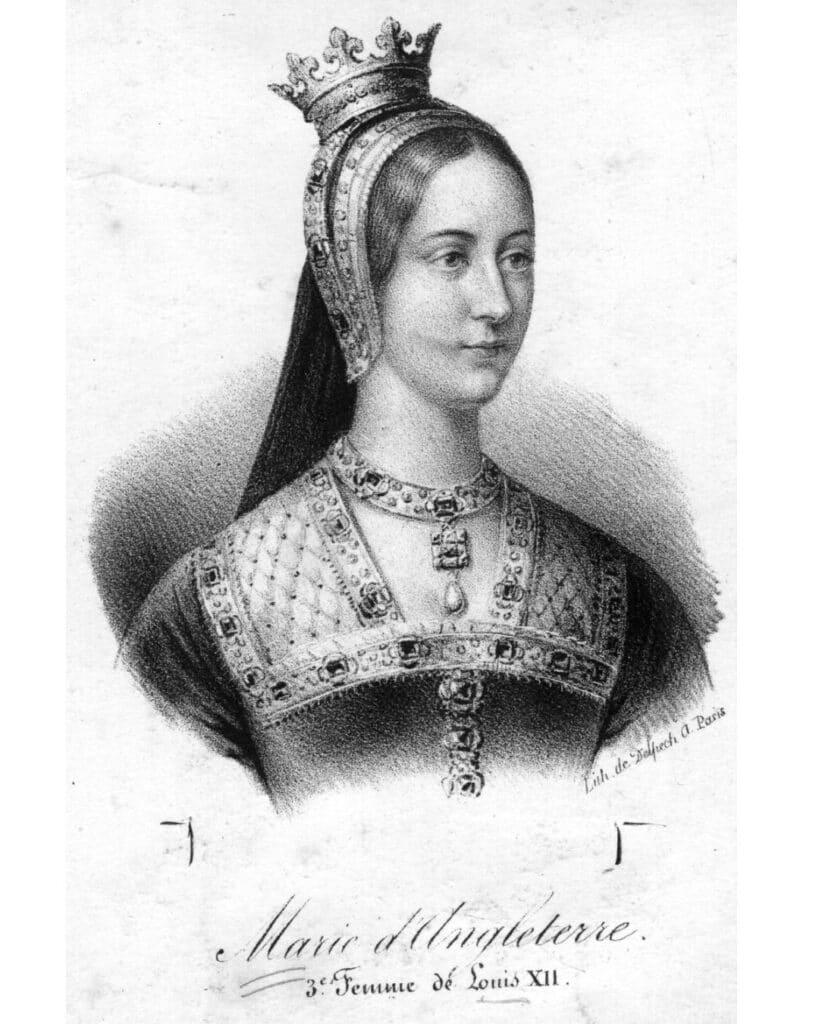
Mary Tudor’s wedding to King Louis XII of France was the very definition of duty over desire. At 18, she was young, vibrant, and used to the excitement of the English court. Her new husband? 52, in failing health, and already twice widowed. This was no grand romance; it was a political transaction designed to strengthen ties between England and France.
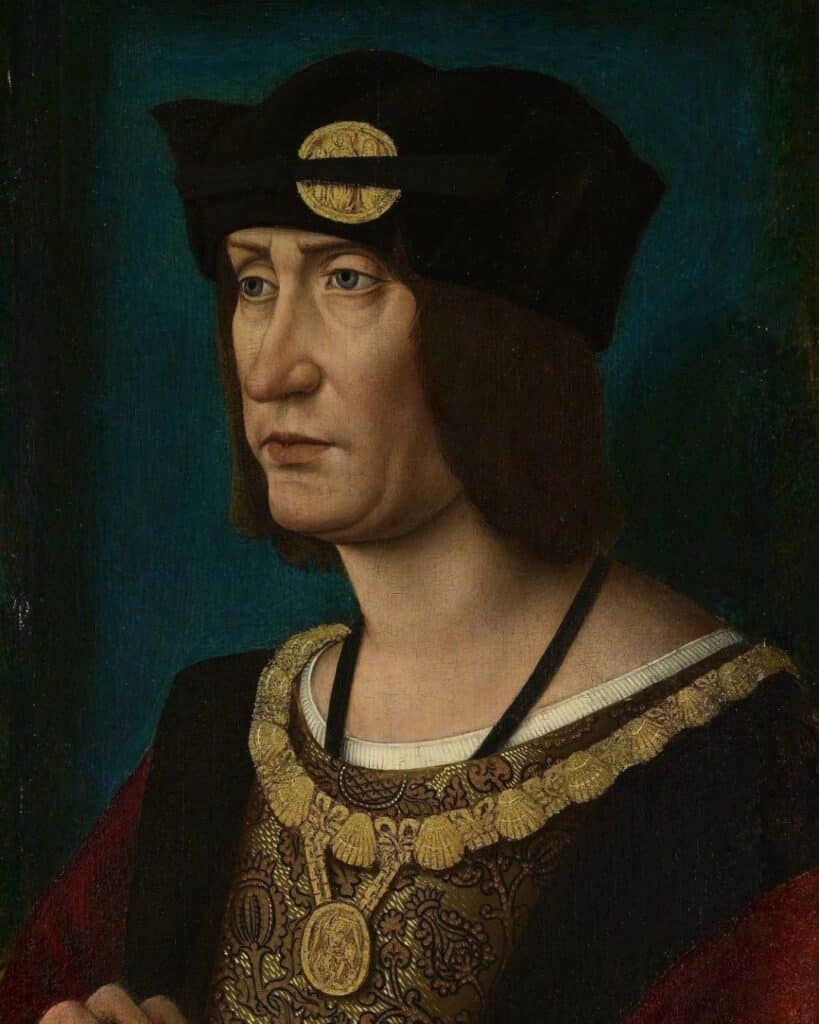
The wedding took place on 9 October 1514 in Abbeville, with all the pomp and pageantry expected of a royal match. Mary arrived in France dressed in the finest fabrics money could buy and prepared to play her part as queen. She wouldn’t have to endure it for long. Less than three months later, on 1 January 1515, Louis XII was dead.
His health had been fragile before the wedding, but rumors swirled that he had worn himself out trying to produce an heir with his much younger bride. Whether or not there was truth to that, Mary suddenly found herself a widow, free to make her own choice. Or so she thought.
Hooked on the Middle Ages? Get more stories like this one in your inbox.
The Secret Marriage to Charles Brandon, The Duke of Suffolk
Now, with Louis XII dead and buried, she should have been free. But in royal politics, a young, beautiful, and wealthy widow was far too valuable to be left to her own devices. Instead of returning to England immediately, Mary was placed into seclusion at the royal palace in Cluny to mourn the death of her husband for forty days, as was the custom.
During this time, Mary wrote to Henry VIII, reminding him of the promise he had made, not once, but twice, before she left England. If she could not marry the man of her choice, she declared, then she would take herself off to a convent and marry no one. It was a bold threat, but she knew her brother well enough to understand that he wouldn’t like the idea of his sister in a nunnery and being of no further use in his political games.
Meanwhile, Thomas Wolsey, Henry’s powerful advisor, wrote to Mary, urging her not to accept any marriage proposals and to wait for word from England. But Mary was done waiting. She knew that while Henry had once promised her freedom, he was just as likely to change his mind if a better alliance presented itself. She’d already been patient, obedient, and used for political gain. She wasn’t about to let it happen again.
And then came Charles Brandon.
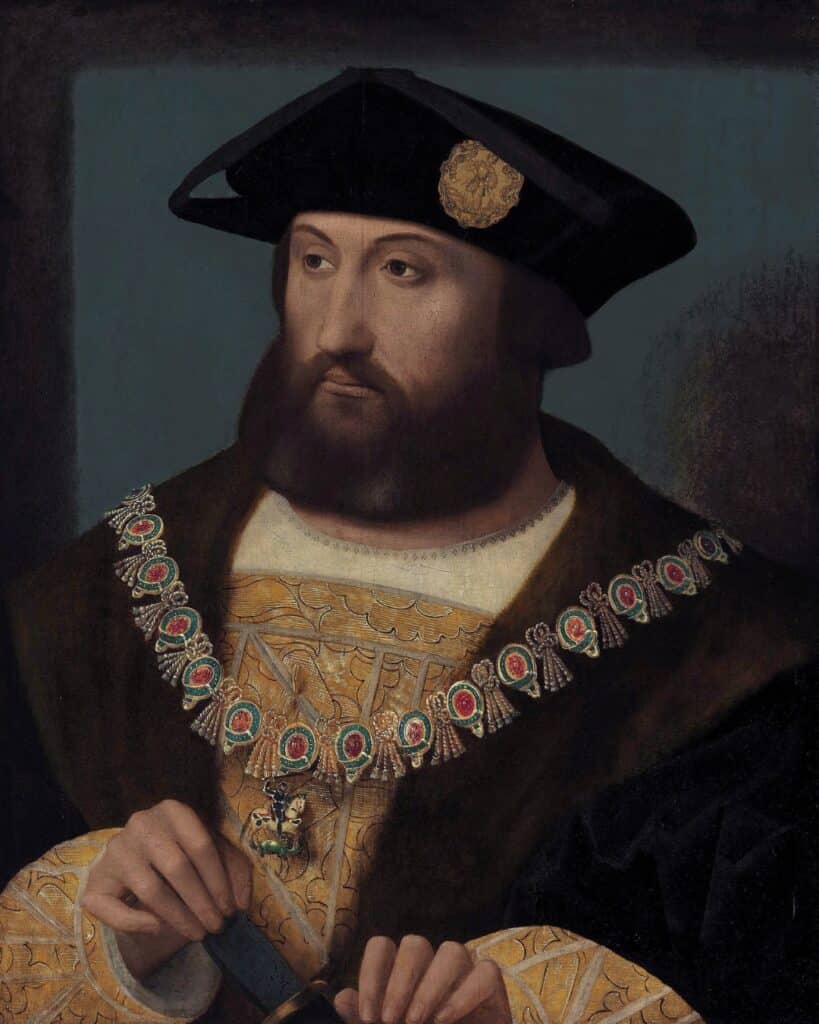
Henry had finally agreed to send his trusted friend, the Duke of Suffolk, to escort Mary back to England. Now, Henry wasn’t stupid. He knew the attraction between Charles and Mary and wasn’t about to let his political pawn (or sister) slip from his fingers by marrying his best friend, a nobody in royal terms. So, before Charles left, he made him promise he would not propose marriage to Mary, and technically, he never broke that promise. Because Mary got to him first.
She knew her brother might try to force her into another diplomatic marriage if she returned unmarried. She also knew that if she and Charles married before returning to England, Henry would be furious, but he’d have no choice but to accept it. And so, Mary took matters into her own hands. She proposed to Charles, and he, knowing full well the risks, accepted.
In March 1515, the two were secretly married in France, defying the king and setting off one of the biggest royal scandals of the Tudor era.
Incurring the Wrath of Henry VIII
Henry VIII was furious when he discovered what Mary and Charles had done. It was an outright betrayal of royal authority, and Henry did not take kindly to being defied, even by those he loved most.
Mary and Charles knew they had made a dangerous move, so before returning to England, they wrote to Thomas Wolsey, throwing themselves at Henry’s mercy. They begged for forgiveness, pleading that their love had left them with no choice. But Henry wasn’t easily swayed. They had robbed him of the chance to arrange another politically advantageous marriage for Mary, which would have strengthened his alliances in Europe.
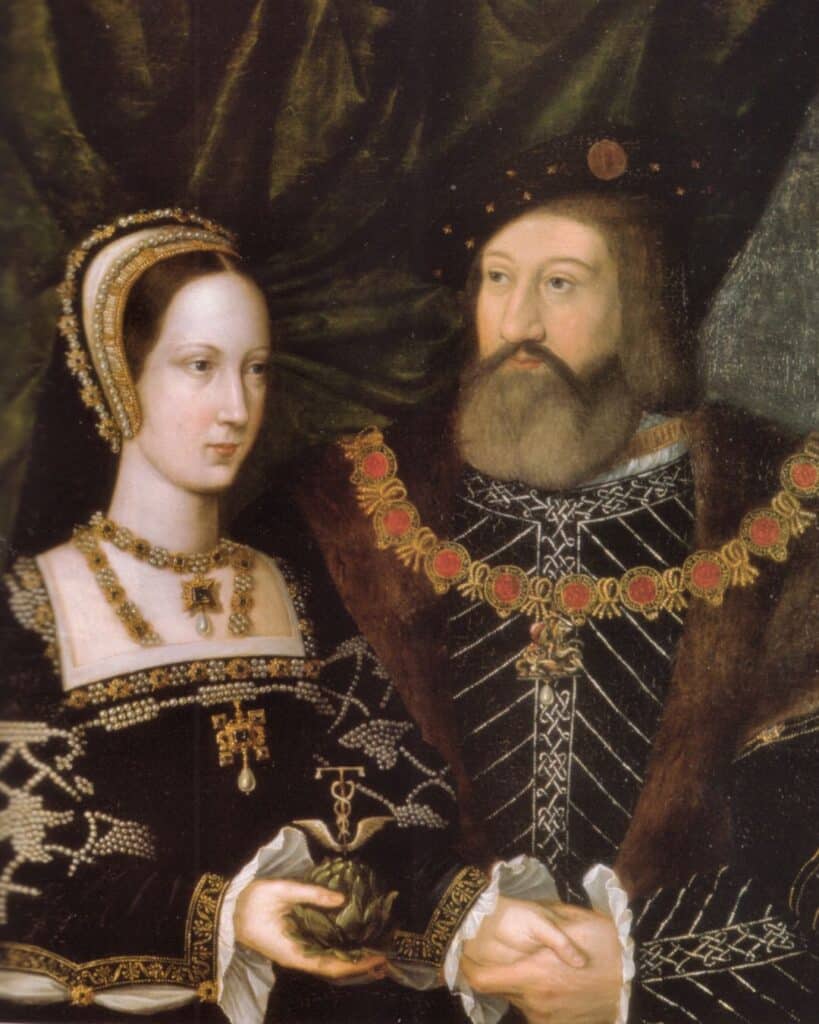
So, instead of welcoming them back, Henry banished them from court, keeping them at a distance while he decided their fate. There was no escaping punishment. Henry needed to make an example of them. He could have had Charles executed for marrying a royal princess without permission; the law was on his side. Instead, he hit them where it hurt: their wallets.
Charles and Mary were slapped with a massive fine to buy back his favor, a staggering £24,000 (the equivalent of millions today). It was an impossible sum, so Henry allowed them to pay it off in installments, deducting chunks from Charles’ income. Essentially, Henry made Charles pay for the privilege of marrying his sister. It was a brutal financial punishment, but they got off lightly considering the alternative.
By 1516, Mary and Charles were allowed back at court, and while Charles had to work hard to regain Henry’s trust, he was never fully cast out of favor.
Mary’s Life as the Duchess of Suffolk
Mary and Charles Brandon began their life together as the Duke and Duchess of Suffolk. It wasn’t the life of a queen, but for Mary, it was far better. She had spent her childhood as a political pawn, endured a marriage to a man more than three decades older than her, and fought tooth and nail to marry the man she loved. Now, at last, she could simply live.
Their home at Westhorpe Hall in Suffolk became Mary’s sanctuary. Away from the scheming and uncertainty of the royal court, she threw herself into family life. She and Charles had four children together, the most notable being Frances Brandon, who would become the mother of Lady Jane Grey, England’s doomed Nine Days’ Queen.
Despite preferring a quieter life, Mary couldn’t escape court politics entirely. She remained close to Henry, though she was never afraid to speak her mind when she disagreed with him. She was particularly vocal about his treatment of Catherine of Aragon, whom she had known since childhood. She openly opposed Henry’s divorce and had little patience for Anne Boleyn, whom she saw as a manipulative threat.

By her mid-thirties, Mary’s health began to fail. Some accounts suggest she suffered from tuberculosis, while others believe she had a lingering illness that weakened her over time. She died on 25 June 1533 at the age of just 37. Henry ordered her to be buried at Bury St Edmunds Abbey, though after the Dissolution of the Monasteries, her remains were moved to St. Mary’s Church, Bury St Edmunds, where she rests today.
Though her life was short, Mary Tudor achieved something few royal women of her time could: she married for love and lived on her own terms. Even in death, she remained one of the few people Henry VIII had ever truly loved.

Love a good medieval story?
Join our readers and get tales of kings, queens, castles and ordinary medieval lives straight to your inbox.

Kylie Lang is a nationally syndicated travel journalist with bylines on the Associated Press Wire & more, a medieval history writer, and the founder and lead author of Tales of the Middle Ages (talesofthemiddleages.com). She holds a BA (Honours) in History from the University of Kent and is a member of the British Guild of Travel Writers.