I’m a sucker for a good “what if.” I live on the grounds of an old 13th-century castle in the Charente, southwest France, and when I walk past the bread oven or the bit of rampart wall still standing, I can’t help but wonder how close it all came to turning out differently.
What if the French Revolution hadn’t happened here? Might the monarchy still be in play? My castle might still be standing, and France could be a very different place.
Table of Contents
The same is true for many rulers. The what-ifs? Those moments in history we never even knew about that, if they’d succeeded, could have seen us in a very different world than the one we live in now.

The Medieval Rulers at a Glance
| Ruler | The moment | What might have been |
| Louis II of Italy | Died in 875 with no son | A lasting kingdom of Italy |
| Sweyn Forkbeard | Died five weeks after taking England in 1014 | A Danish England from 1013 |
| Harald Hardrada | Killed at Stamford Bridge in 1066 | A Norwegian England, not a Norman one |
| Bohemond of Taranto | Left Antioch to fight Byzantium in 1107 | A stronger Crusader state in the east |
| Alfonso the Battler | Left Aragon to the military orders in 1134 | A kingdom run by the Templars |
| Empress Matilda | Driven out of London in 1141 | England’s first crowned queen in her own right |
| Henry the Young King | Died of dysentery in 1183 | No King Richard and no King John |
| Ögedei Khan | Died in December 1241 | Mongol armies deeper into Europe |
Louis II of Italy: What If He’d Had a Son?
Louis II was Charlemagne‘s great-grandson, and he spent most of his life doing something none of his royal cousins bothered with. He stayed in Italy and fought for it.
He was king of Italy and Holy Roman Emperor, but his real job was holding back Arab raiders who had dug in across southern Italy. In 871, after years of trying, he took the city of Bari with help from the Byzantine fleet. It was a big win.
Then came the reward. That August, Adelchis, the prince of Benevento, a man Louis was meant to be protecting, attacked him in his own palace, robbed him, and locked him up. Louis only got out a month later when fresh raiders landed, and Adelchis needed him again. He had to swear he would never take revenge. Talk about gratitude.
Louis died near Brescia on August 12, 875. He left two daughters and no son. Within months, his uncle Charles the Bald hurried to Rome and was crowned emperor at Christmas, and Italy went back to being a prize for outsiders to fight over.
Here’s my “what if.” If Louis had left a grown son, Italy might have had its own royal line, rooted in Italy, a thousand years before it finally became one country in 1861. Something to think about.
Sweyn Forkbeard: The Five-Week King of England
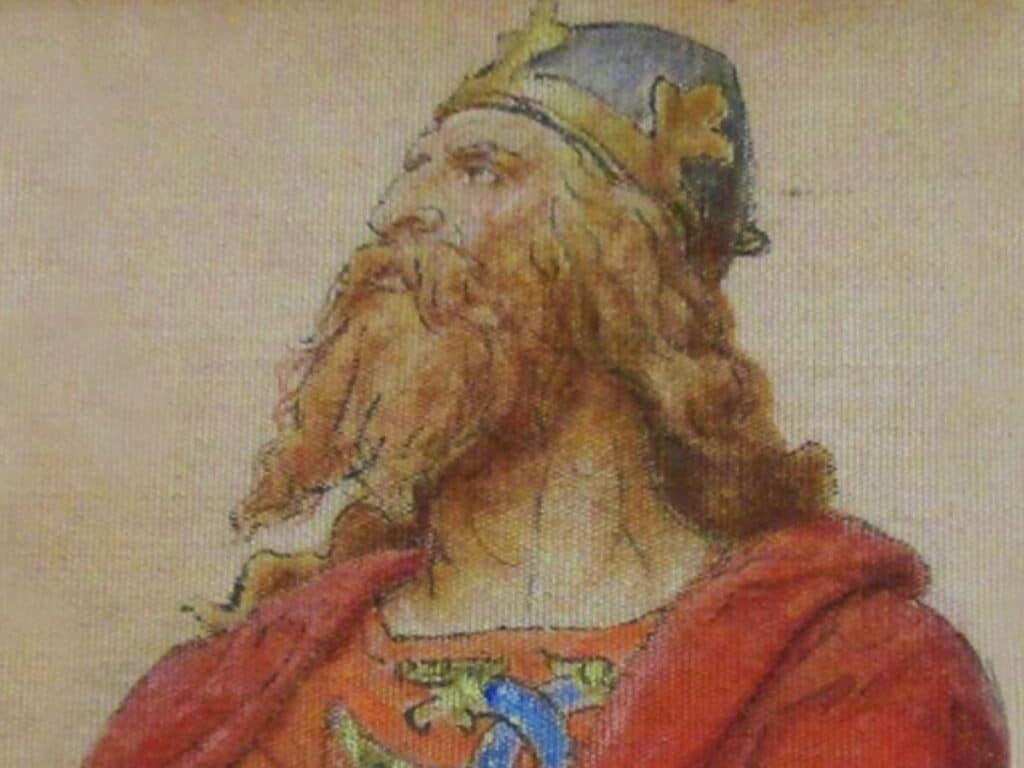
Sweyn Forkbeard, king of Denmark, spent years running Viking raids on England. In 1013, he stopped raiding and started conquering. By the end of the year, King Æthelred the Unready had fled to Normandy, and the English lords had no choice. On Christmas Day 1013, they reluctantly accepted Sweyn as king.
He never even got a coronation. On February 3, 1014, he died at Gainsborough in Lincolnshire, just five weeks into his reign. Some say he fell from his horse. Later monks claimed the ghost of St Edmund ran him through with a spear.
His death threw everything into the air again. Æthelred came back, and it took Sweyn’s son Cnut until 1016 to win England for himself.
So what if Sweyn had lived another 20 years? A Danish dynasty with real roots might have held England far longer than Cnut’s sons managed.
And if England had stayed Danish, would William of Normandy ever have fancied his chances in 1066? I’m not so sure.
Ögedei Khan: Did His Death Save Europe?
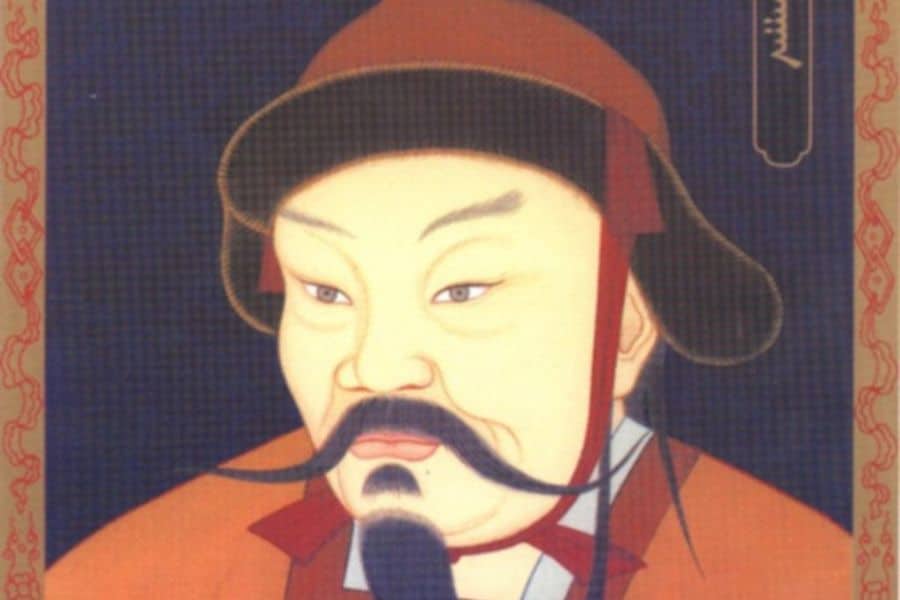
Ögedei was the third son of Genghis Khan, and he became Great Khan in 1229. Under him, the Mongol Empire kept growing, and in 1241 his armies tore into Europe.
In April 1241, within days of each other, Mongol forces crushed a Polish and German army at Legnica and destroyed the Hungarian army at Mohi. Hungary was overrun. The road west looked wide open.
Then, in December 1241, Ögedei died after a heavy night of drinking. In 1242, the Mongol armies turned around and left.
For centuries, the story went that the commanders rushed home to pick the next khan, and Ögedei’s death saved Europe. It’s a cracking story. But it isn’t the whole truth.
The general Batu never went back to Mongolia. In 2016, the scientists Ulf Büntgen and Nicola Di Cosmo used tree rings to show that Hungary had a run of cold, wet years. The plains turned to marsh, which was hopeless for an army that lived on its horses.
So I’d say Ögedei’s death played a part, and the weather played a bigger one. Either way, if he’d lived and the sun had shone, the map of Europe could look very different today.
Hooked on the Middle Ages? Get more stories like this one in your inbox.
Harald Hardrada: The Viking Who Nearly Beat William to It
Everyone remembers 1066 for the Battle of Hastings. Fewer people remember that England was invaded twice that autumn, and the first invader was arguably the scarier of the two.
Harald Hardrada had already lived three lifetimes. As a young exile, he served the Byzantine emperors in Constantinople and rose to lead the famous Varangian Guard, fighting in Sicily, Bulgaria and Asia Minor. He came home rich and made himself king of Norway in 1046.
In September 1066, he landed in northern England with a huge fleet. On September 20 he smashed the northern earls at Fulford, just outside York, and York surrendered.
Then King Harold Godwinson marched his army north so fast that he caught the Norwegians by surprise at Stamford Bridge on September 25. The saga writer Snorri Sturluson later claimed Harold had offered Hardrada “seven feet of English ground,” as he was taller than other men. Hardrada was hit in the throat by an arrow, and his army was cut to pieces.
Three days later, William landed at Pevensey on the south coast. Harold had to march all the way back again, with a tired army, and you know how that ended.
If Hardrada had won at Stamford Bridge, the Normans would have faced a battle-hardened Viking king instead of an exhausted Harold. My money would have been on Hardrada. England might have ended up Scandinavian rather than French, and we’d all be speaking a very different sort of English.
Bohemond of Taranto: The Crusader Who Wanted Too Much
Bohemond came from Norman stock just like William the Conqueror, and he was hard to miss. The Byzantine princess Anna Komnene, who loathed him, still admitted that he towered over everyone and that “the sight of him inspired admiration, the mention of his name terror.”
On the First Crusade, the crusaders spent months stuck outside the great city of Antioch. Bohemond broke the deadlock by striking a secret deal with Firouz, a commander on the walls. In June 1098, Firouz let Bohemond’s men climb in, and the city fell. Bohemond made himself Prince of Antioch and refused to hand it over to anyone.
Then his luck ran out. He was captured by the Danishmend Turks in 1100 and held for three years until a ransom was paid. In 1104 he was beaten at Harran. So he sailed home to raise a new army, and instead of taking it back east to defend Antioch, he turned it on the Byzantine Empire.
It was a disaster. Emperor Alexios trapped him outside Dyrrachium, and in 1108 Bohemond signed the Treaty of Devol, making him the emperor’s vassal. He never went back to Antioch, and died in Apulia in March 1111.
Here’s the “if only.” If Bohemond had brought his new army to Antioch instead of picking a fight with Byzantium, the Crusader States might have had the muscle they so badly lacked. I’m inclined to think his ambition cost the Crusaders dearly.
Alfonso the Battler: The King Who Left His Kingdom to the Templars
Alfonso I of Aragon earned his nickname. He spent nearly 30 years at war against the Muslim kingdoms of Spain, and in 1118 he took Zaragoza, the greatest prize of his reign.
But Alfonso had no children, and he made a decision that left everyone gobsmacked. In his will, he left his entire kingdom to three military orders: the Knights Templar, the Hospitallers and the Order of the Holy Sepulchre. He handed a whole kingdom over to monks with swords.
When he died in 1134, wounded at the Battle of Fraga, his nobles refused. Aragonese law said the crown couldn’t give away its lands to outsiders. So they dragged his brother Ramiro out of the church. Ramiro had been a monk, abbot, and bishop, and he didn’t want to be king. Trust me, you can’t make this stuff up.
Ramiro “the Monk” did his duty. He married, had a daughter named Petronila, betrothed her to the Count of Barcelona as a baby, and went straight back to his monastery. That marriage created the Crown of Aragon, one of the great powers of the medieval Mediterranean. The Templars were bought off in 1143 with castles and lands.
If Alfonso’s will had stood, the military orders would have ruled a kingdom in Europe. Would it have lasted? I doubt it. But it would have been the strangest state in medieval Europe, and I’d have loved to see it.
Empress Matilda: Locked Out of London

Empress Matilda should have been England’s first queen to rule in her own right. Her father, Henry I, made his barons swear to accept her as his heir. When he died in 1135, her cousin Stephen grabbed the crown anyway.
Matilda didn’t take that lying down. In February 1141, her forces captured Stephen at the Battle of Lincoln. By April, the bishops had declared her “Lady of the English,” and all she needed was a coronation at Westminster.
She never got it. On June 24, 1141, the people of London rose against her and chased her out of the city before the ceremony could happen. Stephen’s side regained their footing, and the civil war dragged on for years.
In December 1142, she escaped from Oxford Castle across the frozen river, reportedly dressed in white to hide in the snow. What a woman.
Meanwhile, her husband, Geoffrey of Anjou, was busy conquering Normandy, which he finished in 1144. Geoffrey never ruled England, but their son did. In 1154, Matilda’s boy became Henry II, the first Plantagenet king.
So what if London had opened its gates in 1141? England would have crowned a ruling queen 400 years before Mary I. That’s quite a thought.
Henry the Young King: The King Who Never Reigned
Henry II and Eleanor of Aquitaine had their eldest surviving son crowned king on June 14, 1170, while his father was still very much alive. It was meant to secure the succession, but instead, it gave the young man a crown and nothing to do with it.
Henry the Young King was handsome, generous and wildly popular. He spent much of his time on the tournament circuit with his tutor, William Marshal. What he didn’t have was land, money, or power, and in 1173 he rebelled against his father, with his mother’s support. The revolt failed, and Eleanor spent the next 16 years in prison.
In 1183 he rebelled again. While campaigning in the Limousin, he caught dysentery and died at Martel on June 11, aged just 28. On his deathbed, he asked William Marshal to carry his cloak to Jerusalem.
With the Young King dead, his brother Richard became heir to England. Richard had never been raised for it. He was Eleanor’s boy, invested as Duke of Aquitaine at 14, and as king he spent barely six months of his ten-year reign in England.
If his older brother had lived, Richard might have stayed in Aquitaine for good and never become Richard the Lionheart at all. England wouldn’t have paid for his crusade, and it wouldn’t have been squeezed for the ransom when he was captured on the way home.
As for John, the youngest of the lot, he’d most likely have lived and died a minor prince. The barons would have had no reason to drag him to Runnymede to seal Magna Carta. Funny how much hangs on one bout of dysentery in a little town down in the Lot.
Frequently Asked Questions
Did Ögedei Khan’s death stop the Mongol invasion of Europe?
Ögedei Khan’s death played a part in stopping the Mongol invasion of Europe, but it probably wasn’t the main factor. Ögedei died in December 1241, and the Mongols left Hungary in 1242. But their commander, Batu, never returned to Mongolia for the succession.
How long was Sweyn Forkbeard king of England?
Sweyn Forkbeard was king of England for about five weeks. The English lords accepted him as king on Christmas Day 1013, after Æthelred the Unready fled to Normandy. Sweyn died at Gainsborough in Lincolnshire on February 3, 1014, before he could be crowned. His son Cnut became king of England in 1016.
Why did Harald Hardrada invade England in 1066?
Harald Hardrada, king of Norway, claimed the English throne after Edward the Confessor died in January 1066. He landed in the north in September, won the Battle of Fulford on September 20, and took York. King Harold Godwinson defeated and killed him at Stamford Bridge on September 25, just three days before William of Normandy landed in the south.
Who was Henry the Young King?
Henry the Young King was Henry II and Eleanor of Aquitaine’s eldest surviving son. He was crowned king of England on June 14, 1170, while his father was still alive, but he never held real power. He rebelled twice and died of dysentery at Martel, in France, on June 11, 1183, aged 28. His brothers Richard and John later became king.
Did Alfonso the Battler really leave his kingdom to the Templars?
Yes. Alfonso I of Aragon did leave his kingdom to the Templars. He had no children and left his kingdom to three military orders: the Knights Templar, the Hospitallers, and the Order of the Holy Sepulchre. When he died in 1134, his nobles refused to honor the will and made his brother Ramiro, a monk, king instead. The orders were later compensated with castles and land.
Was Empress Matilda ever Queen of England?
No, Empress Matilda was never Queen of England. She captured her rival, King Stephen, in 1141 and was declared “Lady of the English,” but the people of London drove her out of the city before her coronation. She was never crowned. Her son became King Henry II in 1154, the first of the Plantagenet kings.
Love a good medieval story?
Join our readers and get tales of kings, queens, castles and ordinary medieval lives straight to your inbox.

Kylie Lang is a nationally syndicated travel journalist with bylines on the Associated Press Wire & more, a medieval history writer, and the founder and lead author of Tales of the Middle Ages (talesofthemiddleages.com). She holds a BA (Honours) in History from the University of Kent and is a member of the British Guild of Travel Writers.
Related posts:
 Sweyn Forkbeard: The First Viking King of England
 Empress Matilda: The Crown, the Betrayal, and the Fight of Her Life
 Empress Matilda: Lady of the English and Queen of Ice and Snow. But Should She Have Been England’s First Queen?
 Matilda of Tuscany: The Warrior Countess Who Brought an Emperor to His Knees