The word “Viking” still sends a chill down the spine, even centuries after their reign of terror. These Norse warriors mastered the art of raiding, striking fear into the hearts of European rulers for over 300 years.
But what made the Vikings so unstoppable? It wasn’t just brute strength. It was their cunning tactics, superior technology, and a way of war that left their enemies scrambling. They knew how to use rivers like roads, strike before anyone could react, and vanish just as quickly. From Lindisfarne to Paris, no port or monastery was safe.
Table of Contents

The Dawn of Viking Raids
The first recorded Viking raid hit like a thunderclap. In 793, men in longships landed on the island of Lindisfarne off the northeast coast of England. They stormed the monastery, killed the monks, looted the treasures, and left the place in ruins. It shook Christian Europe. These weren’t familiar enemies. They didn’t send warnings. They didn’t fight like everyone else. They came from the sea, struck fast, and disappeared before anyone could react.
Lindisfarne was a place where monks lived, men of peace, and the monastery was filled with relics, manuscripts, and gold crosses. Attacking a place like that felt like a direct punch to the heart of Christian society, and it only got worse as more raids followed.

The men who carried out the attack were seafarers used to tough conditions, and they knew how to survive on land and sea. Their ships could handle rough waters but also sail up rivers, giving them access to towns and monasteries far inland. And they didn’t need much to get started. A few boats, some axes, and the element of surprise gave them all the edge they needed.
The reasons behind the raids were complex. Some of it came down to survival. Overpopulation, limited farmland, and internal power struggles back home pushed many to seek fortune elsewhere. Others saw opportunity. Europe was fractured and filled with isolated, wealthy religious sites that had no real defense. It was a perfect storm of hunger, ambition, and opportunity.
Soon, the same longships were appearing along the coasts of Ireland, Scotland, and Francia. They were testing. Pushing boundaries. Seeing how far they could go before someone pushed back. As it turned out, no one could stop them for a long time.

Seafaring Supremacy: The Longships
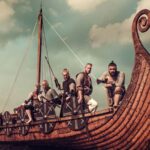
If the Viking raids were the storm, the longship was the lightning bolt that made it possible. The boats were fast, flexible, and deadly. Long and narrow, they cut through the water like knives and could travel just as easily on open sea as they could along narrow rivers. That meant no coastal town or inland village was ever truly safe.
The design of the longship was a product of both necessity and skill. Vikings lived in a harsh environment where survival meant moving quickly, trading widely, and striking without warning. Their ships reflected that mindset. Shallow bottoms let them land directly on beaches or riverbanks. There was no need for harbors. They could pull up to a monastery, raid it, and be gone before anyone could ride for help.
They didn’t rely on wind alone. Longships had sails for speed and oars for control. If the weather turned or the wind died, it didn’t matter. The crew could row, and they could keep going for hours. Each man had a place, each movement was practiced, and each raid was planned with the ship at its heart.
And they were terrifying to see. Some had carved dragon heads mounted on the prow, snarling toward the horizon as they approached. The sight of those ships coming over the water sent fear ahead of them. Villages sometimes abandoned their homes before the Vikings even arrived, knowing they had no way to stop them.
Longships gave the Vikings an edge no one else had. They could strike anywhere and leave nothing but smoke and silence behind. That freedom made them unpredictable, and in medieval warfare, unpredictability was a powerful weapon.

Hooked on the Middle Ages? Get more stories like this one in your inbox.
Tactics of Terror: Hit-and-Run Raids
Their raids were built on speed, surprise, and fear. They weren’t marching into open fields or laying sieges. They were slipping ashore before sunrise, burning buildings before the sun hit the rooftops, and rowing back out to sea before anyone knew what happened.
They struck when people were weakest. Sundays during church. Early morning hours. Harvest time. And they knew what to take. Gold, silver, livestock, tools, weapons, women, and slaves. Anything that could be carried off was fair game. What they left behind were ashes, broken bodies, and a message: you’re never safe.
These raids weren’t chaotic free-for-alls. They had a rhythm. A crew would scout a vulnerable target, often sailing upriver and anchoring out of sight. The attack would be quick, brutal, and focused. Anyone who fought back was killed. Anyone who couldn’t was taken. There was no negotiation.
That speed made them nearly impossible to stop. By the time a local lord had raised a force or lit a beacon, the Vikings were gone. Towns that thought they were protected by distance or rivers learned quickly that those natural barriers meant nothing. The rivers were Viking highways, and distance only gave them more places to hide.
One notable example of this tactic was the raid on Dorestad in the Netherlands during 834-836 CE. Located about 80 kilometers inland from the coast, Dorestad was a significant trading hub. The ability of Viking ships to navigate rivers allowed them to penetrate deep into enemy territory, catching defenders off guard.
Terror was part of the strategy. The more afraid people were, the less they resisted. Some villages even paid off Viking crews just to be left alone. These payments, known as Danegeld, became a reliable source of income. It turned the Vikings into something more than raiders. They became a business. And fear was their currency.

Psychological Warfare
Word of their attacks spread fast. Stories of monks being slaughtered, churches burned, and women dragged onto ships turned the Vikings into monsters in the minds of medieval Europeans. They leaned into that fear. They wanted people to believe resistance was useless. The more terrified their targets were, the easier the raid.
They played with perception. The longships with carved beasts at the prow, snarling as they approached the shore. Those were meant to be seen. To make the enemy panic before a single axe was lifted. And when people ran instead of fighting, it saved time. Less bloodshed for them. More profit. More fear for the next village.
They rarely stayed long in one spot. Hit, grab, burn, leave. That rhythm made them impossible to predict. Locals never knew if they were coming tomorrow or in five years. That tension wore people down.
Vikings also used fear to test defenses. They hit soft targets first, but they watched who responded. Where the soldiers came from. How long they took to arrive. Then they adjusted. They picked weaker paths, found blind spots, and came back when no one expected it. The raids got smarter over time. More brutal, too.
The Role of Leadership
Viking success went beyond brutal raids. It rested on leaders who combined charisma with strategy. These figures inspired loyalty and organized crews into deadly forces.
Ragnar was one of the first to build a reputation that spread fear across Europe. Tales of his daring raids on Francia and his willingness to face fortified towns drew more warriors to his banner. He showed that boldness could turn a handful of ships into an army.

Ivar the Boneless pushed Viking ambitions further by leading the Great Heathen Army into England. His campaigns were not random attacks but sustained invasions aimed at conquest and settlement. Through careful planning and ruthless efficiency, he forced local kingdoms into alliances and tribute.
Across the North Sea, other leaders were forging kingdoms at home. Olaf Tryggvason and Harald Fairhair united fractious chieftains under a single crown in Norway. With unity came resources for larger expeditions and better equipped crews ready to strike deeper into Europe.
Strong leadership also shaped Viking society beyond warfare. Chiefs rewarded their men with land and wealth earned abroad, which cemented bonds of loyalty. That emerging structure turned raiding bands into political players capable of negotiating with kings and carving out territories to call their own.

Cultural Impact: From Raiders to Settlers
Over time, they began to settle in the same places they once burned. Some of it was practical. Dragging silver across the sea got risky. Owning land, farming it, and collecting taxes was safer and more stable. In parts of Ireland, England, and northern France, Viking leaders cut deals with local rulers, married into noble families, and took control without a sword in sight.
York became a Viking stronghold in England. Dublin started as a Viking camp and grew into a major trading port. In France, King Charles the Simple granted land to the Viking leader Rollo in 911 CE to prevent further raids. This agreement laid the groundwork for the Duchy of Normandy, which would later produce influential figures like William the Conqueror.
As settlers, they blended cultures. Pagan beliefs rubbed up against Christianity. Norse words slipped into local languages. Their art, burial practices, and shipbuilding techniques left marks that never fully disappeared. Some places still carry Viking influence in street names, laws, and dialects.
But even as they built farms and towns, their reputation stuck. For generations, people remembered the fire and the blood. The fear never fully faded. Even when they arrived with trade goods instead of swords, their past followed them.
The Decline of Viking Dominance
By the late 11th century, various factors contributed to the decline of Viking raids. Increased fortifications along coastlines made it harder for raiders to strike successfully. Additionally, many Scandinavian kingdoms began converting to Christianity and integrating into European feudal systems.
The rise of strong centralized states also posed challenges for Viking leaders who once thrived on chaos and fragmentation within their enemies’ territories. Notable figures like Alfred the Great managed to unite forces against Viking incursions, ultimately pushing back against Norse dominance in England.
Legacy: A Lasting Influence
Despite their eventual decline as raiders, the Vikings left an indelible mark on European history. Their influence extended beyond warfare; they contributed significantly to trade networks that connected various regions across Europe and beyond.
Viking exploration reached as far as North America (with settlements in Newfoundland), while their trade routes facilitated cultural exchanges between East and West. They established connections with civilizations such as those in Byzantium and even influenced regions as far away as Russia through trade along rivers like the Dnieper and Volga.
By the time the Viking Age ended in the 11th century, they had left an irreversible mark on Europe. Their raids reshaped politics, trade, and even genetics across the continent. Many of their tactics were later adopted by European armies, and their settlements evolved into powerful kingdoms.
From the rivers of France to the shores of England, the Vikings dominated not just through brute force but through sheer tactical brilliance. Their reign of terror may have ended, but their legacy as some of history’s most formidable warriors remains unchallenged.
Love a good medieval story?
Join our readers and get tales of kings, queens, castles and ordinary medieval lives straight to your inbox.

Kylie Lang is a nationally syndicated travel journalist with bylines on the Associated Press Wire & more, a medieval history writer, and the founder and lead author of Tales of the Middle Ages (talesofthemiddleages.com). She holds a BA (Honours) in History from the University of Kent and is a member of the British Guild of Travel Writers.