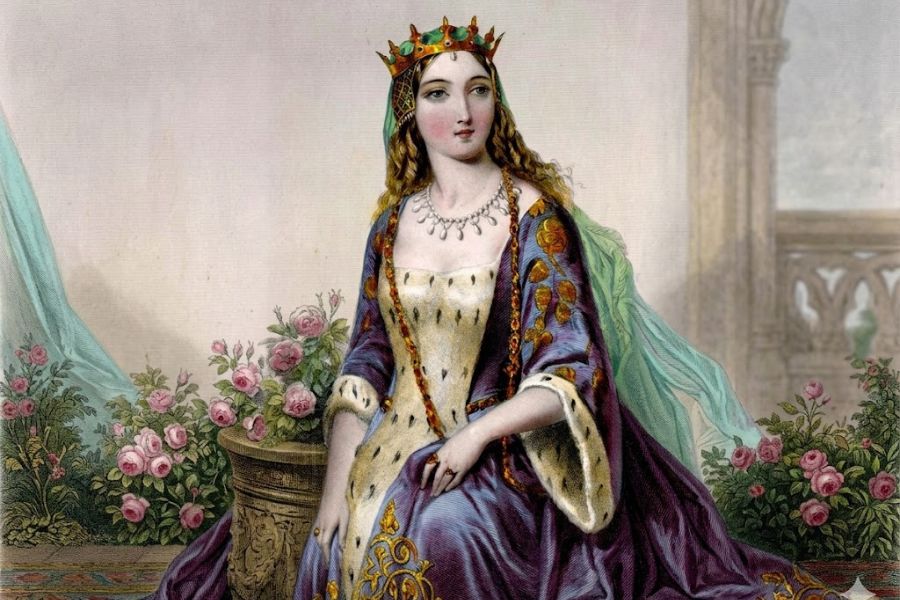
When Henry VI’s queen, Margaret of Anjou, rode north in the winter of 1461 with her young son in tow and the wreckage of Towton at her back, she did not stop at the English border. She crossed it to Scotland, where she went in search of soldiers, shelter, and a foothold to win back her husband’s crown.
This is the part of the Wars of the Roses that tends to get cut from the dramatizations. The marches and counter-marches, the executions in the marketplace, the heads on the gates of York, all of that is familiar. What is less familiar is the steady, calculating presence of Scotland just over the Tweed, watching every move and occasionally reaching in to tip the scales.
Table of Contents
For thirty years, Scottish kings, queens regent, and border lords played the English civil war the way you play a long game of chess. They sheltered Lancastrians when it suited them and made peace with Yorkists when it suited them better.
By the time the dust settled at Bosworth in 1485, the groundwork had already been laid for a marriage that would eventually fold the two crowns together. It started, though, with a desperate queen on a cold road north.
Margaret of Anjou’s Scottish Bargain
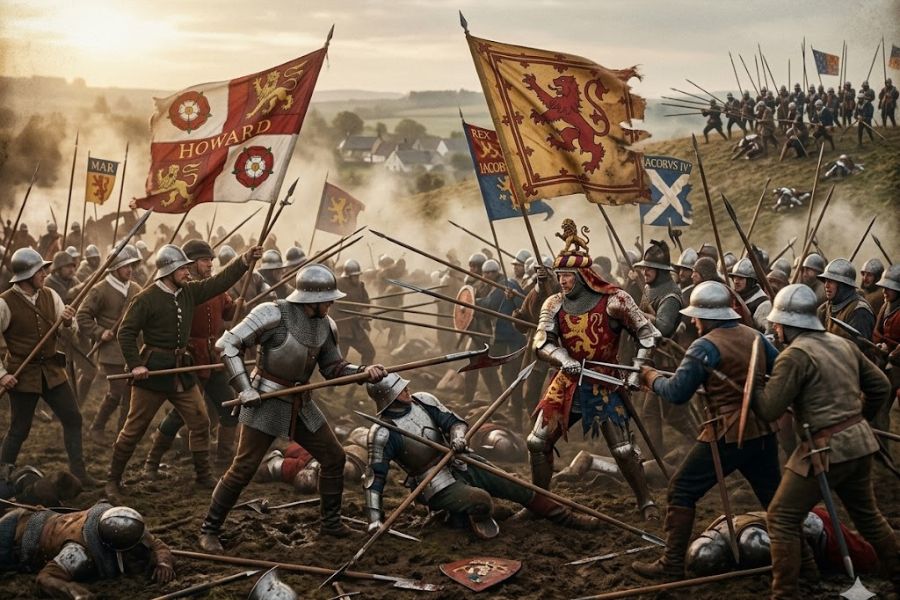
After the rout at Towton in March 1461, the Lancastrian cause looked finished. Edward of York had been crowned in London, Henry VI was a fugitive, and the queen’s options had narrowed to two: France or Scotland. Margaret of Anjou chose Scotland because it was closer and because the Scottish court, then dominated by the dowager queen Mary of Guelders, had reasons of its own to want the Yorkists weakened.
The deal Margaret struck was this. In exchange for Scottish military support, she handed over Berwick-upon-Tweed in April 1461. Berwick had been English since 1482, lost and retaken more times than anyone could comfortably count, and it was the single most valuable piece of border real estate either kingdom could possess.
Margaret gave it up without much hesitation. She needed troops, and Mary of Guelders needed Berwick.
There was talk, too, of a marriage between Margaret’s son, the young Prince Edward of Westminster, and one of the Scottish royal daughters. Nothing came of it in the end, but the negotiations tell you how seriously both sides took the alliance.
Margaret spent months at the Scottish court, lodging at one point in the Dominican friary at Edinburgh, before sailing for France in 1462 to find more substantial backing from Louis XI. Scotland had given her a base when she had nothing else. It was not generosity. It was geopolitics.
The Border as a Lancastrian Bolthole
Once Margaret had moved on, Scotland continued to host Lancastrian exiles. Henry VI himself, after various wanderings, ended up sheltering in the Scottish borders and in northern English castles still held by his loyalists. Bamburgh, Dunstanburgh, and Alnwick changed hands repeatedly between 1461 and 1464, with Scottish troops involved in several of the sieges and relief attempts.
The pattern was familiar from earlier centuries. When an English faction lost at home, the survivors slipped north. The borders were porous, the loyalties of the local lords were flexible, and the Scottish crown could always claim plausible deniability while quietly funneling men and supplies south.
The Percies, the great northern family whose loyalties tilted toward the Lancastrians, had cousins and tenants on both sides of the line. Border reivers raided whoever it was profitable to raid.
The slow grind in Northumberland that followed Towton, the sieges in the rain, the small night actions, the betrayals and re-betrayals of garrison commanders, that’s where the Lancastrian cause actually died the first time. And Scotland was in it up to the elbows.
When Henry VI was finally captured in 1465, he was taken in Lancashire, but he had spent years before that moving between Scottish protection and English hideouts, a king reduced to a fugitive guest.
Edward IV and the Scottish Pivot
Edward IV was not the kind of man to let Scotland meddle without consequences. Once the Lancastrians in the north were broken, he turned his attention to the border and the Scottish crown’s habit of backing his enemies.
The Scottish king at this point was the boy James III, with his mother Mary of Guelders ruling for him until her death in 1463, and a series of factions jostling for control thereafter.
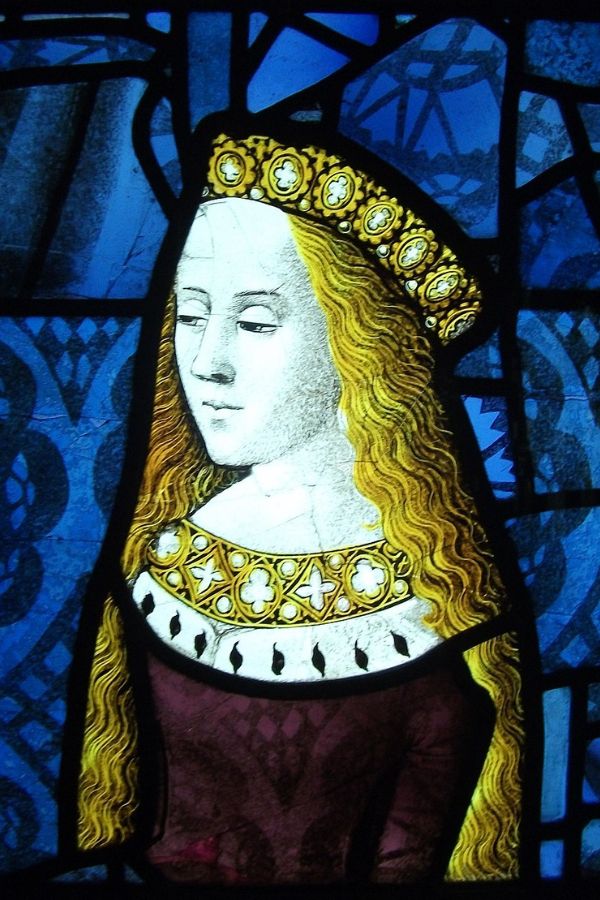
Edward played the long game. He opened diplomatic talks, dangled the possibility of a marriage between his own daughter Cecily and the young Scottish prince James, and signed a truce in 1474 that was meant to lead to a permanent settlement.
For a few years, the border was quieter than it had been in a generation. Then, in 1480, the whole thing fell apart. James III’s brother, the Duke of Albany, defected to England and offered to become king as Edward’s puppet. Edward sent his brother, Richard of Gloucester, north with an army.
In 1482, Richard took Berwick back. The town that Margaret of Anjou had given away in 1461 returned to English hands, and it has remained English ever since. The campaign also saw English troops briefly enter Edinburgh, though they withdrew without placing Albany on the throne.
The whole episode is one of the few unambiguous military successes of Richard’s career before his crown, and it tied the Wars of the Roses directly to the Anglo-Scottish frontier in a way that no chronicler at the time would have missed.
James III, James IV, and the Yorkist Survivors
After Bosworth in 1485, the Yorkist cause did not simply evaporate. Henry Tudor sat on a shaky throne, and anyone with a claim, real or imagined, could find backers somewhere in Europe. Scotland, with its long habit of harboring English exiles, became one of the natural destinations again, only now the exiles were Yorkist rather than Lancastrian.
The most famous of them was Perkin Warbeck, the young man who appeared in the 1490s claiming to be Richard, Duke of York, the younger of the princes in the Tower. James IV, who had succeeded his murdered father in 1488, took Warbeck seriously enough to receive him at court in 1495, give him a noble Scottish bride in Catherine Gordon, and invade England on his behalf in September 1496.
The invasion fizzled out within days. James found that the northern English did not rise for Warbeck, and the Scottish army withdrew after burning a few border villages.
It is the marriage to Catherine Gordon that I always find the saddest detail. She was a kinswoman of the king, well born, and she ended up married to a man who was almost certainly an imposter and who would be hanged at Tyburn in 1499.
She lived on at the English court for decades afterward, married three more times, and became a survivor of one of the strangest episodes of the whole period. The Scottish king had wagered her future on a Yorkist gamble that did not pay off.

The Marriage That Closed the Circle
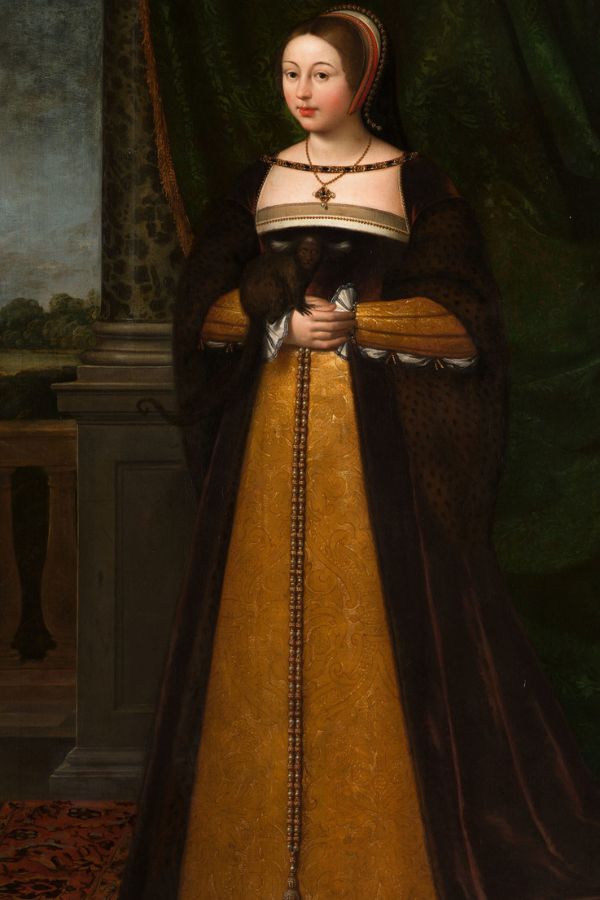
By 1502, James IV and Henry VII were ready to stop fighting. The Treaty of Perpetual Peace was signed in January of that year, and it included a marriage clause. Henry’s elder daughter, Margaret Tudor, would marry James. She was twelve when the treaty was signed, thirteen when she traveled north in the summer of 1503, and the wedding took place at Holyrood on the eighth of August.
The symbolism was not lost on contemporaries. The Tudor rose, itself a piece of dynastic propaganda fusing York and Lancaster, was now being grafted onto the thistle. The poet William Dunbar wrote ‘The Thrissil and the Rois’ for the occasion, and the celebrations stretched across days.
Margaret was the granddaughter of Elizabeth Woodville and Edward IV on her mother’s side, and of Margaret Beaufort on her father’s. She carried Yorkist, Lancastrian, and Beaufort blood into the Stewart line in one body.
The practical results took a long time to show. James IV would die at Flodden in 1513, fighting Margaret’s brother Henry VIII, and the Anglo-Scottish wars went on through most of the sixteenth century.
The dynastic seed planted in 1503 grew slowly, through Margaret’s son James V, her granddaughter Mary Queen of Scots, and her great-grandson James VI, who in 1603 finally inherited the English throne and united the crowns.
Every one of them descended from a marriage that had been arranged to end the long shadow cast by the Wars of the Roses across the border. The bride who rode north in 1503 was carrying more history with her than anyone, including Margaret herself, could have known.