Margaret Tudor was Henry VIII’s sister; she carried English blood north, and her great-grandson eventually united the two crowns. So she’s the Scottish queen most English-speaking readers can name, if they can name one at all.
The trouble is, she wasn’t the only woman to wear that crown, and she wasn’t the first. The Stewart kings had a long line of Scottish queens before her and a couple after, and most of them ruled, or tried to rule, in a country where the king was as likely to die by an assassin’s blade as in his bed.
Table of Contents
These women came from the households of Scottish lairds, the French royal courts, and Danish palaces. They buried husbands, raised child kings, and stood between rival factions while the men around them sharpened knives. Their names rarely make it into the popular histories. They should.
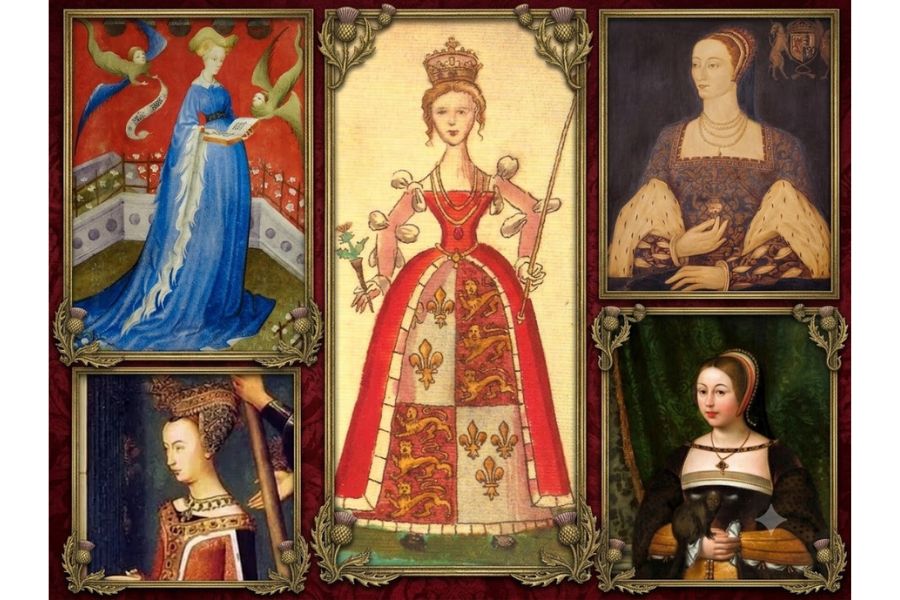
Annabella Drummond and the First Stewart Crown
Annabella Drummond married Robert III before he was king, back when he was still John Stewart, Earl of Carrick. He took the regnal name Robert when he came to the throne in 1390, partly because John was thought unlucky for kings, and partly because the previous John, Balliol, had been such a disaster.
Annabella came from the Drummonds of Stobhall, a well-connected Perthshire family. She was clever, politically aware, and by most contemporary accounts, the stronger personality in the marriage. Her husband was physically frail after being kicked by a horse years earlier, and he spent much of his reign letting his brother, the Duke of Albany, run the country into the ground.
Annabella did what she could. She raised her son, David, Duke of Rothesay, to take an active role in government, pushing him forward as a counterweight to Albany. When she died in 1401, that protection vanished. Within a year, Rothesay was dead, almost certainly starved to death at Falkland Palace on Albany’s orders.
The chronicler Walter Bower didn’t bother to disguise the suspicion. Annabella’s other son, the future James I, was packed off to France for safekeeping and captured by the English on the way. He’d spend eighteen years in English captivity. None of it would have happened, or at least not so easily, if Annabella had lived.
Joan Beaufort and the Murder at Perth
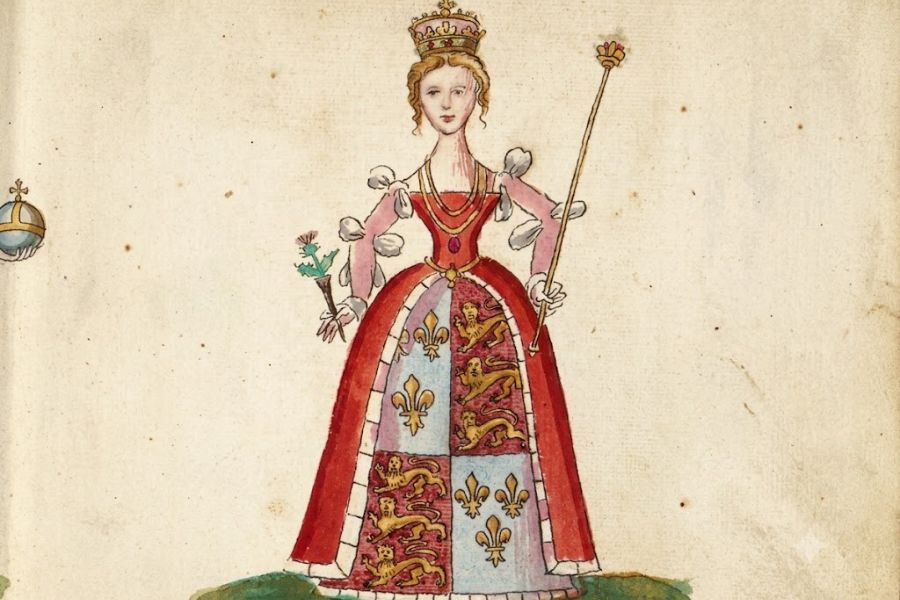
Joan Beaufort was English, a granddaughter of John of Gaunt, and she met James I while he was still a hostage at the English court. The story of their courtship was romantic enough that James himself wrote a poem about it, The Kingis Quair, in which he describes seeing her from his prison window and falling in love.
Whether or not the poem is strictly autobiographical, the marriage happened in 1424, and Joan returned to Scotland with him as queen.
James came home determined to break the power of the over-mighty nobles who’d run riot during his absence. He executed several of his Albany cousins almost immediately, clawed back lands and revenues, and made enemies fast, and he made them everywhere.
In February 1437, a group of conspirators broke into the royal lodgings at the Blackfriars in Perth. Joan tried to bar the door with her own body, reportedly taking a wound in the process. James hid in a sewer beneath the floor and was dragged out and stabbed to death.
Joan survived, badly hurt, and immediately set about hunting down the killers. Within weeks, the men responsible had been tortured to death in public. Her six-year-old son was crowned James II, and Joan held the regency, at least for a time.
She lost it to the Livingston family in a palace coup three years later and died in 1445, possibly while being besieged at Dunbar Castle. She had spent most of her widowhood fighting to keep her son’s throne from the men around him.
Mary of Guelders and a Cannon’s Backfire
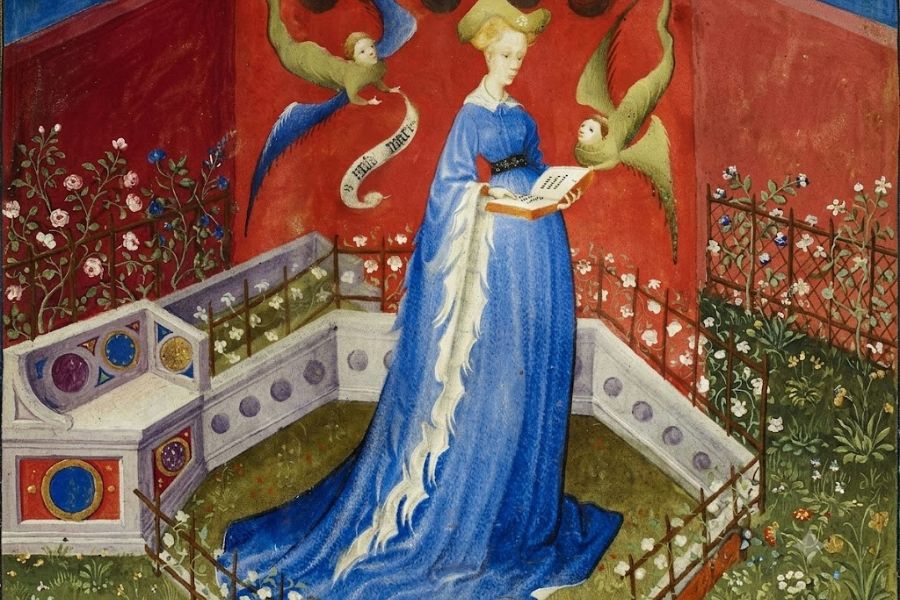
James II married Mary of Guelders in 1449. She was a great-niece of the Duke of Burgundy, which gave Scotland a useful diplomatic link to one of the wealthiest courts in Europe, and she came with a substantial dowry. Mary was pious, well-educated, and politically active from the start.
James II had a temper and a face disfigured by a birthmark that gave him his nickname, James of the Fiery Face. He spent his reign crushing the Black Douglases, the most powerful noble family in Scotland, including stabbing the eighth earl to death himself during a supper at Stirling Castle in 1452.
The king wanted, badly, to push the English out of the border fortresses they still held.
In 1460, at the siege of Roxburgh, James was standing too close to one of his own siege cannons when it exploded. He was killed instantly. Mary took up the regency for their nine-year-old son, James III, and pushed the siege through to a successful conclusion.
Roxburgh fell. For three years, she ran Scotland with a steady hand, negotiating with both Yorkists and Lancastrians during the English Wars of the Roses, founding Trinity College Kirk in Edinburgh, and trying to hold the kingdom steady. She died in 1463, in her early thirties, leaving James III in the care of factions who would treat him as a prize to be fought over rather than a king to be served.
Hooked on the Middle Ages? Get more stories like this one in your inbox.
Margaret of Denmark and the Orkney Pawn
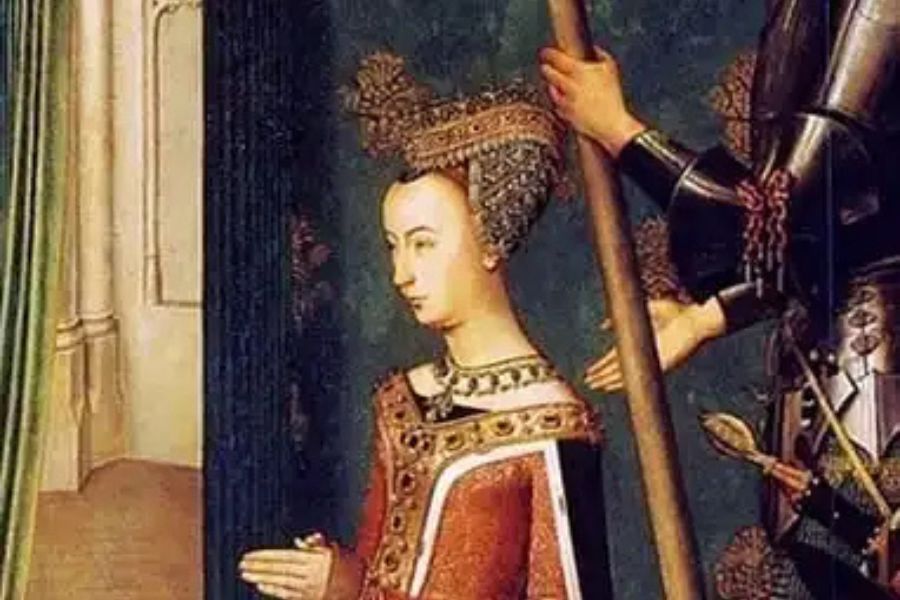
Margaret of Denmark arrived in Scotland in 1469, at the age of 13, to marry James III. Her father, Christian I of Denmark and Norway, couldn’t afford her dowry in cash. So he pawned Orkney and Shetland to Scotland as security. He never redeemed them. That’s how the Northern Isles became Scottish, and they’ve stayed that way ever since.
Margaret was, by every contemporary account, far more popular than her husband. James III was bookish, suspicious of his own nobles, and drawn to low-born favorites whom the aristocracy loathed. Margaret kept her own household at Stirling, raised the three royal sons there, and tried to mediate between the king and the increasingly hostile lords.
She died in 1486, still in her early thirties, possibly poisoned, though the evidence is thin and the rumor likely grew in the telling. Her eldest son, the future James IV, was fifteen when she died. Within two years, he’d joined the rebel nobles who killed his father at the Battle of Sauchieburn.
He wore an iron chain around his waist for the rest of his life as penance. Margaret had spent years trying to prevent exactly that outcome, and she didn’t live to see it fail.
Margaret Tudor and the Aftermath of Flodden
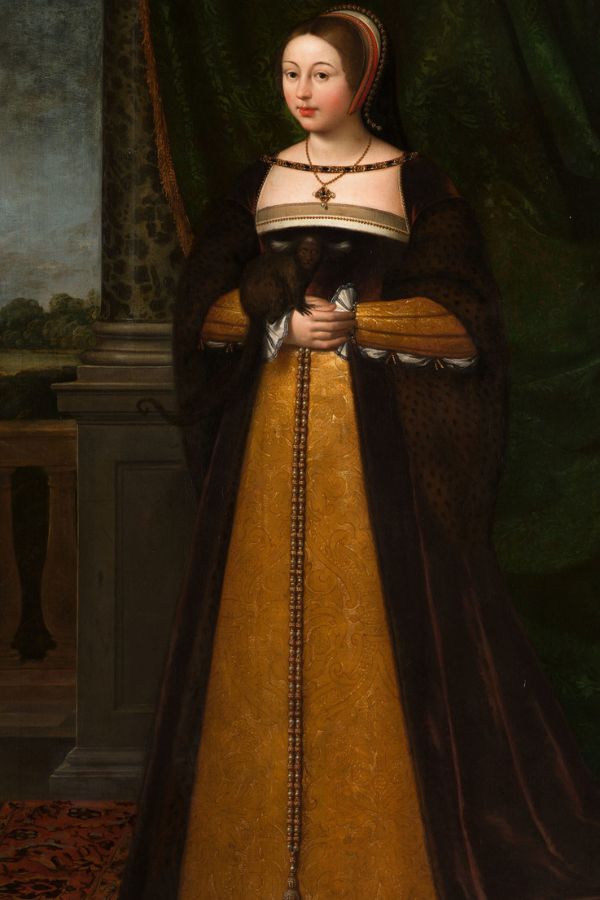
Margaret Tudor arrived in Scotland in 1503, a 13-year-old bride to James IV, thereby sealing the Treaty of Perpetual Peace between England and Scotland. The peace lasted ten years. In 1513, her brother, Henry VIII, invaded France; James invaded England in support of the French alliance; and the Scottish army was annihilated at Flodden. James IV died on the field, along with most of the Scottish nobility.
Margaret was left as regent for her infant son, James V, while she was also pregnant. Within a year of Flodden, she’d made the politically catastrophic decision to marry Archibald Douglas, Earl of Angus, which split the Scottish nobility and cost her the regency. The Duke of Albany, the next male Stewart heir, was brought back from France to take over.
She spent the rest of her life ricocheting between her brother in England, her husband, whom she came to despise, and the Scottish factions who used and discarded her in turn. She tried to divorce Angus, which scandalized Henry VIII, who was at that point still arguing his own marriage to Catherine of Aragon was indissoluble.
She married a third time, to Henry Stewart, Lord Methven, and that didn’t go well either. When she died in 1541, she was estranged from her son James V, who was about to lose his own war with England and die, leaving an infant daughter on the throne. That daughter was Mary, Queen of Scots.
Mary of Guise and the Last Stewart Consort
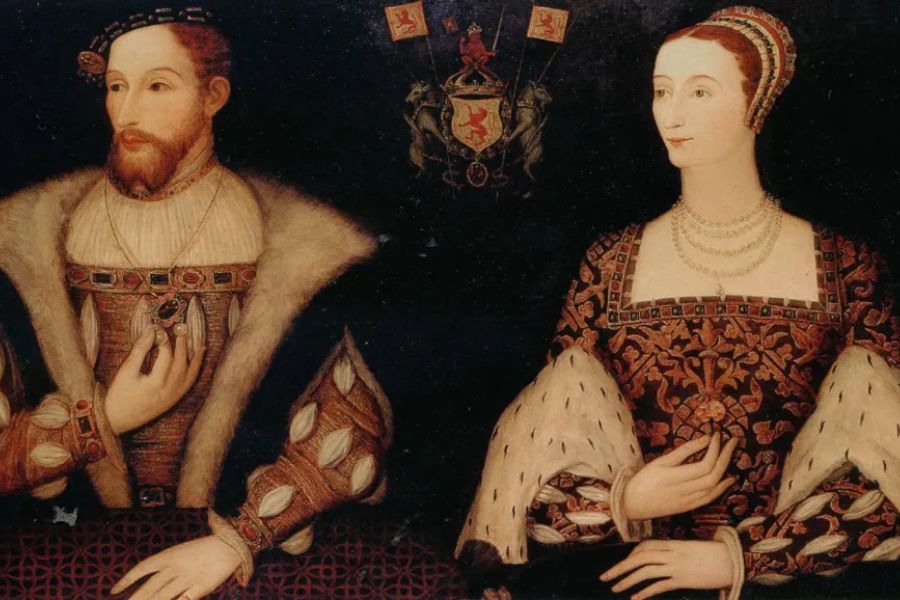
Mary of Guise was already a widow with a young son when James V’s representatives came looking for a French bride in 1538. Henry VIII had also asked for her hand, and she’s said to have replied that she might be a large woman, but she had a very small neck.
Whether or not she actually said it, she chose Scotland. James V was the better political bet, and the French alliance suited her family, the powerful Guise of Lorraine.
The marriage was short and grim. Two infant sons died within hours of each other in 1541. James V died in December 1542, weeks after the disastrous Scottish defeat at Solway Moss, leaving Mary of Guise with a six-day-old daughter as Queen of Scots.
The next eighteen years of her life were spent fighting to keep that daughter on the throne and out of English hands.
She did it well. She outmaneuvered the pro-English faction, got Mary safely shipped to France to marry the Dauphin, and took over the regency herself in 1554. She held Scotland together through the rising tide of Protestant reform, the English-backed Lords of the Congregation, and a French garrison that the Scots increasingly resented.
She died at Edinburgh Castle in June 1560, in the middle of the siege that would end the French alliance and open Scotland up to John Knox’s Reformation. Her daughter would return from France a year later to inherit a country Mary of Guise had bled to preserve, and would lose it within seven years.
Conclusion
What these women had in common was the job of keeping the Stewart line alive through one of the most dangerous monarchies in Europe. Of the eight kings from Robert II to James V, four died violently, and one died in battle. Their wives buried them, raised their heirs, fought their factions, and in several cases ran the country competently in their absence.
The chronicles tend to record the kings, the rebels, and the bishops. The queens slip into the margins.
They shouldn’t. Annabella Drummond shaped the early Stewart succession. Joan Beaufort avenged a murdered king and held a regency by sheer will. Mary of Guelders took Roxburgh. Margaret of Denmark gave Scotland Orkney and Shetland. Mary of Guise kept her infant daughter alive long enough to be crowned in France.
Love a good medieval story?
Join our readers and get tales of kings, queens, castles and ordinary medieval lives straight to your inbox.
Kylie Lang is a nationally syndicated travel journalist with bylines on the Associated Press Wire & more, a medieval history writer, and the founder and lead author of Tales of the Middle Ages (talesofthemiddleages.com). She holds a BA (Honours) in History from the University of Kent and is a member of the British Guild of Travel Writers.