As winter approaches, I find myself researching good historical fiction set in the Middle Ages to read during the colder months. There is nothing quite as cozy as being curled up in front of a roaring fire with a good book and a glass of wine. Living in France, the wine is easy to come by, but the books not so much.
Getting English books in France can be hard, so I try to time my orders to coincide with a trip to see my family in the UK, where delivery is free when I use Amazon. There are a myriad of historical novels out there covering the Middle Ages, and it depends on whether you’re looking for accuracy or complete fiction.
Table of Contents
I prefer well-researched facts with some fiction woven in, and there are some fantastic authors who know exactly how to do it well. The amount of research that’s gone into their books shines through the pages. These ten books are ones I highly recommend if you get stuck when people ask you what you want for Christmas.

10 Historical Novels Set in the Middle Ages
The Middle Ages span a huge portion of time. It starts around the late 5th century and continues through the late 15th century. That covers so many eras and dynasties that you’re spoilt for choice. I’m a fan of the Plantagenet era, and that in itself covers 300 odd years.
These books are ones I’ve either read or listened to on Audible. They all have that special something that makes you read until the wee hours of the morning, leaving you wanting more and unable to put the book down.
The Summer Queen by Elizabeth Chadwick

12th century, set in Aquitaine, France, and the Crusader world
As a massive fan of Eleanor of Aquitaine, this book was always going to be top of my list. You enter The Summer Queen in the 1130s, when Eleanor of Aquitaine (Alienor) inherits her father’s duchy and is plunged into the brutal politics of royal courts. Barely a teenager, she is sent to Paris to marry Prince Louis (soon King Louis VII).
As queen, she confronts the weight of her title, the hostility of court factions, and a husband whose piety and ambition collide with her own sense of agency. Their union is strained by miscarriages, pressure from the church, and the failure to produce a male heir.
The Second Crusade becomes a crucible, Eleanor travels, suffers, questions alliances, and must navigate whispers of scandal. When her marriage fails, she returns to Aquitaine only to be drawn again into dynastic politics, and eventually into a marriage with Henry of Anjou, a man whose temper and drive will test her in new ways.
This book is the first in a trilogy. The other two are The Winter Crown (Book 2) and The Autumn Throne (Book 3).
The Author, Elizabeth Chadwick
Elizabeth Chadwick is one of the most respected historical fiction writers of our time, known for her ability to bring the Middle Ages to life with striking authenticity. Her novels are grounded in meticulous research, often drawn from medieval chronicles, charters, and primary sources, which gives her storytelling a depth and accuracy that many writers never achieve.
What sets Chadwick apart is her focus on character and humanity. Her protagonists, often women navigating male-dominated worlds, feel deeply real, flawed, ambitious, vulnerable, and resilient. She captures both the sweep of historical events and the quiet, human moments that shape them, weaving fact and fiction together so seamlessly that you forget where one ends and the other begins.
Labyrinth by Kate Mosse

13th century, set in Carcassonne and the Languedoc region of France
Labyrinth is one of those books that hooks you from the first few pages and refuses to let go. It was my dad who first introduced me to Kate Mosse with another one of her novels, The Burning Chambers, and from the moment I opened the book, I was completely engrossed —and it was no different with this one.
The story moves between two timelines: one following Alais, a young woman living in 1209 during the brutal Albigensian Crusade, and the other set in the present day with Alice Tanner, who stumbles upon a mysterious cave while volunteering on an archaeological dig in the Pyrenees. What connects them is an ancient secret tied to the Holy Grail, guarded for centuries and fought over by those desperate to control its power.
Alais’s world is one of danger and shifting loyalties. As Carcassonne braces for siege, she becomes the keeper of a sacred knowledge passed down through generations. Her father entrusts her with three powerful books that must never fall into enemy hands, setting her on a perilous path through betrayal, sacrifice, and survival. Eight hundred years later, Alice’s discovery unravels layers of hidden history, pulling her deep into a web of intrigue that echoes Alais’s own fight for truth.
This book is the first in Mosse’s Languedoc Trilogy, followed by Sepulchre and Citadel. Each novel explores a different era of southern France, blending historical events with gripping fiction.
The Author, Kate Mosse
Kate Mosse has a rare talent for weaving historical fact with compelling storytelling, creating novels that are both page-turners and deeply rooted in real events. Her writing draws heavily on the landscapes, legends, and conflicts of southern France, bringing its medieval past vividly to life. What makes her stand out is the way she builds tension across centuries, linking past and present without losing the depth of either story.
Her characters are complex and fully realized, often caught between faith, power, and destiny. She explores how extraordinary circumstances shape ordinary people, and she does so with a sensitivity to historical detail that makes the world of her novels feel tangible. Mosse doesn’t just set her stories in the Middle Ages; she resurrects them with all their violence, hope, and humanity.
Elizabeth of York, the Last White Rose by Alison Weir

15th–16th century, set in England
If you’re fascinated by the Wars of the Roses and the birth of the Tudor dynasty, this novel is a must-read. It follows the life of Elizabeth of York, daughter of Edward IV, whose fate is tied to one of the most turbulent periods in English history. After years of bloodshed between the Houses of York and Lancaster, her marriage to Henry Tudor unites the rival factions and ushers in a new era. But beneath the surface of this carefully crafted alliance lies grief, suspicion, and political danger.
Weir traces Elizabeth’s journey from princess to queen with sharp historical insight. She loses her father, navigates the chaos surrounding the disappearance of her brothers, the Princes in the Tower, and endures the fallout of Richard III’s controversial reign. Her eventual marriage to Henry VII is far from a romantic resolution.
It is a strategic bond meant to secure the crown and stabilize a fractured kingdom. Through betrayals, rebellions, and the strain of motherhood, Elizabeth emerges as a quiet but powerful figure whose influence shapes the early Tudor court.
This book is part of Weir’s series on the Tudor queens, which also includes novels on Katherine of Aragon, Anne Boleyn, and Jane Seymour.
The Author, Alison Weir
Alison Weir has built her reputation on blending impeccable scholarship with storytelling that brings history alive. A respected historian and novelist, she bases her work on extensive archival research, yet never lets the detail overwhelm the narrative. Her books reveal the human stories behind historical events, focusing on the private lives, fears, and ambitions of figures often reduced to footnotes in history books.
What sets Weir apart is how she gives voice to women whose power was often exercised behind the scenes. She explores the emotional weight of duty, the cost of royal marriages, and the subtle ways influence was wielded in a male-dominated world. Through her writing, queens like Elizabeth of York step out from the shadows and become fully realized figures, allowing readers to see history not just as a series of battles and treaties but as a profoundly human story.
Hooked on the Middle Ages? Get more stories like this one in your inbox.
Cloud Cuckoo Land by Anthony Doerr

15th century, set in Constantinople and beyond
This isn’t a traditional medieval novel, but the heart of its story beats in the final days of the Byzantine Empire. One of its central threads follows Anna, an orphaned seamstress in 1453 Constantinople, as the city faces its brutal siege by the Ottoman Turks.
Life is precarious and survival uncertain, but when Anna stumbles upon a long-lost ancient text in a monastery library, it becomes her lifeline. The manuscript tells the tale of Aethon, a dreamer searching for a magical city in the sky, and it offers her hope in a world falling apart.
At the same time, another story unfolds with Omeir, a conscripted farm boy on the other side of the siege, dragged into the conflict despite his gentle nature. Their paths, though seemingly distant, are woven together by the enduring power of stories and the human need to preserve knowledge even as civilizations crumble. These narratives are mirrored by others set centuries later, each shaped by the same manuscript, showing how one piece of writing can outlast empires.
Doerr’s novel is a testament to the power of storytelling across time. The medieval sections, grounded in the real siege of Constantinople, capture the fear, hunger, and desperation of a city on the edge of destruction, while celebrating the resilience of human curiosity.
The Author, Anthony Doerr
Anthony Doerr is known for writing novels that explore the sweep of history through intimate, deeply human stories. He also wrote The Light We Cannot See. His work often focuses on how people endure and connect despite the chaos around them, and Cloud Cuckoo Land is no exception. He blends historical fact with literary imagination in a way that makes the past feel immediate and alive, never distant or dusty.
What makes Doerr remarkable is his ability to balance scale and detail. He moves effortlessly between the vast forces of history and the private struggles of individuals caught within them. The result is historical fiction that is as emotionally powerful as it is intellectually rich, reminding readers that stories are often the most enduring legacy of any age.
Pillars of the Earth by Ken Follett

12th century, set in England
Ken Follett’s books are long, and when I say long, I mean at least 900 pages, but boy, are they worth reading. Few novels capture the grit, violence, and ambition of the Middle Ages like this one. Pillars of the Earth takes place in 12th-century England, a period torn apart by civil war, famine, and shifting power.
At its center is the fictional town of Kingsbridge, where a visionary monk dreams of building a cathedral that will outlast generations. Around this ambitious project orbit the lives of builders, nobles, kings, and outcasts, each with their own desires and betrayals that shape the town’s fate.
The story follows Tom Builder, whose obsession with creating something enduring drives much of the novel, and Aliena, a dispossessed noblewoman fighting to reclaim her family’s place in a brutal world. They are joined by Jack, a gifted stonemason with a mysterious past, and Prior Philip, whose faith collides with the greed and corruption of those in power. Their lives intertwine against a backdrop of anarchy and shifting loyalties, where survival depends on wit, resilience, and relentless ambition.
The cathedral itself becomes a metaphor for human persistence, rising slowly over decades while the world around it crumbles and changes. Through war, betrayal, love, and loss, it remains a symbol of hope and defiance in a violent age.
Pillars of the Earth is part of Ken Follett’s Kingsbridge novels, all set in the fictional English town of Kingsbridge. The sequence is The Evening and the Morning, set around 997 to 1007; The Pillars of the Earth, set in the 12th century; World Without End, set in the 14th century; A Column of Fire, set in the 16th century; and The Armor of Light, set from the 1790s into the early 1800s.
The Author, Ken Follett
Ken Follett is a master storyteller known for combining historical accuracy with cinematic drama. He builds his narratives on a solid foundation of research, immersing readers in the social, political, and religious realities of the period. His attention to detail, from the techniques of medieval cathedral construction to the brutal realities of feudal life, makes the world of Pillars of the Earth feel entirely real.
Follett’s strength lies in how he weaves complex characters into vast historical landscapes without losing the human element. He understands that history is driven as much by personal ambition, fear, and love as by kings and armies. That focus on ordinary people shaping extraordinary events has made his work among the most widely read and enduring historical fiction of the modern era.
The Time of Singing by Elizabeth Chadwick

12th–13th century, set in England and Normandy
Another Elizabeth Chadwick novel about lesser-known historical characters. The Time of Singing tells the story of Roger Bigod and Ida de Tosny, a royal ward and former mistress of King Henry II. The book begins in the 1170s, a turbulent time marked by shifting loyalties and power struggles following Henry’s conflicts with his sons. Roger, heir to the powerful Bigod earldom, is fighting to restore his family’s fortunes and reputation after his father’s rebellion left them in disgrace.
Ida’s path is very different. As a young noblewoman under the king’s guardianship, she has little say over her own fate. After bearing Henry’s child, she is married off to Roger to secure alliances and strengthen the Bigod family’s position.
What begins as a political arrangement slowly evolves into something more complex and genuine, as Roger and Ida navigate trust, betrayal, and the heavy expectations placed upon them. Their marriage unfolds against a backdrop of royal intrigue, the rise and fall of great barons, and the never-ending tension between loyalty and ambition.
I loved how the book showed the deeply human side of medieval marriage, far removed from the romanticized versions often found in fiction. It’s a story about two people learning to build a life together in a world where choice is rare and love, if it comes, must fight to survive. Chadwick captures the weight of duty and the resilience needed to carve out a space for happiness amid the harsh realities of medieval power.
The Last Kingdom by Bernard Cornwell

9th century, set in England
If you like your historical fiction raw, bloody, and brimming with power struggles, The Last Kingdom delivers from the very first chapter. The story begins in the late 800s, when England is not yet a unified kingdom but a patchwork of rival realms under constant threat from Viking invasion.
At the center is Uhtred of Bebbanburg, a Saxon nobleman captured as a boy by Danish raiders. Raised among the very people who killed his family, he grows up torn between two worlds: the Norse warriors who treated him as one of their own and the Saxon birthright he was meant to inherit.
As Uhtred comes of age, he is drawn into Alfred the Great’s orbit, the visionary king of Wessex, determined to push back the Viking tide and forge a united England. But loyalty does not come easily. Uhtred’s heart leans toward the freedom and ferocity of the Danes, even as his duty ties him to Alfred’s cause. Battles rage across the land, alliances shift with brutal speed, and Uhtred must decide who he is and where he truly belongs.
This is the first book in The Saxon Stories, a bestselling series that spans Uhtred’s life and the birth of England. They were adapted into a hugely popular television series by the BBC and Netflix, bringing Uhtred’s story and the brutal world of early medieval England to the screen for a global audience.
The Author, Bernard Cornwell
Bernard Cornwell is widely regarded as one of the greatest writers of historical fiction, known for his meticulous research, sharp prose, and cinematic storytelling. He excels at making complex history feel immediate, creating characters who are deeply flawed yet impossible to forget. His battle scenes are brutal and immersive, and his depiction of early medieval England is gritty and authentic.
His stories embrace the chaos, cruelty, and resilience of the age, giving readers a visceral sense of what it meant to live and fight during one of the most formative periods in English history.
Pope Joan by Donna Woolford Cross

The 9th century, set across the Frankish Empire and Rome
This novel tells one of the most controversial and compelling legends of the Middle Ages: the story of a woman who, disguised as a man, rose through the ranks of the Church to become pope. The book follows Joan, born in the 820s in the Carolingian Empire, whose brilliance and hunger for knowledge set her apart in a world where education is denied to women.
After a violent attack destroys her home and family, Joan disguises herself as her dead brother and takes the name “John Anglicus,” entering a monastery where her intellect quickly draws attention. As the years pass, Joan’s ambition and skill carry her from the cloisters of learning to the heart of power in Rome.
She becomes a trusted advisor, a healer, and eventually a cardinal, all while hiding the truth of who she is. Her ultimate ascent to the papacy is both triumphant and perilous, and the threat of discovery looms over every decision she makes. The novel explores not only her extraordinary rise but also the dangers, sacrifices, and compromises required to achieve it in a world hostile to women’s authority.
It tackles questions of gender, power, and faith without straying from the brutal realities of the era. Whether or not the historical Pope Joan truly existed is still debated by scholars, but Cross’s portrayal makes the legend feel entirely plausible, deeply human, and impossible to forget.
The Author, Donna Woolfolk Cross
Donna Woolfolk Cross approaches medieval history with a storyteller’s instinct and a scholar’s care, crafting fiction that’s as thought-provoking as it is dramatic. Her meticulous research into 9th-century life, from the structure of the Church to daily medieval customs, grounds the novel firmly in its historical setting, even as it explores one of the most enduring mysteries of the Middle Ages.
She focuses on the human cost of ambition. Joan’s rise is not painted as a triumphant fairy tale but as a struggle filled with danger, compromise, and painful choices. That balance between sweeping historical narrative and intimate human drama is what has kept Pope Joan on reading lists for decades.
The Lost Queen by Signe Pike

6th century, set in Scotland and the ancient kingdoms of Strathclyde and Alt Clut
This novel pulls you into the shadowy, half-forgotten world of post-Roman Britain, where myth and recorded history blur. The Lost Queen follows Languoreth, a real historical figure often overlooked by chroniclers but believed to be the sister of Myrddin, the man who inspired the legend of Merlin.
Born into a royal family during a time of shifting power and the encroachment of Christianity, Languoreth is raised in a world still steeped in old Celtic traditions. Her life is shaped by duty from the beginning. To secure her kingdom’s future, she is married off to a powerful warlord, a decision that sets her on a path of political intrigue, heartbreak, and defiance.
Through Languoreth’s eyes, we see a society caught between two belief systems: the fading pagan world of her ancestors and the growing influence of the Christian church. As kingdoms rise and alliances break, she becomes a pivotal figure in the struggle to preserve her people’s identity and independence. Her story is one of resilience and strength, but also sacrifice, as she navigates love, loyalty, and the brutal realities of early medieval power.
This book is the first in a trilogy, followed by The Forgotten Kingdom and The Sky King. Together, they reimagine the historical backdrop that may have given rise to Arthurian legend, grounding it in real people and real conflicts rather than myth.
The Author, Signe Pike
Signe Pike brings a historian’s curiosity and a storyteller’s skill to a period often shrouded in legend. Her meticulous research into early medieval Scotland, from archaeological evidence to ancient texts, gives the novel an authenticity that sets it apart from typical Arthurian fiction.
I love the focus on women’s roles in this turbulent era. Languoreth is no background figure. She is a leader, a diplomat, and a witness to history in the making. By putting her at the center of the narrative, Pike challenges the traditional male-dominated version of the Arthurian world and restores a powerful female voice to its origins.
Shadow on the Crown by Patricia Bracewell

11th century, set in England and Denmark
This novel plunges you into the treacherous politics of early medieval England through the eyes of Emma of Normandy, one of the most remarkable queens of the period. The story begins in 1002 when the teenage Emma is sent from her homeland in Normandy to marry King Æthelred of England.
It is a marriage forged not by love but by strategy, meant to secure an alliance against Viking invasions. From the moment she steps off the ship, Emma is thrown into a world of suspicion, danger, and ruthless court intrigue. Life at Æthelred’s court is far from welcoming. The king is haunted by insecurity and paranoia, while his ambitious nobles view Emma as an outsider and potential threat.
As she learns to navigate this hostile environment, Emma uses intelligence, patience, and political skill to carve out power for herself in a world that offers women little. Her story is one of survival and transformation, from pawn to player in the deadly game of medieval politics.
This book is the first in a trilogy, followed by The Price of Blood and The Steel Beneath the Silk, which together trace Emma’s evolution from foreign bride to one of the most influential queens in English history.
The Author, Patricia Bracewell
Patricia Bracewell excels at weaving meticulous historical research into a story that feels intimate and immediate. She draws on medieval chronicles and contemporary accounts to bring Emma’s world to life, from the dangers of Viking raids to the shifting loyalties of the Anglo-Saxon nobility.
Bracewell’s greatest strength is how she portrays Emma herself. She is neither idealized nor vilified, but shown as a young woman forced to grow harder and more strategic to survive. Through her eyes, we see the brutal realities of royal life in the 11th century, where alliances are fragile, betrayal is constant, and power must be seized before it is taken away.
Love a good medieval story?
Join our readers and get tales of kings, queens, castles and ordinary medieval lives straight to your inbox.
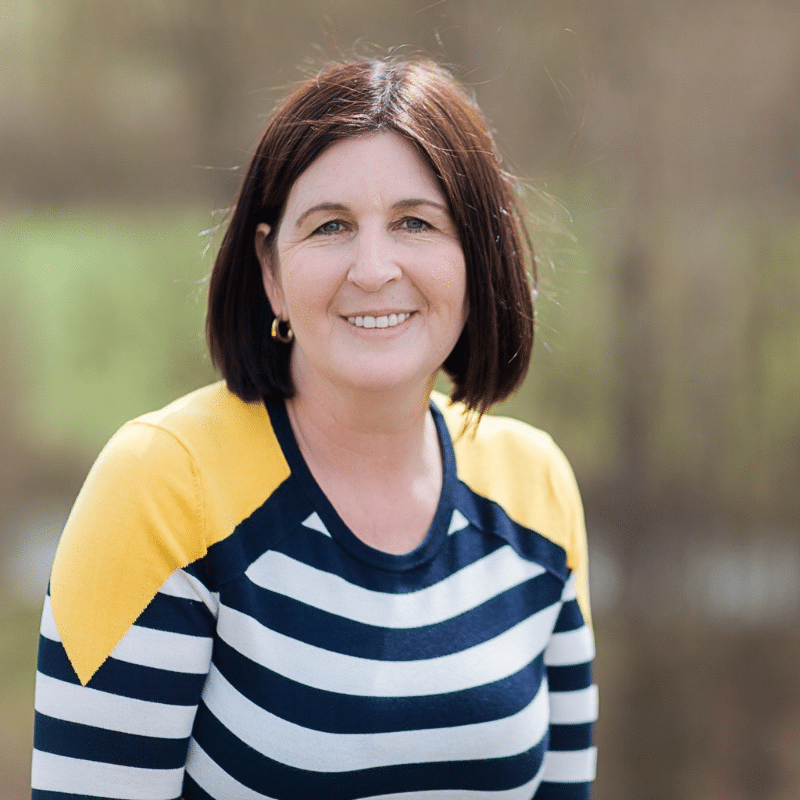
Kylie Lang is a nationally syndicated travel journalist with bylines on the Associated Press Wire & more, a medieval history writer, and the founder and lead author of Tales of the Middle Ages (talesofthemiddleages.com). She holds a BA (Honours) in History from the University of Kent and is a member of the British Guild of Travel Writers.


