
Hygiene in the Middle Ages was shockingly bad. Toilets didn’t exist, bathing wasn’t a thing, and water was filled with nasty things. Living in medieval times, you took your life in your hands.
If you think modern commutes are challenging, consider the medieval experience of navigating streets that were essentially rivers of sewage. Between the mud-slick streets, questionable medical practices, and the general lack of plumbing, it’s easy to assume everyone back then stank to high heaven. But is that actually true? Or have we all been fed a slightly exaggerated tale of medieval grime?
Table of Contents
The truth sits somewhere between “they did their best” and “you wouldn’t want to sit next to them on a hot day.” Hygiene in the Middle Ages wasn’t as simple as turning on a tap or grabbing a bottle of shampoo. People had ideas about cleanliness; some were surprisingly sensible, and others were completely bonkers. They scrubbed with herbs, perfumed their armpits, and threw waste out the window with a casual “look out below!”
So, let’s take a little wander (with our noses firmly covered) through the streets, homes, and bathhouses of medieval Europe. We’re lifting the lid on what people actually did to stay clean, or at least smell less awful, and exploring how those habits, beliefs, and fragrant misconceptions shaped life back then. Get ready because it’s about to get dirty.
Cleanliness Was Complicated: Water Wasn’t Always the Answer
We take clean water for granted now. It’s there when we turn on the tap, hot or cold, filtered and ready to go. But in the Middle Ages? Clean water was a gamble. If you lived near a spring or well, you were doing alright, but there were no guarantees it hadn’t been contaminated by runoff, waste, or something worse floating downstream.
Public fountains existed in towns, but they were shared by everyone. And that meant everything from rinsing vegetables to washing faces, and even soaking bandages. In cities, the local river doubled as a laundry, a bath, and a dumping ground.

Medieval water sources were about as clean as a mud puddle in a pig pen. People drew their water from the same places where tanners dumped their chemicals, butchers tossed animal remains, and everyone emptied their chamber pots. The result? A deadly cocktail that made every sip a gamble with destiny. Beer and weak wine were safer bets.
Washing wasn’t a simple affair. Heating water took time and fuel. You had to haul it, boil it, and then try not to freeze while scrubbing down. For many, a full-body wash was a rare event reserved for special occasions or when the smell got a bit too much.
Waste Disposal Was… Creative
There was no bin day, no sewer system, and definitely no one coming round in a high-vis jacket to collect your compost. Waste, human or otherwise, usually went straight into the street. Literally.
In towns and cities, it was totally normal to dump the contents of your chamber pot out the window with a quick shout of “Gardyloo!” (if you were feeling polite). The lucky pedestrians below had developed a sixth sense for dodging these aromatic projectiles, while the unlucky ones? Well, let’s just say medieval laundry services made a killing.

Some streets had shallow drainage channels down the middle known as “kennels,” which were supposed to carry the mess away. But these often just pooled, especially in busy areas, turning into open-air stews of rot and filth.
And if the streets weren’t bad enough, rivers caught the overflow. Towns upstream washed, drank, and bathed in the same water that downstream neighbors used to get rid of everything else.
The result? A not-so-fragrant cocktail of waste and disease. It’s no wonder cities became breeding grounds for sickness. Forget the idea of quaint cobbled streets, these were ankle-deep in the kind of muck that makes you want to burn your shoes.
Not All Bodies Were Treated Equally
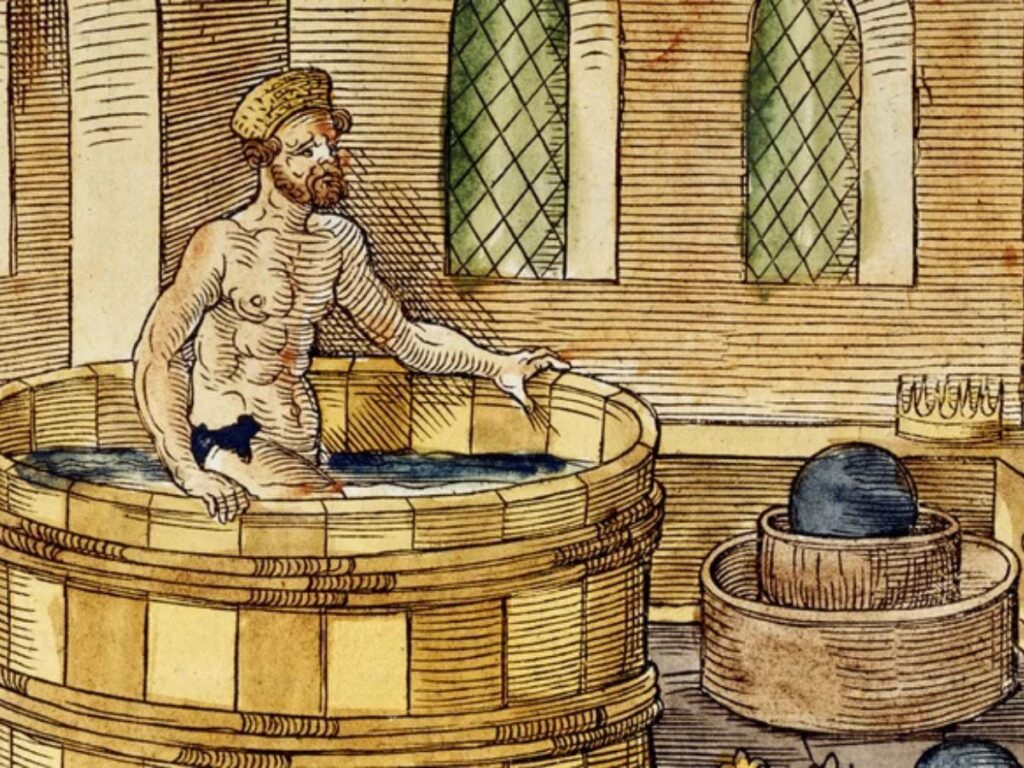
Your social class made a big difference when it came to keeping clean. If you were rich and lord of the manor in a castle, you might bathe in a wooden tub with scented oils, rose petals, and heated water brought in by servants. If you were poor, a rinse with cold water in a shared basin was about as luxurious as it got. And for many, even that was a rare event.

Public bathhouses were popular in towns and cities. They were places to wash, chat, eat, and sometimes flirt. Men and women often bathed together, which raised a few eyebrows among church leaders. Over time, the bathhouses gained a shady reputation, especially when outbreaks of disease hit. By the late Middle Ages, many were shut down, blamed for spreading illness and encouraging “immoral behavior.”
In rural areas, people made do with what they had. That usually meant wiping off the dirt with a damp cloth or scrubbing with sand or ash. Full baths were infrequent, often saved for holy days or big life events like weddings. The idea of bathing once a day would have seemed strange, if not suspicious. For most people, staying clean meant managing the smell and hoping for the best.
Herbs, Scrubs, and a Whiff of Something Stronger
Without soap as we know it, medieval folk got inventive. If water wasn’t available or safe, they turned to dry scrubbing. That meant rubbing down with sand, ash, or coarse cloth to remove dirt and sweat. It did the job well enough to stop the worst of the grime from building up.
Herbs played a big role too. People used rosemary, lavender, or sage bundles to rub on their skin or hang around their homes. Not only did they help mask unpleasant odors, but they were also believed to have cleansing and protective powers. You could say it was the medieval version of essential oils, only with fewer wellness influencers and more fleas.
Cleaning routines were often focused more on smell than hygiene. A person who smelled clean was assumed to be clean, even if they hadn’t touched water in days. For those who could afford it, perfumed cloths and herbal sachets were part of the daily toolkit. For everyone else, it was a matter of finding the right leaf, ash, or twig to keep the worst of the pong at bay.

Perfumes, Incense, and Masking Odours
Perfumes weren’t just for the wealthy; although the finest ones, made with imported spices, rosewater, and ambergris, definitely came with a price tag. Even among the lower classes, people found ways to add fragrance to their lives, often through herbs or crushed flowers tucked into clothing or worn around the neck.
In crowded homes and marketplaces, burning herbs or resins helped mask the everyday stench of unwashed bodies, rotting food, and open sewers. Pomanders, small metal balls filled with fragrant materials, were popular. Some were fancy, others were simple, but their purpose was the same: block out the smell of the person next to you, and maybe your own.
Scent was also tied to superstition. Many believed bad smells could make you ill, so sweet-smelling things were thought to protect you. During plagues, doctors carried herbs and vinegar-soaked sponges in their masks to filter out “bad air.” In a world without germ theory, a pleasant smell was seen as a barrier between life and death.
Hooked on the Middle Ages? Get more stories like this one in your inbox.
Filth at Home: Where the Dirt Lived With You
Most medieval homes were rough, dark, and messy. Floors were often just packed earth, sometimes covered with rushes or straw that rarely got changed. Over time, those layers soaked up everything from spilled drinks to food scraps and worse, turning the floor into a damp, mouldy mess that animals and insects loved.
People shared their homes with livestock, especially in rural areas. Chickens wandered in and out, pigs rooted around in corners, and the family goat might sleep beside the fire. Animals provided warmth, and space was limited. The downside? Droppings on the floor, fleas in the bedding, and a constant background hum of odor.
Daily life was full of smoke and grime. Without chimneys in most homes, smoke from cooking fires filled the rooms, staining the walls and settling on skin and clothes. Ventilation was poor, windows were tiny or non-existent, and everything stayed damp. It’s no wonder people got sick so often. The idea of “fresh air” just didn’t exist inside these four walls.

Toilets: A Hole Lot of Trouble
In the Middle Ages, “using the loo” meant a lot of different things depending on where you were and how much money you had. For most people, it was a simple hole in the ground outside, also known as a pit latrine, or a wooden bench over a trench, sometimes shared by the entire village.
You’d find a slightly fancier version called a garderobe in castles and monasteries. These were vertical shafts built into the outer wall, with a seat at the top and the drop landing straight outside, often into a moat or cesspit. You can guess what happened to the moat. Some people hung their robes near the shaft, believing the smell would keep moths away.
There was no toilet paper either. People wiped with straw, moss, wool scraps, or even their left hand. Handwashing was encouraged by some religious orders, but soap was scarce and water wasn’t always clean. Unsurprisingly, diseases linked to poor sanitation, like dysentery, spread so easily. In short, if you ever find yourself time-travelling, you’ll want to pack some tissues.

Poor Ventilation and Mold Growth
If you’ve ever left laundry too long in the machine and got that musty smell, imagine living with that every single day. Most medieval homes had tiny windows, no glass, and thick stone or wattle-and-daub walls that held onto moisture. Fires were lit for warmth and cooking, but without proper chimneys, the smoke simply filled the room or seeped into the walls.
The result? Soot-covered surfaces and walls that stayed damp for months on end. In colder months, homes were shut up tight to keep in heat, making things worse. Moisture clung to the walls, mould grew in corners, and everything from food to bedding took on that sour, earthy smell.
Living in this damp environment had consequences. Respiratory illnesses were common, especially among children and the elderly. The link between damp air, mold, and poor health wasn’t understood yet, so people just lived with it. For most, the smell of mold was simply part of life, not a warning sign of something more dangerous growing in the walls.
The Bed Was Worse Than the Bathroom
You might think the loo (toilet) was the worst place in a medieval home, but the real horrors were waiting under the covers. Beds were made with straw or hay stuffed into sacks, sometimes layered with old fabric or animal hair. Over time, the stuffing broke down, absorbed moisture, and became a cozy little ecosystem for things you definitely don’t want near your skin.
Fleas, lice, and bedbugs thrived in these conditions. The straw rarely got changed, and washing bedding was a luxury most people couldn’t manage more than once or twice a year. Some beds even had wooden frames lined with wool or moss to make them “softer,” which only added to the fun for the bugs.
These pests didn’t just cause a few itches. They spread disease, triggered infections, and generally made people’s lives miserable. There are accounts of people combing lice out of their hair daily, and scratching in bed was just part of the nighttime routine. When people talked about sleeping rough, it wasn’t just about the floor but about what was already in the bed.

Medieval Medicine and Misconceptions About Cleanliness
The medieval view of health was based more on ancient ideas and superstition than science. Cleanliness wasn’t seen as something that could prevent illness. In fact, some people believed that bathing too often could actually make you sick. The thinking was that warm water opened the pores, and disease could sneak into open pores. So staying a bit grimy? That was protective, in their eyes.
Instead of washing, people focused on balancing the four humors: blood, phlegm, black bile, and yellow bile. Feeling unwell? You probably had too much of one. The solution might involve bloodletting, purging, or applying a paste made from who-knows-what to draw the sickness out. Hygiene played little to no role in recovery, and the idea of bacteria or contagion didn’t exist yet.
Doctors didn’t wear gloves, surgical instruments weren’t cleaned, and wounds were often packed with herbs or animal fat. There was no concept of sterilisation. Most medical treatments were more harmful than helpful, and infections were common. For many, the cure was just as dangerous as the illness, especially if it involved a barber with a blade.
Bloodletting and Other Unsanitary Medical Practices
You weren’t offered bed rest or fluids if you went to a medieval healer with a fever. You were more likely to have a vein opened. Bloodletting was the go-to cure for everything from headaches to the plague. Doctors believed removing “bad blood” would balance the body’s humors and restore health.

Leeches were also popular, especially for the wealthy who could afford them. The idea was the same: eliminate the excess and let the body rebalance itself. It didn’t work, of course, but it made people feel like something was being done. And when you’re desperate, you’ll try just about anything, even sticking a parasite to your arm.
Medical tools weren’t disinfected, and surgeries were done with the same knives used for cutting food or trimming hair. There was no understanding of germs, and wounds often became infected. Sometimes the instruments themselves were rusted or reused straight from another patient. Infections spread fast, and recovery was more down to luck than skill.
The Role of Barbers as Surgeons
In the Middle Ages, your barber also pulled teeth, stitched wounds, lanced boils, and even amputated limbs. If it needed cutting, a barber could probably do it. They were known as barber-surgeons, and while they weren’t formally trained doctors, they were often the only medical help most people could afford or find.

Barber shops had the tools: razors, knives, and cloths, all ready for whatever job came through the door. Bloodletting was one of their most common services, often advertised with a red-and-white striped pole, a tradition still around today. Only back then, the pole represented the bloodied cloths hung out to dry.
Without proper knowledge or hygiene practices, treatments were risky. Pain relief was rare, infection was common, and survival wasn’t guaranteed. But in a world where medical schools were few and full physicians were expensive, the local barber was often the best option.
Plagues and Epidemics: The Deadly Consequences
For all their creative attempts at staying clean, medieval hygiene fell apart completely when disease came knocking. And when it did, it didn’t knock politely, it smashed through the door. The Black Death hit Europe in the 14th century and wiped out millions. It spread fast, killed quickly, and thrived in the cramped, filthy conditions of towns and cities.

Fleas from rats were the main culprits, but no one knew that at the time. People blamed everything from bad air to divine punishment. The streets were already full of waste, homes were packed with people and animals, and water sources were easily contaminated. All of it combined into a perfect storm that allowed the plague to tear through communities at terrifying speed.
People died in their homes, in the streets, and sometimes mid-sentence. Bodies piled up faster than they could be buried. Those who could afford to fled the cities, hoping the countryside would offer some kind of escape. However, without understanding how the disease spread, isolation wasn’t always the cure.
Quarantine and Superstitions About Illness
Superstitions about disease and the plague were rife. Some believed disease was a punishment from God. Others blamed it on the stars, bad smells, or even certain groups of people. Quarantine, however, was starting to happen. In places like Venice, ships had to wait offshore for forty days before docking, which is where the word “quarantine” comes from, quaranta giorni, or forty days.

It wasn’t based on any clear understanding of infection, but it worked well enough to slow the spread. In cities, though, things were messier. Sick families were locked in their homes, healthy or not, with a red mark painted on the door and no way out.
People lit fires in the street to protect themselves, carried bundles of herbs, or even wore beak-like masks stuffed with spices. None of it helped. But in a world without clean streets, safe water, or working toilets, anything that offered even a hint of protection was worth trying. Logic took a back seat.
So… Did Medieval People Really Smell That Bad?
Honestly, sometimes they did. When you mix dirty streets, questionable medicine, and the odd bucket of waste flying out a window, it won’t smell like roses. But it wasn’t for lack of trying. People in the Middle Ages cared about cleanliness; they just had different tools, beliefs, and barriers than we do now.
What really let them down was a lack of knowledge. They didn’t understand how disease spread or why hygiene mattered on a deeper level. Without germ theory or clean infrastructure, even the best efforts were no match for the chaos of urban life and the terror of widespread illness. The result? A world that was often far dirtier, sicker, and more dangerous than people realized at the time.
So yes, medieval folk might have been smelly by today’s standards. But they were also resourceful, superstitious, occasionally inventive, and doing their best in a world where even a clean bed could be out to get you. If nothing else, reading about it should make you feel very grateful for hot showers, washing machines, and bin collection. It certainly does me.

Love a good medieval story?
Join our readers and get tales of kings, queens, castles and ordinary medieval lives straight to your inbox.

Kylie Lang is a nationally syndicated travel journalist with bylines on the Associated Press Wire & more, a medieval history writer, and the founder and lead author of Tales of the Middle Ages (talesofthemiddleages.com). She holds a BA (Honours) in History from the University of Kent and is a member of the British Guild of Travel Writers.
Related posts:
 Did Medieval People Really Smell That Bad? What Hygiene Was Really Like In the Middle Ages
 Just How Filthy Were Medieval Toilets? Were They as Bad as We Think They Were?
 Were Medieval Castles Really That Stinky Or Was It Not Really That Bad (Behind the Scenes of Life in the Middle Ages)
Why Medieval Castles Were Filthy Places You’d Never Want to Live In
Were Medieval Castles Really That Stinky Or Was It Not Really That Bad (Behind the Scenes of Life in the Middle Ages)
Why Medieval Castles Were Filthy Places You’d Never Want to Live In