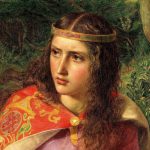
If you’ve never read Elizabeth Chadwick’s trilogy of books about Eleanor of Aquitaine, you’re missing out. It’s a story that couldn’t be told in one book. Queen of France, then Queen of England, mother to ten children including Richard the Lionheart and King John, she played politics across half of Europe into her eighties.

Elizabeth Chadwick’s trilogy transports us to the 12th century to a world of power, ambition, silence, strategy, and survival. From her early days as the heiress of Aquitaine to the long stretch of years when she was kept locked away by her own husband. If you’ve ever wanted to walk beside a woman who didn’t follow the rules, these books let you do just that.
Table of Contents
It’s well-researched historical fiction that leaves you feeling as though you’ve been privy to her inner thoughts and the intimate moments of her life. I devoured them within a very short space of time and loved getting to know Eleanor through Chadwick’s eyes.

Book 1: The Summer Queen

The Summer Queen is the first book in the trilogy and opens with Eleanor as a teenager, already poised to inherit one of the largest and wealthiest duchies in Europe. Her father’s sudden death throws her into a high-stakes political world, and within days, she’s married off to the future King of France.
Louis is deeply pious, quiet, and unprepared for a woman like Eleanor. The clash between them runs deeper than personality. She was raised in Aquitaine, where music, poetry, and power went hand in hand. She understood the court, she understood politics, and she wasn’t afraid to speak her mind. Louis, on the other hand, was raised in a cloister. He wanted a queen who would support his spiritual goals. She wanted a husband who saw her as an equal. The distance between them grows with each chapter.
Chadwick traces their journey through the Second Crusade, which is anything but glorious. The campaign is messy, full of poor decisions and growing resentments. Eleanor’s authority is questioned constantly. Her choices are scrutinized and punished. You witness the breakdown of trust between rulers and the beginning of Eleanor’s frustration with being used for diplomacy while denied influence.
At the same time, we get a sense of her ambition and her ability to navigate difficult circumstances. She doesn’t wield power openly in this stage of her life. She watches. She calculates. Chadwick shows us a woman who’s smart, well-educated, and aware of what’s expected of her.
Why I loved The Summer Queen
One of the most impressive things Chadwick does is capture Eleanor’s voice in a way that feels true to the twelfth century. Her thoughts and actions feel rooted in her time. Her frustrations are shaped by the church, the court, and the expectations placed on noblewomen.
The tension between personal ambition and royal duty drives much of the story. Eleanor wants to rule her duchy and protect her lineage. Louis wants to save his soul. Watching her learn to navigate a court where she’s technically queen but treated as an accessory is deeply frustrating and completely gripping. She is constantly reminded that she is valuable, but never in control.
The Crusade, where the soldiers’ misery and the leadership’s incompetence create real consequences. And her relationship with Petronella, her sister, is full of heartbreak.
Book 2: The Winter Crown

The Winter Crown picks up after Eleanor’s annulment from Louis and moves into her marriage with Henry of Anjou. It’s a new chapter, but not an easier one. Henry is younger, bolder, and far more like Eleanor in ambition and energy. At first, there’s mutual respect. She becomes Queen of England, a mother many times over, and a partner in power. But it doesn’t last.
As Henry’s reign grows more aggressive, so does his need for control. At court, in foreign alliances, and eventually within his own household, Eleanor starts to feel the walls close in again. Chadwick shows us a woman who has learned from her years in the French court. She no longer wastes time trying to be understood. She focuses on surviving and influencing from the shadows. Her public image stays intact, but behind the scenes, there’s tension, heartbreak, and growing anger.
This is the part of her life where Eleanor becomes most politically active. She helps manage her lands, writes letters, brokers marriages, and educates her children in the roles they’ll one day hold. But Henry doesn’t want a co-ruler. He wants obedience. And when their sons grow old enough to challenge his authority, Eleanor supports them. The rebellion fails, and Henry punishes her in a way that defines the rest of this book. He has her imprisoned. And for a very long time.
Why I Loved The Winter Crown
Chadwick does a brilliant job of showing how political power moves behind doors rather than across battlefields. There’s a constant sense that things could unravel at any moment. The court is thick with mistrust. Her relationships with her children are complicated. She wants them to lead, but she also knows what leadership costs.
This was the most emotionally difficult book in the trilogy. I found myself rooting for Eleanor in moments where there was nothing she could actually do. That sense of frustration and quiet endurance builds across the pages.
Book 3: The Autumn Crown

This final book, The Autumn Throne, covers Eleanor’s later years, beginning with her release from imprisonment after Henry’s death. She’s no longer a young duchess or a queen at the height of her influence. But she is still politically sharp and, for the first time in decades, free to act without asking permission. That freedom is both a gift and a burden.
Now in her sixties, Eleanor takes on a new role. She arranges the coronation of her favorite son, Richard the Lionheart, negotiates his marriage, and acts as his envoy when he goes to the Holy Land. She travels across the continent, forging alliances and holding the kingdom together while her son fights in Jerusalem.
Then Richard is taken prisoner, and Eleanor sets out to raise the ransom. These chapters show the sheer force of her will. She rides, she pleads, she calculates. She uses everything she has left. Once Richard is freed, the power struggle begins again. This time with John, her youngest son. The years are catching up to her, but Eleanor is still at the heart of it all. She sees clearly what John is capable of and what he isn’t.
In the final chapters, the focus shifts to loss. Richard is fatally wounded during a siege in Châlus, and Eleanor rides out to be with him. She arrives too late. His death breaks something in her. This was the son who trusted her, relied on her, and gave her purpose after years of silence and confinement.
She doesn’t get time to grieve. Almost immediately, she has to rally behind John, her last surviving son and the one she trusts least. With the throne in his hands, Eleanor once again steps back into the role of stabiliser, using what influence she still has to protect the crown from falling apart.
Even then, she takes on one final journey, crossing the Pyrenees in her seventies to bring her granddaughter Blanche back from Castile. Only when that task is complete does she return to Fontevraud Abbey. She dies there in 1204, having outlived two kings, watched ten children rise and fall, and done more behind the scenes than most rulers managed on the battlefield.
Why I Loved The Autumn Crown
One of the most powerful threads is her relationship with Richard. When he is captured near Vienna by Duke Leopold of Austria, then handed over to Henry VI, the Holy Roman Emperor, Eleanor springs into action. Now in her late sixties, she takes charge of raising the enormous ransom. She gathers silver from churches and nobles across England, pushing through resistance and delays.
But she doesn’t just send the money, she takes it herself, travelling across Europe to deliver the ransom and negotiate her son’s release. It’s a dangerous journey through hostile territory, and she’s not a queen in power anymore. She’s a mother with limited time, forced to rely on her reputation and every ounce of influence she still holds.
Meet the Author: Elizabeth Chadwick
Elizabeth Chadwick has been writing historical fiction for over three decades. She started young, scribbling stories in her teens, and went on to win the Betty Trask Award for her debut novel, The Wild Hunt. That was the beginning of a long writing career focused almost entirely on the medieval period. Her work has since been translated into multiple languages and regularly hits bestseller lists.
She’s probably best known for her William Marshal novels, starting with The Greatest Knight and The Scarlet Lion. She’s also written about the FitzWarin family, the Bigod earls, and Matilda de Braose. More recently, she began a new series with The Royal Rebel, set in the 14th century, due for release in January 2026, now available for pre-order. What ties them all together is her commitment to realism. She’s worked with re-enactment groups, handled weapons, and explored how people actually lived, dressed, and thought.
Her style is immersive without drifting into fantasy. She doesn’t paint the past as glamorous or sanitized. Her characters walk through blood, dirt, and power struggles, and they feel like people rather than just names in a textbook. That’s what makes her version of Eleanor so believable. She’s painted the picture of a woman shaped by her world, and Chadwick gives her the complexity and weight she deserves.
My Final Thoughts
If you’ve ever wanted to understand what it meant to hold power as a woman in the twelfth century, this is as close as you’ll get. I’d recommend this trilogy to anyone who wants to see history from the inside out, and especially to anyone who thinks they already know Eleanor of Aquitaine. You’ll come away with a far deeper sense of who she was. And why her story still matters.
Kylie Lang is a nationally syndicated travel journalist with bylines on the Associated Press Wire & more, a medieval history writer, and the founder and lead author of Tales of the Middle Ages (talesofthemiddleages.com). She holds a BA (Honours) in History from the University of Kent and is a member of the British Guild of Travel Writers.