
Most people think of Vikings as a world ruled by men, but the sagas tell a different story. Among the smoke of the longhouse and the chaos of raids, there are whispers of women who picked up weapons and fought as fiercely as any warrior.
Their lives were shaped by hunger, survival, and the weight of a brutal age, and the traces they left behind are anything but ordinary.
Table of Contents
Some of these stories about female Viking Warriors sound impossible. Women leading ships into battle and riding into war as fierce warriors. Were they real, or are they legends dressed up in steel and blood? The line between truth and myth isn’t always clear, but the clues are there for anyone willing to look closer. Ready to meet them?

Shieldmaidens and the Stories That Shaped Them
The sagas speak often of shieldmaidens, women who took up weapons and fought alongside men. They were the mortal reflection of something even greater in Norse belief: the Valkyries, the otherworldly figures who chose the fallen on the battlefield and carried them to Odin’s hall in Valhalla. Both ideas grew from a culture that valued courage above almost everything else, whether the fighter was born of flesh or forged in myth.
One of the earliest written accounts of shieldmaidens comes from Saxo Grammaticus in his Gesta Danorum, written in the early 13th century. He claimed that 300 of them fought for the Danes at the Battle of Bråvalla, a clash said to have taken place centuries earlier.

Historians argue about whether that battle even happened, but the detail that matters is this: people believed these women could stand shoulder to shoulder with men in war, and that belief lived on in the story.
Legends like that of Blenda of Småland take the idea even further. Her tale tells how she lured an enemy force to a feast, got them drunk, and led an army of women to kill them in their sleep. Whether Blenda ever existed doesn’t change the point. The story was told, retold, and treasured because it captured something vital to Norse identity, the notion that strength and cunning were not confined to men.
These legends laid the foundation for the women whose names still echo through history and myth, and those are the women you’re about to meet.
9 Female Viking Warriors Who Shaped History
Lagertha
Lagertha’s story comes from Saxo Grammaticus’s Gesta Danorum, written in the 12th century, long after the Viking Age ended. He describes a woman in Norway during a time when strength and loyalty were everything. She appears when Ragnar Lothbrok is raising an army to avenge his family. Among his fighters was a woman whose courage outshone most of the men. Her name was Lagertha.
Saxo writes that she fought on the front lines with her hair loose and a shield in her hand, and her presence turned the tide of battle. Ragnar married her after the war, and they had children, though the details vary between accounts. Later, when civil war broke out in Norway, she gathered her own forces and led them to victory. If the saga is to be believed, she was a woman who didn’t just survive the age of raiders and warlords—she mastered it.

Whether Lagertha was real is another story. Historians doubt her existence, and there is no archaeological proof that she lived outside the sagas. Still, her legend has endured for centuries and found new life in the TV series Vikings, where actress Katheryn Winnick brought her to the screen as a complex, fierce warrior who became a global fan favorite.
Hervör
Hervör’s story comes from the sagas, and it begins in darkness. She was born the daughter of a slain warrior, a man who left behind nothing but a cursed sword called Tyrfing. The weapon was said to bring victory in battle, but also death to anyone who owned it. Most people would run from such a fate, but Hervör did the opposite. She disguised herself as a man, took the name Hervarðr, and set out to claim the blade from her father’s burial mound.
The sagas describe her walking through a night so thick with ghosts that the air itself seemed alive. When she reached the barrow, she called her father’s spirit to rise and hand over Tyrfing. He warned her of the doom the sword carried, but she would not turn back.
She took Tyrfing and stepped into a life of raiding, sailing with crews who believed her to be a man. Eventually, she revealed her true identity, and by then, her reputation as a warrior was already carved into the stories that would outlive her.
Hervör’s story appears in the Hervarar saga ok Heiðreks, and like most heroic sagas, it mixes scraps of truth with a heavy dose of imagination. There’s no evidence she ever lived outside those pages, but her legend speaks to real fears and desires of the Viking Age.
Hooked on the Middle Ages? Get more stories like this one in your inbox.
Freydís Eiríksdóttir
Freydís Eiríksdóttir lived in a world where the horizon promised danger and opportunity in equal measure. She was the daughter of Erik the Red and part of the family that pushed Viking exploration beyond Greenland to the shores of Vinland, which we know as North America. Her story comes from two sagas, The Saga of the Greenlanders and The Saga of Erik the Red, and in both, she refuses to play a quiet role.
One account paints her as a ruthless schemer who ordered the killing of her rivals in the icy camps of Vinland. Another gives her a moment of fierce defiance that has echoed through history: when their settlement was attacked, and the men faltered, Freydís grabbed a sword from a fallen warrior, bared her chest, and charged at the enemy. The attackers fled. That single image, a woman standing alone with her breast bared, weapon in hand, daring anyone to face her, turned her into one of the most vivid figures of the Viking world.
The sagas disagree on her character, but both insist she existed. We can’t confirm the details, but it’s likely that Freydís lived and sailed west. Whether she was a cold-blooded killer or a fearless defender depends on which saga you believe. Either way, she earned her place among the most formidable names in Viking lore.

Sigrid the Proud (Sigrid Tostadóttir)
Sigrid the Proud, or Sigrid Tostadóttir, was a queen who stood her ground in the last century of the Viking Age. She lived in Scandinavia during the late 10th century, a time when Norse traditions clashed with the growing pull of Christianity. Power still belonged to those who could command warriors and forge alliances, and Sigrid knew how to do both.
She had already been married to a wealthy noble, and when he died, she inherited land and influence that made her one of the most desirable matches in the north. But Sigrid wasn’t interested in being a bargaining chip. The sagas tell of her turning down kings who demanded she give up her faith.
When two of them pushed too far, she invited them to a feast, locked the doors, and burned them alive. The message was clear: Sigrid would not bend to anyone. Stories of that fire spread across Scandinavia, and her reputation as a woman of iron will was sealed.
Some historians believe Sigrid was the same woman later known as Świętosława, who married into the Polish royal family and became the mother of future kings. The sagas may exaggerate, but they didn’t invent her out of nothing. She belonged to the Viking Age and understood its harsh logic of power being taken, not given.
Thyra (Thyra Danebod)
Thyra Danebod lived in Denmark during the 10th century, when the Viking Age was at its height and rival kingdoms jostled for control of the north. She was married to Gorm the Old, the first historically recognized king of Denmark, and became the mother of Harald Bluetooth, the ruler who would later unite Denmark and Norway under Christianity. But Thyra was far from a passive queen. The sagas describe her as a woman whose counsel carried as much weight as any warlord’s sword.
She is credited with ordering the construction of the Danevirke, the massive fortification that shielded Denmark from southern incursions. That alone sets her apart as a strategic mind in an age when borders were written in blood. Some accounts even suggest she raised forces and led expeditions to defend her realm when her husband was absent.
Whether she stood on the battlefield herself is debated, but her influence on the Viking military landscape cannot be denied. Stones inscribed with her name survive, including the Jelling Stones, carved by her son to honor her wisdom and strength.
Hildr Hrólfsdóttir
Hildr Hrólfsdóttir lived during the Viking Age and came from a noble family, marrying into the powerful lineage that ruled parts of Norway. Her exact dates are lost, but her life fell in the 10th century. She earned her place in history as a skald, a poet whose verses could shape the reputation of kings and warriors.
In a society where stories were the lifeblood of fame, a skilled poet held real power, and Hildr used hers well. Her surviving stanzas show a voice that understood both the glory and the grit of her time, speaking to a world where honor had to be defended in hall and on field alike.
The sagas hint that Hildr moved in the same circles as war leaders, where politics and power were often as dangerous as any battlefield. While there’s no proof she fought with weapons, her influence was a weapon of its own, securing alliances and preserving legacies in a culture that lived for memory.
Hildr’s story reminds us that not every fighter in the Viking Age wielded an axe. Some carved their victories into the language of the time, and in doing so, they shaped the way we remember an age built on both blood and words.
Brynhildr (Brynhild)
Brynhildr’s name appears in the Völsunga saga and the Poetic Edda as a Valkyrie, cast out of the divine realm and condemned to live as a mortal after defying Odin. Even in exile, she remained a warrior, swearing she would only marry a man who knew no fear. That vow drew her into the orbit of Sigurd, the greatest hero of the age, and for a time, they were promised to each other.
The betrayal came through trickery. Sigurd was given a potion that made him forget Brynhildr, and under its spell, he helped his sworn brother Gunnar win her hand by disguising himself as Gunnar during the courtship. When the truth came out, Brynhildr’s rage burned hotter than any forge. In a society where honor was life, humiliation was worse than death, and she demanded vengeance.
She urged Gunnar to kill Sigurd, and he obeyed. Soon after, Brynhildr climbed onto Sigurd’s funeral pyre and ended her life, choosing to follow him into death rather than live with the ruin of her pride.
Was Brynhildr real? No, but her story held meaning in a culture obsessed with loyalty, fate, and the price of broken oaths. She may be a creation of poets, but she reflects the brutal code that shaped the Viking Age, where love and death often walked the same road.
Freya / Skadi
Freyja and Skadi belong to the world of Norse myth, but their names carried real weight in Viking culture. Freyja was a goddess of love and fertility, but she was also tied to war and death. Half of those who fell in battle were said to go to her hall, Folkvangr, while the other half went to Odin in Valhalla. Warriors called on her before raids, and the sagas link her to seiðr, a powerful form of magic that gave those who mastered it an edge in war.
Skadi was a giantess who married into the gods after her father was killed. Skadi ruled the mountains and the hunt, striding through the snow with bow and skis, the image of endurance in a harsh land. Her name became part of the old word for Scandinavia itself, and she stood for survival in the face of the elements.
Neither Freyja nor Skadi walked the earth, but the women of the Viking Age knew their names. These goddesses shaped expectations and inspired the tales of shieldmaidens, reminding people that courage, whether in battle or against winter’s grip, was sacred.
The Birka Female Warrior
In 1889, archaeologists uncovered a remarkable grave in Birka, Sweden, a major Viking trading hub. Inside was a warrior’s resting place complete with a sword, axe, spear, arrows, two horses, and gaming pieces used for planning battles. For more than a century, scholars assumed the warrior was a man. Then, in 2017, DNA analysis revealed the truth: the skeleton was female.
This discovery shook long-held assumptions about Viking society. Everything about the grave pointed to someone who lived and died as a warrior. She wasn’t buried on the fringes but in a prime location within the fortified town, a sign of her status. Whoever she was, she had the resources, authority, and skills to command in a world where power usually rested in male hands.

We don’t know her name, but her presence is undeniable. Her bones tell us that at least one woman carried the weight of a warrior’s life and earned a burial fit for a leader. In a debate often clouded by legend, the Birka warrior stands as hard evidence that some women didn’t just belong to the stories; they belonged to the battlefield.
Love a good medieval story?
Join our readers and get tales of kings, queens, castles and ordinary medieval lives straight to your inbox.
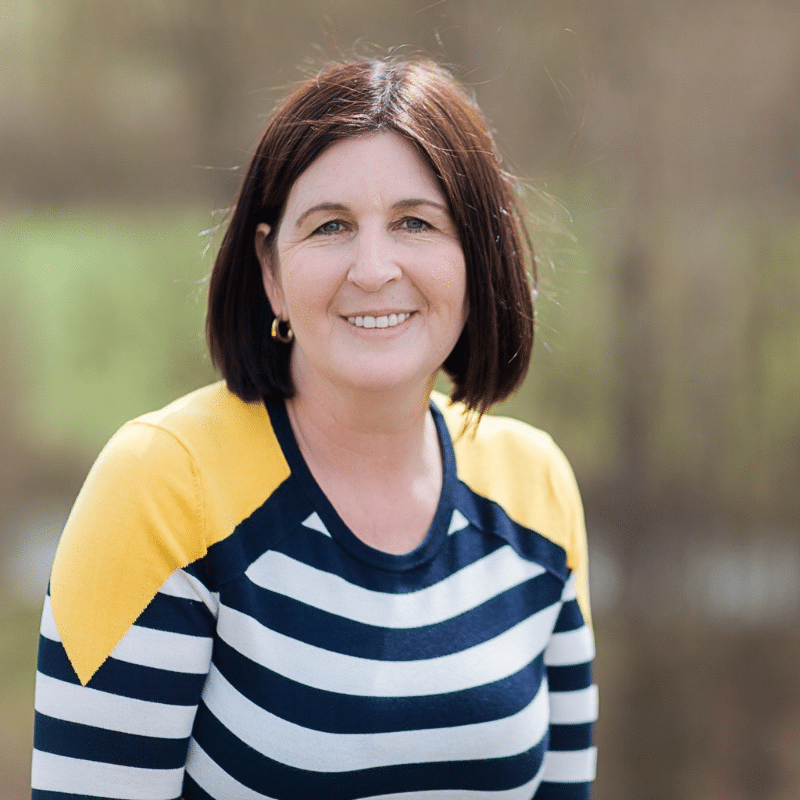
Kylie Lang is a nationally syndicated travel journalist with bylines on the Associated Press Wire & more, a medieval history writer, and the founder and lead author of Tales of the Middle Ages (talesofthemiddleages.com). She holds a BA (Honours) in History from the University of Kent and is a member of the British Guild of Travel Writers.