
Henry VII gets the worst deal of any Tudor. He’s the grey man in the family portrait, the cautious bookkeeper sandwiched between the drama of Bosworth and the operatic chaos of his son’s six marriages. Most people who love this period can rattle off the wives of Henry VIII in order, but would struggle to name a single one of Henry VII’s policies.
This is a shame, because he’s arguably the most consequential king of the lot. He inherited a country that had been tearing itself apart for thirty years, with an incredibly thin claim to the throne, no money, no standing army, and a nobility that had spent a generation switching sides whenever the wind changed. He held it together for twenty-four years and handed his son a stable, solvent kingdom.
Table of Contents
When you sit down with the accounts of his reign, you realize the man pulled off something close to a miracle, and did it with so little fanfare that history has been undervaluing him ever since.

The Mess He Inherited
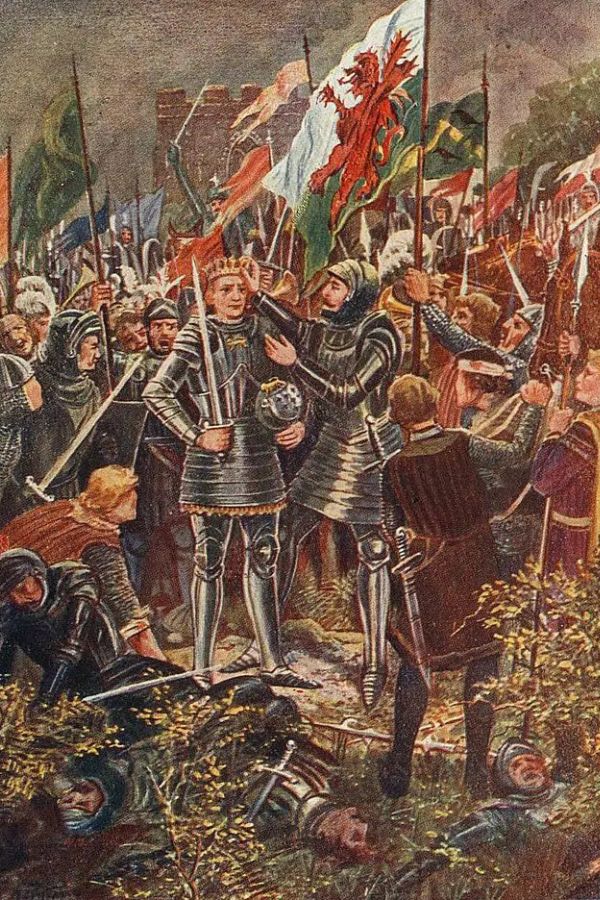
Bosworth wasn’t a clean ending. When Henry Tudor’s forces cut down Richard III on 22 August 1485, what he picked up off that battlefield was a crown and a problem. England had been at war with itself on and off since 1455.
Three kings had been deposed in the previous twenty-five years. Two of them had been murdered. Anyone with a sword and a drop of Plantagenet blood could fancy his chances.
Henry’s own claim was almost laughable on paper. He came through his mother, Margaret Beaufort, from John of Gaunt’s third marriage, a line that had been explicitly barred from the throne by Henry IV.
His father, Edmund Tudor, was the son of a Welsh squire who had married Henry V’s widow in secret. By the standards of medieval royal genealogy, this was a man who had no business wearing the crown of England.
He also had no money. The Crown lands had been bled dry by decades of warfare and royal mismanagement. The nobility was untrustworthy by habit. Yorkist heirs were still walking around, including young Edward, Earl of Warwick, the ten-year-old son of George of Clarence, who had a much better hereditary claim than Henry did. Pretenders would crawl out of the woodwork for the next fifteen years.
Dating his Reign From the Day Before Bosworth
One of Henry’s first acts as king tells you everything about how his mind worked. He had Parliament backdate the start of his reign to 21 August 1485, the day before Bosworth. This was actually a brilliant piece of legal trickery.
If his reign began the day before the battle, then every man who had fought for Richard III, the anointed king of England on 21 August, was technically a traitor. Henry could now attaint them, seize their lands, and refill the Crown’s empty coffers without lifting a sword. He used the threat selectively.
Most of the attainders were reversed in time, in exchange for fines, good behavior, and bonds. He’d given himself a permanent stick to hold over the heads of the men who had nearly killed him.
That’s the Henry VII method in a nutshell. He understood that a king without a full treasury was a king at the mercy of Parliament, and a king at the mercy of Parliament couldn’t face down rebellions or buy off troublesome nobles. So he built mechanisms.
He revived the old system of bonds and recognizances, where a noble would pledge enormous sums of money to behave himself. By the end of the reign, roughly two-thirds of the English peerage was financially shackled to the king in some form.
They didn’t love him for it, but he didn’t need them to; he just needed them to think twice before raising a banner against him.

Hooked on the Middle Ages? Get more stories like this one in your inbox.
The Pretenders He Outlasted
The most underrated thing about Henry VII is the sheer relentlessness of the threats he faced and the cold efficiency with which he dealt with them. Within two years of Bosworth, a boy named Lambert Simnel was being paraded around Ireland as Edward, Earl of Warwick.
The fact that the real Warwick was a prisoner of the Crown didn’t stop an Irish coronation, an invasion, and a pitched battle at Stoke Field in June 1487 that some historians consider the true end of the Wars of the Roses.
Henry’s response to Simnel after he won is one of my favorite moments in Tudor history. He didn’t execute the boy, but put him to work in the royal kitchens turning a spit, and later promoted him to falconer. A teenage pretender, reduced to a member of the household staff. It’s a perfect Henry VII solution: humiliating, practical, but still merciful.
Then came Perkin Warbeck, who claimed to be Richard of Shrewsbury, the younger of the Princes in the Tower. Warbeck was the more dangerous threat by a long way. He had backing from Margaret of Burgundy, recognition from the Holy Roman Emperor, support from James IV of Scotland, and a presence at half the courts of Europe.
He bothered Henry on and off for eight years. When Warbeck was finally captured in 1497, Henry kept him alive at court, paraded him as a cautionary tale, and only executed him in 1499 after a suspicious escape attempt that gave Henry the excuse he needed.
Warwick, the real one, was executed at the same time. Ferdinand and Isabella had made clear they wouldn’t send Catherine of Aragon to a kingdom with surviving Yorkist claimants. The Spanish match required tidy ends, so Henry tidied them with a swift execution.

The Council, the Spies, and the Behind-The-Scenes Machinery
Henry kept the existing council structures, courts, and forms. What he changed was who he listened to and what he watched.
He filled his inner council with men whose loyalty was to him personally and whose status depended entirely on his favor. Edmund Dudley, Richard Empson, Reginald Bray, Bishop Richard Fox, Bishop John Morton. Lawyers and clerics, not magnates.
They were brilliant administrators and ruthless tax collectors, and they were hated for it. When Henry VIII came to the throne, two of his first acts were to arrest Dudley and Empson on trumped-up treason charges and have them executed. It was a popular move. The machinery they had run for his father had squeezed England hard.
Henry also ran what was effectively a network of informers. He read incoming and outgoing letters, kept detailed notes in his own hand on the finances of his nobility, marking which men owed him money, which had paid, and which were behind.
The royal account books from the 1490s onward are covered in his marginalia and initials. This wasn’t a king who delegated and went hunting, but one who sat at his desk and worked. He knew, often to the pound, what every great family in England could afford to lose.
Marriage as Foreign Policy
Henry’s diplomatic achievements get even less attention than his domestic ones, which is unfair. When he took the throne in 1485, England was a backwater. Burgundy and France ignored it when they could, and Spain didn’t take it seriously. By the time he died in 1509, his eldest daughter Margaret was queen of Scotland, his second son was betrothed to the daughter of the most powerful royal couple in Europe, and he had brokered a peace with France that actually held.
The Treaty of Medina del Campo in 1489, which arranged the marriage of his son Arthur to Catherine of Aragon, was the diplomatic coup of his reign. It put a Tudor in the same family tree as Ferdinand and Isabella, who at that moment were the rising power of Christendom.
The fact that Arthur died in 1502 and Catherine had to be recycled for the younger brother Henry, was an inconvenience, not a disaster. Henry VII kept her in England, kept the alliance alive, and squeezed Ferdinand for the unpaid portion of the dowry until the day he died.
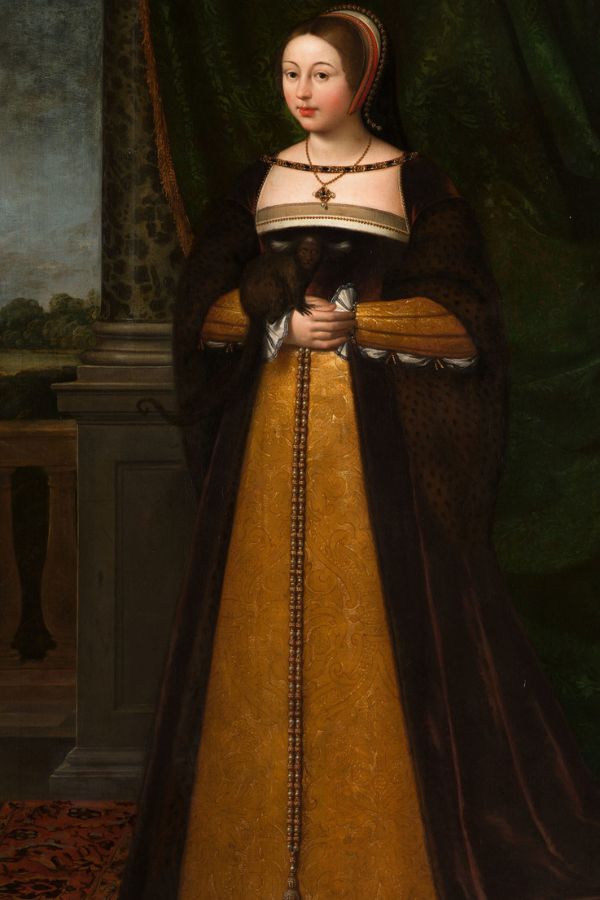
The marriage of Margaret Tudor to James IV of Scotland in 1503 was the other masterstroke. A century later, when Elizabeth I died childless, it was the reason James VI of Scotland could ride south and become James I of England, uniting the crowns. Henry VII didn’t live to see it. He’d set the dominoes.
What He Handed Over
When Henry VII died at Richmond on 21 April 1509, he left his son a treasury estimated by historians at around 1.5 million pounds. The exact figure is debated, but the order of magnitude isn’t. It was an enormous sum, possibly the largest cash reserve any English king had ever sat on.
He left a country that had been at peace internally for over a decade, a court free of pretenders, and a Council that ran on competence rather than blood, a legal system that had been tightened year by year, and a network of marriage alliances that would shape European politics for a century.
Henry VIII spent most of the money within a few years on the French wars, which achieved very little. He executed the men who had built the financial machine. He never showed much interest in the patient, the ledger-based work of governance that had made his reign possible in the first place. The flamboyance of the second Tudor was a luxury bought by the grind of the first.
I think about Henry VII sometimes when I’m watching another period drama featuring his son. The cameras love Henry VIII’s tantrums, weddings, and beheadings. They never linger on the man who made it all possible: the thin, watchful king sitting at his desk in Richmond, initialing another account book, working out who owed him what, building a dynasty out of paperwork and patience.

Love a good medieval story?
Join our readers and get tales of kings, queens, castles and ordinary medieval lives straight to your inbox.

Kylie Lang is a nationally syndicated travel journalist with bylines on the Associated Press Wire & more, a medieval history writer, and the founder and lead author of Tales of the Middle Ages (talesofthemiddleages.com). She holds a BA (Honours) in History from the University of Kent and is a member of the British Guild of Travel Writers.