
The Tudors ruled England in an age of upheaval, where faith, loyalty, and survival could turn on a single decision. Behind the portraits and pageantry lay a court riddled with betrayals, sudden deaths, and rebellions that shook the kingdom to its core.
From peasants marching in defiance to noble families destroyed by conspiracy charges, the Tudors presided over a country where no one’s position was safe. Some fell in the shadow of the executioner, others in the corridors of law courts, and a few by accidents that never stopped looking suspicious. Each case revealed just how fragile power could be in a world that thrived on rumor and fear.
Table of Contents
Rebellions, plots, executions, and courtroom dramas left scars on the monarchy and shaped the future of the realm. They are tales of blood, ambition, and survival in a kingdom where scandal was as dangerous as the sword.

The 8 Scandalous Deaths of Tudor England
The Pilgrimage of Grace (1536)
In the autumn of 1536, rebellion swept through the north of England. Henry VIII’s break from Rome and the dissolution of the monasteries had left communities in shock. Monasteries were not just places of prayer but hospitals, schools, and the backbone of charity. When the king’s commissioners arrived to strip them, people saw their world torn apart.
The first sparks flew in Lincolnshire in early October. Armed villagers, priests, and local gentry marched into Lincoln, seizing the cathedral and demanding an end to new taxes and religious reforms. Henry dismissed them as “rude commons,” and his threats were enough to scatter the rebels within days. But the unrest had already spread further north, where it became far more dangerous.
By mid-October, a massive rising gathered in Yorkshire under the leadership of Robert Aske, a barrister from a well-connected family. Aske framed the movement as a holy “pilgrimage,” not treason, and rebels marched carrying banners with the Five Wounds of Christ. The numbers were staggering. Estimates put the force at over 30,000, dwarfing anything Henry could field in the region. Monasteries were restored, royal officials fled, and the north stood on the edge of open war with the crown.
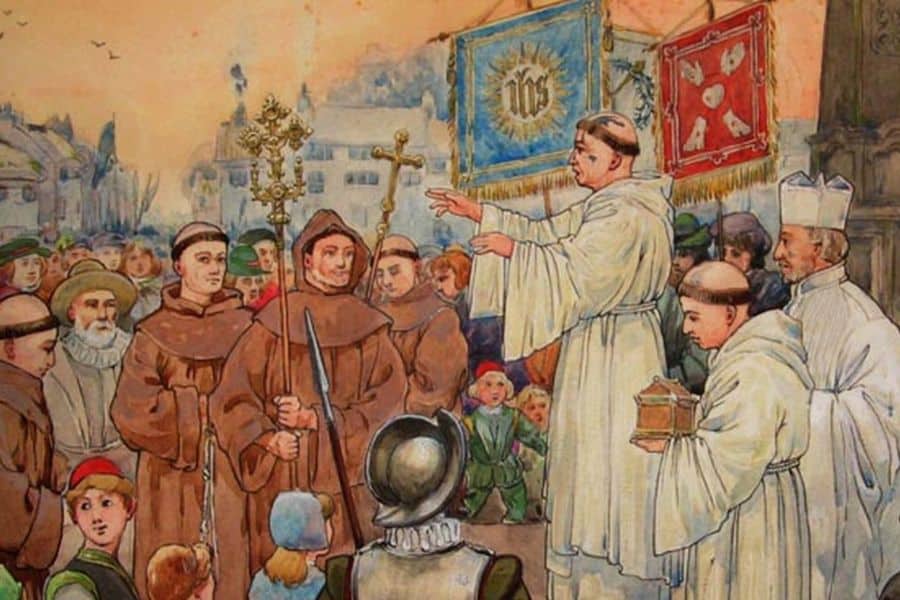
Henry’s forces, commanded by the Duke of Norfolk, could not meet the rebels head-on. Instead, Norfolk negotiated. He promised pardons, a parliament in York, and a review of the religious changes. Aske believed him and urged his followers to disperse. For a brief moment, it looked as if the Pilgrimage of Grace had won without bloodshed.
The reprieve did not last. In January 1537, a fresh rising broke out in Cumberland, and Henry seized his chance. He declared the pardons void, arrested the leaders, and sent troops to crush the revolt. This time, there was no mercy. Robert Aske was captured, taken to York, and hanged in chains from the walls of Clifford’s Tower as a warning. Dozens of abbots, priests, and gentry were executed, some dragged through the streets before their deaths.
The Pilgrimage of Grace ended in blood, but its shadow lingered. It showed the depth of resistance to Henry’s reforms and proved how fragile his hold on the kingdom could be.
The Exeter Conspiracy (1538)
In 1538, Henry VIII turned his fury on one of the oldest noble families in England. The Pole family, descended from the royal line of York, stood uncomfortably close to the throne. Margaret Pole, Countess of Salisbury, was the daughter of George, Duke of Clarence, brother to Edward IV and Richard III. Her sons, Henry and Reginald, carried blood that Henry VIII could never ignore. In an age obsessed with lineage, that made them dangerous.
The spark came from Reginald Pole, who had fled abroad and become a vocal critic of Henry’s break from Rome. Reginald wrote scathing attacks against the king and urged foreign powers to intervene in England. His words hit hard. Henry’s pride was wounded, and his paranoia deepened. The king turned on Reginald’s family, still in England, convinced they were conspiring against him.
By late 1538, the net closed. Henry Courtenay, Marquess of Exeter, another noble with Plantagenet blood, was accused of treason alongside members of the Pole family. Evidence was thin, built largely on intercepted letters and confessions extracted under pressure. It did not matter. Henry saw threats everywhere, and he was determined to stamp them out.
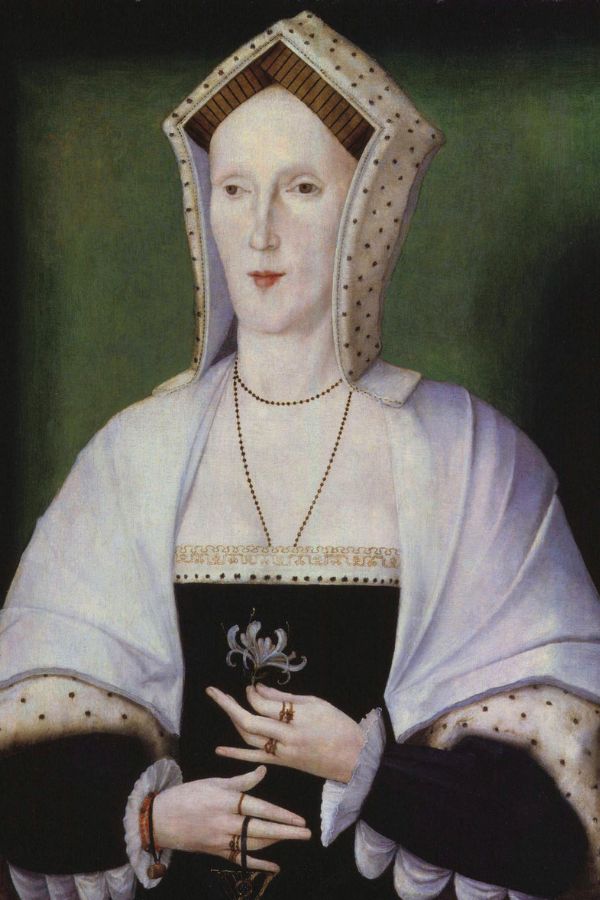
The arrests swept up Geoffrey Pole, who was interrogated so harshly that he attempted suicide. He eventually gave evidence against his own brother and Exeter. That sealed their fate. In December 1538, Henry Courtenay was beheaded on Tower Hill. Sir Edward Neville followed him. In January 1539, Henry Pole, Baron Montagu, was executed as well.
The bloodletting did not stop with the men. Margaret Pole, then in her late sixties, was thrown into the Tower. She would not die until 1541, hacked to pieces by an unskilled executioner in one of the most brutal deaths of Henry’s reign. Her fate was tied directly to the so-called Exeter Conspiracy, a name given to the supposed treason that justified the destruction of an entire family.
Hooked on the Middle Ages? Get more stories like this one in your inbox.
Anne Askew’s Trial (1546)
In 1546, Anne Askew, a young woman from Lincolnshire, became one of the most notorious heresy cases of Henry VIII’s reign. She was educated, outspoken, and unafraid to challenge priests and theologians on scripture. In an England where religion shifted with the king’s moods, her sharp tongue was enough to put her life at risk.
Anne’s marriage had collapsed when she embraced reformist views. She moved to London and joined circles tied to Catherine Parr, Henry’s last queen, who quietly supported Protestant learning. That connection made her dangerous to the conservative faction at court. In June 1546, Anne was arrested and charged with denying the Catholic belief in transubstantiation, a crime punishable by death.
Her trial was only the beginning. Officials wanted names of high-ranking sympathizers, especially women close to the queen. Anne refused to betray anyone. To break her, she was taken to the Tower and tortured on the rack, a device that stretched her body until her joints tore apart. She was racked so savagely that her hips and shoulders were dislocated.
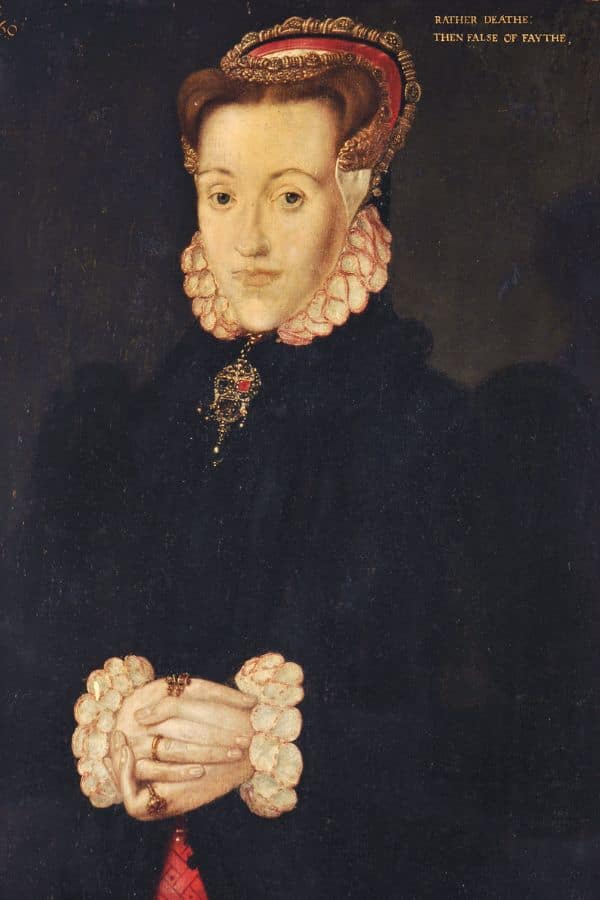
The lieutenant of the Tower, horrified, refused to continue, but Thomas Wriothesley, the Lord Chancellor, personally turned the handle to inflict more pain. Anne endured it without giving up a single name.
When she was brought to Smithfield for execution in July 1546, she was so crippled she had to be carried to the stake in a chair. She was chained upright against the wood, alongside three other condemned men. Gunpowder was tied around their bodies, a brutal addition that would ignite with the flames. Witnesses reported that the powder exploded, tearing their bodies apart in front of the crowd.
The Execution of Lady Jane Grey (1554)
Lady Jane Grey was only sixteen when she became the figurehead of one of the greatest power grabs in Tudor history. In July 1553, after the death of Edward VI, she was proclaimed queen. The move was orchestrated by John Dudley, Duke of Northumberland, who married Jane to his son and sought to keep the Protestant succession alive. Jane herself was a pawn, deeply learned but with little say in the political storm around her.
Her reign lasted just nine days. Support for Mary, the rightful heir under Henry VIII’s will, surged across the country. The Privy Council abandoned Jane, proclaiming Mary queen on July 19, 1553. Northumberland was arrested and executed, while Jane and her young husband, Guildford Dudley, were sent to the Tower of London.
At first, Mary showed mercy. Jane was seen as an innocent caught in her father-in-law’s ambition. She remained in the Tower but was spared the axe. That changed after Wyatt’s Rebellion in early 1554. The rising made Jane’s continued existence too dangerous. She was a Protestant symbol, and with her alive, rebels could always rally to her cause.

On February 12, 1554, Jane was led to the scaffold within the Tower grounds. Guildford was executed first; his body returned past her window on a cart. Jane followed soon after. Eyewitnesses describe her calm dignity as she spoke to the crowd, then fumbled for the block, crying, “Lord, into thy hands I commend my spirit.” One clean stroke ended her life.
The execution of Lady Jane Grey shocked Europe. A teenager, executed not for her own ambition but for the schemes of others, became a Protestant martyr. Her death was a warning of how unforgiving Tudor politics could be. Innocence offered no shield when power was at stake.
The Wyatt’s Rebellion (1554)
In January 1554, England braced for a marriage many feared would hand the kingdom over to Spain. Queen Mary I announced her plans to wed Philip of Spain, son of the most powerful monarch in Europe. To Protestants and nationalists alike, it looked like a surrender of English independence. Within weeks, rebellion erupted.
The man who gave his name to the rising was Sir Thomas Wyatt the Younger, a Kentish gentleman with military experience and Protestant leanings. He gathered thousands of supporters, from local gentry to angry tradesmen, all determined to stop the marriage. At the same time, other conspirators in the West Country and the Midlands plotted parallel risings, but those collapsed before they even began. Wyatt’s force was the only one that truly marched.
By late January, his army of around 3,000 men set out from Kent toward London. The queen’s council panicked, some members urging her to flee. But Mary showed steel. She stood before the citizens of London at the Guildhall, declaring she would never abandon her crown. She promised to fight if necessary, and her resolve stiffened the city’s defenses.
On February 3, Wyatt’s rebels reached Southwark, but the gates to London Bridge were barred. His men marched along the Thames, skirmishing with royal forces. At Kingston, they repaired a broken bridge and crossed, pressing on toward the city. The final clash came at Ludgate on February 7. Wyatt’s exhausted men were surrounded, and the rebellion collapsed. He was captured and dragged through London in chains before his execution.
The aftermath was grim. Around a hundred rebels were executed, their bodies displayed as warnings. The rising gave Mary’s enemies the perfect excuse to target Elizabeth, who was suspected of sympathy with the plot. She was arrested and sent to the Tower, entering through Traitors’ Gate in the shadow of her mother’s fate. Although no evidence tied her directly, she lived under suspicion for months.
Wyatt’s Rebellion ended in blood and fear, but it revealed the deep hostility to Mary’s Spanish marriage and the fragility of her regime. The queen had survived, but the sight of Elizabeth imprisoned showed how close the rebellion came to reshaping England’s future.
The Death of Amy Dudley (1560)
On September 8, 1560, Amy Robsart Dudley was found dead at the bottom of a staircase in Cumnor Place, Oxfordshire. Her neck was broken, and reports noted injuries to her head. Officially, the coroner’s jury ruled it an accident, but the verdict did nothing to silence the rumors. Her death became one of the great scandals of Elizabethan England.
Amy was the wife of Robert Dudley, Elizabeth I’s closest companion and rumored lover. Their intimacy had already stirred whispers at court and abroad. Ambassadors reported that Elizabeth spent hours alone with him, and some claimed she considered marriage. The only obstacle was Amy. When news spread that she had died suddenly, gossip exploded.
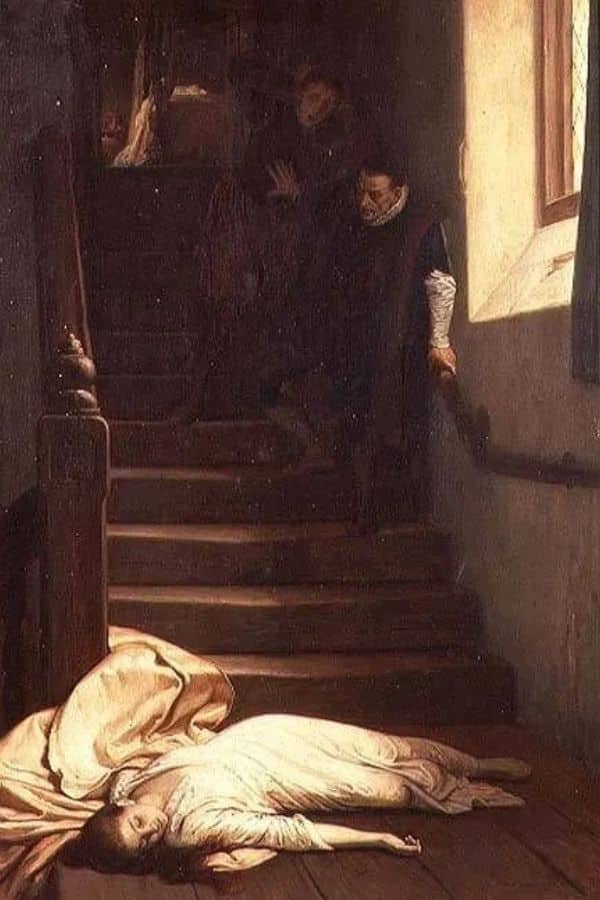
The circumstances fueled suspicion. On the morning of her death, Amy had insisted that her household leave the house to attend a local fair. When they returned, they found her body at the foot of the stairs. To some, it looked deliberate, as if she had sought solitude for a final act. To others, it was the perfect setup for murder.
Three theories emerged. Some believed it was a tragic accident, perhaps worsened by a known illness that weakened her. Others suggested suicide, pointing to her isolation and unhappiness in a marriage overshadowed by Elizabeth. But the most enduring belief was murder. Enemies accused Dudley of arranging his wife’s death to clear the way to the throne, while others suspected his rivals engineered the scandal to ruin him.
Whatever the truth, the fallout was devastating. Elizabeth could never marry Dudley without tainting her reign. The scandal gave her enemies endless ammunition and haunted Dudley’s reputation for the rest of his life.
Katherine Willoughby’s Lawsuit (1560s)
Katherine Willoughby, Duchess of Suffolk, was no stranger to scandal. At fourteen, she had married Charles Brandon, Duke of Suffolk, a man nearly four decades her senior and once the husband of Henry VIII’s sister. After Brandon’s death, she married Richard Bertie, a man far below her rank, and the match caused outrage among the nobility. What followed in the 1560s was a lawsuit that laid bare her independence and defiance.
During Mary I’s reign, Katherine and Bertie fled England rather than give up their Protestant faith. They lived in exile in Wesel and later in Poland, surviving hardship that would have broken many aristocrats. When Elizabeth came to the throne, they returned, but their marriage soon faced an unusual test. Bertie sought legal control over Katherine’s extensive estates, a move that turned husband against wife in the courts.
The lawsuit wound its way through the Court of Requests in the early 1560s. Katherine fought back, refusing to yield the lands she considered her rightful inheritance. It was a shocking spectacle for the time: a duchess openly resisting her husband through legal channels, challenging not only Bertie’s claim but the expectations of marriage itself.
The case did not ruin them. Katherine and Bertie remained together, but the episode cemented her reputation as a woman unafraid to defy authority, whether royal, religious, or marital. In a world where noblewomen were expected to be silent and obedient, Katherine Willoughby’s lawsuit stood out as a scandal that cut to the heart of Tudor society’s unease with powerful women.
Throckmorton Plot (1583)
By the early 1580s, Elizabeth I had ruled for twenty-five years, but her throne was still not secure. Catholic powers abroad wanted her gone, and Catholic families in England dreamed of replacing her with Mary, Queen of Scots. Out of this tension came the Throckmorton Plot, a conspiracy that nearly lit the fuse on foreign invasion.
The plot centered on Francis Throckmorton, a young Catholic gentleman with connections to powerful families. He acted as a go-between for Spanish and French agents, carrying messages that mapped out a plan to depose Elizabeth. The idea was simple but explosive: assassinate the queen, spark a Catholic uprising, and place Mary Stuart on the throne. Spanish troops, supported by the Duke of Guise, would invade England to seal the deal.
The conspiracy unraveled thanks to Elizabeth’s spymaster, Sir Francis Walsingham. His network of informers intercepted letters and tracked Throckmorton’s movements. In October 1583, Throckmorton was arrested. Under torture in the Tower, he confessed, admitting to a plan that reached deep into Europe’s Catholic courts.
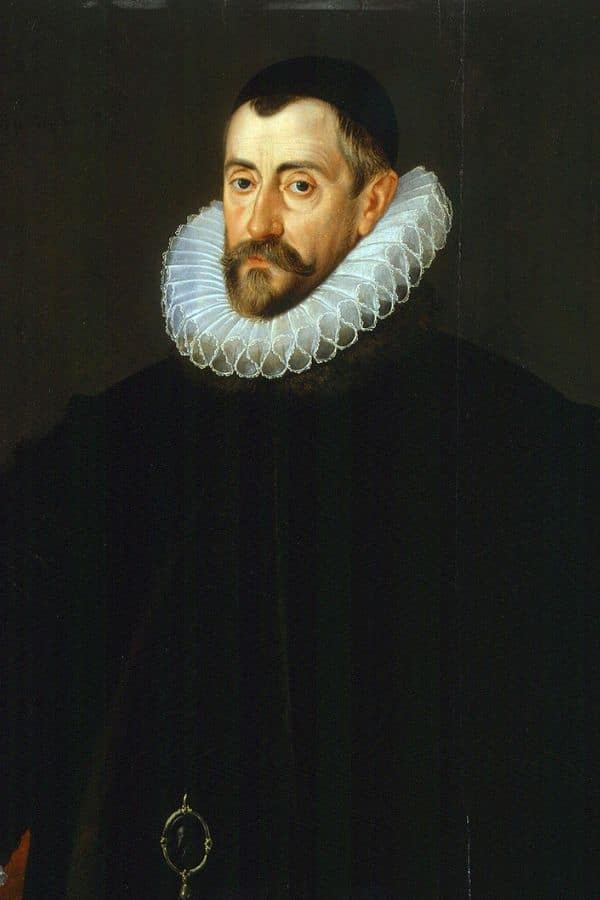
The discovery sent shockwaves through England. Throckmorton was executed in July 1584, hanged and quartered as a traitor. The fallout was immense. Dozens of Catholic households fell under suspicion, and Mary, Queen of Scots, was placed under even tighter surveillance. The government responded by drafting the Bond of Association, a pledge that anyone plotting against Elizabeth, or benefiting from such a plot, would be destroyed.
The Throckmorton Plot showed how fragile Elizabeth’s reign remained. A handful of letters and promises from abroad were enough to raise the specter of invasion and regicide.

Love a good medieval story?
Join our readers and get tales of kings, queens, castles and ordinary medieval lives straight to your inbox.

Kylie Lang is a nationally syndicated travel journalist with bylines on the Associated Press Wire & more, a medieval history writer, and the founder and lead author of Tales of the Middle Ages (talesofthemiddleages.com). She holds a BA (Honours) in History from the University of Kent and is a member of the British Guild of Travel Writers.
Related posts:
 The Execution of Lady Jane Grey: The Teenager Crowned Queen and the Nine Days That Sealed Her Fate
 Did Amy Dudley Die by Misfortune or Murder? Tudor History’s Unsolved Mystery
 17 Gruesome Tudor Executions and the Horrific Stories Behind Them
 For Jane Seymour the Most Dangerous Place in England Was Henry VIII’s Bedchamber