Love has always made people do daft things. But I’m not sure anything we get up to now quite matches a medieval woman baking bread against her own bare skin to win a husband’s heart, or an emperor who refused to bury the woman he loved and carried her body from room to room.
When it came to matters of the heart, our ancestors reached for the strangest tools they had. Herbs and charms, whispered spells, and potions brewed in secret and slipped into a cup of wine.
Table of Contents
Medieval aphrodisiacs and love potions sat somewhere between medicine, magic, and outright crime. Some were foods you’d recognize from your own kitchen, others dreamed up by respected physicians and written into serious medical books.
And some would land a woman in front of a bishop, or worse, at the stake. This was the age of courtly love, of troubadours and longing, the world Eleanor of Aquitaine helped make fashionable, and people wanted every advantage they could get.
The Strange Science Behind Medieval Aphrodisiacs
Start with the food, because the medieval approach to desire was surprisingly logical once you understand the rules they were playing by.
Medieval medicine ran on humoral theory, the old Greek idea that the body was governed by four humors and by qualities of hot, cold, wet, and dry. Desire and fertility were thought to require heat and moisture because those conditions produced plenty of “seed.”
So the way to fire up passion was to eat hot, moist foods. Physicians drew this straight from Galen and passed it down through Arabic scholars, filling medical books with advice on what to serve a sluggish lover.
The warming list will sound familiar. Ginger, cinnamon, nutmeg, pepper, and other spices. Wine, rich meats, and small birds, especially sparrows, which were linked to lust because everyone had watched sparrows carry on in the eaves.
Eggs, chickpeas, artichokes, and asparagus all made the cut. The 11th-century book De Coitu, written by the North African scholar Constantine the African and read across Europe, laid out these warming foods as serious medicine for a failing marriage bed.
Then there was the doctrine of signatures, the belief that a plant shaped like a body part could strengthen that part. Carrots and parsnips got their reputation this way. So did the orchid, whose paired root tubers reminded people of testicles.
The Greeks had named the plant satyrion, after the ever-randy satyrs, and the medieval world kept using orchid root in love tonics for exactly that reason. Cool, wet foods like lettuce and water lily were thought to do the opposite and dampen desire, which is why monks were sometimes fed them.
Not all of this reached the plate innocently. Marriage was frequently a business arrangement, and what a couple did or didn’t manage behind the bedroom door had real consequences for heirs and inheritance.
A good aphrodisiac could be the difference between a secure future and a scandal.
Mandrake: The Root That Screamed
If one plant ruled the world of medieval love magic, it was the mandrake. You may well have heard of it if you’ve ever read any of the Harry Potter books.
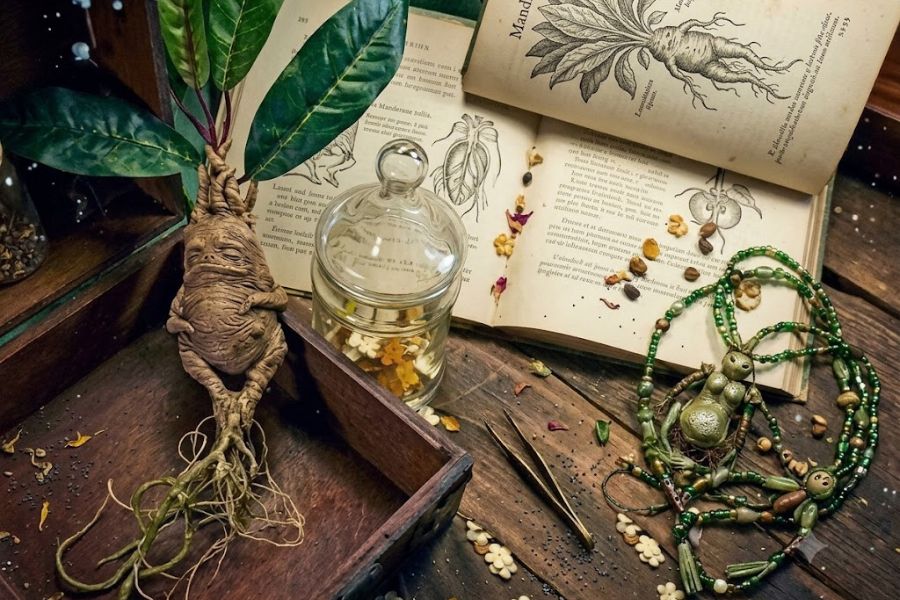
Mandrake root is thick and forked, and with a bit of imagination, it looks like a tiny human body, sometimes male, sometimes female. That resemblance gave it a reputation stretching all the way back to the Bible, where Rachel and Leah quarrel over mandrakes in the Book of Genesis, believing they help a woman conceive.
The Greek physician Dioscorides, writing in the 1st century and copied endlessly through the Middle Ages, recorded that mandrake root steeped in wine could help win over a reluctant lover.
Because the root looked so human, people believed it screamed when torn from the ground, and that the scream could kill or madden anyone who heard it. The solution, passed around as perfectly practical advice, was to loosen the soil, tie a hungry dog to the root, and step well back.
The dog would lunge for food, pull the mandrake free, and take the fatal scream so the harvester didn’t have to. A plant worth a dog’s life tells you how much people wanted what it promised.
Mandrake also had a darker side, which the folklore rarely mentioned. It contains powerful compounds that can sedate, cause hallucinations, and, in the wrong dose, kill you outright.
Hooked on the Middle Ages? Get more stories like this one in your inbox.
The Love Potion That Doomed Tristan and Iseult
No account of medieval love potions is complete without the most famous one of all, and it’s a story rather than a recipe.
In the legend of Tristan and Iseult, the young Iseult of Ireland is promised in marriage to King Mark of Cornwall. Her mother, the Queen of Ireland, brews a powerful love potion and entrusts it to a maid, with strict instructions that Iseult and Mark must drink it together on their wedding night so they’ll love each other forever.
It goes wrong at sea. On the ship carrying Iseult to Cornwall, she and the knight Tristan drink the potion by mistake, and the two are bound to each other by a love that nothing can break. Not marriage, not loyalty to the king, not the disaster they can both see coming.
The rest of the tale is heartbreak, secrecy, and ruin. The story spread across medieval Europe in dozens of versions and shaped how people imagined love magic ever after. A potion in these tales overrides the will completely, and that idea, that a drink could steal your very choices, is exactly what would later make love potions so frightening to the Church.
Charlemagne and the Ring Hidden Under a Tongue
Some love-magic stories attached themselves to real and famous people, and the strangest belongs to Charlemagne, the great emperor who united much of Europe.
In old age, Charlemagne fell helplessly in love with a common woman, so besotted that he ignored the business of his empire, and his court grew alarmed. When the woman died suddenly, the emperor’s obsession only deepened.
He had her embalmed body brought to his chamber and would not be parted from it, weeping over a corpse while his kingdom waited.
Archbishop Turpin, suspecting sorcery, examined the body and found a small ring with a jewel hidden beneath the dead woman’s tongue. The moment he removed it, Charlemagne’s passion leaped from the corpse to the archbishop himself.
Turpin, understandably rattled, flung the ring into a lake at Aachen. And from that day, the emperor fell in love with the lake, built his great palace and chapel on its shore, and never wanted to leave.
It’s a fable, of course, about how blind and transferable obsessive love can be. But that it was told at all, about the most powerful ruler in Christendom, shows how completely medieval people believed a small enchanted object could hijack a human heart.
When a Love Potion Was a Crime: The Fall of Eleanor Cobham
Here is where love magic stops being charming and turns deadly serious, in a true story from 15th-century England.
Eleanor Cobham had done rather well for herself. She began as a lady-in-waiting and ended up married to Humphrey, Duke of Gloucester, brother of a king and, for a time, heir to the throne.
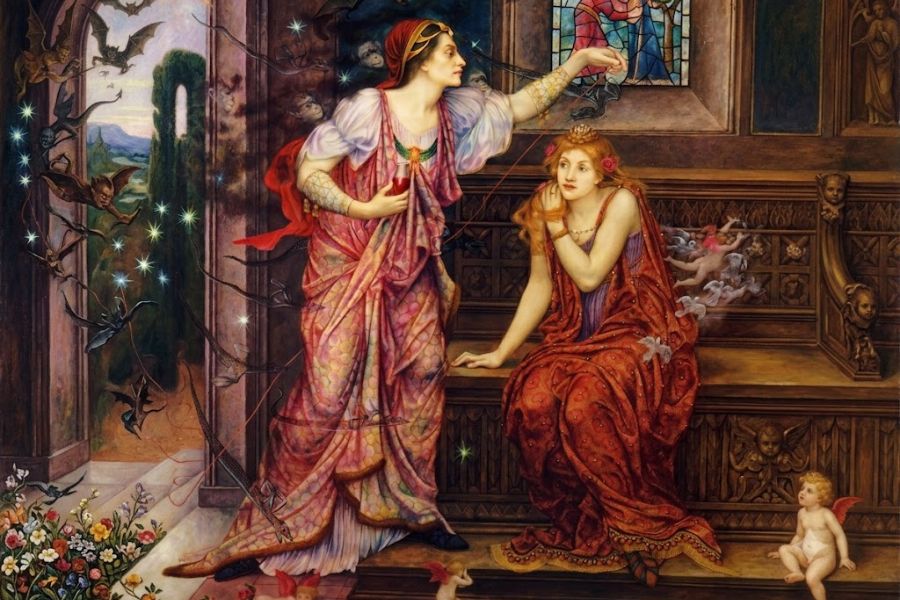
That marriage came with whispers. Many believed Eleanor had used potions supplied by a cunning woman named Margery Jourdemayne, known as the Witch of Eye, first to make the duke fall in love with her, and later to help her conceive the child that would secure her position.
For years, the whispers stayed whispers. Then in 1441, Eleanor and her circle made a fatal mistake. She consulted two learned astrologers, Roger Bolingbroke and Thomas Southwell, and had them cast a horoscope that predicted King Henry VI would fall gravely ill and possibly die that summer.
Predicting the king’s death was treason, plain and simple. When it came out, the whole affair collapsed into a sensational trial for witchcraft and treasonable necromancy.
The punishments were savage and revealing. Southwell died in the Tower before he could be executed. Bolingbroke was hanged, drawn, and quartered. Margery Jourdemayne, the woman who supplied the potions, was burned at the stake as a relapsed heretic.
Eleanor herself, too grand to execute, was forced to walk barefoot through the streets of London on three separate market days, carrying a lit candle to a different church each time while the crowds watched. Her marriage was annulled, and she spent the rest of her life a prisoner, dying at Beaumaris Castle in 1452.
She got off lightly compared to the others, and that tells you everything. A love potion in the wrong hands, at the wrong political moment, could send people to the fire, and the poorer woman selling the remedy paid the highest price.
Eleanor was far from the only queen or great lady to face such rumors. Years later, Elizabeth Woodville would be accused of bewitching a king into marriage, and the same fear of women’s secret magic ran through many of the era’s witch trials.
The Recipes the Church Tried to Stamp Out
For every noblewoman with an astrologer, there were countless ordinary women working love magic at the hearth, and we know about it mostly because appalled churchmen wrote it down in order to forbid it.
The early 11th-century bishop Burchard of Worms compiled a long list of these practices in a handbook for priests, complete with the penance a woman should be given for each.
One entry describes women who would lie face down, bare themselves, have bread baked against their bodies, and then feed that bread to a husband to inflame his love. The penance was two years of fasting on the appointed days.
Other folk recipes recorded across Europe called for a few drops of menstrual blood stirred into a man’s food or drink, an intimate ingredient believed to bind him body and soul. These recipes were common enough that the Church treated them as a standing problem rather than a rare shock, and they sit at the heart of a wider world of medieval superstition that the authorities never fully stamped out.
If you’ve ever wondered how women even managed the practical side of something like collecting menstrual blood in a world of moss and linen cloths, the answer is a whole hidden history in itself.
Plenty of love magic relied on charms and amulets. Periwinkle, powdered and mixed with a few other bits, was said to stir love between a husband and wife. Vervain and other herbs were carried or worn to attract affection.
Knotted cords, whispered words, and small tokens all had their place, part of the same landscape of everyday rituals people used to nudge fate in their favor.
The Church’s objection wasn’t only that these things were pagan nonsense. It was the belief, straight out of the Tristan legend, that a potion could rob a person of their free will and their reason. Tampering with another soul’s freedom to choose was, to a medieval priest, a serious spiritual crime, whichever way you dressed it up.
Did Any of It Actually Work?
The short answer is mostly no, and some of it was outright dangerous. A few ingredients had a real physical effect, which kept the whole business alive.
Warming spices like ginger really do raise the pulse and bring a bit of heat to the skin, so a spiced cup of wine really could leave someone flushed and giddy, even if the cause was the wine as much as the spice. That was enough to convince people the magic was working.
Others were poison dressed as passion. Cantharides, the crushed blister beetle better known as Spanish fly, was used for centuries as an aphrodisiac because it irritates and inflames the body’s tissues.
It also damages the kidneys and can kill, and more than one eager lover across history has poisoned the object of their affection, stone dead. The lore came with cautionary tales attached. The Roman poet Lucretius was said to have been driven mad by a love philtre given to him by his own wife, a story medieval writers repeated with relish as a warning.
The belief that the right herb, the right word, the right secret ingredient might finally make someone love you back outlived the Middle Ages by centuries and, if we’re truthful with ourselves, has never fully gone away. We’ve just swapped mandrake and sparrow hearts for candlelit dinners and a decent bottle of red.
Frequently Asked Questions
What Did Medieval People Use as Aphrodisiacs?
Medieval peoples used ginger, cinnamon, nutmeg, wine, eggs, chickpeas, artichokes, asparagus, sparrows and small birds, and orchid root, known as satyrion, which was prized because its shape resembled testicles, as aphrodisiacs.
What Was in a Medieval Love Potion?
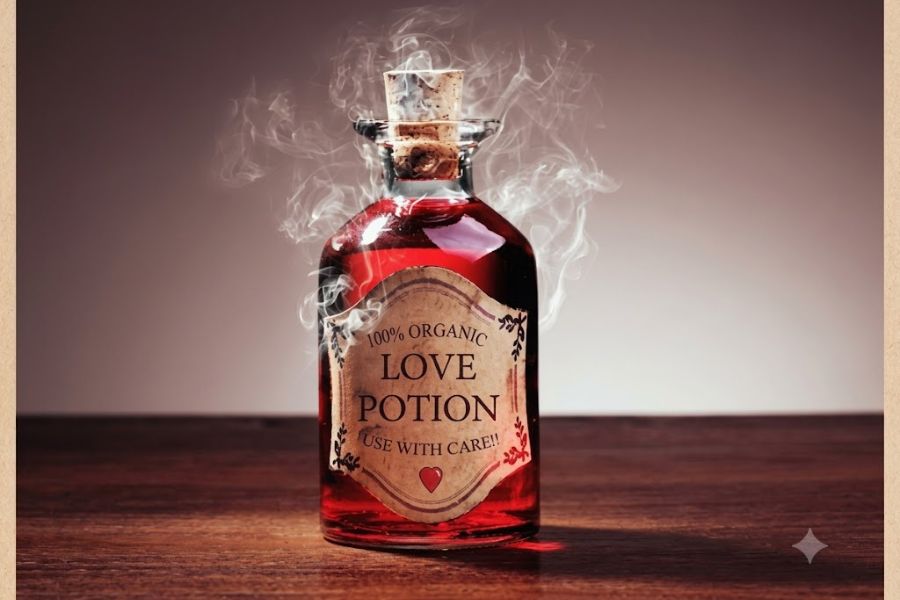
What was in a medieval love potion varied from the herbal to the alarming. Gentler potions used mandrake steeped in wine, periwinkle, vervain, and honey. Darker folk recipes called for menstrual blood, powdered bone, sparrow hearts, or other body-based ingredients. Cantharides, or Spanish fly, was also used and was outright poisonous.
Was Making a Love Potion a Crime in the Middle Ages?
Making a love potion in the Middle Ages could be considered a crime depending on the circumstances. The Church condemned love magic as a sin because it was thought to override a person’s free will, and cunning women who sold potions risked being tried as witches. Margery Jourdemayne, who supplied Eleanor Cobham, was burned at the stake in 1441.
What Is the Most Famous Medieval Love Potion?
The most famous medieval love potion is the legend of Tristan and Iseult. Brewed by the Queen of Ireland for her daughter’s wedding to King Mark, it was drunk by mistake by Tristan and Iseult on their voyage, binding them in an unbreakable and doomed love.
Did Medieval Love Potions Actually Work?
No, medieval love potions didn’t actually work, not in the way people hoped. A few ingredients, like warming spices, had mild physical effects, but most love potions worked through belief and suggestion. Some, such as Spanish fly, were dangerous poisons that harmed or killed the person they were meant to enchant.
Love a good medieval story?
Join our readers and get tales of kings, queens, castles and ordinary medieval lives straight to your inbox.

Kylie Lang is a nationally syndicated travel journalist with bylines on the Associated Press Wire & more, a medieval history writer, and the founder and lead author of Tales of the Middle Ages (talesofthemiddleages.com). She holds a BA (Honours) in History from the University of Kent and is a member of the British Guild of Travel Writers.
Related posts:
 9 Medieval Girls’ Names That Vanished Because of a Scandal (the Downfall of Powerful Women in the Middle Ages)
 The Turbulent Early Years of Eleanor of Aquitaine and Henry Plantagenet
 The Tumultuous Marriage of Eleanor of Aquitaine and Henry Plantagenet
 17 Facts About Eleanor of Aquitaine That May Surprise You